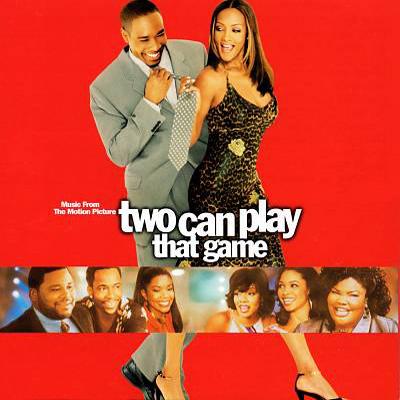
"Two Can Play That Game" Soundtrack Lyrics
Movie • 2001
Track Listing
Mary J. Blige f/ Notorious B.I.G. & Puffy
Melky Sedeck
Chante Moore f/ Jermaine Dupri
Jodeci
Jersey Ave
Avant
Chico & Coolwadda
Rahsaan Patterson
Damozel
The Roots
Yasmeen Sulieman
Pam & Dodi
KeKe Wyatt
“Two Can Play That Game — Music from the Motion Picture” – Album Guide to Tracks and Key Scenes
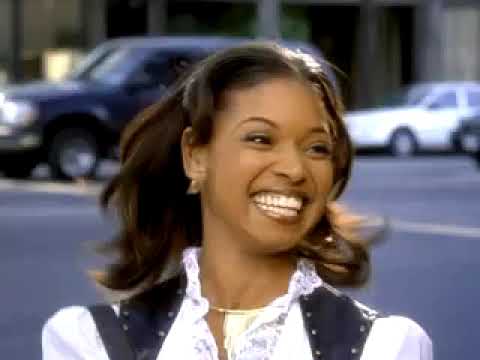
Review
How do you soundtrack a battle of the sexes that plays like a rulebook and a rom-com? With late-90s/early-00s R&B and hip-hop that move like strategy — sly, stylish, and a little cocky. Two Can Play That Game leans on radio-proven grooves (Mary J. Blige, Jodeci, The Roots) and glossy contemporary cuts to mirror Shanté’s voiceover “ten-day plan.” When the film needs heat or humor, the songs do the nudging.
The mood tilts from salon-fresh confidence to jealous static and back to reconciliation. Missy Elliott’s bite, Cameo’s wink, and a handful of smooth ballads trade places with Marcus Miller’s light score cues and needle-drop classics. It’s a mixtape built for punchlines and power moves — and for one very specific late-night phone scroll.
Genres in phases: R&B slow-jam — temptation, apology, “do better”; hip-hop — swagger and friend-counsel beats; quiet-storm balladry — the soft landing after the games.
How It Was Made
Composer Marcus Miller provided the film’s original score, while music supervision and clearances ran through Pilar McCurry (credited music supervisor). The companion album — “Music from the Motion Picture Two Can Play That Game” — arrived August 28, 2001 with a tight R&B/hip-hop lineup and a few crate-digger touches. The retail edition clocks in at ~56 minutes and was issued under the Geffen/UMG umbrella.
Editorially, the movie favors recognizable hooks over wall-to-wall score; the album mirrors that choice with Mary J. Blige (“Real Love”), Jodeci (“Stay”), The Roots (“The Next Movement”), and contemporary artists like Avant, Rahsaan Patterson, and Chanté Moore rounding out the flow.
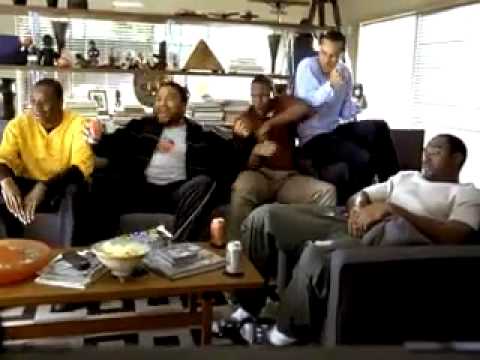
Tracks & Scenes
Key uses as widely cited by soundtrack indexes, album notes, and fan scene IDs. (Platform edits can shift exact timing.)
“Sock It 2 Me” (Missy Elliott feat. Da Brat)
- Where it plays:
- Shanté power-walks to Keith’s office for a surprise pop-in — all attitude and tempo as the camera follows her “don’t blink” stride.
- Why it matters:
- A flex cue. The lyric and bounce reinforce Shanté’s rules-in-action persona.
“Ooh Aah” (Avant)
- Where it plays:
- Keith stews after learning Shanté is out with other men; the track smolders under his jealousy spiral.
- Why it matters:
- Turns wounded pride into mood lighting — the film’s quiet-storm pressure valve.
“Love Will Be Waiting at Home” (For Real)
- Where it plays:
- A tender end-scene embrace; the camera lingers as the couple softens and the song eases into the moment.
- Why it matters:
- Reframes the games as prelude; forgiveness gets the last word.
“Candy” (Cameo) — end credits
- Where it plays:
- Rolls over the first stretch of credits — an upbeat, old-school nod after the détente.
- Why it matters:
- Sends the audience out with a wink — a dance-floor classic as curtain call.
“She’s a Bad Mama Jama (She’s Built, She’s Stacked)” (Carl Carlton)
- Where it plays:
- Heard in-film during a social backdrop/party beat — a diegetic crowd-pleaser that underscores the film’s look-and-step energy.
- Why it matters:
- Iconic funk polish that fits the movie’s glossy dating-scene vibe.
Album standouts that frame scenes/tonality
- Mary J. Blige — “Real Love” (legacy hook that matches Shanté’s rule-by-experience voiceover)
- Jodeci — “Stay” (romantic gravity for reconciliation beats)
- The Roots — “The Next Movement” (hip-hop propulsion for montage energy)
- Rahsaan Patterson — “So Hot” (smooth connective tissue between set-pieces)
- Chanté Moore — “Go Ahead With All That” (sleek R&B for the chess-match tone)
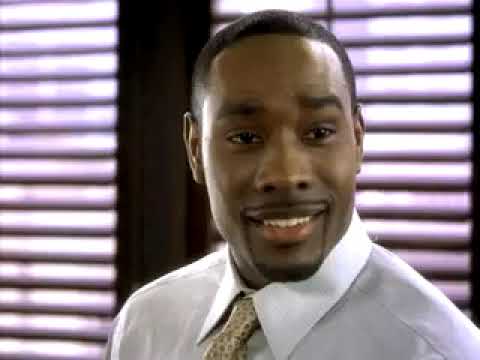
Notes & Trivia
- Pilar McCurry serves as the film’s music supervisor; she’s also credited as executive soundtrack producer.
- Marcus Miller is the credited composer — his cues stitch between radio-ready drops.
- The retail album omits a few in-film favorites (e.g., Carl Carlton’s “Bad Mama Jama,” For Real’s “Love Will Be Waiting at Home”).
- Release timing: the soundtrack landed in late August 2001 ahead of the film’s early-September U.S. release.
Reception & Quotes
Critics were mixed on the movie but singled out the music as reliably crowd-pleasing — a familiar-but-effective blend of R&B staples and Y2K-era radio.
“A playlist built for banter — smooth where it needs to be, spiky when it’s fun.” Album roundups
“The needle-drops keep the pace; the ballads sell the make-up.” Fan commentary
Interesting Facts
- Clearances vs. curation: Several iconic tracks heard in the film didn’t make the retail CD — classic early-00s OST reality.
- Quiet-storm leverage: The movie uses slow-jams as emotional pivot points rather than just romance wallpaper.
- Voiceover rhythm: Shanté’s rulebook narration meshes with hip-hop cadences; the songs underline her “coach” persona.
- Legacy bops: “Candy” and “Bad Mama Jama” supply multi-generational familiarity for a date-night crowd.
Technical Info
- Title: Music from the Motion Picture Two Can Play That Game
- Year: 2001
- Type: Feature film soundtrack (songs compilation; separate score not commercially issued as an album)
- Composer: Marcus Miller
- Music Supervisor: Pilar McCurry
- Label/Publisher: Geffen Records / UMG (soundtrack release)
- Selected notable placements: Missy Elliott — “Sock It 2 Me” (Shanté’s office run); Avant — “Ooh Aah” (Keith jealous); For Real — “Love Will Be Waiting at Home” (final hug); Cameo — “Candy” (end credits); Carl Carlton — “She’s a Bad Mama Jama” (party backdrop).
- Distributor (film): Screen Gems (Sony)
Questions & Answers
- Who composed the original score?
- Marcus Miller. His cues bridge scenes between the big needle-drops.
- What label released the soundtrack album?
- Geffen/UMG released the 2001 songs compilation.
- Which song plays over the end credits?
- “Candy” by Cameo opens the credits run.
- What’s the slow-jam when Keith is upset?
- Avant’s “Ooh Aah.” It underscores his jealousy beat.
- Is the For Real ballad on the retail CD?
- No — “Love Will Be Waiting at Home” is heard in the film but not on the standard soundtrack album.
Key Contributors
| Entity | Relation (S–V–O) |
|---|---|
| Marcus Miller | Composer → scored the film’s original cues. |
| Pilar McCurry | Music Supervisor → cleared & curated featured songs; executive soundtrack producer. |
| Vivica A. Fox; Morris Chestnut | Actors → leads whose on-screen beats many cues underline. |
| Geffen Records / UMG | Label → released the soundtrack album (Aug 2001). |
| Screen Gems (Sony) | Distributor → released the film theatrically. |
Sources: official trailer; film credits; soundtrack album listings; soundtrack scene Q&A index; IMDb soundtrack entries and credits; AllMusic/retail metadata.
November, 29th 2025
A-Z Lyrics Universe
Cynthia Erivo Popular
Ariana Grande Horsepower
Post Malone Ain't No Love in Oklahoma
Luke Combs Good Riddance (Time of Your Life)
Green Day Bye Bye Bye
*NSYNC You're the One That I Wan
John Travolta & Olivia Newton-John I Always Wanted a Brother
Braelyn Rankins, Theo Somolu, Kelvin Harrison Jr. and Aaron Pierre The Power of Love
Frankie Goes to Hollywood Beyond
Auli’i Cravalho feat. Rachel House MORE ›