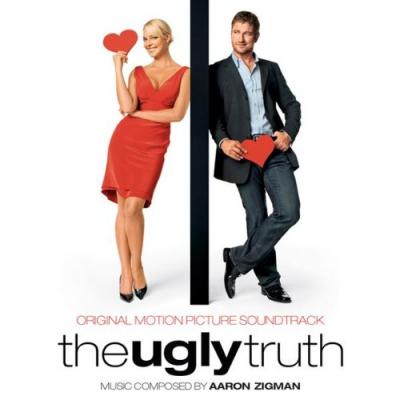
"Ugly Truth" Soundtrack Lyrics
Movie • 2009
Track Listing
Katy Perry
Rick Krive
Scott Robinson
Daniel May
Nikka Costa
Natasha Bedingfield
Josh Kelley
Los Pinguos
Los Pinguos
Latin Soul Syndicate
Daniel Merriweather
Flo Rida
“The Ugly Truth (Original Motion Picture Soundtrack)” – Album Guide to Tracks and Key Scenes
Overview
Can a rom-com that revels in bad advice still stick the landing with a killer pop cue? The Ugly Truth plays both sides — crude gags and glossy chemistry — and the music does a lot of the smoothing. Aaron Zigman’s brisk, cue-sized score stitches the banter together, while a small clutch of radio-ready songs telegraph mood changes faster than any speech ever could.
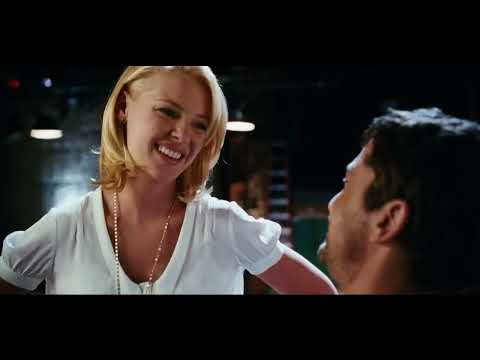
Katherine Heigl’s Abby and Gerard Butler’s Mike bicker their way from sparring partners to something messier. The soundtrack mirrors that arc: an effervescent opener to sell the fantasy, retail-therapy funk for makeover logic, sun-splashed pop for a “perfect date,” and sweaty club grooves when sparks finally fly. The score stays light on its feet — short cues, guitar and keys over orchestral underpinnings — punctuating punchlines, then stepping back so the needle-drops can take the spotlight.
Genres arrive in phases: late-2000s pop — wishful thinking and image-making (“Hot n Cold,” “Pocketful of Sunshine”); funk-soul — confidence as commodity (“Everybody Got Their Something”); Latin club — desire taking the wheel (Los Pinguos, Latin Soul Syndicate); and orchestral-pop score — sentiment and soft landings. Neat, commercial, effective.
How It Was Made
Composer Aaron Zigman turned in a compact, 35-track score album for Lakeshore Records. It’s built from short, scene-specific cues — guitar and keys, a dash of drums, and orchestra textures — designed to hit jokes and segue quickly. The film layers in about a dozen licensed songs, but no official “songs soundtrack” was released; only the score hit stores/streaming.
Tracks & Scenes
“Hot n Cold” (Katy Perry)
- Where it plays:
- Opening over titles (~00:01:00). Abby’s dating disaster smash-cuts into a perky “reset” vibe as we meet her on the job. Non-diegetic, sets a bright, pop sheen.
- Why it matters:
- Establishes rom-com gloss and Abby’s whiplash love life before Mike ever strides into frame.
“Everybody Got Their Something” (Nikka Costa)
- Where it plays:
- ~00:36:00 during the makeover/advice montage, as Mike reframes Abby’s look and body language. Non-diegetic; cuts to newsroom reactions and date prep.
- Why it matters:
- Funk-soul swagger equals temporary confidence — a “fake it till you make it” beat the film openly sells.
“Pocketful of Sunshine” (Natasha Bedingfield)
- Where it plays:
- ~00:55:00 on a sunny day date — Abby and Colin hiking/drive sequence. Non-diegetic, outdoorsy montage pacing.
- Why it matters:
- Radiant pop idealizes Abby’s “checklist romance,” underlining why Mike’s cynical coaching seems to work.
“Under the Covers” (Josh Kelley)
- Where it plays:
- ~00:59:00 at a restaurant interlude for Abby and Mike — flirtation in denial. Non-diegetic, bridging dialogue into a warmer register.
- Why it matters:
- Signals their chemistry before either character will admit it.
“Soluna” (Los Pinguos)
- Where it plays:
- ~01:08:00 at the Cuban/Latin club. Diegetic band/club source as Abby arrives and locks eyes with Mike amid the crowd.
- Why it matters:
- Sets the room temperature: tactile, communal, and far from Abby’s controlled routines.
“El Gitano del Amor” (Latin Soul Syndicate)
- Where it plays:
- ~01:11:00, same club sequence — Abby and Mike finally dance. Diegetic; camera rides the rhythm as their banter turns physical.
- Why it matters:
- Their dynamic flips from head to body. It’s the film’s clearest musical cue that attraction has outrun the rules.
“De Vez En Cuando” (Los Pinguos)
- Where it plays:
- Club continuation, between glances and spins; a secondary dance groove under dialogue beats. Diegetic.
- Why it matters:
- Keeps the scene grounded in sweaty, lived-in rhythm while the plot advances in looks instead of lines.
“Chainsaw” (Daniel Merriweather)
- Where it plays:
- ~01:23:00 as Mike is introduced to a new producer dynamic; transitional montage. Non-diegetic.
- Why it matters:
- A brisk palate cleanser setting up the late-act shuffle of loyalties and jobs.
“Café Metropole” (Rick Krive)
- Where it plays:
- Early dinner-date ambience; sleek background jazz in a white-tablecloth setting. Diegetic restaurant source.
- Why it matters:
- Polite, safe, and aspirational — the sonic opposite of the club where Abby truly loosens up.
“Right Round” (Flo Rida)
- Where it plays:
- ~01:31:00 over the end credits; the curtain-call pop blast.
- Why it matters:
- Commercial, catchy, a send-off pitched straight at 2009 radio — and a reminder that this is a studio rom-com first, social satire a distant second.
Score Highlights (Aaron Zigman)
- Standout cues:
- “The Dinner,” “Black Dress,” “The Kiss,” and “Abby & Mike Rant.” Expect short, guitar/keys-forward cues over light orchestra — zippy setups, quick exits.
Notes & Trivia
- The official album is score-only; despite a dozen licensed songs in the film, no companion “songs” album dropped.
- Those tiny, jokey cue titles (“Flick the Bean,” “Spazzy Dance”) reflect how the score was written to punch specific gags.
- Trailer music call-out: an official trailer used Mika’s “Grace Kelly,” not included in the film or score album.
- The Latin-club stretch layers multiple tracks (Los Pinguos, Latin Soul Syndicate) to move from flirt to full-on dancing.
Reception & Quotes
Critics were split to negative overall, with a few defenders. Nearly everyone agreed the music choices were slickly effective, even when the humor wasn’t.
“Heigl and Butler are pleasant… but the movie does them in.” Roger Ebert
“Sexist swill… not a genuine laugh in it.” Rolling Stone (Peter Travers)
“Rom-com writ large… ridiculous and somehow new again — and delightful.” The Washington Post (Ruth McCann)
Interesting Facts
- Score-only release: Lakeshore’s album skipped the pop songs entirely — unusual for a mainstream rom-com of the era.
- Micro-cues: Most cues clock well under two minutes, engineered to land punchlines and transitions.
- Two worlds, two palettes: Polished pop for Abby’s checklisted romance; sweaty Latin grooves for the awakening.
- Club accuracy: The dance sequence is diegetic throughout — music is part of the scene, not laid over it.
- Trailer vs. film: High-energy trailer cuts leaned on a non-film banger to sell tone.
Technical Info
- Title: The Ugly Truth (Original Motion Picture Soundtrack)
- Year: 2009
- Type: Film score with select featured songs in the movie (no “songs” album)
- Composer: Aaron Zigman
- Label / album status: Lakeshore Records — digital/CD (35 tracks)
- Key featured songs in film: Katy Perry — “Hot n Cold”; Natasha Bedingfield — “Pocketful of Sunshine”; Nikka Costa — “Everybody Got Their Something”; Latin Soul Syndicate — “El Gitano del Amor”; Los Pinguos — “Soluna,” “De Vez En Cuando”; Josh Kelley — “Under the Covers”; Daniel Merriweather — “Chainsaw”; Rick Krive — “Café Metropole”; Flo Rida — “Right Round”.
- Release context: Theatrical release — July 24, 2009 (score album streeted mid-July)
- Availability: Streaming (Apple Music/Spotify/YouTube Music); CD originally issued by Lakeshore Records
- Trailer note: One official trailer used Mika’s “Grace Kelly” (marketing only)
Questions & Answers
- Is there an official “songs” soundtrack?
- No — only the score album was released. The film’s pop tracks were licensed, not compiled.
- What song plays over the opening?
- Katy Perry’s “Hot n Cold.” It sets the film’s bright, radio-friendly tone from the first minute.
- Which track scores the big dance scene?
- At the club it’s diegetic Latin grooves, peaking with Latin Soul Syndicate’s “El Gitano del Amor.”
- What’s the end-credits song?
- Flo Rida’s “Right Round.” It’s a pure 2009 pop sign-off.
- Where do we hear “Pocketful of Sunshine”?
- During Abby and Colin’s hiking/drive date montage — a sun-soaked idealization of their “perfect match.”
Key Contributors
| Entity | Role / Relation (S–V–O) |
|---|---|
| Aaron Zigman | Composer — scored The Ugly Truth; album artist for the official score release |
| Lakeshore Records | Label — released the score album on CD/digital |
| Robert Luketic | Director — led creative choices the score supports |
| Sony Pictures Releasing | Distributor — released the film theatrically |
| Katy Perry | Performer — “Hot n Cold” (opening titles) |
| Natasha Bedingfield | Performer — “Pocketful of Sunshine” (date montage) |
| Nikka Costa | Performer — “Everybody Got Their Something” (makeover/advice montage) |
| Latin Soul Syndicate | Performer — “El Gitano del Amor” (club dance) |
| Los Pinguos | Performers — “Soluna,” “De Vez En Cuando” (club sequence) |
| Josh Kelley | Performer — “Under the Covers” (restaurant beat) |
| Daniel Merriweather | Performer — “Chainsaw” (late-act transition) |
| Flo Rida | Performer — “Right Round” (end credits) |
Sources: Apple Music (album details); Spotify/YouTube Music (availability); SoundtrackRadar (song placements & timestamps); IMDb (soundtracks page); SoundtrackINFO (Q&A & CD data); Filmtracks (score overview); Rolling Stone, Roger Ebert, Washington Post (reviews); Wikipedia (release facts).
November, 20th 2025
A-Z Lyrics Universe
Cynthia Erivo Popular
Ariana Grande Horsepower
Post Malone Ain't No Love in Oklahoma
Luke Combs Good Riddance (Time of Your Life)
Green Day Bye Bye Bye
*NSYNC You're the One That I Wan
John Travolta & Olivia Newton-John I Always Wanted a Brother
Braelyn Rankins, Theo Somolu, Kelvin Harrison Jr. and Aaron Pierre The Power of Love
Frankie Goes to Hollywood Beyond
Auli’i Cravalho feat. Rachel House MORE ›