Soundtracks:  A B C D E F G H I J K L M N O P Q R S T U V W X Y Z #


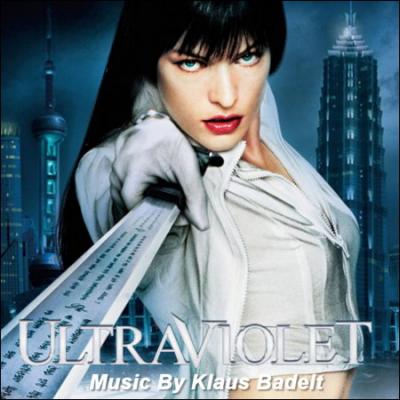
Ultraviolet Album Cover

"Ultraviolet" Soundtrack Lyrics

Movie • 2006

Track Listing


“Ultraviolet (Original Motion Picture Score)” – Album Guide to Tracks and Key Scenes

Ultraviolet trailer frame — Violet draws her sword in a white corridor, neon city behind — score imagery
Ultraviolet — trailer still used for soundtrack context, 2006

Overview

Can a movie built like a gleaming video game still throb with human pulse? Ultraviolet tries — and the score is where you feel it most. German composer Klaus Badelt fuses glassy synth arpeggios with churning ostinatos and catwalk-cool percussion, then drapes it over Kurt Wimmer’s neon martial-arts comic strip. It plays like a control room metronome: precise, propulsive, and always in forward motion.

Milla Jovovich’s Violet ferries a mysterious child through a techno-plague police state. Badelt’s palette splits the world: chilly, quantized textures for the Arch Ministry; warmer pads and minor-key strings for Violet’s fragile empathy; metallic guitar and drum programming for set-piece mayhem. There are almost no pop needle-drops in the film proper — the music is the engine, not the garnish.

Stylistically, phases align to theme: electronic action — control and surveillance; hybrid orchestral — memory cuts through noise; industrial pulses — sterile power; and ambient pads — brief sanctuary. Trailer cues bend another way: late-90s/00s big-beat swagger sells spectacle; the film itself stays pure score.

How It Was Made

Badelt scored Ultraviolet in a tight hybrid style he’d refined on early-2000s action projects: short cue blocks for rapid edits, synth-heavy beds to glue CG-driven geometry, and recurring motifs for Violet and villain Daxus. Additional music was contributed by collaborators in his team, with music editors carving the cues to the film’s brisk, cut-and-paste rhythm. An official commercial album didn’t accompany the theatrical release; a later CD circulated on a specialty label as an unofficial score release, while Badelt himself posted a suite of cues online years after.

Editing-room energy in the trailer — fast wipes and digital HUDs that the score mirrors with sequenced synths
Sequencers and steel — a hybrid score built for high-speed cutting, 2006

Tracks & Scenes

“Main Titles (Parts 1–2)” (Klaus Badelt)

Where it plays:
Opening logos into Violet’s voiceover and world sketch. Neon serif titles slice across sterile lab whites; the camera tracks like a guided missile. Non-diegetic.
Why it matters:
Introduces the score’s DNA: sawtooth pulses + minor-key string figures. Cool, clipped, confident — Violet’s mask.

“Vault / Scanner / Vault Fight” (suite)

Where it plays:
The courier infiltration: color-shifting sleeves, weapon manifests, anti-gravity geometry. Movement ramps from sneaking to zero-G swordplay. Non-diegetic, tightly synced hits.
Why it matters:
Badelt’s staccato figures turn architecture into tempo — you feel the building’s layout as rhythm.

“Motorcycle”

Where it plays:
The signature chase — Violet rockets a bike through high-gloss streets and a tunnel full of pursuing vectors. Electronic percussion and octave-leaping bass keep breathless momentum.
Why it matters:
Pure propulsion cue. It welds velocity to futurist sheen — the film distilled to BPM.

“DNA / Injection”

Where it plays:
Lab confrontations around the boy’s blood and the bioweapon twist. Pads and detuned textures blur ethics and fear; needle-fine high strings ride the tension.
Why it matters:
The rare stretch where melody softens the chrome. Violet’s humanity surfaces under the synth frost.

“Daxus”

Where it plays:
Villain motifs orbit Arch-Ministry scenes and the final face-off. Low brass stabs and filtered pulses, often with brittle, gated echo.
Why it matters:
A corporate-sinister signature — the sound of authoritarian certainty.

“End Title”

Where it plays:
Closing montage and credits. Motifs cohere into a resolved figure; percussion eases off, pads exhale.
Why it matters:
A hard-won release valve after non-stop kinetic writing — the film’s rare moment of grace.

Trailer songs (not in the film/score album)

Rob Dougan — “Clubbed to Death (Kurayamino Edition)”
Used prominently in marketing; big-beat strings and breakbeats frame the city as glossy menace.
Jem — “24”
Another trailer staple — breathy vocals over ticking clock loops to sell stakes and pace.
Action montage from the trailer — sword arcs, gun kata, and bike sprint in a neon tunnel
Choreography as metronome — set-pieces cut to sequenced pulses, 2006

Notes & Trivia

  • The film’s marketing leaned on recognizable trailer music; the feature itself is virtually all score.
  • Badelt later placed a suite of Ultraviolet cues online, revealing internal reel names (“Main Titles,” “Motorcycle,” “DNA,” etc.).
  • A widely traded CD appeared years later via a specialty imprint as an unofficial release; collectors treat it as the de facto album.
  • Additional music programmers/arrangers in Badelt’s circle helped fill the action’s many short cues.
  • The film’s high-def digital look — then novel — nudged the score toward hyper-clean electronics.

Reception & Quotes

Critical response skewed harsh, but even naysayers nodded to the film’s sealed, synthetic aesthetic — which the score amplifies by design.

“Hermetically sealed in a synthetic wrapping… it arrives a nearly lifeless film.” Variety
“The latest entry in the ‘not screened for critics’ genre.” The Hollywood Reporter
End-card style frame — skyline and credits palette echoing the score’s cool synth pads
End titles exhale — motifs resolve, percussion cools, 2006

Interesting Facts

  • Score-first storytelling: With few licensed tracks, rhythm and motif handle scene transitions.
  • Villain signature: Daxus cues favor sub-bass pulses and clipped brass — boardroom menace.
  • Motorcycle motif: The chase material doubles as Violet’s agency theme in later variations.
  • Trailer misdirection: Big-beat classics sell the sizzle; the film’s soundworld stays icy-electronic.
  • Collector’s corner: The sought-after CD floating around is labeled unofficial; provenance matters.

Technical Info

  • Title: Ultraviolet — Original Motion Picture Score
  • Year: 2006 (film); later unofficial score CD circulated post-release
  • Type: Primarily original score (few/no pop placements in feature)
  • Composer: Klaus Badelt
  • Additional music (uncredited/department): Ian Honeyman; Andrew Raiher; others in Badelt’s team
  • Notable cues: “Main Titles,” “Vault/Scanner/Vault Fight,” “DNA,” “Injection,” “Motorcycle,” “Daxus,” “End Title”
  • Trailer music (not in film): Rob Dougan — “Clubbed to Death (Kurayamino Edition)”; Jem — “24”
  • Label/availability notes: No wide official soundtrack at release; later unofficial CD issue (collectors); composer-posted suite online
  • Release context: Theatrical release — March 3, 2006

Questions & Answers

Who composed the score for Ultraviolet?
Klaus Badelt, working in an electronic-meets-orchestral hybrid built for rapid-fire cuts.
Was there an official soundtrack album?
Not at the time of release. A later CD exists as an unofficial score issue; otherwise, cue suites surfaced online.
What’s the song in the trailer?
Marketing used Rob Dougan’s “Clubbed to Death (Kurayamino Edition)” and Jem’s “24.” They aren’t in the feature.
Are there any big needle-drops in the movie itself?
Essentially no — the film is carried by Badelt’s score. Action beats and transitions are all cue-driven.
Where can I hear the “Motorcycle” chase music?
It appears on fan-shared score suites and composer-posted playlists under that cue name.

Key Contributors

EntityRole / Relation (S–V–O)
Klaus BadeltComposer — scored Ultraviolet
Ian HoneymanAdditional music — contributed programming/arranging
Andrew RaiherAdditional music — contributed cues/arranging
Kurt WimmerDirector — creative lead whose edit pacing shaped cue design
Screen Gems / Sony PicturesStudio/Distributor — released the film in theaters
Rob DouganTrailer composer/artist — “Clubbed to Death (Kurayamino Edition)” in marketing
JemTrailer artist — “24” used in marketing

Sources: Variety (review); The Hollywood Reporter (review summary); Wikipedia (film page incl. trailer music note); SoundtrackCollector (composer & department credits); Discogs (CD listing marked “unofficial”); YouTube (official trailer; score suite & cue list); SoundCloud (composer’s “Ultraviolet” playlist).

November, 20th 2025


A-Z Lyrics Universe

Lyrics / song texts are property and copyright of their owners and provided for educational purposes only.