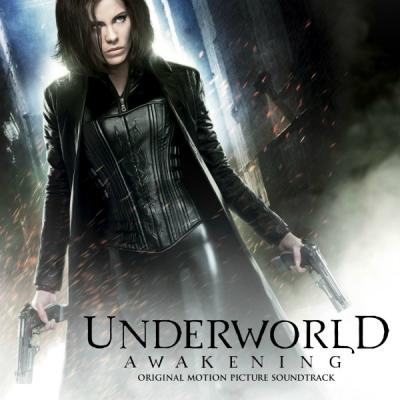
"Underworld: Awakening" Soundtrack Lyrics
Movie • 2011
Track Listing
Evanescence
Lacey Sturm (Flyleaf)
Linkin Park
The Cure
Stella Katsoudas (Sister Soleil)
Ministry
Lacuna Coil
The Naked And Famous
Black Light Burns
William Control
Civil Twilight
& Sons
8mm
Ryan T.Hope (The Lifeline)
Combichrist
Collide
Justin Lassen
“Underworld: Awakening (Original Motion Picture Soundtrack & Original Score)” – Album Guide to Tracks and Key Scenes
Overview
What happens when a goth-club franchise turns the lights up — and finds humans hunting the monsters? Underworld: Awakening pivots the series into siege-thriller mode, and the music follows suit. Two releases carry the load: a songs compilation stacked with Renholdër (Danny Lohner) remixes and an aggressive, metallic-hybrid score by Paul Haslinger. The film itself is largely score-driven; the compilation does the heavy lifting in branding and credits.
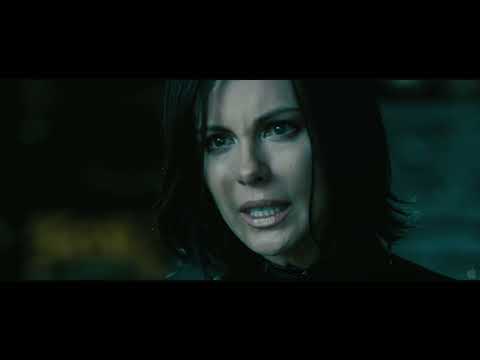
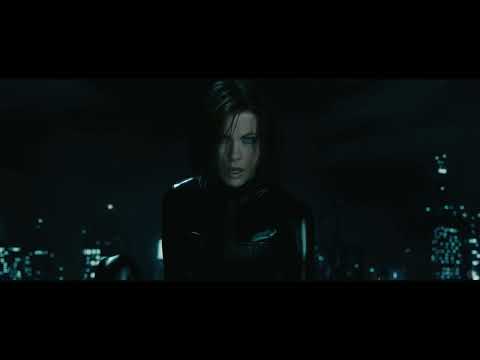
Kate Beckinsale’s Selene wakes to a world where vampires and Lycans are culled like vermin. Haslinger’s writing leans into steel-on-stone textures: stressed low brass, serrated synths, and piston percussion. It moves in short cues — built to punch cuts, track oxygen, and time reloads. Meanwhile the songs album supplies marquee names (Evanescence, Linkin Park, The Cure, Ministry, Lacuna Coil) forged into Renholdër’s midnight sheen; in the feature, only the Evanescence cut actually plays, and it’s a final-credits drop.
Style map: industrial/electronic — surveillance and capture; hybrid orchestral — resolve, tragedy, awe; alt/metal remixes — brand identity, end-roll momentum. It’s the most ruthlessly functional sound of the series — by design.
How It Was Made
Haslinger returned to the franchise to compose the original score — nearly an hour of tense, cue-sized adrenaline, tracked to a real-time chase structure. Lakeshore Records issued both albums: the songs compilation (executive-produced on the label side and featuring Renholdër remixes/new collaborations) and the separate score CD, with Haslinger’s cue titles mapping scene beats. The score later picked up industry recognition as the franchise’s sound evolved toward heavier electronics.
Tracks & Scenes
“Underworld Awakening Main Titles” (Paul Haslinger)
- Where it plays:
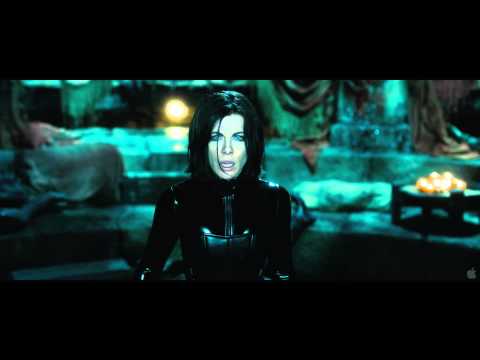
- Main title boot-up: archives, autopsy glass, Selene’s voiceover about the human purge. Non-diegetic; a cold start that swells into crisis.
- Why it matters:
- Establishes the new order — clipped pulses, sub-bass groans, and a motif that returns whenever Selene regains control.
“The Purge”
- Where it plays:
- Prologue crackdown. SWAT vans, UV floods, vampires dragged into daylight; intercut with Selene’s capture. Non-diegetic; long-form suite broken by percussive stingers.
- Why it matters:
- Series reset in one cue — human dominance framed as mechanized rhythm.
“Raiding the Army Surplus Store”
- Where it plays:
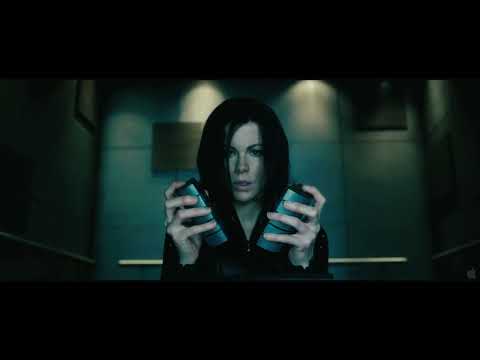
- Selene and the child scavenge armor and ammo; quick cuts through racks, hiss of oxygen, barrel checks. Non-diegetic; a short, punchy prep cue.
- Why it matters:
- Turns a gear-up into choreography; micro-motif = agency regained.
“Arriving at the Coven” / “This Is Not One of Us”
- Where it plays:
- Refuge that isn’t. Stone halls, hostile elders, a child scanned like contraband. Non-diegetic; strings under icy pads, then a low-brass turn when trust breaks.
- Why it matters:
- Gives the film’s rare breath of “old Underworld” — then snatches it away.
“The Lycan Van Escape”
- Where it plays:
- Freeway snatch-and-grab flips; Selene clings to a van skin as rounds spark off metal. Non-diegetic; tom clusters and synth growls mirror chassis rattle.
- Why it matters:
- Peak kinetic cue — editing and percussion fuse into one machine.
“The Uber-Lycan” / “Find Her and Destroy Her”
- Where it plays:
- Antigen’s secret: a towering hybrid lays waste to security glass; final-act hunt pivots to containment not escape. Non-diegetic; brassy glissandi, ripping synths.
- Why it matters:
- Scale-up moment — the score goes from tactical to titanic.
“A New Dawn”
- Where it plays:
- Closing beats as Selene surveys a changed world. Non-diegetic; motif softens into wary resolve.
- Why it matters:
- After relentless assault, a final exhale — and a hook for sequels.
End credits — “Made of Stone (Renholdër Remix)” (Evanescence)
- Where it plays:
- Credit roll opener. Guitars and drum hits smooth the transition out of the last detonations. Non-diegetic; immediately post-finale.
- Why it matters:
- The compilation’s only track used in the feature. It brands the exit with a marquee name and Renholdër’s lacquered punch.
Songs on the album (not in the feature)
- Examples:
- Linkin Park — “Blackout (Renholdër Remix)”; The Cure — “Apart (Renholdër Remix)”; Ministry — “Watch Yourself (Renholdër Remix)”; Lacey Sturm & Geno Lenardo — “Heavy Prey”; Lacuna Coil — “Trip the Darkness (Ben Weinman Remix)”. These live on the OST and in marketing but do not appear on-screen.
Notes & Trivia
- Only “Made of Stone (Renholdër Remix)” plays in the film; the rest of the songs album functions as a companion/branding release.
- Haslinger’s score album runs ~59 minutes with 25 tracks and cue titles that map the story beat-for-beat.
- Lakeshore issued the compilation and the separate score; label executives oversaw the releases with producers steering the artist lineup and mastering.
- Release timing: U.S. theatrical debut January 20, 2012; digital soundtrack mid-January; CD late January; score CD mid-February windows by territory.
Reception & Quotes
Critics were split on the movie, aligned on the vibe: bigger, nastier, and engineered for fans. The sound follows — industrial muscles with a ruthless, functional score.
“Extends the mythos and sustains the excitement of its predecessors.” Variety
“More aggressively violent… strictly for the converted.” The Hollywood Reporter
Interesting Facts
- Score shape: Lots of 60–150 second cues — built to carry hard edits without temp-track seams.
- Uber-Lycan sound: Deep brass glides and distorted sub-synths mark the new monster as industrial as it is organic.
- Brand continuity: Renholdër remixes echo the franchise’s 2003 identity even as the film shifts to human antagonists.
- End-roll swap: Score hands off to the Evanescence remix within seconds — a classic 2000s/2010s OST move.
- Cue-as-map: Track titles like “Selene Returns to Antigen” and “The Lycan Van Escape” let you “read” the film by album.
Technical Info
- Title: Underworld: Awakening — Original Motion Picture Soundtrack; Underworld: Awakening — Original Motion Picture Score
- Year: 2012 (U.S. release: January 20, 2012)
- Type: Songs compilation (various artists; Renholdër remixes); Original score (Paul Haslinger)
- Composer: Paul Haslinger
- Label(s): Lakeshore Records (both releases)
- Album notes: Soundtrack digital release mid-Jan; CD Jan 31, 2012; score album ~Feb 2012; 25-track score (~59 min)
- Notable placements (on screen): Haslinger cues dominate action/transition; Evanescence’s “Made of Stone (Renholdër Remix)” plays over opening end credits
Questions & Answers
- Who composed the score?
- Paul Haslinger, returning to the franchise with a harsher, metal-inflected hybrid palette.
- Which songs from the compilation actually appear in the movie?
- Only Evanescence’s “Made of Stone (Renholdër Remix)” — it opens the end credits.
- Where can I stream the albums?
- On major platforms: the songs OST and Haslinger’s 25-track score are both available digitally.
- What’s the big new monster’s musical signature?
- Sliding low brass and distorted sub-synths — the “Uber-Lycan” gets tectonic sonics.
- Why did the team release two albums?
- The movie is score-led; the compilation builds brand and provides marquee artists for marketing and the credit roll.
Key Contributors
| Entity | Role / Relation (S–V–O) |
|---|---|
| Paul Haslinger | Composer — scored Underworld: Awakening (original score album) |
| Danny Lohner (Renholdër) | Remixer/Producer — contributed remixes & sonic direction on the OST |
| Evanescence | Artists — “Made of Stone (Renholdër Remix)” — end credits |
| Linkin Park; The Cure; Ministry; Lacuna Coil | Artists — appear on the OST (album identity, not film placements) |
| Brian McNelis; Eric Craig | Producers — soundtrack album producers for Lakeshore Records |
| Skip Williamson | Executive producer — label-side oversight |
| Björn Stein; Måns Mårlind | Directors — staged action to cue-length pulses |
| Screen Gems | Distributor — U.S. release January 20, 2012 |
Sources: Apple Music (score & OST pages), Discogs (album credits & labels), IMDb Soundtracks (on-screen song credit), soundtrack databases (scene placement for end credits), Underworld wiki (release windows & score overview), Filmtracks (score review), Variety & Hollywood Reporter (capsule reviews), official trailers (YouTube).
November, 20th 2025
Learn about 'Underworld: Awakening', an American 3D action horror film: Wikipedia, IMDbA-Z Lyrics Universe
Cynthia Erivo Popular
Ariana Grande Horsepower
Post Malone Ain't No Love in Oklahoma
Luke Combs Good Riddance (Time of Your Life)
Green Day Bye Bye Bye
*NSYNC You're the One That I Wan
John Travolta & Olivia Newton-John I Always Wanted a Brother
Braelyn Rankins, Theo Somolu, Kelvin Harrison Jr. and Aaron Pierre The Power of Love
Frankie Goes to Hollywood Beyond
Auli’i Cravalho feat. Rachel House MORE ›