Soundtracks:  A B C D E F G H I J K L M N O P Q R S T U V W X Y Z #


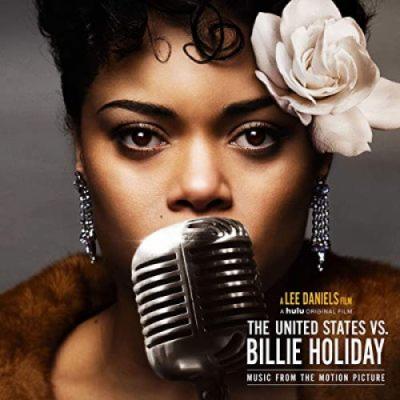
United States vs. Billie Holiday Album Cover

"United States vs. Billie Holiday" Soundtrack Lyrics

Movie • 2021

Track Listing


"The United States vs. Billie Holiday (Music from the Motion Picture / Original Motion Picture Score)" – Album Guide to Tracks and Key Scenes

Official trailer still: Andra Day as Billie Holiday under a spotlight with a big-band behind her
The United States vs. Billie Holiday — official trailer still, 2021

Overview

How do you film a protest song without reducing it to background mood? You put it on stage, kill the clinking glasses, and let the room hold its breath — then you never let go.

The United States vs. Billie Holiday frames the 1940s campaign to silence Holiday through the music itself. Two albums anchor the sound: Music from the Motion Picture — largely performed by Andra Day as Holiday — and Kris Bowers’ Original Motion Picture Score. Together they swing from speakeasy warmth to government chill. Day’s recordings (cut with Salaam Remi, Raphael Saadiq, and Warren “Oak” Felder) chase period fidelity while staying cinematic; Bowers threads tense, aching cues (“Lynching,” “Carnegie Hall”) between performances.

Genres & phases: classic jazz repertoire — resistance as melody; torch-song balladry — personal cost; orchestral-thriller textures — surveillance and state pressure; contemporary soul-pop original (“Tigress & Tweed”) — present-tense echo. The arc: a voice the state can’t quiet, scored like a courtroom and a club sharing one stage.

How It Was Made

Most vocals were tracked to feel live-on-set, chasing 1930s–50s mic color while giving editors clean stems. Producer Salaam Remi rebuilt arrangements with period instrumentation, while Raphael Saadiq and Oak Felder contributed originals and production touches. Music supervision was led by Lynn Fainchtein (with director Lee Daniels closely involved), aligning needle-drops, performance logistics, and licensing. Bowers came aboard late in post, writing a compact, tension-forward score that dovetails with stage numbers.

Trailer frame: smoky club interior with bandstands and patrons as a performance begins
Recreating Café Society and other rooms — authenticity with cinematic lift, 2021

Tracks & Scenes

“Strange Fruit” (Andra Day as Billie Holiday)

Where it plays:
Café Society. The club dims; waiters stop service. Holiday stares past the crowd and sings in near-silence. The sequence intercuts her witness to a lynching and then returns to the stage, the band holding still between phrases. Non-diegetic bleed gives way to fully diegetic performance; the moment stretches past a typical song cue to feel like a public reckoning.
Why it matters:
The film’s thesis — a protest sung as evidence. The staging makes the audience complicit and explains the federal fixation on silencing her.

“All of Me” (Andra Day)

Where it plays:
Multiple appearances early: bandstand warmth, brass punching through haze while agents clock faces from the back of the room. Diegetic club performance with brief cutaways to tailing and note-taking.
Why it matters:
Shows Holiday’s charisma and the mechanics of surveillance — joy up front, pressure in the shadows.

“Ain’t Nobody’s Business” (Andra Day)

Where it plays:
Tour montage and dressing-room beats. We catch a verse from the wings, then the camera tracks the corridor as the song continues out front. Mostly diegetic with hallway bleed.
Why it matters:
Lyrics double as credo — independence framed against handlers, lovers, and lawmen.

“Lover Man” (Andra Day)

Where it plays:
Late-night, small-room set. The camera stays near Holiday’s face and hands; murmurs from nearby tables fall away as strings tuck under the vocal. Diegetic performance with subtle score padding.
Why it matters:
Switches the film from political pressure to private ache — vulnerability that makes the later courtroom scenes sting harder.

“Lady Sings the Blues” (Andra Day)

Where it plays:
Later-career chapter. A public set after bad headlines; a weary but defiant delivery. Diegetic, with cutaways to skeptical officials and adoring fans in the same frame.
Why it matters:
Self-mythology in motion — the title as lived testimony, not branding.

“Them There Eyes” (Andra Day)

Where it plays:
Breezy mid-film interlude — wardrobe fittings, back-alley cigarettes, a carousel of club marquees. Non-diegetic montage that still feels like source on the edges.
Why it matters:
A shot of delight before the squeeze tightens — the film needs these pockets of swing to make the crackdown register.

“Gimme a Pigfoot and a Bottle of Beer” (Andra Day)

Where it plays:
Rowdier club sequence. Hot clarinet, stomping rhythm; the camera drifts table-level as the band locks in. Diegetic.
Why it matters:
Holiday’s comic bite and crowd control — she commands a room before she ever fights a case.

Original song: “Tigress & Tweed” (Andra Day & Raphael Saadiq)

Where it plays:
Modern coda / end-credits showcase and single. Studio-cut vocal over a head-nodding groove; plays as commentary on the film you just watched.
Why it matters:
Bridges eras — Holiday’s fight reframed for now, without diluting the period story.

Score cues by Kris Bowers — selected scene anchors

“Lynching”
Strings and low pulses undercut a harrowing discovery; the cue then haunts the return to the stage for “Strange Fruit.”
“Carnegie Hall”
Fanfare turned elegy — prestige venue energy that still feels precarious given the legal siege.
“Judge’s Ruling”
Staccato tension in the courtroom as the verdict lands — restrained, unsentimental.
Trailer frame: Holiday at the microphone; the club lights dim as the audience hushes for Strange Fruit
The “Strange Fruit” staging — silence as orchestration, 2021

Notes & Trivia

  • The soundtrack and the score were released a week apart — Warner Records for the songs, Lakeshore for Bowers’ score.
  • Recording sessions prioritized a live feel; many vocals were cut to mirror on-set performance dynamics.
  • Music supervision by Lynn Fainchtein kept period accuracy in arrangements and venue texture, from Café Society to Carnegie Hall.
  • The soundtrack won the Grammy for Best Compilation Soundtrack for Visual Media; Day’s “Tigress & Tweed” drew multiple award nominations.
  • Bowers joined late; earlier composers were attached during development before schedules shifted.

Reception & Quotes

Reviews split on structure but converged on the music. Critics praised Day’s voice-as-performance and the way staging makes policy feel personal.

“Passionate, if messy; Day’s performance sings even when the film sprawls.” Time
“A raw, absorbing center in a scattershot biopic.” Vanity Fair

Availability: Songs album out Feb 19, 2021; score followed Feb 26 to align with the film’s Hulu release. Physical CD and vinyl editions exist alongside streaming.

Trailer frame: Holiday on a grand stage, orchestra behind, as camera booms over a cheering audience
Prestige rooms, precarious times — the push and pull the music scores, 2021

Interesting Facts

  • Set-to-stage morphs: One sequence morphs a lynching tableau into a club stage, turning memory into music.
  • Period instruments: Arrangements chase 30s–50s color while using modern capture to reveal detail the original records can’t.
  • Producer bench: Salaam Remi, Raphael Saadiq, and Oak Felder give the album a cross-era sheen.
  • Score economy: Bowers’ album runs under 20 minutes — short cues that hit like pressure spikes.
  • Awards thread: The album later took home a Grammy; Day won the Golden Globe for her performance in the film.

Technical Info

  • Title: The United States vs. Billie Holiday — Music from the Motion Picture / Original Motion Picture Score
  • Year: 2021
  • Type: Film soundtrack & score
  • Composer: Kris Bowers (score)
  • Primary performer/artist: Andra Day (songs as Billie Holiday)
  • Producers (songs): Salaam Remi; Raphael Saadiq; Warren “Oak” Felder; Andra Day
  • Music supervision: Lynn Fainchtein (with director Lee Daniels involved on supervision)
  • Labels: Warner Records (songs); Lakeshore Records (score)
  • Release dates: Songs — Feb 19, 2021; Score — Feb 26, 2021
  • Selected notable placements: “Strange Fruit” — Café Society showpiece; “All of Me” — club surveillance beats; “Ain’t Nobody’s Business” — tour corridor & stage; “Lover Man” — late-night small-room set; “Lady Sings the Blues” — later-career set; “Tigress & Tweed” — end-credits single.
  • Release context: U.S. streaming premiere on Hulu — Feb 26, 2021.
  • Awards: Best Compilation Soundtrack for Visual Media (Grammy, 64th Awards).

Questions & Answers

Did Andra Day actually sing the songs?
Yes. Her vocals anchor the soundtrack; sessions aimed for a live, on-set feel.
Who composed the score?
Kris Bowers wrote the original score — concise, tension-driven cues that weave between performances.
Where does “Strange Fruit” appear?
As a centerpiece club performance staged in near-silence — the film’s moral and musical fulcrum.
Is “Tigress & Tweed” part of the story or just credits?
It functions as the film’s modern coda and end-credits single, written by Day with Raphael Saadiq.
Who released the albums?
Warner Records handled the songs album; Lakeshore Records released the score.

Key Contributors

SubjectRelationObject
Andra Dayperformed songs asBillie Holiday
Salaam Remiproduced tracks forMusic from the Motion Picture
Raphael Saadiqco-wrote/produced“Tigress & Tweed”
Warren “Oak” Felderproducedselect modern cues on the songs album
Kris BowerscomposedOriginal Motion Picture Score
Lynn Fainchteinmusic supervisedfeature film
Lee Danielsdirected / co-supervised music onfeature film
Warner RecordsreleasedMusic from the Motion Picture
Lakeshore RecordsreleasedOriginal Motion Picture Score

Sources: Wikipedia (film & soundtrack entries); Apple Music & Spotify album pages; Lakeshore Records release notes; Architectural Digest set feature; Time review; Vanity Fair review; GQ/Pitchfork coverage; official trailer.

November, 19th 2025


A-Z Lyrics Universe

Lyrics / song texts are property and copyright of their owners and provided for educational purposes only.