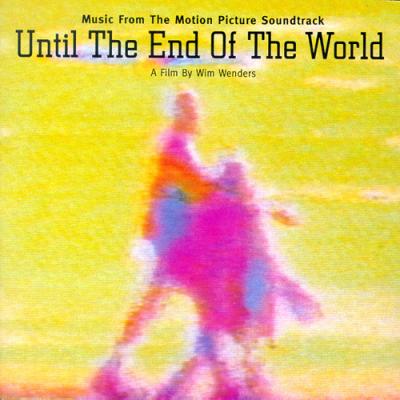
"Until the End of the World" Soundtrack Lyrics
Movie • 1991
Track Listing
Graeme Revell
Talking Heads
Julee Cruise
Neneh Cherry
Crime and the City Solution
Lou Reed
CAN
REM
Elvis Costello
Graeme Revell
Nick Cave and the Bad Seeds
Patti Smith and Fred Smith
Depeche Mode
Graeme Revell
Jane Siberry with k.d.lang
T-Bone Burnett
Daniel Lanois
U2
Graeme Revell
"Until the End of the World (Music From the Motion Picture / Original Score)" – Album Guide to Tracks and Key Scenes
Overview
What does the future sound like when you ask 1990’s biggest artists to imagine 1999? Wim Wenders tried it — and the result is a road movie scored like a mixtape from tomorrow.
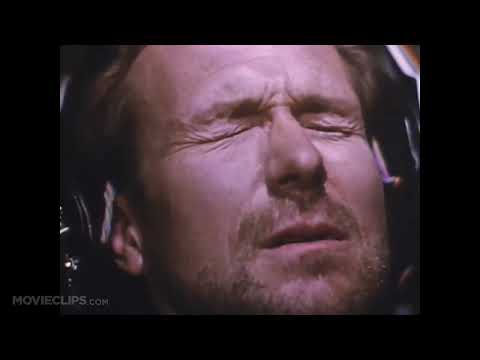
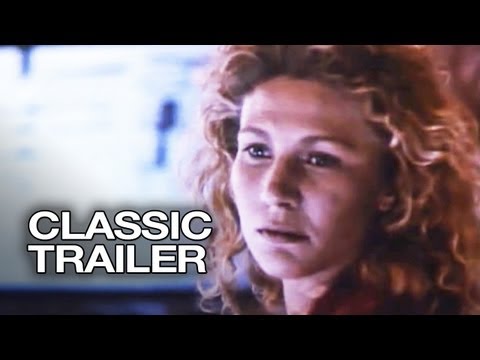
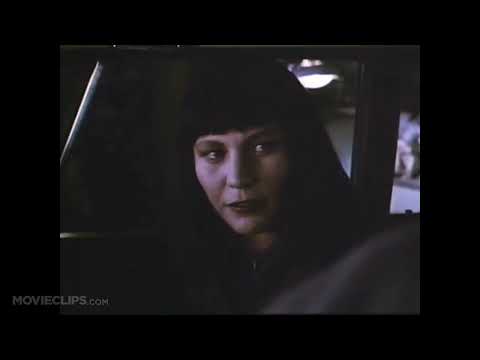
Until the End of the World follows Claire Tourneur’s chase across continents after a mysterious traveler, while a dream-recording device pulls everyone toward the Australian outback. The soundtrack is stacked with originals made for this film — Talking Heads, R.E.M., Depeche Mode, Lou Reed, Nick Cave & the Bad Seeds, Jane Siberry with k.d. lang, Can — interleaved with Graeme Revell’s spare, cello-led score. It’s half diary of late-80s/early-90s alternative music, half sci-fi moodboard; songs tint each city and border crossing, while Revell’s motifs (often voiced by David Darling’s solo cello) glue the miles together.
Genres & phases: art-pop and alt-rock — transit, new identities; dub/EBM shadings — surveillance, drift; chamber-score minimalism — yearning and distance; hymn-like art-songs — spiritual waypoints; anthemic rock (U2) — collision of romance and apocalypse. The cumulative arc: a love story and a world on edge, humming with radios from everywhere.
How It Was Made
Wenders commissioned brand-new songs and set a brief: write what you’ll be making ten years from now. Almost every track was composed specifically for the film; the main exception is U2’s “Until the End of the World,” whose film version comes from Achtung Baby, while the album carries a slightly different cut. Producer/label partners compiled the 19-track album for Warner Bros., while the film’s original score is by Graeme Revell, with much of its character coming from David Darling’s lyrical solo-cello performances. Music supervision on the film is credited to Sharon Boyle, who helped mesh the globe-trotting narrative with an equally borderless playlist.
Tracks & Scenes
“Sax and Violins” (Talking Heads)
- Where it plays:
- Early in the film, introducing Claire and the near-future (1999) world she moves through. The camera drifts past signage and glass as the lyric’s jittery cool sketches a society between analog and digital. Non-diegetic.
- Why it matters:
- A final Talking Heads postcard — witty, uneasy — that sets the film’s tone: cosmopolitan, slightly alien.
“Fretless” (R.E.M.)
- Where it plays:
- Travel montage on the road — highways and train windows, late-night interiors, jet-lagged stares. The vocal feels like an inner monologue over forward motion. Non-diegetic.
- Why it matters:
- Turns transit into emotion; the song’s heavy drift mirrors Claire’s pursuit and doubt.
“Death’s Door” (Depeche Mode)
- Where it plays:
- Late-film passage of quiet surveillance and separation — corridors, hotel rooms, a sense of someone always just out of frame. Non-diegetic, minimal arrangement.
- Why it matters:
- Whispered fatalism — the soundtrack’s most intimate hush, foreshadowing the dream machine’s psychic toll.
“What’s Good” (Lou Reed)
- Where it plays:
- Urban way-station sequence — a reset between legs of the chase, neon signage giving way to bleary morning. Non-diegetic.
- Why it matters:
- Reed’s wry inventory of life’s leftovers tracks the film’s pre-millennial melancholy.
“(I’ll Love You) Till the End of the World” (Nick Cave & the Bad Seeds)
- Where it plays:
- Bars and borderlands — a story-song that feels like a folk tale overheard on the road. It surfaces as the chase turns mythic. Non-diegetic.
- Why it matters:
- A toast for doomed romantics; the chorus answers the movie’s title with unruly devotion.
“Calling All Angels” (Jane Siberry with k.d. lang)
- Where it plays:
- A reflective waypoint later in the journey — voices like a benediction over fragile images and desert light. Non-diegetic.
- Why it matters:
- Spiritual pause button; it reframes the pursuit as pilgrimage.
“Until the End of the World” (U2)
- Where it plays:
- Used in the film in the Achtung Baby album version; the soundtrack album includes an alternate cut. Deployed during a surge of momentum near a narrative hinge. Non-diegetic.
- Why it matters:
- Anthemic gravity — a love/fallout dialogue that mirrors the film’s romance under threat.
“Last Night Sleep” (Can)
- Where it plays:
- Night-drive interlude with a motorik undertow; dashboard lights, empty lanes, the world humming. Non-diegetic.
- Why it matters:
- Road-movie hypnosis — the krautrock pulse makes distance feel endless.
“Summer Kisses, Winter Tears” (Julee Cruise)
- Where it plays:
- Candle-lit stopover; a cover that floats like vapor in a small room. Non-diegetic, dream-adjacent.
- Why it matters:
- Old song, new haunt — nostalgia as a ghost in a near-future world.
Score moments by Graeme Revell
- “Opening Titles” & “Claire’s Theme” (solo cello: David Darling)
- Bookend and motif — plaintive, human-scale lines amid satellites and systems.
- “Love Theme”
- Brief, breathing cue that tethers the chase to feeling; appears between harder-edged song placements.

Notes & Trivia
- Wenders asked artists to imagine the music they would make a decade later; most delivered brand-new, film-first songs.
- Talking Heads’ “Sax and Violins” became the band’s swan song; Can reconvened to cut “Last Night Sleep.”
- U2’s song appears in the movie as the Achtung Baby version; the album contains a different mix/edit.
- Revell’s score leans on David Darling’s solo cello — a warm counterpoint to the film’s tech and travel.
- Traditional/field recordings (Aka Pygmy and Indigenous Australian music) appear in the film outside the main album.
Reception & Quotes
The movie’s truncated theatrical cut split critics, but the soundtrack earned long-tail acclaim and a mini-legend of its own — revived alongside the later director’s-cut release.
“Wenders asked for songs from the future; what he got was an alternate history of 1990s pop — haunted, gorgeous, unmoored.” Pitchfork
“Many more people owned the album than saw the movie — at first.” Criterion essay
Interesting Facts
- Future brief: The “write for 1999” prompt gives the album a unified, speculative mood.
- Two U2s: Film and album use different U2 versions — a rare same-title, dual-cut situation.
- Band farewells: Talking Heads’ track stands as the group’s last single; Can briefly reunited to contribute.
- Mixtape geography: Many songs function as city stamps — Paris to Berlin to Tokyo to Sydney.
- Director’s-cut glow-up: The 287-minute restoration reignited interest in how the music threads the longer structure.
Technical Info
- Title: Until the End of the World — Music From the Motion Picture / Original Score
- Year: 1991
- Type: Film soundtrack & score
- Composer: Graeme Revell (score); featured solo cello by David Darling
- Music supervision: Sharon Boyle (film)
- Label: Warner Bros. Records (original soundtrack album)
- Soundtrack release: December 10, 1991 (CD/digital; 19 tracks)
- Selected notable placements: Talking Heads — “Sax and Violins” (Claire/world intro); R.E.M. — “Fretless” (on-the-road montage); Depeche Mode — “Death’s Door” (quiet late-film interlude); Jane Siberry with k.d. lang — “Calling All Angels” (reflective waypoint); U2 — “Until the End of the World” (album vs. film version note); Nick Cave & the Bad Seeds — title-answering ballad.
- Release context: Film premiered/released in 1991 in multiple cuts; later 287-min director’s cut restored (Criterion, 2019).
- Availability: Album streams widely; periodic vinyl reissues; film in multiple cuts on disc/streaming.
Questions & Answers
- Were the songs really written just for this movie?
- Yes — almost all were commissioned; U2’s song existed on Achtung Baby but the soundtrack uses a different cut.
- Who composed the film’s original score?
- Graeme Revell, with key color from David Darling’s solo cello.
- Which track introduces the film’s near-future vibe?
- Talking Heads’ “Sax and Violins” underscores our early sense of Claire and this 1999 world.
- Is “Calling All Angels” in the movie or just on the album?
- It’s on the album and used in the film as a reflective waypoint later in the journey.
- Does the director’s cut change how the music plays?
- The longer cut breathes more — songs and score recur and recontextualize scenes across the extended structure.
Key Contributors
| Subject | Relation | Object |
|---|---|---|
| Wim Wenders | directed | Until the End of the World (1991) |
| Graeme Revell | composed score for | Until the End of the World |
| David Darling | performed | solo cello on score cues |
| Sharon Boyle | music supervised | feature film |
| Warner Bros. Records | released | Music From the Motion Picture album |
| Talking Heads; R.E.M.; Depeche Mode; Lou Reed; Nick Cave & the Bad Seeds; Jane Siberry with k.d. lang; Can | contributed | original songs for film/album |
| Robby Müller | shot | cinematography |
Sources: Wikipedia (film & soundtrack); Apple Music / Spotify album pages; Criterion essays; IMDB credits (music supervision); Pitchfork review; Discogs catalog entries; U2Songs/U2Wanderer notes; official trailer.
November, 19th 2025
A-Z Lyrics Universe
Cynthia Erivo Popular
Ariana Grande Horsepower
Post Malone Ain't No Love in Oklahoma
Luke Combs Good Riddance (Time of Your Life)
Green Day Bye Bye Bye
*NSYNC You're the One That I Wan
John Travolta & Olivia Newton-John I Always Wanted a Brother
Braelyn Rankins, Theo Somolu, Kelvin Harrison Jr. and Aaron Pierre The Power of Love
Frankie Goes to Hollywood Beyond
Auli’i Cravalho feat. Rachel House MORE ›