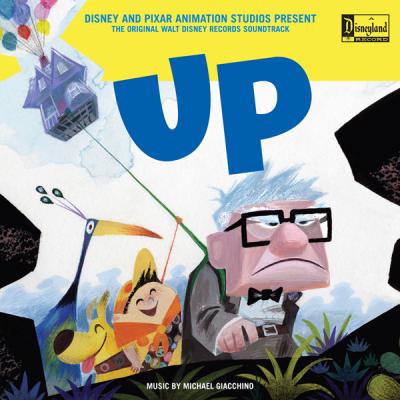
"Up" Soundtrack Lyrics
Cartoon • 2009
Track Listing
Michael Giacchino
Michael Giacchino
Michael Giacchino
Michael Giacchino
Michael Giacchino
Michael Giacchino
Michael Giacchino
Michael Giacchino
Michael Giacchino
Michael Giacchino
Michael Giacchino
Michael Giacchino
Michael Giacchino
Michael Giacchino
Michael Giacchino
Michael Giacchino
Michael Giacchino
Michael Giacchino
Michael Giacchino
Michael Giacchino
Michael Giacchino
Michael Giacchino
Michael Giacchino
Skywalker Sound
Skywalker Sound
Skywalker Sound
"Up (Original Motion Picture Soundtrack)" – Album Guide to Tracks and Key Scenes
Overview
What if the most devastating love story in modern cinema had almost no words — only a waltz? Michael Giacchino’s score for Up turns a simple three-beat melody into a life lived: play, promise, loss, and, yes, lift.
The film follows widower Carl Fredricksen whose house sails to South America via balloons, with an eager Scout stowaway in tow. The music does the heavy lifting: a nostalgic, music-box-like waltz (“Married Life”) that keeps changing clothes — jaunty when love blooms, fragile when grief arrives, brassy when adventure calls. Woodwinds sketch whimsy; muted brass suggests stubbornness; piano pares everything back to memory. Distinct? The score never lets theme become wallpaper — it shape-shifts scene by scene into new harmonies, tempos, and orchestrations while staying unmistakably “Ellie & Carl.”
Genres & themes in phases: parlour-waltz nostalgia — memory and vows; comic adventure brass — Carl’s gruff momentum; string elegy — grief and letting go; quasi-tango/habanera touches — ritual, daily routine, a wink of classicism; and finally full-orchestra catharsis — found family and flight.
How It Was Made
Composer Michael Giacchino approached the score as character writing: one theme that could be bent without breaking. Director Pete Docter and producer Jonas Rivera asked for something that felt like a cherished music box for the marriage montage; the team built the film’s emotional language around that early cue. Live players — strings, winds, brass, percussion — were recorded with a warm, close sound to preserve intimacy even in set-piece action.
Supervision & needle-drops are sparse by design (this is mostly score), though a few classical staples surface briefly in-story. Editorially, cues were re-spotted to make jokes land on a cymbal splash or a bassoon grunt, while “Married Life” was revised to track picture beats without losing its singable simplicity.
Tracks & Scenes
“Up With Titles” (Michael Giacchino)
- Where it plays:
- Opening logo/title card with perky woodwinds and snare; it tees up the film’s playful side right before the emotional prologue. Early minutes, non-diegetic.
- Why it matters:
- Introduces the world with bounce and brevity — a curtain-raiser that points to adventure before we plunge into memory.
“Married Life” (Michael Giacchino)
- Where it plays:
- The wordless life-montage of Carl & Ellie: fixing the house, saving coins for Paradise Falls, the doctor’s office, picnics, and Ellie's illness — the music shifts tempos and instrumentation to mirror their seasons. Early reel, ~five minutes long, non-diegetic (emotionally internal).
- Why it matters:
- This is the film’s heart. A three-beat melody grows from carefree to heartbroken to resilient, anchoring every later variation in the movie.
“Carl Goes Up” (Michael Giacchino)
- Where it plays:
- When Carl releases the balloons and the house rips free of the city, the orchestra blossoms as furniture skates across floors and the neighborhood shrinks below. First act turning point, non-diegetic.
- Why it matters:
- Transforms grief into motion; the theme lifts to the high register, trading ache for literal altitude.
“Paradise Found” (Michael Giacchino)
- Where it plays:
- Clouds part; Carl and Russell sight Paradise Falls for the first time. Strings glow, harmonic rhythm slows, woodwinds sparkle. Mid-film, non-diegetic.
- Why it matters:
- Suspends time to honor a promise — Ellie’s dream now visible, not yet grasped.
“Kevin Beak Performance” / comic scherzos (Michael Giacchino)
- Where it plays:
- Introduces Kevin’s gawky grace in the tepui jungle; bassoons and pizzicato strings “squawk” as Russell offers chocolate and chaos follows. Non-diegetic, quick montage-style inserts.
- Why it matters:
- Motivic gag-writing — the theme can be silly without losing identity; character bonding via timbre jokes.
“Muntz’s Dark Reverie” (Michael Giacchino)
- Where it plays:
- On the airship, Muntz recounts his obsession. Low strings and uneasy harmonies shade Carl’s hero worship into dread. Mid-to-late second act, non-diegetic.
- Why it matters:
- Turns the waltz inward; harmony curdles to warn us that certainty can become cruelty.
“It’s Just a House” (Michael Giacchino)
- Where it plays:
- As Carl sheds his possessions to rescue Russell and Kevin, the theme returns pared to piano and soft strings, then swells as he lets go. Late second act, non-diegetic.
- Why it matters:
- Resolves the score’s thesis: love isn’t the things you keep — it’s the people you choose.
“The Spirit of Adventure” / airship action suite (Michael Giacchino)
- Where it plays:
- Final battle aboard the dirigible: propeller rhythms, brass fanfares, slapstick hits for Dug and the dog-pack. Late reel climax, non-diegetic with comic-mickey-mousing accents.
- Why it matters:
- Classic adventure scoring but still ruled by the waltz — heroism born from tenderness.
“Stuff We Did” (Michael Giacchino)
- Where it plays:
- Carl opens Ellie’s scrapbook and discovers the “Thanks for the adventure — now go have a new one!” page. Intimate piano with strings, non-diegetic, late second act into finale.
- Why it matters:
- Ellie’s theme, unadorned — acceptance and permission in a few aching bars.
“The Ellie Badge” (Michael Giacchino)
- Where it plays:
- Epilogue at the ice-cream shop and badge ceremony — the theme closes in gentle triumph. End credits lead-in, non-diegetic.
- Why it matters:
- Reframed family: the theme returns not as memory, but as a future.
“Habanera” (from Bizet’s Carmen) — brief classical needle-drop
- Where it plays:
- Heard briefly as part of Carl’s morning routine sequence — a tongue-in-cheek cultural touchstone woven into the score/arrangement. Short, source-music feel.
- Why it matters:
- A witty nod to ritual and romance, contrasting the film’s personal waltz with opera’s idea of love.
“Wedding March” (Felix Mendelssohn) — brief classical needle-drop
- Where it plays:
- Alluded to in the wedding imagery of the prologue as a traditional cue reference (very short). Source-style, ceremonially framed.
- Why it matters:
- Signals fairy-tale beginnings before the score writes its own, more human vows.
Notes & Trivia
- The “Married Life” cue was written early and became the blueprint for all later variations.
- Live players were prioritized to keep breath and bow-noise in the recording — intimacy over gloss.
- The soundtrack’s initial release was digital-only; a later pressing finally put it on CD for collectors.
- Two classical staples — a snippet of “Habanera” and the Mendelssohn “Wedding March” — appear briefly in-story.
- Listen for bassoon and muted brass as a comic “grump” signature for Carl in early reels.
Reception & Quotes
Critics singled out the score as a rare case of a theme doing narrative heavy lifting — and awards followed, from Oscars to Grammys.
“Warm, nostalgic, and emotionally resonant — the music lingers long after the credits.” Vanity Fair
“A wonderfully entertaining and enjoyable score… lighter, thematic, and confident.” Movie Music UK
“The opening montage’s music is the film’s emotional anchor.” Academic/press coverage of the “Married Life” sequence
“Giacchino’s live players give the waltz human breath — not just notes.” Composer interviews and profiles
Availability: Streaming on major services; digital album widely available; CD reissue via Intrada for collectors. Regional availability may vary.
Interesting Facts
- Waltz DNA: The main theme stays in 3/4 even during action — you can tap “one-two-three” through the chaos.
- Comic mickey-mousing: Percussion hits time dog-gags with silent-era precision.
- Harmony tells truth: When Carl clings to the past, chords tighten; when he lets go, voicings open.
- Airship engine rhythm: Low strings imitate propeller pulses during the finale.
- End-credits therapy: “The Ellie Badge” resolves the theme on a quietly brighter chord than its first statement.
Technical Info
- Title: Up (Original Motion Picture Soundtrack)
- Year: 2009 (film release); album released May 26, 2009; later CD reissue 2011
- Type: Film score
- Composers: Michael Giacchino
- Music supervision: Studio team with minimal needle-drops (classical inserts)
- Selected notable placements: “Married Life” (life montage); “Carl Goes Up” (balloon lift-off); “Stuff We Did” (scrapbook epiphany); “The Ellie Badge” (epilogue)
- Release context: Premiered at Cannes; wide release followed
- Label/album status: Walt Disney Records (digital); Intrada Records (later CD)
- Awards: Academy Award (Best Original Score); Grammy recognition for “Married Life”
- Trailer cues: Theatrical trailers leaned on Giacchino’s main waltz and slapstick brass stingers
Questions & Answers
- Why does the score feel like a music box?
- The director wanted the marriage to sound intimate and handmade; Giacchino built the main theme as a delicate, wind-up waltz.
- Is “Married Life” the same melody everywhere?
- Yes — reharmonized, re-orchestrated, sped up/slowed down to match story beats. Same DNA, different outfits.
- Are there any famous non-score pieces in the film?
- A brief taste of Bizet’s “Habanera” and a ceremonial nod to Mendelssohn’s “Wedding March” appear in-story.
- What track plays when the house lifts off?
- “Carl Goes Up” — the theme opens into soaring strings and triumphant brass as the city drops away.
- Where can I hear the closing cue?
- Look for “The Ellie Badge” on the album; it’s the epilogue’s gentle, affirming send-off.
Key Contributors
| Entity | Relation |
|---|---|
| Michael Giacchino | Composer — wrote & produced the film score |
| Pete Docter | Director — requested “music-box” feel for the marriage montage |
| Jonas Rivera | Producer — shepherded score and album release |
| Walt Disney Records | Label — issued the digital album |
| Intrada Records | Label — later CD release for collectors |
| “Habanera” — Georges Bizet | Classical source — brief needle-drop reference in film |
| “Wedding March” — Felix Mendelssohn | Classical source — traditional ceremonial reference in prologue |
| Up (2009) | Primary work — feature film whose score this album presents |
Sources: IMDb; Apple Music; Spotify; Wikipedia; Disney/Pixar pages; Vanity Fair; Movie Music UK; academic/press pieces on the “Married Life” sequence; Opera articles on “Habanera”.
November, 19th 2025
Read about 'Up', the 2009 American 3D computer-animated comedy-drama adventure film on Internet Movie Database and WikipediaA-Z Lyrics Universe
Cynthia Erivo Popular
Ariana Grande Horsepower
Post Malone Ain't No Love in Oklahoma
Luke Combs Good Riddance (Time of Your Life)
Green Day Bye Bye Bye
*NSYNC You're the One That I Wan
John Travolta & Olivia Newton-John I Always Wanted a Brother
Braelyn Rankins, Theo Somolu, Kelvin Harrison Jr. and Aaron Pierre The Power of Love
Frankie Goes to Hollywood Beyond
Auli’i Cravalho feat. Rachel House MORE ›