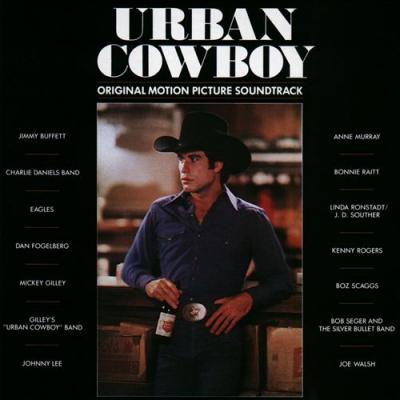
"Urban Cowboy" Soundtrack Lyrics
Movie • 1995
Track Listing
Jimmy Buffett
Joe Walsh
Dan Fogelberg
Bob Seger And The Siver Bullet Band
Mickey Gilley
Johnny Lee
Anne Murray
The Eagles
Johnny Lee
Bonnie Raitt
The Charlie Daniels Band
Mickey Gilley
Gilley's 'Urban Cowboy' Band
Kenny Rogers
The Charlie Daniels Band
Bonnie Raitt
Boz Scaggs
Linda Ronstadt/J.D Souther
"Urban Cowboy (Original Motion Picture Soundtrack)" – Album Guide to Tracks and Key Scenes
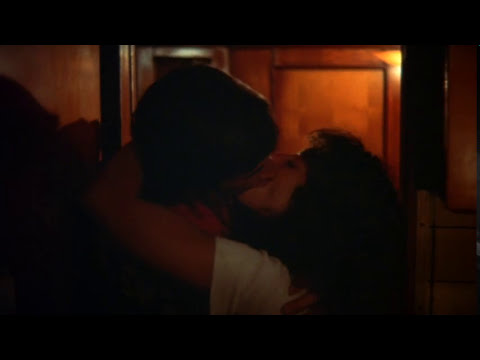
Overview
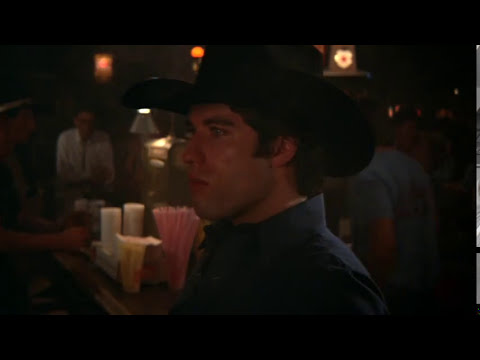
How do you bottle a cultural pivot? Urban Cowboy did it with a jukebox: neon-lit two-steps, slow dances, and pop-polished country cuts that moved from the beer-soaked floor to the pop charts. The film (John Travolta, Debra Winger) turns Gilley’s in Pasadena, Texas into a musical protagonist — the soundtrack follows suit, marrying bar-band grit to radio sheen.
The album’s muscle is its songbook: Johnny Lee’s “Lookin’ for Love,” Anne Murray’s “Could I Have This Dance,” Kenny Rogers’ “Love the World Away,” Boz Scaggs’ “Look What You’ve Done to Me,” Mickey Gilley’s “Stand by Me,” and more — a set that charted big and helped ignite the so-called “Urban Cowboy” movement of early-’80s country-pop. Originally a 1980 double-LP, it was later issued on CD in 1995, bringing the Gilley’s glow to the digital era.
Genres & themes in phases: honky-tonk two-step — courtship and bravado; soft-rock balladry — intimacy and regret; roadhouse fiddle/banjo — competition and sweat; crooner country — vows and second chances. The songs don’t just score scenes — they are the scenes.
How It Was Made
Produced for Full Moon/Asylum with executive oversight from Irving Azoff, the soundtrack assembled Nashville stalwarts (Rogers, Anne Murray, Johnny Lee) alongside rock/pop names (Boz Scaggs, Eagles, Joe Walsh, Bob Seger). Much of it was captured or curated to feel like Gilley’s house band had a direct line to FM radio — Mickey Gilley’s own performances stitch the film’s world to the LP. The studio leaned in: multiple singles were serviced to country, pop, and AC formats, turning the album into a multi-chart story.
Releases: double-LP and cassette (1980), then a widely distributed CD program (1995) that revived catalog interest and made the mix a ’90s CD-bin staple for country-pop converts.
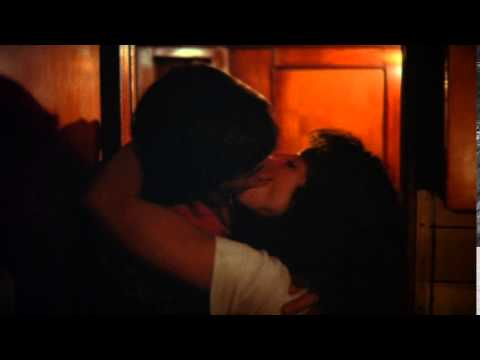
Tracks & Scenes
Key placements below (title–moment). Minute marks vary by cut; diegetic (in-world) vs. non-diegetic noted.
“Lookin’ for Love” (Johnny Lee)
- Where it plays:
- Recurring at Gilley’s and over the film’s closing stretch/credits — Bud and Sissy’s hard-won reconciliation gliding into night traffic. Largely diegetic in the club; non-diegetic for the finale roll.
- Why it matters:
- The movie’s calling card: a barroom confession that became a national chorus and the story’s emotional exit sign.
“Could I Have This Dance” (Anne Murray)
- Where it plays:
- Wedding at Gilley’s — slow-dance vows amid friends, neon, and sawdust. Diegetic performance/needle-drop within the reception scene.
- Why it matters:
- Vows in 3/4: tenderness and tradition that the movie will test — and, ultimately, re-choose.
“Stand by Me” (Mickey Gilley)
- Where it plays:
- On Gilley’s stage and on the floor — a house-anthem slow dance threading early romance. Diegetic with crowd ambience.
- Why it matters:
- Club identity in one song: community, swagger, and a promise that proves hard to keep.
“Look What You’ve Done to Me” (Boz Scaggs)
- Where it plays:
- Love-scene interlude and reflective montages — soft focus and second thoughts. Non-diegetic.
- Why it matters:
- Soft-rock ache that lets the film exhale between bull rides and bar fights.
“Love the World Away” (Kenny Rogers)
- Where it plays:
- Late-reel reconciliation energy and quiet travel beats; a radio-ready balm after the storm. Non-diegetic.
- Why it matters:
- A grown-up lullaby — gentler than Bud’s pride, kinder than the bar’s noise.
“Cherokee Fiddle” (Johnny Lee)
- Where it plays:
- Honky-tonk floor time — couples cut patterns while Bud and Sissy circle each other. Mostly diegetic.
- Why it matters:
- Fiddle as fuel — movement, sweat, and the movie’s love of the two-step.
“The Devil Went Down to Georgia” (The Charlie Daniels Band)
- Where it plays:
- Barroom fireworks and competitive energy around bull-riding nights. Diegetic/high-octane needle-drop.
- Why it matters:
- Virtuosity and swagger — the film’s competitive streak in fiddle form.
“Don’t It Make Ya Wanna Dance” (Bonnie Raitt)
- Where it plays:
- Girls’-night loosen-up and lighter montage beats at Gilley’s. Diegetic feel.
- Why it matters:
- Raitt’s roadhouse joy gives the film air and grin between arguments.
“Orange Blossom Special/Hoedown” (Gilley’s “Urban Cowboy” Band)
- Where it plays:
- House-band fireworks, crowd whoops, the room at full tilt. Diegetic.
- Why it matters:
- Authenticity check — this is a working bar, not just a set.
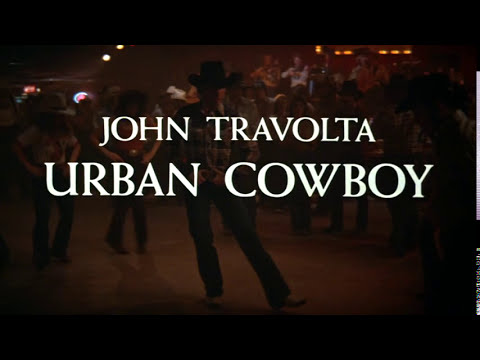
Notes & Trivia
- The album topped the U.S. Country Albums chart and hit No. 3 on the Billboard 200 — unusually high for a country-leaning soundtrack.
- Multiple singles from the LP made Country and Pop/AC charts; “Lookin’ for Love” and “Stand by Me” both reached No. 1 country.
- RIAA certified the soundtrack triple-platinum decades later, underscoring its long tail.
- The 1995 compact-disc issue re-introduced the double-LP program to a new generation of listeners.
- Gilley’s — the real Pasadena, TX honky-tonk — functioned as both set and sonic muse; its club identity shapes the album.
Reception & Quotes
Contemporary and retrospective coverage credits the album with pushing country further into mainstream pop spaces at the dawn of the ’80s.
“A blockbuster country soundtrack that crossed formats and rewired radio for a season.” Billboard anniversary look-back
“The Gilley’s jukebox that ate America — and still tastes like neon and sawdust.” Paste ‘Time Capsule’ essay
Availability: Widely streaming. Original 1980 double-LP/cassette; a common 1995 CD reissue for catalog buyers.
Interesting Facts
- Pop-country spark: The film is frequently cited as a catalyst for the early-’80s country-pop “Urban Cowboy” boom.
- Cross-format blitz: Singles were worked simultaneously to Country, AC, and Pop — rare for a honky-tonk-rooted set.
- House pride: Mickey Gilley’s own stage performances blur the line between soundtrack and location sound.
- Soft-rock synergy: David Foster co-crafted Boz Scaggs’ ballad — prime 1980 soft-rock DNA inside a country film.
- End-credits glow: “Lookin’ for Love” carries the reconciled couple into the credits, sealing the film’s thesis.
Technical Info
- Title: Urban Cowboy — Original Motion Picture Soundtrack
- Year: 1980 (original release); 1995 CD reissue
- Type: Song-driven soundtrack (country, soft rock) — minimal score
- Labels: Full Moon / Asylum (original); reissued on CD in mid-’90s
- Executive producer: Irving Azoff
- Selected notable placements: “Lookin’ for Love” (Gilley’s & end credits); “Could I Have This Dance” (wedding at Gilley’s); “Stand by Me” (slow-dance floor); “Look What You’ve Done to Me” (love-scene/reflective montage); “Love the World Away” (late-reel resolve)
- Chart notes: US Billboard 200 peak No. 3; US Top Country Albums No. 1; RIAA 3× Platinum (2018)
- Legacy: A touchstone of the “Urban Cowboy” movement; a frequent reference in country-pop histories
Questions & Answers
- Why do so many songs play in the bar?
- Because Gilley’s is the setting and the scene partner — the movie treats the bandstand as narrative engine, so many cues are diegetic.
- What song plays at Bud & Sissy’s wedding?
- Anne Murray’s “Could I Have This Dance,” used as a slow-dance vow on the Gilley’s floor.
- Which track closes the film?
- Johnny Lee’s “Lookin’ for Love” accompanies their reconciliation and rides into the credits.
- Was there a separate score album?
- No — the film is songs-first; incidental score is minimal and never issued as a standalone release.
- Why is 1995 important for this soundtrack?
- That’s when the program was reissued on CD, bringing the 1980 double-LP to the compact-disc market.
Key Contributors
| Entity | Relation |
|---|---|
| James Bridges | Director — built a story where the bar’s music drives character beats |
| Irving Azoff | Executive Producer (Soundtrack) — assembled cross-format lineup |
| Mickey Gilley | Performer/Club owner — on-stage songs; Gilley’s served as key location |
| Johnny Lee | Artist — “Lookin’ for Love,” major chart single |
| Anne Murray | Artist — “Could I Have This Dance,” wedding cue |
| Kenny Rogers | Artist — “Love the World Away,” late-reel ballad |
| Boz Scaggs | Artist — “Look What You’ve Done to Me,” soft-rock centerpiece |
| Full Moon / Asylum Records | Labels — released original soundtrack; CD reissue followed in 1995 |
| Urban Cowboy (1980) | Primary work — feature film whose soundtrack is profiled here |
Sources: Wikipedia (film & soundtrack); Billboard feature; Paste Magazine ‘Time Capsule’; IMDb Soundtracks; RIAA database notes; Discogs (1995 CD); Amazon/retail listings; streaming album pages; film trailer.
November, 19th 2025
A-Z Lyrics Universe
Cynthia Erivo Popular
Ariana Grande Horsepower
Post Malone Ain't No Love in Oklahoma
Luke Combs Good Riddance (Time of Your Life)
Green Day Bye Bye Bye
*NSYNC You're the One That I Wan
John Travolta & Olivia Newton-John I Always Wanted a Brother
Braelyn Rankins, Theo Somolu, Kelvin Harrison Jr. and Aaron Pierre The Power of Love
Frankie Goes to Hollywood Beyond
Auli’i Cravalho feat. Rachel House MORE ›