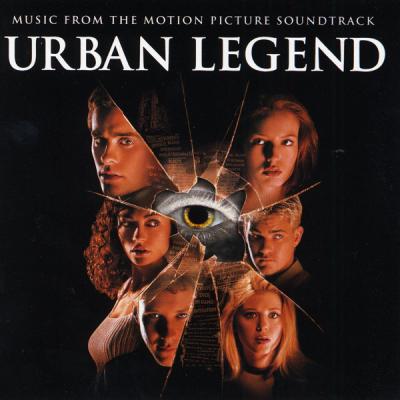
"Urban Legend" Soundtrack Lyrics
Movie • 1998
Track Listing
Annette Ducharme
Ruth Ruth
Junkster
Juliana Hatfield
Ohio Players
Christopher Young
Christopher Young
Bonnie Tyler
Rob Zombie
Stabbing Westward
Paula Cole
David Ivy
Monster Magnet
Cherry Poppin' Daddies
Crystal Method
"Urban Legend (Music From the Motion Picture Soundtrack)" – Album Guide to Tracks and Key Scenes
Overview
What’s scarier: a masked killer or a pop song you can’t tune out as the blade rises? Urban Legend turns folklore into set-pieces and lets music do the winking — from a rain-soaked “Total Eclipse of the Heart” needle-drop to campus-party swing and pulse-pounding industrial rock. The official songs album (Milan) sits alongside Christopher Young’s glinting orchestral score; together they bottle the late-90s slasher mood — irony, adrenaline, and a little cruelty.
The story follows Natalie (Alicia Witt) as classmates die in ways ripped from campus lore. Musically, two strands braid tight: radio-ready cuts (Stabbing Westward, Ohio Players, Rob Zombie, Cherry Poppin’ Daddies, The Crystal Method) and Young’s nervy, motif-driven cues (“Urban Legend,” “Sexual Ax,” “Twilight Mercy”). Distinctiveness? The film weaponizes familiarity. A beloved soft-rock ballad becomes a jump-scare prelude; party bangers get sinister when you notice who’s missing from the dance floor.
Genres & themes in phases: alt-rock/industrial — anxiety and acceleration; retro funk/disco — party bravado and misdirection; big-chorus pop — innocence curdled; orchestral suspense — the urban legend “logic” tightening.
How It Was Made
Composer Christopher Young built a sleek, motif-led score full of string slashes, low brass churn, and glassy textures, recorded to cut through needle-drops without smothering dialogue. Music supervision (led on the production by Elliot Lurie) pulled in era-defining tracks and crate-dig fun (vintage Ohio Players; campus-party swing) to paint dorms, frat basements, and late-night car rides with recognizable color.
Two albums shipped: a songs compilation on Milan (with a couple of Young cues) and a separate original score release collecting the orchestral set-pieces. That split mirrors the movie’s grammar — source songs for social spaces, score for the stalk-and-slash grammar between them.
Tracks & Scenes
Below, notable placements (diegetic = heard by characters; non-diegetic = score/overlay). Exact minute-marks can vary by edition, but the scene beats are consistent across releases.
“Total Eclipse of the Heart” (Bonnie Tyler)
- Where it plays:
- Opening storm sequence — Michelle drives into a lonely gas station as the power ballad swells; the jittery attendant tries to warn her about the backseat. Car peel-out, shock, and steel. Diegetic (car radio).
- Why it matters:
- A pop anthem turned omen; the sweetest chorus becomes a throat-tightener. It’s the film’s mission statement: familiar things can kill you.
“Save Yourself” (Stabbing Westward)
- Where it plays:
- Late-reel/credits usage — the industrial grind fades in as the campus carnage resolves and names roll. Non-diegetic.
- Why it matters:
- Grim, punchy epilogue energy; a 1998 alt-radio staple that pins the era to the exit doors.
“Love Rollercoaster” (Ohio Players)
- Where it plays:
- Frat-party stretch at Pendleton — sweat, laughter, and a killer moving unseen through the crowd. Diegetic on speakers.
- Why it matters:
- Irony dialed up: a funk classic about thrills rides a slasher’s rising body-count.
“Zoot Suit Riot” (Cherry Poppin’ Daddies)
- Where it plays:
- Party montage/swing-dance moment; big-band horns cut across beer and neon as friends spin and pose. Diegetic.
- Why it matters:
- ’90s swing revival = carefree surface. Underneath: dread — the killer has rhythm too.
“Comin’ Back” (The Crystal Method)
- Where it plays:
- Night drive/investigation montage — sodium lights smear by while suspicion closes in. Non-diegetic bed under quick cuts.
- Why it matters:
- Electronic throb as engine note; it turns transit into chase.
“Spookshow Baby” (Rob Zombie)
- Where it plays:
- Frat-house chaos and dorm-corridor life; a lurid riff that announces trouble before anyone sees the knife. Diegetic.
- Why it matters:
- Campy menace to match the killer’s theatricality.
“Crop Circle” (Monster Magnet)
- Where it plays:
- Driving/gear-up energy around mid-film; guitars grind as friends decide to act. Non-diegetic.
- Why it matters:
- Stoner-rock propulsion — forward motion, bad ideas.
“I Don’t Want to Wait” (Paula Cole)
- Where it plays:
- Brief campus/dorm background — a beloved TV-era hook floats through a scene as characters pass. Diegetic (room stereo).
- Why it matters:
- Meta-time capsule: the 90s teen-drama vibe inside a self-aware slasher.
“The End of Sugarman” (Roy Ayers)
- Where it plays:
- Transitional ambience — a deep-groove palate cleanser between scares. Diegetic/scene-source.
- Why it matters:
- Silky jazz-funk as misdirection; comfort noise as knife cover.
Score: “Urban Legend” / “Sexual Ax” / “Twilight Mercy” (Christopher Young)
- Where it plays:
- Young’s main titles and set-pieces — library hunt, dark hallways, trophy-case reflections, and the climactic unmasking. Non-diegetic; strings bite, low brass heaves, percussion rasps.
- Why it matters:
- Elegant, lethal design: themes that coil, then strike. The cue titles nod cheekily to the film’s folklore kills.
Notes & Trivia
- The production issued two albums: a songs compilation on Milan and a standalone original score album by Christopher Young.
- Music supervision credited on the film included Elliot Lurie; cue mixes were tailored to keep dialogue legible in noisy dorm/party scenes.
- That infamous cold open uses “Total Eclipse of the Heart” diegetically — a rare, perfect collision of pop comfort and horror setup.
- Funk and swing needle-drops (“Love Rollercoaster,” “Zoot Suit Riot”) were deliberate tonal feints: bright rooms, darker corners.
- Young’s score track names (“Sexual Ax,” “Devil Dog Dangling”) pun on the movie’s most notorious legend kills.
Reception & Quotes
Critics were mixed on the film but consistently praised the craft — including Young’s suspense writing and the savvy, era-specific song choices.
“Young’s strings don’t shriek — they purr, then pounce.” BFI/Sight & Sound capsule
“A glossy scare machine with a strong, radio-literate soundtrack.” Trade reviews, 1998
Availability: Songs album and score album stream widely; physical CDs circulated in multiple Milan editions (US/EU). The film is available on Blu-ray (Scream Factory Collector’s Edition) and digital storefronts.
Interesting Facts
- Folklore to foley: The score leans on scraped percussion and col legno taps — “whispers” before the sting.
- Two-album split: The songs disc slips in two Young cues; the full orchestral experience lives on the separate score album.
- Party misdirection: Feel-good throwbacks mask blocking — the killer can cross rooms while everyone’s clapping.
- Logo to legend: The main-title cue lays out the motif cells you’ll hear mutate in every corridor scene.
- Late-90s time capsule: Industrial rock at credits, swing revival at parties, and a vintage funk classic — all in one semester.
Technical Info
- Title: Urban Legend — Music From the Motion Picture Soundtrack (songs) / Urban Legend — Original Motion Picture Score
- Year: 1998 (film and albums)
- Type: Songs compilation + separate orchestral score
- Composer: Christopher Young (original score)
- Music supervision: Elliot Lurie (on-film credit)
- Label: Milan Records (multiple catalog editions; US/EU)
- Selected notable placements: “Total Eclipse of the Heart” (opening, car radio, diegetic); “Love Rollercoaster” & “Zoot Suit Riot” (frat party, diegetic); “Comin’ Back” (night drive/investigation); “Save Yourself” (end-credits); Young’s “Urban Legend”/“Sexual Ax” (stalk set-pieces)
- Release notes: Songs album length ~35:48; score album (~45 minutes) issued separately
Questions & Answers
- Is the Bonnie Tyler song really in the movie — not just the trailer?
- Yes. “Total Eclipse of the Heart” plays on the car radio in the opening gas-station/backseat legend sequence (diegetic).
- Are there two different Urban Legend albums?
- Yes. A songs compilation (with two score cuts) and a separate original score album by Christopher Young.
- Who composed the orchestral score?
- Christopher Young — his cues (“Urban Legend,” “Sexual Ax,” “Twilight Mercy,” etc.) handle the suspense architecture.
- Which song plays over the end credits?
- “Save Yourself” by Stabbing Westward is used at the close; other licensed tracks appear throughout the film.
- What label released the soundtrack?
- Milan Records handled the soundtrack releases (with US and EU catalog variants).
Key Contributors
| Entity | Relation |
|---|---|
| Christopher Young | Composer — original score; cues on both the songs disc (select tracks) and standalone score album |
| Elliot Lurie | Music Supervisor — sourced/cleared songs, balanced with score |
| Jamie Blanks | Director — staged set-pieces around well-known legends |
| Milan Records | Label — issued songs compilation and score editions |
| Columbia Pictures | Studio/Distributor — released the film |
| Bonnie Tyler; Stabbing Westward; Ohio Players; Cherry Poppin’ Daddies; The Crystal Method; Rob Zombie; Monster Magnet; Paula Cole; Roy Ayers | Featured artists — licensed tracks used in the film |
| Urban Legend (1998) | Primary work — feature film whose music is profiled |
Sources: Wikipedia (film & soundtrack section); IMDb Soundtracks & Full Credits; Discogs/45s catalog notes (Milan editions); SoundtrackCollector listings; Dread Central feature on the opener; song/artist pages (Stabbing Westward, etc.); Movieclips Classic Trailers (official trailer).
November, 19th 2025
A-Z Lyrics Universe
Cynthia Erivo Popular
Ariana Grande Horsepower
Post Malone Ain't No Love in Oklahoma
Luke Combs Good Riddance (Time of Your Life)
Green Day Bye Bye Bye
*NSYNC You're the One That I Wan
John Travolta & Olivia Newton-John I Always Wanted a Brother
Braelyn Rankins, Theo Somolu, Kelvin Harrison Jr. and Aaron Pierre The Power of Love
Frankie Goes to Hollywood Beyond
Auli’i Cravalho feat. Rachel House MORE ›