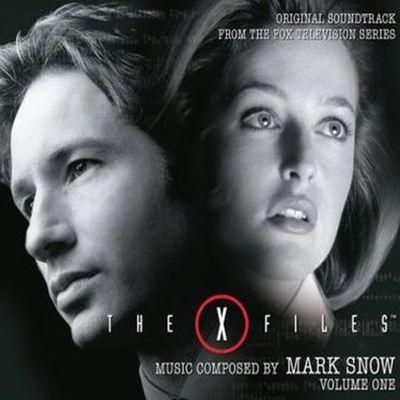
"X-Files: Episodes" Soundtrack Lyrics
TV • 1996
Track Listing
Bobby Darin
Jimi Hendrix
Mark Snow
Mark Snow
Johann Sebastian Bach
The Eagles
Golden Earrings
The Offspring
Johann Sebastian Bach
X
Erik Satie
Paper Lace
Mark Snow / Bach
Mark Snow
Mark Snow
James
The Vandals
Mr. Mister
Aram Khachaturian
Live
Johnny Mathis
Lundwig Van Beethoven
Cyndi Lauper
The Big Bopper
Mark Snow
Mark Snow
Mark Snow
Mark Snow
Mark Snow
Mark Snow
Mark Snow
Mark Snow
Mark Snow
Mark Snow
Mark Snow
Mark Snow
Mark Snow
Mark Snow
Mark Snow
Mark Snow
Mark Snow
Kenny James
Andy Williams
Johann Sebastian Bach
The Pretenders
The Partridge Family
Beethoven
Al Green
Mark Snow
Mark Snow
Mark Snow feat David Duchovny
Mark Snow
Mark Snow
Mark Snow
Prince
Mark Snow
X
Mark Snow
Mark Snow
Gillian Anderson
Cher
Cher
Cher
Ray Anthony
Hummel
The Platters
Isaac Hayes
Wagner's Opera die Walkure
Camille Saint-Saens
Marlene Dietrich
Mark Snow
Mark Snow
Mark Snow
Rose & The Arrangement
Mark Snow
Mark Snow
Mark Snow
Mark Snow
Mark Snow
Mark Snow
Mark Snow
Mark Snow
“The Truth and the Light: Music from The X-Files (Original Television Soundtrack)” – Album Guide to Tracks and Key Scenes
Overview
How do you package dread, wonder, and late-night channel-surf unease? In 1996, composer Mark Snow did exactly that: The Truth and the Light condenses the first three seasons’ most evocative cues into a single, continuous listen — dialogue fragments threading through synth atmospheres, distant choirs, and that famous six-note whistle. It isn’t a “greatest hits” of episodes so much as a séance with the show’s subconscious.
The album moves like a case file opening itself. Ambient textures smear into pulse patterns; strings creep in and back out as if the sound is breathing. Snow’s palette — low drones, percussion flurries, whispery sampled voices — turns monster-of-the-week shocks into a unified, nocturnal world. You can hear Mulder’s obsession in the unresolved harmonies; you can feel Scully’s rational calm in the measured cadences and clear tonal centers.
Genres & phases: ambient and minimal electronics — mystery and the unknown; quasi-sacred choral pads — awe and faith; cold-steel percussion — procedure, pursuit, danger; occasional orchestral swells — revelation and loss. The sequencing arcs from inquiry to confrontation to an uneasy kind of closure — very trust no one
, even in music.
How It Was Made
Compiled and produced with Snow’s supervision, the album stitches together score excerpts from seasons 1–3, woven with short snippets of series dialogue. It arrived via Warner Bros. in October 1996 on CD and cassette, positioned between the songs-based companion (Songs in the Key of X, spring 1996) and Snow’s later orchestral expansion for the 1998 feature film. The TV themes remained largely synthesizer-driven in these early years; the live-player shift came later in the series’ run.
Tracks & Scenes
Below, key cues and episode moments the album evokes. Because the disc is a collage, some pieces blend multiple episodes; we also note memorable needle-drops and trailer-style uses that aren’t on the album (but define the show’s sonic memory).
“Materia Primoris (The X-Files Theme)” (Mark Snow)
- Where it plays:
- The series’ main titles — static-fuzz overlays, crime-scene imagery, the flicker of faces and fingerprints. Every episode cold-open resolves into this whistle and bass pulse before the case file slams shut.
- Why it matters:
- A mission statement in six notes: skepticism vs. belief, encoded as echo and negative space. The 1996 single remix took that eeriness to radio charts.
Score excerpt from “Clyde Bruckman’s Final Repose” (Season 3)
- Where it plays:
- Quiet, humane writing under Bruckman’s confessions and final scenes; sustained strings and soft synth beds frame black comedy with compassion.
- Why it matters:
- Shows Snow’s range — terror elsewhere, tenderness here. It’s the series admitting mortality, not just monsters.
Score textures across the “Anasazi / The Blessing Way / Paper Clip” arc (Seasons 2–3)
- Where it plays:
- Myth-arc chases, desert visions, and the cold fluorescent hum of secret facilities. Percussive ostinati push through synth fog as files burn and lies calcify.
- Why it matters:
- These cues crystalize the conspiracy tone — procedural rhythms colliding with the uncanny.
Score gestures from “José Chung’s From Outer Space” (Season 3)
- Where it plays:
- Tongue-in-cheek suspense under conflicting testimonies — elastic, almost parodic horror colors that still read as X-Files.
- Why it matters:
- When the show gets playful, the music winks without breaking the spell — a tightrope this album captures in miniature.
Diegetic: “Hey Man, Nice Shot” (Filter) — D.P.O. (Season 3, not on the album)
- Where it plays:
- Arcade and street-punk energy against a lightning-obsessed teen’s temper; distorted guitars slam under pinball lights and storm clouds.
- Why it matters:
- Anchors the mid-’90s setting and contrasts Snow’s clinical suspense with raw alt-rock menace.
Diegetic: “Wonderful! Wonderful!” (performed by Kenny James) — Home (Season 4 premiere, 1996; not on the album)
- Where it plays:
- A syrupy oldie spins on a house stereo while unthinkable violence erupts. The croon softens nothing; it makes the scene worse — and unforgettable.
- Why it matters:
- Classic X-Files irony: comforting pop against absolute horror. A needle-drop you hear once and never quite shake.
Needle-drop callback: “Red Right Hand” (Nick Cave & the Bad Seeds) — Ascension (Season 2; not on the album)
- Where it plays:
- On the road with a kidnapper; the bass tolls like a warning bell. Mulder chases headlights and a ghost of a clue.
- Why it matters:
- Gothic Americana that fits the show’s paranoia like a glove — later canonized on the songs-based companion record.
Notes & Trivia
- Released October 8, 1996 by Warner Bros.; CD and cassette formats.
- A collage approach: Snow’s cues + short dialogue interludes from seasons 1–3.
- The theme appears as “Materia Primoris” on the album; a 1996 single remix charted strongly in Europe.
- In the UK and France the album hit national charts — unusual for an ambient TV-score compilation.
- It sits between two 1996 tie-ins: this score album and the songs-driven Songs in the Key of X.
Music–Story Links
- When Mulder confronts the myth-arc, low drones and strict pulses underscore obsession — his belief given a heartbeat.
- When Scully interrogates evidence, icy sustained tones and sparse motifs mirror rational focus — a musical lens flare of skepticism.
- Monster-of-the-week tension often hinges on texture (scrapes, breaths) instead of melody, keeping the threat literally faceless.
- Diegetic songs (“Wonderful! Wonderful!”, “Hey Man, Nice Shot”) weaponize contrast — the show’s morality play staged through sonic irony.
Reception & Quotes
The album drew mixed-positive notices on release and performed respectably on European charts; fans treated it as the definitive early-years mood document until larger archival box sets arrived years later.
“A representative compilation of those creepy sounds.” Filmtracks — context on the TV score releases
“Easily the most ambitious record ever assembled for a TV soundtrack.” Entertainment Weekly on the 1996 songs companion
Interesting Facts
- Two 1996 releases bracket the brand: Songs in the Key of X (various artists) and The Truth and the Light (Snow’s score).
- The theme single topped charts in parts of Europe under its 1996 remix release.
- Later archival sets (La-La Land Records) finally spread dozens of full episode cues across multi-CD volumes.
- Season 4’s “Home” used a sound-alike performance of “Wonderful! Wonderful!” — the original Johnny Mathis master wasn’t used.
- Early seasons relied on synthesizers; live musicians entered the TV score more prominently in later seasons and the 1998 film.
Technical Info
- Title: The Truth and the Light: Music from The X-Files
- Year: 1996 (TV score compilation from Seasons 1–3)
- Type: Original Television Soundtrack (score)
- Composer/Producer: Mark Snow (compilation with dialogue bridges)
- Label: Warner Bros. Records
- Length: ~45:50
- Context: Released after the songs album Songs in the Key of X (March 1996); before the 1998 film score
- Notable placements referenced: “D.P.O.” (Filter needle-drop), “Home” (crooner needle-drop), “Ascension” (Nick Cave), plus myth-arc and award-winning S3 one-offs like “Clyde Bruckman’s Final Repose”
- Chart/Reception notes: UK Top 50; Top 10 France; contemporary reviews mixed but respectful of its mood-album design
- Availability: Original 1996 issue on CD/cassette; later comprehensive TV-score box sets reissued by specialty labels
Questions & Answers
- Is this the album with rock bands like R.E.M. and Nick Cave?
- No — that’s Songs in the Key of X (1996). The Truth and the Light is Mark Snow’s TV score compilation.
- Which seasons does the music come from?
- Seasons 1–3, edited into a continuous listen and interlaced with dialogue clips.
- Is the main theme on here?
- Yes — as “Materia Primoris (The X-Files Theme).” A 1996 single remix also charted in Europe.
- Why do some memorable songs from episodes not appear?
- Because this is a score album. Needle-drops like “Wonderful! Wonderful!” or “Hey Man, Nice Shot” are tied to episodes but live outside this release.
- Where can I hear longer episode cues?
- Seek the later multi-CD “Original Television Soundtrack” volumes (La-La Land Records) — they present extensive, episode-specific selections.
Key Contributors
| Entity | Relation |
|---|---|
| Mark Snow | Composer & Producer — created and compiled the TV score excerpts |
| Warner Bros. Records | Label — released the 1996 album |
| Chris Carter | Series Creator — dialogue excerpts and liner-notes presence |
| David Duchovny / Gillian Anderson | Lead Cast — voices appear in interludes; characters define the musical POV |
| La-La Land Records | Later archival sets — multi-CD “Original Television Soundtrack” volumes |
| Filter | Artist — “Hey Man, Nice Shot” heard in S3 episode “D.P.O.” (not on this album) |
| Kenny James | Performer — “Wonderful! Wonderful!” sound-alike used in S4’s “Home” (not on this album) |
| Nick Cave & the Bad Seeds | Artist — “Red Right Hand” used in S2’s “Ascension” (not on this album) |
Sources: Wikipedia (album, composition, franchise music pages); Discogs (release/version data); Filmtracks (context and reception notes); IMDb episode soundtrack pages (“D.P.O.”, “Home”); label pages (La-La Land Records) and contemporary press on 1996 tie-ins.
November, 19th 2025
A-Z Lyrics Universe
Cynthia Erivo Popular
Ariana Grande Horsepower
Post Malone Ain't No Love in Oklahoma
Luke Combs Good Riddance (Time of Your Life)
Green Day Bye Bye Bye
*NSYNC You're the One That I Wan
John Travolta & Olivia Newton-John I Always Wanted a Brother
Braelyn Rankins, Theo Somolu, Kelvin Harrison Jr. and Aaron Pierre The Power of Love
Frankie Goes to Hollywood Beyond
Auli’i Cravalho feat. Rachel House MORE ›