Soundtracks:  A B C D E F G H I J K L M N O P Q R S T U V W X Y Z #


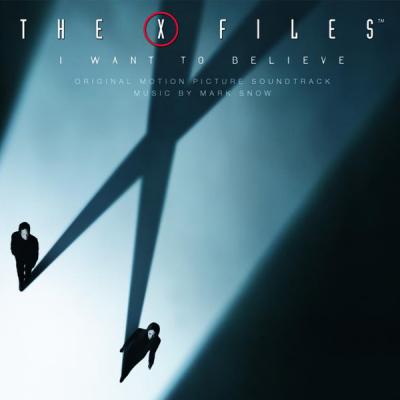
X-Files: I Want to Believe Album Cover

"X-Files: I Want to Believe" Soundtrack Lyrics

TV • 2008

Track Listing


“The X-Files: I Want to Believe (Original Motion Picture Soundtrack)” – Album Guide to Tracks and Key Scenes

Official 2008 trailer frame for The X-Files: I Want to Believe with Mulder & Scully silhouetted against snow
2008 film trailer mood — arctic light, moral fog, and Mark Snow’s chill-to-the-bone palette.

Overview

What does faith sound like when it freezes? Mark Snow’s score for The X-Files: I Want to Believe trades alien spectacle for a human, wintry thriller — muted strings, thudding low percussion, and breathy choirs that feel like the wind itself interrogating everyone on screen. This isn’t TV-case-of-the-week wallpaper; it’s a feature-length escalation of the series’ DNA, built around grief, belief and bodies lost to the cold.

The 2008 album leans into contrast: intimate piano and glassy pads against pounding taiko and horn clusters; a classic theme reimagined at feature scale; and, in the end credits, a contemporary recast of that theme plus a bruised UNKLE cut. The score’s architecture mirrors the film’s ethic — procedure crawling toward transcendence, only to find ambiguity waiting like black ice.

Genres & phases: orchestral suspense with electronic grain — investigation and dread; choral haze — wounded faith; action ostinati — pursuit and moral urgency; end-title remixes — the franchise myth refracted through 2008’s alt-electronica.

How It Was Made

Snow recorded at the Newman Scoring Stage (20th Century Fox) with the Hollywood Studio Symphony in May 2008. The palette skewed low and weighty — up to eight horns, five trombones, two pianos, strings in mass — pointedly no trumpets or high woodwinds. Snow also layered a “battery of percussion” (including taiko) and live voices; some uncanny colors came from piano strings prepped with dimes and putty. The album arrived via Decca/Fox Music in July 2008, with two non-Snow additions: an UNKLE end-credit variation on the TV theme and Xzibit’s “Dying 2 Live.”

Trailer still: winter field and search teams, matching the score’s cold metallic percussion
Recording choices — heavy low brass, taiko, prepped piano — carve a soundworld as stark as the snowfields.

Tracks & Scenes

Below are standout cues and needle-drops, tied to specific moments. (We avoid a full tracklist.)

“Moonrise” (Mark Snow)

Where it plays:
Opening movements of the case — bleak exteriors and a search grid forming in the snow. The cue breathes in long phrases, then tightens as the disappearance turns from mystery to dread.
Why it matters:
Sets the film’s temperature: contemplative, fragile, but edged with something predatory underfoot.

“Foot Chase” (Mark Snow)

Where it plays:
An on-ground pursuit through ice and service roads; breath clouds, radio chatter, boots slamming. Percussive ostinati lock to cuts as Mulder pushes past caution.
Why it matters:
Brings kinetic X-Files without sci-fi bombast — adrenaline as procedural rhythm rather than spectacle.

“Home Again” (Mark Snow)

Where it plays:
The film’s final grace note — an emotional coda between Mulder and Scully after the ordeal. Strings widen, harmony warms by a few crucial degrees.
Why it matters:
After an icy hour, Snow lets light in. It’s the franchise theme — belief vs. doubt — softened to human scale.

“X-Files (UNKLE Variation on a Theme)” (Mark Snow / UNKLE)

Where it plays:
End titles: a modernized spin on the six-note whistle, with crunchy beats and widescreen ambience. Functions as a bridge from score to mixtape culture.
Why it matters:
Signals 2008’s sound — remix as ritual. It honors the theme while dressing it for a different dance floor.

“Broken” (UNKLE feat. Gavin Clark)

Where it plays:
Also in the end-credit roll, following the variation; bruised vocal lines over tectonic drums. After the narrative quiets, this is the world’s hurt speaking.
Why it matters:
Gives the film a contemporary, emotional exhale — a rare sung presence in an otherwise instrumental experience.

“Dying 2 Live” (Xzibit)

Where it plays:
Album cut linked to the film’s release and credited cast member Xzibit (Agent Drummy). Associated with the soundtrack program rather than a featured on-screen moment.
Why it matters:
One of only two non-Snow tracks on the official album; a cross-fade between TV legacy and 2008 radio grit.

Needle-drop: “Ooh La La” (Deborah Poppink)

Where it plays:
Diegetic source heard in-film (background/scene ambience). It punctures the severity for a blink — a pop sheen inside the cold case.
Why it matters:
Tonal contrast intensifies unease: cheerful varnish over very dark wood.

Needle-drop: “Movin’ On Up” (Primal Scream)

Where it plays:
Brief source use associated with radio/room tone. It’s there and gone — just enough to register a world beyond the investigation.
Why it matters:
Reminds us the case cuts through ordinary life — a hymn of escape inside a story about entrapment.

Notes & Trivia

  • Released July 2008 on Decca/Fox Music; the program appends UNKLE’s theme variation, UNKLE’s “Broken,” and Xzibit’s “Dying 2 Live.”
  • Recorded at the Newman Scoring Stage with Hollywood Studio Symphony; four days of sessions.
  • Snow deliberately omitted trumpets and high woodwinds to keep the timbre weighty and somber.
  • Prepped-piano textures (dimes, putty on strings) provide the “creak of the uncanny.”
  • The film itself is a stand-alone thriller — no alien mythology — which pushed Snow toward warmer, more human motifs.

Music–Story Links

  • When Scully confronts the ethics of treatment vs. miracle, piano and hushed strings (“What If You’re Wrong / Sister”) outline a private chapel of doubt.
  • Search sequences deploy low brass pedals and taiko (“March and Dig / Girl in the Box”) — the sound of time running out.
  • Mulder’s stubborn hope gets vertical motion — rising intervals recur across cues like breath seen in cold air.
  • End titles pivot from canon to culture: UNKLE’s variation and “Broken” reframe the myth through 2008 electronica.

Reception & Quotes

Critics split on the film but often singled out Snow’s craft: a colder, more intimate X-Files that still carries the theme’s shiver. The album remains the definitive document of the series’ second feature-era sound.

“UNKLE’s remix of the X-Files theme lands with the film and soundtrack.” Billboard report
“Virtually the entire score is made up of dark, occasionally disturbing textures… an hour of unsettling menace.” MovieMusicUK (review)
Trailer collage: search parties, snowy roads and flashlights — the score’s pulse made visual
Procedure, peril, and a fragile grace note — the album’s arc in four images.

Interesting Facts

  • UNKLE’s end-title reinterpretation wasn’t on the group’s End Titles… Stories for Film album — it lives here.
  • Snow cited There Will Be Blood’s “Prospectors Quartet” as a percussion inspiration — austere, insistent.
  • Orchestration credits include Pete Anthony (conductor), Jonathan Sacks (orchestrator), Alan Meyerson (mix) — the Fox lot A-team.
  • Streaming editions vary by territory in small details (ordering, runtime readout), but keep the same three non-score cuts at the end.
  • Yes, that’s rapper/actor Xzibit in the cast; the soundtrack mirrors the cameo with his track.

Technical Info

  • Title: The X-Files: I Want to Believe (Original Motion Picture Soundtrack)
  • Year: 2008
  • Type: Feature film score (released as a soundtrack album)
  • Composer: Mark Snow
  • Label: Decca Records / Fox Music
  • Recording: Newman Scoring Stage, Hollywood Studio Symphony; four days; heavy low brass, two pianos, large strings, choir; no trumpets/high woodwinds
  • Notable non-score inclusions: UNKLE — “X-Files (Variation on a Theme)”; UNKLE — “Broken”; Xzibit — “Dying 2 Live”
  • Selected cue placements: “Foot Chase” — on-ground pursuit; “Home Again” — closing coda; “March and Dig / Girl in the Box” — search escalation
  • Availability: 23-track digital/CD release; streaming on major platforms

Questions & Answers

Is this a TV soundtrack?
No — it’s the 2008 film score. The TV compilations are Songs in the Key of X (songs) and The Truth and the Light (score).
Who performs on the recording?
The Hollywood Studio Symphony, conducted on the Fox Newman Stage, with Snow layering electronics, percussion and choir.
What plays over the end credits?
UNKLE’s variation on the theme and UNKLE’s “Broken”; the album also includes Xzibit’s “Dying 2 Live.”
Why does the score feel darker than the 1998 film?
The story is smaller, colder, more intimate; Snow focused on low timbres, taiko pulses and prepped-piano colors.
Is the full TV theme here?
Yes — quoted and transformed; the end-title variation is the most overt nod, with beats and widescreen ambience.

Key Contributors

EntityRelation
Mark SnowComposer — wrote and produced the score
Chris CarterDirector/Co-writer — film creative lead the music supports
Decca Records / Fox MusicLabels — released the soundtrack
Hollywood Studio SymphonyPerformer — orchestra on the recording
Pete AnthonyConductor
Jonathan SacksOrchestrator
Alan MeyersonScoring mixer
UNKLE (James Lavelle)Artist — end-title variation on the theme; “Broken” featured
Xzibit (Alvin Joiner)Artist — “Dying 2 Live” included on album; appears in film
Trailer end-card: title over black, echoing the score’s last sustained notes
Title card, and then the mix breathes — UNKLE and Snow take over.

Sources: Wikipedia (album & film music pages); Billboard (UNKLE remix & end-title notes); ScoringSessions.com (recording forces, stage, personnel); Discogs (release/label data); Apple Music & Spotify (album program/ordering); Wired coverage of UNKLE; X-Files Fandom (song uses list & end-credit callout); MovieMusicUK (review).

November, 19th 2025


A-Z Lyrics Universe

Lyrics / song texts are property and copyright of their owners and provided for educational purposes only.