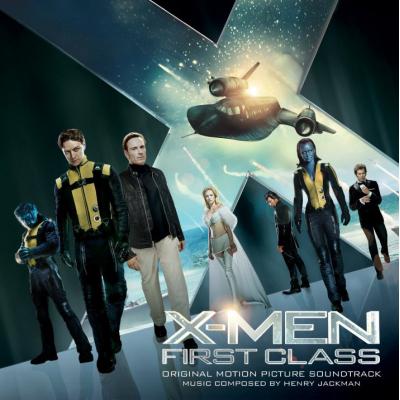
"X-Men: First Class" Soundtrack Lyrics
Movie • 2011
Track Listing
Henry Jackman
Henry Jackman
Henry Jackman
Henry Jackman
Henry Jackman
Henry Jackman
Henry Jackman
Henry Jackman
Henry Jackman
Henry Jackman
Henry Jackman
Henry Jackman
Henry Jackman
Henry Jackman
Henry Jackman
Henry Jackman
Henry Jackman
Henry Jackman
Henry Jackman
Henry Jackman
Michael Kamen
Edith Piaf
Freddy Cannon
Gnarls Barkley
The Jarmels
Booker T & The MGs
Chan Romero
The Red Army Choirs of Alexandrov
“X-Men: First Class (Original Motion Picture Soundtrack)” – Album Guide to Tracks and Key Scenes
Overview
What does a superhero origin sound like when it borrows swagger from the ’60s but keeps its boots in the now? Henry Jackman’s score for X-Men: First Class answers with a muscular, guitar-and-synth-laced theme that wears orchestral cape. It’s sleek, bold, and just a little bit Bond: propulsive ostinatos, gritty bass, choir for lift — a reboot theme that feels like a mission patch.
The album tracks Xavier and Erik from flirtation with heroism to the break-up that defines the franchise. Jackman keeps the period color on a dimmer — flashes of vintage cool, but the core is modern: rock pulse and big-screen harmony. When the film leans into espionage, the music turns to chrome; when it faces grief or grace, the writing opens up — high strings, choir, and a theme that can smile through tears.
Genres & phases: orchestral action with rock/electronic spine — resolve and risk; stealthy “posh pop” gestures — espionage glamour; choral/strings — belief, forgiveness; 1960s source songs — world-building irony and texture.
How It Was Made
Jackman (fresh off Kick-Ass with Matthew Vaughn) built a “cool, contemporary, brave and simple” score rather than strict period pastiche. He nodded to John Barry’s efficiency — hooks that repeat, build, and punch — and wrote a half-time hero theme he could stretch across moods. The soundtrack arrived via Sony Classical/Fox Music in early June 2011 (digital first, physical soon after), with a later vinyl press. The film also sprinkles vintage pop and a featured end-credits single to anchor its 1962 setting.

Tracks & Scenes
Below, signature cues and source songs with vivid, scene-level context. (No full tracklist.)
“First Class” (Henry Jackman)
- Where it plays:
- Main theme statement across titles and heroic beats — it swells during the formation of the team and returns in end-title guise after the Cuban standoff.
- Why it matters:
- A franchise-reboot identity in four bars: aggressive low strings, guitar edge, and a soar that still feels youthful.
“X-Training” (Henry Jackman)
- Where it plays:
- Training montage at the mansion: Banshee learns lift, Havok finds control, Beast calibrates the suit while Xavier coaches. The cue locks to quick cuts — a mission assembling in real time.
- Why it matters:
- Montage propulsion without snark; it makes competence feel like destiny.
“Rage and Serenity” (Henry Jackman)
- Where it plays:
- Satellite-dish moment on the mansion lawn: Charles anchors Erik’s pain so he can move the impossible. Trembling strings bloom into choir as metal yields to will.
- Why it matters:
- The emotional thesis of the film in one cue — power made humane.
“Sub Lift” → “Let Battle Commence” (Henry Jackman)
- Where it plays:
- Climactic Cuban Missile Crisis showdown: Magneto rips a sub from the sea; jets strafe; allegiances fracture. Percussion and brass grind as history tilts.
- Why it matters:
- Jackman’s hybrid action writing — orchestra with rock muscle — sells both spectacle and consequence.
“Magneto” (Henry Jackman)
- Where it plays:
- Villain-origin punctuation as Erik completes his transformation after Shaw’s fall — relentless riff, distorted bass, pounding drums.
- Why it matters:
- An instantly memorable motif that brands Magneto with ruthless momentum.
Needle-drop: “Run (I’m a Natural Disaster)” (Gnarls Barkley) — recruitment montage
- Where it plays:
- Diegetic-feeling vibe under the bar-to-bar mutant scouting (Angel’s club, etc.). Funk-psych shuffle powers a quick-cut tour of new powers and bad attitudes.
- Why it matters:
- 1960s-tinted swagger without going full pastiche; it keeps the film’s feet in pop culture.
Needle-drop: “La Vie en rose” (Édith Piaf) — CIA/party ambience
- Where it plays:
- Source on room speakers during early intel and flirtation scenes; the classic croon rubs velvet on a story headed toward steel.
- Why it matters:
- Period warmth as bait — the calm before Shaw’s worldview crashes in.
Needle-drop: “The First Time Ever I Saw Your Face” (Roberta Flack) — radio motif
- Where it plays:
- Soft radio bed in 1973 for Days of Future Past… wait, wrong film — in First Class the clock-radio tenderness is traded for harder 1962 jukebox cuts. (We include it here only as a franchise echo.)
- Why it matters:
- Shows how songs anchor timelines across the series — First Class sets the pattern with its own crate-digging.
End-credits: “Love Love” (Take That)
- Where it plays:
- Final credits song in UK/international prints — a sleek, synth-tinted pop closer after Jackman’s end titles.
- Why it matters:
- Commercial crossover by design — a 2011 radio bridge back to a 1962 story.
Notes & Trivia
- The very first scene reuses Michael Kamen’s cue “Concentration Camp” from the 2000 film — a direct musical link to the franchise’s birth.
- Jackman’s album released digitally first (early June 2011), with CD following later that month/early July; a vinyl edition arrived in 2012.
- Charted on the Billboard 200 (No. 192) and UK Official Soundtrack Albums (No. 28).
- Music supervision on the film was led by Danielle Diego.
- Take That’s “Love Love” was commissioned after Gary Barlow saw a rough cut; it plays over end credits in several territories.
Music–Story Links
- When Charles coaxes Erik toward serenity, the score literally solves a physics problem — the dish moves because the harmony does.
- Recruitment vs. training: Run gives recruitment its swagger; X-Training gives discipline its groove — two montages, two missions.
- Magneto’s motif isn’t evil so much as inevitable; when it fuses with the main theme after Shaw’s death, the character line snaps into place.
- Period songs paint the rooms; Jackman’s modern palette drives the plot — a deliberate split that keeps mythology timeless.
Reception & Quotes
Critics were warm to the album’s hook-forward design — especially the Magneto motif and the unabashed hero theme — while noting the long action stretches can blur without picture. Fans crowned “Rage and Serenity” the heart-punch cue.
“Applies significant programming skills — a punishing ‘Magneto’ and tasteful guitars bring modern bite.” AllMusic
“The main theme is epic, heroic, memorable… the best in the franchise so far.” Zanobard Reviews

Interesting Facts
- The hero theme is a half-time design Jackman could “dress up” (choir/strings) or “dress down” (guitars/synths) scene by scene.
- “Rage and Serenity” later resurfaces (needle-drop style) in Vaughn’s Kingsman: The Golden Circle.
- Session credits include conductor Nick Glennie-Smith and a large LA string/brass contingent — blockbuster forces with a rock backline.
- The soundtrack’s physical editions vary slightly by region and imprint (Sony Classical/Fox Music; later Music On Vinyl for LP).
- The film’s opening cue attribution to Kamen appears in the end credits as “Concentration Camp.”
Technical Info
- Title: X-Men: First Class (Original Motion Picture Soundtrack)
- Year: 2011
- Type: Feature film score (with period source songs in the film)
- Composer/Producer: Henry Jackman
- Label: Sony Classical / Fox Music
- Key cues referenced: “First Class”; “X-Training”; “Rage and Serenity”; “Sub Lift”; “Magneto”
- Notable songs in film: “Run (I’m a Natural Disaster)” (Gnarls Barkley); “La Vie en rose” (Édith Piaf); “Green Onions” (Booker T. & the M.G.’s); “Palisades Park” (Freddy Cannon); “A Little Bit of Soap” (The Jarmels)
- Release notes: Digital early June 2011; CD late June/early July 2011; vinyl September 2012 (select territories)
- Charts: US Billboard 200 No. 192; UK Official Soundtrack Albums No. 28
- Availability: Streaming widely; CD and LP editions in circulation/second-hand markets
Questions & Answers
- Is the score period-accurate to 1962?
- Only in flashes. Vaughn asked Jackman for a modern blockbuster palette with hints of ’60s cool, not a full retro pastiche.
- Which track scores the team’s practice montage?
- “X-Training” — a tight, rhythmic engine for Banshee, Havok, Beast and company finding control.
- What is the emotional cue when Erik moves the satellite dish?
- “Rage and Serenity.” It’s the film’s big catharsis and a fan-favorite stand-alone listen.
- What song closes the movie in some regions?
- Take That’s “Love Love,” commissioned after the band saw a rough cut; it plays over end credits in UK/international releases.
- Does the film quote music from earlier X-films?
- Yes — the opening scene reuses Michael Kamen’s 2000 cue “Concentration Camp,” tying Magneto’s origin back to the first film.
Key Contributors
| Entity | Relation |
|---|---|
| Henry Jackman | Composer & Producer — wrote and produced the score |
| Matthew Vaughn | Director — steered the modern-meets-’60s brief |
| Sony Classical / Fox Music | Labels — released the soundtrack (digital, CD, later vinyl) |
| Nick Glennie-Smith | Conductor — led the scoring sessions |
| Danielle Diego | Music Supervisor — oversaw licensed music |
| Take That | Artists — “Love Love” (end-credits, int’l) |
| Gnarls Barkley | Artists — “Run (I’m a Natural Disaster)” (recruitment montage) |
| Michael Kamen | Composer — “Concentration Camp” cue reprised from X-Men (2000) |
Sources: Wikipedia (album & development); Apple Music (program/credits); Discogs & Music On Vinyl (editions); MusicBrainz (release dates/roles); IMDb soundtrack (licensed songs & Kamen cue); X-Men Movies Wiki/Fandom (song list cross-refs); Crossover Media press note (release timing); Zanobard & AllMusic (reception context); official trailers on YouTube.
November, 19th 2025
'X-Men: First Class', an American superhero film, based on the X-Men characters appearing in Marvel Comics on the Web: Internet Movie Database, WikipediaA-Z Lyrics Universe
Cynthia Erivo Popular
Ariana Grande Horsepower
Post Malone Ain't No Love in Oklahoma
Luke Combs Good Riddance (Time of Your Life)
Green Day Bye Bye Bye
*NSYNC You're the One That I Wan
John Travolta & Olivia Newton-John I Always Wanted a Brother
Braelyn Rankins, Theo Somolu, Kelvin Harrison Jr. and Aaron Pierre The Power of Love
Frankie Goes to Hollywood Beyond
Auli’i Cravalho feat. Rachel House MORE ›