Soundtracks:  A B C D E F G H I J K L M N O P Q R S T U V W X Y Z #

List of artists: A B C D E F G H I J K L M N O P Q R S T U V W X Y Z #


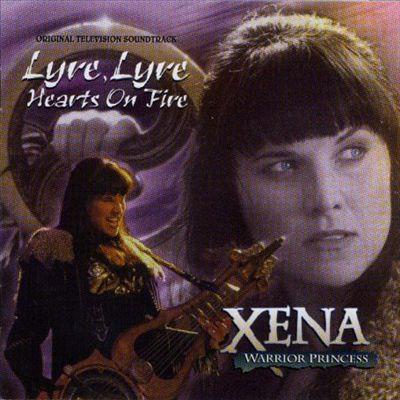
Xena: Warrior Princess: Lyre, Lyre, Hearts on Fire Album Cover

"Xena: Warrior Princess: Lyre, Lyre, Hearts on Fire" Soundtrack Lyrics

TV • 2000

Track Listing


“Xena: Warrior Princess — Lyre, Lyre, Hearts on Fire (Original Television Soundtrack)” – Album Guide to Tracks and Key Scenes

Overview

Battle of the bands — in ancient Greece? Only Xena would try it. The Season 5 musical episode “Lyre, Lyre, Hearts on Fire” (aired January 17, 2000) swaps swords for songbooks as Xena, Gabrielle, Joxer and frenemies settle a dispute over Terpsichore’s Golden Lyre with a full-on sing-off in the city of Melodia. The companion album bottles that chaos: covers, parodies, originals, even a rap battle.

Tonally, it’s the bright sibling to the earlier, darker musical The Bitter Suite. Here the soundtrack leans into pop familiarity — Motown protest, girl-power anthems, ’60s sunshine, MC5 snarl — while Joseph LoDuca stitches connective score cues around the vocals. It’s not “realism”; it’s meta-myth: a jukebox palette used to tease character dynamics and long-running gags.

Genres & phases: girl-group/anthemic pop — solidarity and recruitment; late-’60s/early-’70s hits — communal release; hard rock — swagger and rivalry; novelty/rap — taunt-as-duel; LoDuca’s Mediterranean-flavored score — mythic glue between the bops.

How It Was Made

The episode (written by Adam Armus & Nora Kay Foster; directed by Mark Beesley) clears the stage for LoDuca’s music team and for the cast to sing. Unlike The Bitter Suite — mostly originals — this one deploys licensed classics with new staging (and some playful lyric tweaks) plus LoDuca’s cues and a few originals/interstitials. Varèse Sarabande released the 20-track album in 2000 as the official tie-in, with Lucy Lawless, Renée O’Connor, Ted Raimi and others performing on-mic.

Tracks & Scenes

Below — as many key numbers as possible, with scene-level context. (We avoid the full tracklist.)

“Sisters Are Doin’ It (For Themselves)” (Eurythmics & Aretha Franklin — stage-cover)

Where it plays:
Amazons rally and the women of Melodia take the floor; Xena/Gabrielle steer the crowd from brawl energy to party unity. It reads like a recruitment anthem before the contest.
Why it matters:
Plants the episode’s thesis — power shared is power multiplied — and gives Gabrielle a frontline vocal moment.

“Dancin’ in the Moonlight” (King Harvest — cover)

Where it plays:
Xena, Gabrielle and Joxer glide through the town square at night; torches, tambourines, and goofy grins. It’s diegetic party fuel that softens rivalries before they harden.
Why it matters:
Turns Melodia into a musical playground — the episode’s warmth in three minutes.

“We Can Work It Out” (Lennon–McCartney — cover)

Where it plays:
Fence-mending attempt between factions — and between friends who’ve been at cross purposes. The staging leans comedic, but the subtext is Xena/Gabrielle diplomacy.
Why it matters:
Literalizes the show’s peacemaking streak with a Beatles olive branch.

“Gettin’ Ready” (Telephone Hour–style pastiche)

Where it plays:
A split-screen buzz of band rehearsal and town prep, written and staged as a homage to “The Telephone Hour” from Bye Bye Birdie — gossip rhythm as countdown clock.
Why it matters:
Shows the musical-episode toolkit: pastiche used as narrative montage.

“War” (Whitfield–Strong — cover)

Where it plays:
Xena jumps between Draco’s thugs and Amazons ready to rumble; she belts the hook while tapping out a stomp rhythm the crowd can’t resist. Instant cease-fire by singalong.
Why it matters:
Anti-violence needle-drop as plot device — text meets subtext.

“Kick Out the Jams” (MC5 — cover)

Where it plays:
Draco’s main-stage flex — shirt-rip energy, headbanging chorus, the whole peacocking frontman bit aimed squarely at Gabrielle.
Why it matters:
Hard-rock bravado makes Draco both ridiculous and dangerously charming.

“Always Something There to Remind Me” (Bacharach–David — cover)

Where it plays:
A cheeky torch-song turn in the rivalry — longing weaponized for laughs, with cutaways to jealous side-eyes.
Why it matters:
Shows the episode’s comfort with tonal whiplash: satire and sincerity in the same verse.

“People Got to Be Free” (The Rascals — cover)

Where it plays:
Contest crescendos into kumbaya — villagers and rivals crowd the stage for a clap-along finale before the title number brings the curtain down.
Why it matters:
’60s idealism converted into literal crowd control — joyful and on the nose, intentionally.

“Xena Rap” (original taunt-battle)

Where it plays:
Xena and Draco trade disses in rhyme — a comic duel scored like a tavern cipher, with the chorus egging them on.
Why it matters:
Proof the show will try anything once — and that Lawless can sell a punchline on beat.

“At Long Last Lyre” / “Lyre, Lyre, Hearts on Fire” (originals/closers)

Where they play:
Resolution and bows — the prize claimed, peace restored, everyone taking a last victory-lap refrain.
Why they matter:
Buttons the episode like a stage musical — curtain-call energy on TV timing.

Notes & Trivia

  • Aired January 17, 2000 as Season 5, Episode 10; directed by Mark Beesley.
  • Second Xena musical after Season 3’s The Bitter Suite — but this one leans on recognizable pop covers.
  • Set in Melodia, “musical capital of Greece,” with a literal battle-of-the-bands for Terpsichore’s Golden Lyre.
  • Official soundtrack released in 2000 by Varèse Sarabande (20 tracks; vocals by the cast plus LoDuca score cues).
  • Received later love via a special vinyl reissue announced in 2020.

Music–Story Links

  • When Draco v. Amazons is about to explode, “War” reframes combat as choreography — Xena disarms with call-and-response.
  • “Gettin’ Ready” compresses town politics and rehearsal nerves — a gossip engine that advances A- and B-plots in sync.
  • Draco’s “Kick Out the Jams” weaponizes lust and volume to sway Gabrielle — music as manipulation.
  • “People Got to Be Free” and the title closer bind rivals into a single chorus — mythic justice delivered by harmony.

Reception & Quotes

Fans debate the camp; the soundtrack endures because the songs land. The episode is now a cult favorite and a gateway for non-fans who just want to watch Xena sing.

“A beloved battle-of-the-bands detour — and it rocks.” SYFY WIRE, vinyl reissue coverage
“Lucy Lawless sings ‘War’ and means it; LoDuca keeps the glue strong.” Fan/critic roundups

Interesting Facts

  • Joxer’s twin, Jace (also Ted Raimi), appears as a glitter-bomb showman — extra chaos in the contest.
  • Some album cues are LoDuca instrumentals sourced from elsewhere in the series, woven to fit the episode flow.
  • “Gettin’ Ready” riffs on Bye Bye Birdie’s “The Telephone Hour” — a rare overt Broadway pastiche inside the show.
  • Several numbers were staged diegetically (heard in-world), a trick the episode uses to relocate violence into performance.
  • International broadcasts shuffled minor placement details; the album preserves the North American sequence.

Technical Info

  • Title: Xena: Warrior Princess — Lyre, Lyre, Hearts on Fire (Original Television Soundtrack)
  • Year: 2000 (episode airdate January 17; album 2000)
  • Type: Television soundtrack (covers + originals + score cues)
  • Composer/Producer: Joseph LoDuca (score, selections, album assembly)
  • Notable licensed songs: “Sisters Are Doin’ It,” “Dancin’ in the Moonlight,” “We Can Work It Out,” “War,” “Always Something There to Remind Me,” “Kick Out the Jams,” “People Got to Be Free.”
  • Episode creatives: Writers Adam Armus & Nora Kay Foster; Director Mark Beesley.
  • Label: Varèse Sarabande (CD; later digital; later vinyl special edition)
  • Setting/premise: Melodia — musical capital of Greece; a band contest decides the Golden Lyre’s rightful owner.
  • Availability: Streaming (album) on major platforms; physical CD (2000) and vinyl reissue (2020).

Questions & Answers

Is this the same kind of musical as “The Bitter Suite”?
No — Lyre, Lyre leans on familiar pop covers and comedy; The Bitter Suite used mostly original songs for a darker, operatic story.
Who’s behind the music?
Joseph LoDuca (series composer) arranged/orchestrated and contributed score cues; the cast performs the vocals on the covers and originals.
When did the album come out?
In 2000 via Varèse Sarabande; it later appeared on digital services and received a 2020 vinyl edition.
What’s the plot hook for all the singing?
A battle-of-the-bands in Melodia to decide ownership of Terpsichore’s Golden Lyre — Xena uses music to head off a war.
Are the songs diegetic?
Mostly, yes — characters are aware they’re performing in-world, which the episode plays for comedy and conflict resolution.

Key Contributors

EntityRelation
Joseph LoDucaComposer/Arranger — album/episode music lead
Lucy LawlessPerformer — Xena; vocals on multiple covers (e.g., “War”)
Renée O’ConnorPerformer — Gabrielle; ensemble/lead vocals
Ted RaimiPerformer — Joxer/Jace (twin); vocals and comic features
Adam Armus & Nora Kay FosterWriters — episode teleplay/story
Mark BeesleyDirector — episode staging
Varèse SarabandeLabel — 2000 CD/digital release (later vinyl special)
Pacific Renaissance / Renaissance PicturesProduction — series producers (Robert Tapert, Sam Raimi)

Sources: Apple Music album page; Discogs release pages; IMDb episode & soundtrack listings; Season 5 episode guide; SYFY WIRE vinyl-announcement feature; fan/production interviews and Whoosh! coverage.

November, 19th 2025


A-Z Lyrics Universe

Lyrics / song texts are property and copyright of their owners and provided for educational purposes only.