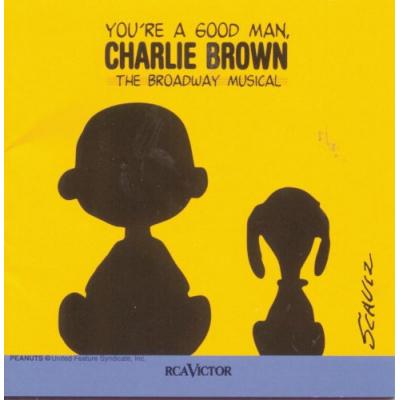
"You're a Good Man Charlie Brown" Soundtrack Lyrics
Musical • 1999
Track Listing
Ilana Levine
“You’re a Good Man, Charlie Brown — New Broadway Cast Recording (1999)” – Album Guide to Tracks and Key Scenes
Overview
How do you modernize a beloved 1967 chamber musical without breaking its toy-box charm? The 1999 Broadway revival of You’re a Good Man, Charlie Brown answers with bright, pop-leaning arrangements, two new showstoppers, and an ensemble that sings like comic strips come to life. The cast album bottles that update: crisp pit band, witty vocal parts, and a run of vignettes that click like Sunday panels.
Clark Gesner’s original tunes remain the spine — hummable, small-scale, and honest. The revival dials up color: tight grooves for group numbers, a gleaming ballpark snap for “T-E-A-M,” and glossy theatre-pop polish. Andrew Lippa’s additions (“Beethoven Day,” “My New Philosophy”) fold in so neatly you’d swear they’d always lived in Schulz’s world.
Across the arc — arrival → adaptation → rebellion → collapse — the album flows from busy-bee opening to classroom crushes, kite disasters, glee-club meltdowns, and finally the communal balm of “Happiness.” Genres map to feeling: mock-classical for Schroeder’s Beethoven devotion; pep-band swing for baseball bravado; patter-song fizz for Lucy’s advice; bright pop for Sally’s meta musings.
How It Was Made
Director Michael Mayer reconceived the show for Broadway with new dialogue and re-ordering, and he invited Andrew Lippa to contribute two new songs and fresh vocal/dance arrangements. Orchestrator Michael Gibson condensed the forces to a five-player pit that still pops like a full band, and music director/conductor Kimberly Grigsby led the session players for the cast album. The recording features Anthony Rapp (Charlie Brown), B.D. Wong (Linus), Ilana Levine (Lucy), Stanley Wayne Mathis (Schroeder), Roger Bart (Snoopy), and Kristin Chenoweth (Sally). According to Masterworks Broadway’s album notes, Lippa also produced the recording and reconceived the opening for a bolder, Broadway-size lift.
Tracks & Scenes
“Opening / You’re a Good Man, Charlie Brown” — Company
Where it plays: A panel-flip overture: introductions, micro-crises, and quick gags cascade as the ensemble sets Schulz’s world in motion. The recording captures the bright choral blend and patter handoffs that stage audiences saw as a rapid montage.
Why it matters: Lippa’s refreshed opening gives the album a contemporary lift without losing Gesner’s clean, conversational hook.
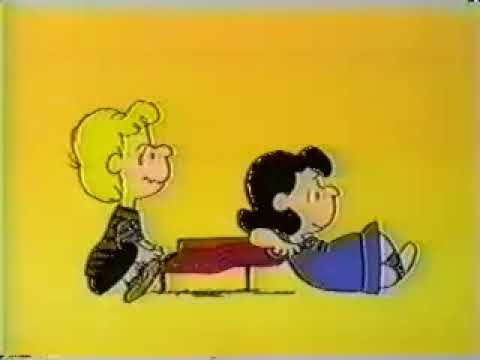
“Schroeder” — Lucy
Where it plays: Lucy tries to flirt over Beethoven; Schroeder keeps playing. The song rides mock-classical accompaniment (a wink at “Moonlight Sonata”) while Lucy steamrolls through romance logic.
Why it matters: Character writing 101 — lyrics define both of them; the accompaniment does the rest.
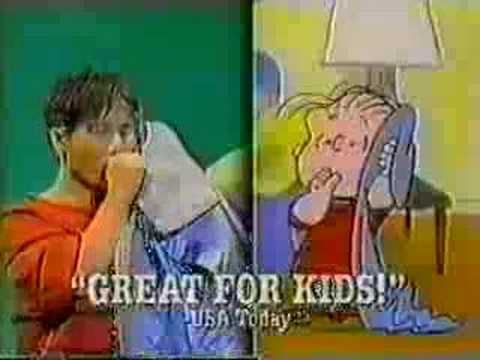
“My Blanket and Me” — Linus & Company
Where it plays: A lullaby that grows into a soft-shoe. Onstage, the blanket becomes a co-star — scarf, cape, partner — then returns to comfort mode.
Why it matters: Shows the revival’s choreography-forward approach: gentle swing, tight ensemble replies.
“The Kite” — Charlie Brown
Where it plays: A solo quest with percussion taps and darting woodwinds as the kite fights back. The band’s crescendos mimic gusts; the collapse is comic and inevitable.
Why it matters: Charlie Brown’s thesis statement: optimism, attempt, splat, repeat.
“The Doctor Is In” — Lucy & Charlie Brown
Where it plays: Advice as business model. A jaunty rhythm powers Lucy’s pop-up therapy while Charlie pays a nickel to be told what he already fears.
Why it matters: Comedy in counterpoint — melody lines talk over each other but land together.
“Beethoven Day” — Schroeder & Company (new in 1999)
Where it plays: A pep-rally anthem that turns a composer’s birthday into a stadium sing-along. The chorus stacks like bleachers; Lucy tries to brand the holiday; Schroeder is dead serious.
Why it matters: A true revival-era banger — Lippa’s theatre-pop bones meet Gesner’s innocence.
“The Book Report” — Company
Where it plays: Four simultaneous homework crises over Peter Pan. Snoopy writes like a general; Lucy filibusters; Schroeder goes analytical; CB panics in prose.
Why it matters: A miniature fugue in joke form — rhythmic intelligence, comic timing.
“My New Philosophy” — Sally & Schroeder (new in 1999)
Where it plays: Sally adopts a rotating set of “philosophies,” each sillier than the last, while Schroeder pleads for sanity. The number ping-pongs between patter and high-flying soprano tags, tailor-made for a show-stopper.
Why it matters: The album’s calling card. It helped seal Kristin Chenoweth’s Tony win — and it’s catnip on repeat.
“T-E-A-M (The Baseball Game)” — Charlie Brown & Company
Where it plays: A dugout pep talk that becomes a crowd chant. Snare pops and brass stings sell the illusion of a full band; the ensemble’s spelling gag lands every time.
Why it matters: Proof that five players (and clever orchestrations) can feel stadium-size.
“Glee Club Rehearsal” — Company
Where it plays: Chaos in canon. Kids can’t keep parts straight; the director (often unseen) loses hope; hilarity ensues over a familiar folk tune frame.
Why it matters: Textbook musical staging of misbehavior — and a tight studio take.
“Little Known Facts” — Lucy, with Linus & Charlie Brown
Where it plays: Lucy “teaches” science wrong; Linus dutifully notes nonsense; CB watches the trainwreck.
Why it matters: A comic aria for a tiny tyrant.
“Suppertime” — Snoopy
Where it plays: Kitchen-counter gospel: Snoopy celebrates the food bowl like a Broadway star taking the 11 o’clock slot.
Why it matters: Roger Bart’s showmanship on record — swagger, squeal, and a final belt.
“Happiness” — Company
Where it plays: Curtain call anthem. The ensemble blends in stacked thirds as everyone lists small joys; the last cadence lands like a hug.
Why it matters: The musical’s heart — and the album’s gentle goodbye.
Notes & Trivia
- The revival replaced Patty with Sally Brown, opening the door to “My New Philosophy” and more kid-logic zingers.
- The pit: piano/keys, bass, percussion, reeds, and a single violin; the album adds guitar just for the recording session.
- Andrew Lippa supplied two new songs and revised vocal arrangements; Michael Gibson handled the orchestrations.
- Kimberly Grigsby conducted and plays keys on the album — the performance pulse you hear is hers.
- Roger Bart (Snoopy) and Kristin Chenoweth (Sally) both won 1999 Tony Awards for Featured Performances.
Music–Story Links
Schroeder’s mock-classical accompaniments set up Lucy’s comic siege; that flips into full pep-band for “Beethoven Day,” where fandom becomes religion. Charlie Brown’s solos (“The Kite,” “T-E-A-M”) use rhythmic build-and-bust to mirror his optimism loop. Sally’s “My New Philosophy” literalizes Peanuts’ one-liner wisdom — new maxim, new groove, same chaos. And “Happiness” threads everyone together, musically proving what the strip always insisted: tiny joys count.
Reception & Quotes
The 1999 revival was a brief Broadway run — but the album stuck, thanks to two indelible new numbers and a cast of ringers. According to the Tony Awards records, Chenoweth and Bart nabbed Featured Actress/Actor statuettes; per Masterworks Broadway’s synopsis, Lippa reconceived the opening and produced the album, and Mayer’s revision swapped in Sally with Schulz’s blessing.
“A toy-box score with Broadway voltage — sweet, snappy, and smart.” album roundups
“Chenoweth detonates ‘My New Philosophy’; Bart turns ‘Suppertime’ into a comic aria.” 1999 season retrospectives
“The revival’s five-player band feels bigger than it looks — credit the orchestrations.” cast-album notes
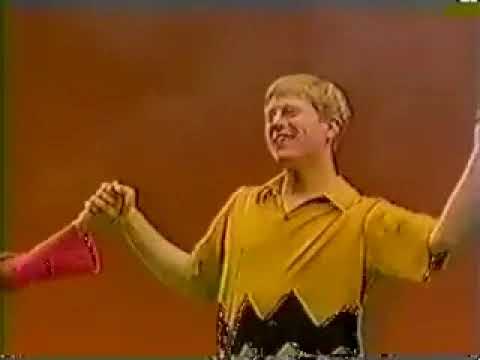
Interesting Facts
- The cast album uses a slightly augmented studio band (adding guitar) for sparkle the tiny pit couldn’t always supply live.
- “Beethoven Day” and “My New Philosophy” aren’t in earlier editions of the show; they arrived with the 1999 Broadway revision.
- Anthony Rapp’s Charlie Brown anchors the ensemble sound — listen to his straight-tone honesty against lush group chords.
- “Glee Club Rehearsal” parodies part-song chaos using a familiar American tune as scaffolding.
- Streaming editions tag the album as the “New Broadway Cast Recording (1999)” so you can spot the revival cuts at a glance.
Technical Info
- Title: You’re a Good Man, Charlie Brown — New Broadway Cast Recording
- Year: 1999
- Type: Broadway cast album
- Music & Lyrics: Clark Gesner
- Additional Music & Lyrics (1999): Andrew Lippa (“Beethoven Day,” “My New Philosophy”)
- Director (revival): Michael Mayer; Choreography: Jerry Mitchell
- Orchestrations: Michael Gibson; Vocal Arrangements/Album Producer: Andrew Lippa
- Conductor & Keys: Kimberly Grigsby; Players (album): reeds, violin/viola, bass, percussion, guitar (recording add-on)
- Key Numbers (selection): “Opening/You’re a Good Man, Charlie Brown,” “Schroeder,” “My Blanket and Me,” “The Kite,” “The Doctor Is In,” “Beethoven Day,” “The Book Report,” “My New Philosophy,” “T-E-A-M (The Baseball Game),” “Glee Club Rehearsal,” “Little Known Facts,” “Suppertime,” “Happiness.”
- Availability: CD & digital; widely streaming as the New Broadway Cast Recording (1999).
- Trailer/Spot Video ID: g55qS02Q9TE
Questions & Answers
- What’s new about the 1999 cast album versus earlier recordings?
- Two Andrew Lippa songs (“Beethoven Day,” “My New Philosophy”), refreshed vocal arrangements, and zippy five-player orchestrations.
- Who leads the band on the album?
- Kimberly Grigsby conducts and plays keys; the pit is compact but engineered for pop and punch.
- Which tracks became signature showstoppers?
- “My New Philosophy” (Sally) and “Suppertime” (Snoopy) — the former helped win its star a Tony.
- Is this the same order as the live show?
- Close — the revival re-ordered material; the album sequence mirrors that production’s flow.
- Where can I hear it?
- On major streamers under “New Broadway Cast Recording (1999).” Look for the versions with Lippa’s two additions.
Canonical Entities & Relations
| Subject | Relation | Object |
|---|---|---|
| Clark Gesner | wrote music & lyrics for | You’re a Good Man, Charlie Brown |
| Andrew Lippa | wrote additional songs & produced | 1999 New Broadway Cast Recording |
| Michael Mayer | directed | 1999 Broadway revival |
| Michael Gibson | orchestrated | 1999 revival/album |
| Kimberly Grigsby | conducted & performed keys on | 1999 cast album |
| Kristin Chenoweth | performed as | Sally Brown (Tony Award, 1999) |
| Roger Bart | performed as | Snoopy (Tony Award, 1999) |
| Anthony Rapp | performed as | Charlie Brown |
| B.D. Wong | performed as | Linus |
| Ilana Levine | performed as | Lucy |
| Stanley Wayne Mathis | performed as | Schroeder |
Sources: Masterworks Broadway album page (credits/orchestrations/production); Official Tony Awards winners list (1999); Spotify & Apple album listings (1999 New Broadway Cast Recording); Wikipedia (show history, 1999 revision details).
According to Masterworks Broadway, Michael Gibson orchestrated, Andrew Lippa produced and supplied new songs/arrangements, and Kimberly Grigsby conducted the recording; per the Tony Awards site, Chenoweth and Bart won Featured Actress/Actor in 1999; as listed on Spotify/Apple, the release appears as the New Broadway Cast Recording (1999) with “Beethoven Day” and “My New Philosophy”; according to Wikipedia, the 1999 Broadway revision added Lippa’s songs and re-ordered material under director Michael Mayer.
November, 19th 2025
A-Z Lyrics Universe
Cynthia Erivo Popular
Ariana Grande Horsepower
Post Malone Ain't No Love in Oklahoma
Luke Combs Good Riddance (Time of Your Life)
Green Day Bye Bye Bye
*NSYNC You're the One That I Wan
John Travolta & Olivia Newton-John I Always Wanted a Brother
Braelyn Rankins, Theo Somolu, Kelvin Harrison Jr. and Aaron Pierre The Power of Love
Frankie Goes to Hollywood Beyond
Auli’i Cravalho feat. Rachel House MORE ›