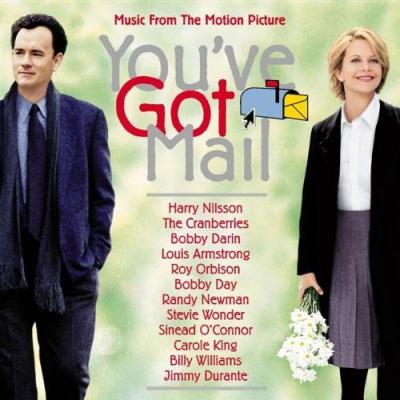
"You've Got Mail" Soundtrack Lyrics
Movie • 1998
Track Listing
Harry Nilsson
The Cranberries
Bobby Darin
Louis Armstrong
Harry Nilsson
Roy Orbison
Bobby Day
Randy Newman
Stevie Wonder
Sinead O'Connor
Harry Nilsson
Carole King
Billy Williams
George Fenton
Jimmy Durante
“You’ve Got Mail (Music From the Motion Picture)” – Album Guide to Tracks and Key Scenes
Overview
What does dial-up romance sound like? Nora Ephron’s You’ve Got Mail answers with New York nostalgia: Harry Nilsson deep cuts, café-friendly classics, and bright pop bookends, stitched together by George Fenton’s twinkling score. The album has two speeds — strolling and swooning — and it lives on the Upper West Side in every bar.
Nilsson is the heartbeat. His “The Puppy Song” welcomes us to a blooming digital Manhattan; “Over the Rainbow” floats across the finale like a benediction; “Remember (Christmas)” turns shop windows into memory. Between them, the film flips through a crate of American song — Louis Armstrong, Stevie Wonder, Bobby Darin, Roy Orbison — plus a new tune written and sung by Carole King.
Across the arc — arrival → adaptation → rebellion → collapse — the music maps feelings to place. 60s/70s sides sketch the neighborhood’s warm clutter, Fenton’s score paints the private emails, and judicious needle-drops frame the meet-cutes and near-misses. It’s a love letter to New York written on staff paper.
How It Was Made
Atlantic released the song compilation in late 1998; Fenton’s orchestral score arrived separately. The producers leaned especially on Harry Nilsson (three tracks + one cover) to give the film a single authorial voice inside a various-artists palette. According to the film’s soundtrack notes and discographies, Carole King contributed “Anyone At All” specifically for the movie. And the opening title cue is no mystery — Art of the Title identifies “The Puppy Song” as the music under the CG city titles.
Licensing extends to a few in-film extras not on the album (a clever bookstore gag uses “Never Smile at a Crocodile” as source music). The album sequencing mirrors the film’s gentle rhythm: whimsical open, neighborhood bustle, winter glow, then that famous park-bench exhale.
Tracks & Scenes
“The Puppy Song” — Harry Nilsson
Where it plays: Opening titles glide over a whimsical, computer-rendered Manhattan before dissolving to real streets and the daily sign-on ritual. Non-diegetic, curtain-raiser.
Why it matters: Instantly establishes the film’s tone — wishful, humming, gently retro — while winking at the digital fairy-tale to come.
“Dreams” — The Cranberries
Where it plays: Morning bustle montage: stoops, cafés, bookbags, and that crisp UWS air. The jangly chorus rides quick cuts of Joe and Kathleen passing within blocks of each other. Non-diegetic city-glide.
Why it matters: A 90s shimmer amid the standards; the lyric turns the neighborhood into a meet-cute waiting to happen.
“Rockin’ Robin” — Bobby Day
Where it plays: “Foxes day out” — Joe shepherds Annabel and Matthew through the neighborhood and into the children’s bookstore for story time. Source-styling with kid energy.
Why it matters: Light, bouncy, and avian — perfect for a scene about small people, small joys, and a not-so-small rival.
“Never Smile at a Crocodile” — (Disney studio recording)
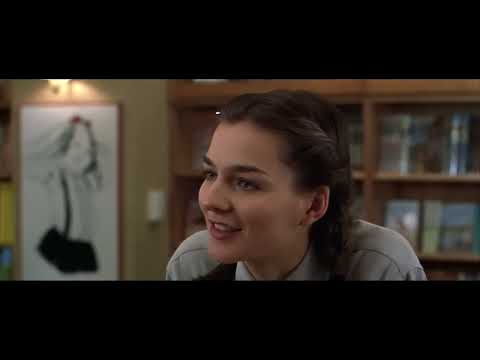
Where it plays: Joe first wanders into Kathleen’s shop, hiding his last name; the song cheekily chirps in-store as they verbally circle each other. Diegetic (shop player).
Why it matters: Musical irony: a predator visiting a kindly bookshop, scored with a children’s warning.
“Dummy Song” — Louis Armstrong
Where it plays: Sidewalk kerfuffle and chivalry: Joe steps in with a grin and an overconfident fix while Satchmo’s bounce keeps tempers low. Non-diegetic needle-drop.
Why it matters: Gives Joe’s charm an old-soul soundtrack — warm brass, warmer grin.
“Remember (Christmas)” — Harry Nilsson
Where it plays: Holiday window-shopping and bookstore decorating; twinkle lights and melancholy mingle as business worries creep in. Non-diegetic montage.
Why it matters: Nostalgia without sap; the melody becomes the film’s memory-theme.
“Tomorrow” — from Annie (children’s vocal)
Where it plays: A holiday interlude with a pint-size performance linking school, stage, and the shop’s community vibe. Diegetic performance.
Why it matters: Adds neighborhood texture and a wink at musical-theatre optimism.
“Signed, Sealed, Delivered I’m Yours” — Stevie Wonder
Where it plays: A mid-movie pep burst that bridges flirting, bravado, and “we might actually be okay” momentum. Non-diegetic.
Why it matters: The most grin-inducing needle-drop in the set — title as plot pun.
“I Guess the Lord Must Be in New York City” — Harry Nilsson / Sinéad O’Connor
Where it plays: Nilsson’s original threads through street-life moments; O’Connor’s cover turns up in the end-titles on the album version. Non-diegetic/credits.
Why it matters: Two readings of the same longing — one jaunty, one tender — both very Manhattan.
“Anyone At All” — Carole King
Where it plays: A reflective late-film swell and on album/credit placements; King’s new-for-the-film tune plays like advice from an old friend. Non-diegetic, pop bookend.
Why it matters: The only brand-new song by a legacy songwriter — bridges generations in one voice.
“Over the Rainbow” — Harry Nilsson
Where it plays: Riverside Park reveal and embrace, then into credits — strings, piano, and that feather-light vocal. Non-diegetic climax/credits.
Why it matters: The feeling of wish fulfillment. (A crew oral history recalls the chills when they tried this cue at the end.)
“The ‘You’ve Got Mail’ Suite” — George Fenton
Where it plays: Email montages, midnight confessions, and the “to the mattresses” advice passages get Fenton’s glockenspiel-and-strings sparkle. Score feature on album.
Why it matters: The private-thoughts music; it’s the sound of the cursor blinking before you press Send.
Notes & Trivia
- Three Harry Nilsson performances + one Nilsson cover make him the film’s stealth “music star.”
- Carole King wrote and performed “Anyone At All” for the movie; the track was promoted alongside the release.
- “Never Smile at a Crocodile” is in the film but not on the commercial album.
- Fenton’s score album was issued separately; the song compilation closes with a five-minute suite of his themes.
- That buoyant morning montage needle-drops The Cranberries’ “Dreams,” giving the 90s its say amid mid-century pop.
Music–Story Links
When Joe first tests the waters in Kathleen’s shop, the crocodile lullaby winks at his “predator” status. As their feud turns public, older pop chestnuts keep the tone light even as the stakes rise. Email scenes shrink to chamber-music size under Fenton’s glockenspiel; city walks breathe to Nilsson. And when the story finally chooses wonder over irony, “Over the Rainbow” lifts the curtain one last time.
Reception & Quotes
The film was a hit and the soundtrack became a cozy-classics staple. According to Wikipedia’s soundtrack overview, the album (Atlantic) arrived December 1998 with a mix of 50s–70s standards, multiple Nilsson cuts, and Fenton’s suite; the film’s box-office success helped cement its “fall in New York” sonic identity.
“A Park Slope record collection fell in love with a broadband future.” album rundowns
“Nilsson’s ‘Over the Rainbow’ at the end? Instant goosebumps.” crew oral histories
“Fenton scores the cursor — that little glow of possibility.” score reviews
Interesting Facts
- Atlantic’s CD lists 15 cuts, ending with Fenton’s five-minute suite and Jimmy Durante’s closer.
- Nilsson’s “The Puppy Song” also opens the film’s title sequence — identified by title-design archivists.
- “I Guess the Lord Must Be in New York City” appears twice in different versions: Nilsson in-film; Sinéad O’Connor on the album.
- The soundtrack’s mix of legacy cuts + one new Carole King song became a late-90s rom-com blueprint.
- A few cues heard on screen (like the Disney “crocodile” number) are absent from the commercial release.
Technical Info
- Title: You’ve Got Mail — Music From the Motion Picture
- Year: 1998 (film) / 1998 (album release)
- Type: Various-artists soundtrack + separate original score
- Label: Atlantic Records (songs); score issued separately
- Key artists (selection): Harry Nilsson; The Cranberries; Stevie Wonder; Bobby Darin; Roy Orbison; Louis Armstrong; Randy Newman; Carole King; Jimmy Durante
- Composer (score): George Fenton
- Notable placements (film): “The Puppy Song” (main titles); “Dreams” (morning city montage); “Rockin’ Robin” (kids’ bookstore visit); “Never Smile at a Crocodile” (shop meet); “Remember (Christmas)” (holiday montage); “Signed, Sealed, Delivered I’m Yours” (mid-film lift); “Over the Rainbow” (finale/credits)
- Trailer Video ID: bjP4s7UUnK8
Questions & Answers
- Is there more than one album?
- Yes — the Atlantic song compilation and a separate release of George Fenton’s original score.
- Which song plays over the opening titles?
- Harry Nilsson’s “The Puppy Song.” Title-design sources call it out explicitly.
- What’s the ending song?
- Nilsson’s “Over the Rainbow” over the Riverside Park reveal and into the credits.
- Why so much Harry Nilsson?
- His voice gives the various-artists set a through-line — wistful, New York-warm, and era-true.
- Are all the in-film songs on the album?
- No. A few diegetic bits — famously “Never Smile at a Crocodile” — are in the movie but not on the OST.
Canonical Entities & Relations
| Subject | Relation | Object |
|---|---|---|
| Nora Ephron | wrote & directed | You’ve Got Mail (1998) |
| George Fenton | composed | You’ve Got Mail original score |
| Atlantic Records | released | You’ve Got Mail — Music From the Motion Picture (songs) |
| Harry Nilsson | performed | “The Puppy Song,” “Remember (Christmas),” “Over the Rainbow,” “I Guess the Lord Must Be in New York City” (in-film) |
| Carole King | wrote & performed | “Anyone At All” (new song for the film) |
| Stevie Wonder | performed | “Signed, Sealed, Delivered I’m Yours” |
| The Cranberries | performed | “Dreams” |
| Warner Bros. | distributed | the film |
Sources: Wikipedia (film & soundtrack); Apple Music & Spotify album pages; Discogs release pages; Art of the Title (opening cue); Vanity Fair’s crew oral history; DVD/database cue lists; filming-location notes used for scene context.
According to Art of the Title, the opening titles use Nilsson’s “The Puppy Song”; according to Wikipedia’s soundtrack entry, the album mixes legacy cuts with three Nilsson tracks and a Carole King original, with separate score by George Fenton; per Apple/Spotify listings, the Atlantic compilation runs 15 tracks including Fenton’s suite; per a Vanity Fair oral history, Nilsson’s “Over the Rainbow” was chosen for the final scene because it carried “a huge emotional overtone.”
November, 19th 2025
A-Z Lyrics Universe
Cynthia Erivo Popular
Ariana Grande Horsepower
Post Malone Ain't No Love in Oklahoma
Luke Combs Good Riddance (Time of Your Life)
Green Day Bye Bye Bye
*NSYNC You're the One That I Wan
John Travolta & Olivia Newton-John I Always Wanted a Brother
Braelyn Rankins, Theo Somolu, Kelvin Harrison Jr. and Aaron Pierre The Power of Love
Frankie Goes to Hollywood Beyond
Auli’i Cravalho feat. Rachel House MORE ›