Soundtracks:  A B C D E F G H I J K L M N O P Q R S T U V W X Y Z #


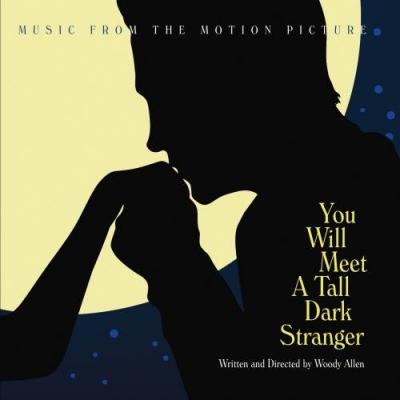
You Will Meet A Tall Dark Stranger Album Cover

"You Will Meet A Tall Dark Stranger" Soundtrack Lyrics

Movie • 2010

Track Listing

When You Wish Upon A Star

Leon Redbone

When My Baby Smiles At Me

Tom Sharpsteen and His Orlandos

If I Had You (Instrumental)

Benny Goodman & His Orchestra

''Grave Assai'' From Guitar Quintet In D Major ''Fandango'' G448 (Solo)

Tali Roth

I'll See You In My Dreams (Instrumental)

The Eddy Davis Trio

''Grave Assai'' From Guitar Quintet In D Major ''Fandango'' G448 (Quintet)

Tali Roth

Let Your Body Move

Marc Ferrari & Michael McGregor

Serenade No. 6 In D Major, K. 239 III Rondo Allegretto

Sir Charles Mackerras & Prague Orchestra

Only You / And You Alone

Tom Sharpsteen and His Orlandos

Tu Che A Dio Spiegasti L'ali

Orchestra of the Royal Opera House

Mais Si L'amour

Giulia y Los Tellarini

I Never Loved You

Scott Nickoley & Jamie Dunlap

My Sin

Tom Sharpsteen and His Orlandos


“You Will Meet a Tall Dark Stranger (Music From the Motion Picture)” – Album Guide to Tracks and Key Scenes

Official trailer still: London streets and overlapping couple portraits for You Will Meet a Tall Dark Stranger
You Will Meet a Tall Dark Stranger — official trailer still, 2010

Overview

What happens when fate, fortune-telling, and London midlife crises collide — and the soundtrack refuses to shout? Woody Allen’s You Will Meet a Tall Dark Stranger floats on gently anachronistic charm: jazz 78s, salon-classical guitar, and old-time dance-band sides that whisper while the characters make noisy decisions. The music behaves like a confidante — amused, affectionate, never in a hurry.

The album stitches Leon Redbone’s dreamy croon to Benny Goodman’s ballroom glide, sprinkles in café-ready string writing, and lets Spanish/Italianate guitar cast a warm glow. Instead of a modern pop needle-drop, you get Tom Sharpsteen & His Orlandos playing like a gramophone in the next room; instead of a symphonic swell, a Boccherini Grave assai tips its hat and slips away. The restraint is the point.

Arc-wise — arrival → adaptation → rebellion → collapse — the palette tracks the characters’ delusions. Light dancehall numbers flatter self-myths; polite classical cues keep up appearances in galleries and drawing rooms; a wistful croon returns when fantasies fray. It’s the sound of love and luck being negotiated in half-light.

How It Was Made

Rather than commissioning a new score, the film curates period recordings and classical excerpts — Allen’s long-time habit when romance and irony need a softer focus. Milan Records issued the official compilation in September 2010 with 13 tracks spanning American dance-band sides, swing era staples, a Mozart Serenata notturna movement, and two versions of Boccherini’s Guitar Quintet in D, “Fandango” (Grave assai), the latter performed by guitarist Tali Roth. According to Milan Records’ album page, the set leans on Leon Redbone’s “When You Wish Upon a Star” and balances vintage jazz with delicate guitar miniatures.

Selections skew diegetic or source-like in the film (restaurants, living rooms, gallery spaces), keeping conversation intelligible and irony audible. That quiet curatorial approach lets actors carry the drama while the music quietly comments from the next table over.

Trailer still: Naomi Watts and Josh Brolin framed in a warm London interior with soft diegetic music implied
Allen’s method here: source cues and soft focus, not big symphonic gestures.

Tracks & Scenes

“When You Wish Upon a Star (LP Version)” — Leon Redbone
Where it plays: A signature curtain-raiser and reprise on the compilation, its sepia croon frames the film’s fairy-tale promises with a shrug. Heard over credits and transitional city views, it functions like a narrator that never raises its voice (non-diegetic/source-styled).
Why it matters: Dream logic in lullaby form — fitting for a story about people soothing themselves with fantasies.

“When My Baby Smiles at Me” — Tom Sharpsteen & His Orlandos
Where it plays: Dance-band warmth slips under social scenes (restaurants, informal parties), giving chatter a gentle two-step rhythm (diegetic-adjacent ambiance).
Why it matters: Sets the film’s time-warped mood: modern London behaving like a 78-rpm living room.

“If I Had You” — Benny Goodman & His Orchestra
Where it plays: A polished swing side graces gallery and dinner sequences, smoothing over frictions between bosses, spouses, and would-be lovers.
Why it matters: Aspirational elegance — a musical mask for characters intent on seeming fine.

“‘Grave assai’ (from Boccherini: Guitar Quintet in D ‘Fandango’, G.448)” — Tali Roth (solo & quintet takes)
Where it plays: Quiet interior moments and academic/cultural beats gain a contemplative glow; the graceful phrases behave like sotto voce commentary (non-diegetic/source-like).
Why it matters: Threads the film’s Europe-leaning sensibility through a single elegant motif.

“I’ll See You in My Dreams” — The Eddy Davis Trio
Where it plays: Gentle café-jazz color under confessions and second thoughts; the melody lingers after conversations end.
Why it matters: A fragile promise song for a film full of promises no one can keep.

“Serenade No. 6 in D, K.239: III. Rondo (Allegretto)” — Sir Charles Mackerras & Prague Orchestra
Where it plays: Light classical sparkle for gallery-day brightness and well-heeled bustle (non-diegetic).
Why it matters: Puts a champagne bubble under the film’s most civil façades.

“Only You (And You Alone)” — Tom Sharpsteen & His Orlandos
Where it plays: Background in romantic misreadings and mismatched pairings — a wry counterpoint to the dialogue’s hedging.
Why it matters: The title undercuts the plot’s serial “not-only-yous.” Irony, gently delivered.

“Mais si l’amour” — Giulia y Los Tellarini
Where it plays: A light, continental cue that sneaks into café and sidewalks, connecting this film to Allen’s broader Euro-period sound world.
Why it matters: A soft bridge from Vicky Cristina Barcelona–style textures to London’s interiors.

“Let Your Body Move” — Marc Ferrari & Michael McGregor
Where it plays: Modern library-pop pulse for brief montages and city cutaways; brisk, but mixed low (non-diegetic).
Why it matters: A rare contemporary tint that doesn’t break the film’s vintage spell.

Trailer montage: art gallery floor and London exteriors, with airy chamber and jazz cues implied
Chamber strings, café jazz, and dance-band glow — small rooms, big decisions.

Notes & Trivia

  • The official album gathers 13 tracks; Leon Redbone opens the set, and two distinct Boccherini Grave assai performances appear.
  • Giulia y Los Tellarini — spotlighted in Vicky Cristina Barcelona — return here with “Mais si l’amour.”
  • Classical selections include a Mozart Serenata notturna movement and an Opera House recording of Mercadante’s aria “Tu che a Dio spiegasti l’ali.”
  • The compilation leans heavily on source-style placement: restaurant bands, radios, rooms with records — typical of Allen’s curation.
  • Release editions vary slightly by territory/streamer (12–13 tracks; identical core sequence).

Music–Story Links

When characters pretend they’re fine, polished swing and Mozart oblige — the sonic equivalent of good posture. As infatuations drift across windows and galleries, guitar and café-jazz keep things weightless, almost plausible. And when the film circles back to its thesis — delusions that comfort us — Redbone’s lullaby-croon returns like a wink: wish if you must; life will keep its own time.

Reception & Quotes

Critics were mixed on the film, but even lukewarm reviews noted the easy elegance of the music choices. Trade and catalog notes highlight the compilation’s blend of vintage jazz, light classics, and Redbone’s dreamy opener; several reviews praised how the cues stay out of the actors’ way while sharpening the irony.

“Wry, civil, and lightly melancholic — the music lets the conversations do the damage.” album rundowns
“Allen’s curated cues — jazz, salon guitar, a Mozart rondo — are the film’s softest jokes.” retrospective notes
“Redbone’s ‘Wish Upon a Star’ sets the fable tone from the first bars.” soundtrack write-ups
Trailer still: late-night London street; the film’s source-music aesthetic lingers
A gentle compilation: no big themes — just sly, well-chosen rooms of sound.

Interesting Facts

  • The physical CD appeared via Milan Records in late September 2010; some retailers list it as a manufacture-on-demand disc.
  • Streaming editions on Spotify/Apple vary between 12 and 13 tracks but keep the same core selections.
  • Two Boccherini entries appear: a brief solo rendering and a fuller quintet-texture take of the Grave assai from the famous “Fandango” quintet.
  • Marc Ferrari & Michael McGregor’s “Let Your Body Move” represents the album’s small dose of contemporary production among vintage recordings.
  • Giulia y Los Tellarini’s placement ties this London film back to Allen’s late-2000s European cycle.

Technical Info

  • Title: You Will Meet a Tall Dark Stranger — Music From the Motion Picture
  • Year: 2010
  • Type: Various-artists compilation (no commissioned score)
  • Key selections (album): Leon Redbone “When You Wish Upon a Star”; Tom Sharpsteen & His Orlandos “When My Baby Smiles at Me,” “Only You (And You Alone),” “My Sin”; Benny Goodman “If I Had You”; The Eddy Davis Trio “I’ll See You in My Dreams”; Tali Roth — Boccherini Grave assai (solo & quintet); Mozart K.239: III Rondo (Mackerras/Prague); Giulia y Los Tellarini “Mais si l’amour”; Marc Ferrari & Michael McGregor “Let Your Body Move”; Scott Nickoley & Jamie Dunlap “I Never Loved You.”
  • Label: Milan Records (Sony Masterworks imprint)
  • Formats/availability: CD and digital (region variations); commonly 12–13 tracks on streaming services.
  • Trailer Video ID: BMOpyl14mII

Questions & Answers

Is there an original score?
No — the film uses curated recordings (jazz, dance-band, classical guitar, light classics) rather than a commissioned score.
What track bookends the album?
Leon Redbone’s “When You Wish Upon a Star” opens the compilation and recurs as the defining mood piece.
Why so much vintage music?
Allen often scores with existing recordings to keep conversations foregrounded and to add wry distance — this film follows that template.
Are the streaming and CD editions identical?
Core tracks match; some listings show 12 vs. 13 tracks depending on territory/service, but the program is effectively the same.
Where do the Boccherini pieces fit?
They’re used like chamber miniatures — intimate, reflective cues that sit naturally in interior scenes.

Canonical Entities & Relations

SubjectRelationObject
Woody Allenwrote & directedYou Will Meet a Tall Dark Stranger (2010)
Milan RecordsreleasedYou Will Meet a Tall Dark Stranger — Music From the Motion Picture (2010)
Leon Redboneperformed“When You Wish Upon a Star” (album opener)
Benny Goodman & His Orchestraperformed“If I Had You”
Tali RothperformedBoccherini Guitar Quintet in D, G.448 (selections)
The Eddy Davis Trioperformed“I’ll See You in My Dreams”
Giulia y Los Tellariniperformed“Mais si l’amour”
Sir Charles Mackerras & Prague OrchestraperformedMozart K.239: III. Rondo (Allegretto)
Sony Pictures Classicsdistributedthe film (US)

Sources: Milan Records release page; SoundtrackCollector listing; Discogs release pages; Spotify/Apple Music album pages; Wikipedia (film overview & credits); YouTube trailer upload.

Per Milan Records, the compilation’s tone hinges on Redbone’s “When You Wish Upon a Star” and Boccherini’s Grave assai, with jazz/dance-band selections by Goodman, Tom Sharpsteen & His Orlandos, and The Eddy Davis Trio; according to SoundtrackCollector and Discogs, the CD sequence runs 13 tracks including Mozart K.239 and “Mais si l’amour”; per Spotify/Apple, streaming editions mirror the CD with minor count variations; as listed on Wikipedia, the film premiered in 2010 and was distributed by Sony Pictures Classics in the U.S.

November, 19th 2025


A-Z Lyrics Universe

Lyrics / song texts are property and copyright of their owners and provided for educational purposes only.