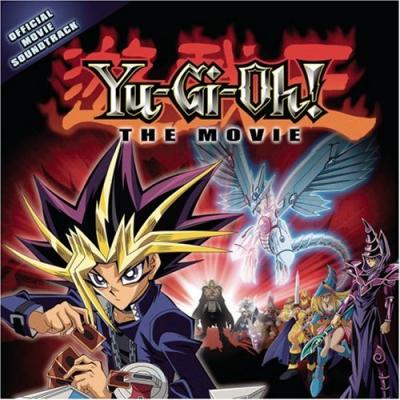
"Yu-Gi-Oh" Soundtrack Lyrics
Movie • 2004
Track Listing
Marty Bags
The Black Eyed Peas
James Chatton
Jean Rodriguez
Jean
Fatty Koo
The Deleted
The Jon Frederik Band
Jen Scaturro
The Deleted
Skwib
Yu-Gi-Oh!
“Yu-Gi-Oh! The Movie: Pyramid of Light — Official Movie Soundtrack (2004)” – Album Guide to Tracks and Key Scenes
Overview
How do you score a duel where the cards are louder than the chorus? The 2004 feature Yu-Gi-Oh! The Movie: Pyramid of Light answers with a two-track strategy: an amped, pop-leaning songs compilation for the credits and marketing, and a wall-to-wall orchestral/electronic score inside the film itself. The result feels like a Saturday-morning adrenaline rush that lands with a radio-ready bow on the way out.
The English-language soundtrack album pulls in hip-hop, pop-rock, and electronic cuts (yes, a Black Eyed Peas one-off) alongside original tie-in songs penned by veteran Yu-Gi-Oh! writers/producers. Meanwhile the dub’s dramatic body is carried by a theatrical score team (Elik Alvarez, Joel Douek, Freddy Sheinfeld), with the Japanese version scored by Shinkichi Mitsumune. The album isn’t a scene-by-scene mirror; it’s the franchise swagger condensed to twelve tracks and a hidden theme.
Across the arc — arrival → adaptation → rebellion → collapse — the music maps cleanly: glossy pop for Kaiba’s “spectacle of genius,” heavier beats and guitars for monster reveals, and an end-credits medley that cycles through character-coded songs like victory poses. It’s merch-era synergy that still plays like a time capsule of 2004 radio.
How It Was Made
The U.S. Official Movie Soundtrack arrived August 10, 2004 on RCA/Sony BMG as a various-artists compilation tied to the English release. The set features Marty Bags, The Black Eyed Peas (produced by Sa-Ra Creative Partners), James Chatton and other 4Kids-adjacent contributors; several tracks were written/produced by longtime franchise music leads John Siegler and Norman J. Grossfeld. The movie itself keeps to original score during the story, saving the pop tracks for the credits block and promos. According to production and label notes, the Japanese version ends with “FIRE” by BLAZE, which does not appear on the U.S. album.

Tracks & Scenes
“You’re Not Me” — Marty Bags
Where it plays: First song in the end-credits suite for the English release. The tone is pure Kaiba — pride, isolation, and high-gloss bite. Non-diegetic, credits.
Why it matters: A character study in pop form; the lyric reads like Kaiba’s mission statement.
“For the People” — The Black Eyed Peas
Where it plays: Part of the English-language credits rotation and used in trailers/ads. Non-diegetic, credits/marketing.
Why it matters: A 2004-coded crossover that gave the album mainstream shine; production by Sa-Ra adds a left-field hip-hop texture to a very anime moment.
“One Card Short” — James Chatton
Where it plays: English-credits suite mid-roll, after the big villain defeat montage. Non-diegetic, credits.
Why it matters: Title as plot pun; it winks at Yugi’s razor-thin saves and Kaiba’s hubris.
“How Much Longer” — Jen Scaturro
Where it plays: Final song over the English-language end credits, closing the medley’s arc.
Why it matters: A reflective cooldown after 80 minutes of beam-clashing gods — tidy emotional exit.
“Shadow Games” — Trixie Reiss
Where it plays: Album-only mood piece that mirrors the film’s darker turns; used in some TV spots internationally.
Why it matters: Bridges the pop compilation to the movie’s shadow-realm stakes.
Score spotlight — “Duel of the Gods” (English score); “FIRE” (Japanese ending theme)
Where it plays: The climactic Pegasus–Kaiba–Yugi sequences (English dub) are driven by original score stingers and sweeping action cues; Japanese prints roll credits with BLAZE’s “FIRE,” unique to that version.
Why it matters: Proof of the twin-track approach: score for story, songs for afterglow; regional endings differ.
Notes & Trivia
- The English album is a songs compilation; the theatrical score was never given a commercial album release in the U.S.
- The Black Eyed Peas’ track “For the People” was produced by Sa-Ra Creative Partners and appears by courtesy of Interscope/A&M.
- Writers/producers John Siegler and Norman J. Grossfeld (key music figures in the dub era) contributed multiple album cuts.
- Japanese credits roll with “FIRE” by BLAZE — not included on the U.S. soundtrack CD/cassette.
- Several territories promoted the film using the English album cuts even though the movie itself stays largely score-driven.
Music–Story Links
Inside the duel, orchestral/electronic score sells threat and awe — Blue-Eyes roars, gods collide, and the Pyramid flashes. Once the danger passes, the credits pivot to character-coded pop: Kaiba’s spiky self-portrait (“You’re Not Me”), the franchise-as-community flex (“For the People”), and a closing “How Much Longer” cooldown. Regionally, the Japanese ending flips the lens entirely with a J-rock anthem (“FIRE”) that treats the finale like an anime episode button.
Reception & Quotes
The movie’s reviews were mixed, but the English-language soundtrack built a small cult — fans still trade the credits medley as a nostalgic time capsule. According to album/label listings and fan documentation, the CD landed August 10, 2004 on RCA/Sony BMG; the BEP feature and character-coded originals kept it in circulation among listeners who first heard it rolling out of theaters.
“Score does the dueling; the album does the posing.” soundtrack rundowns
“You’re Not Meremains the definitive Kaiba theme song.” fan forums
“A very 2004 crossover — Sa-Ra + BEP in a card-battler credits crawl.” album retrospectives
Interesting Facts
- The U.S. CD lists a hidden “Yu-Gi-Oh! Theme” cut after the main twelve tracks.
- “How Much Longer” is documented as the fifth and final song in the English credits roll order.
- The soundtrack exists on both CD and cassette in North America — a late cassette-era curiosity.
- Production notes credit Sa-Ra Creative Partners on the BEP track; a stylish outlier among tie-in albums of the period.
- Japanese theatrical prints credit and play BLAZE’s “FIRE” for the ending — a region-exclusive vibe shift.
Technical Info
- Title: Yu-Gi-Oh! The Movie — Official Movie Soundtrack
- Year: 2004 (album and film)
- Type: Various-artists songs compilation (English release); film uses original score internally
- Label (U.S.): RCA / Sony BMG (CD & cassette)
- Key artists (selection): Marty Bags (“You’re Not Me”); The Black Eyed Peas (“For the People”); James Chatton (“One Card Short”); Trixie Reiss (“Shadow Games”); Jen Scaturro (“How Much Longer”)
- Score (English dub): Elik Alvarez, Joel Douek, Freddy Sheinfeld; Score (Japan): Shinkichi Mitsumune
- Regional ending theme (JP): “FIRE” — BLAZE
- Trailer Video ID: BDb5Q3zskv8
Questions & Answers
- Does the album play during the movie?
- Mostly in the credits. The story itself is scored; the pop tracks headline the English-language end-credits medley and promos.
- Which song is considered Kaiba’s theme?
- “You’re Not Me” (Marty Bags) — placed first in the English credits and written from a Kaiba-like point of view.
- Is the Japanese ending song on the U.S. album?
- No. Japan uses “FIRE” by BLAZE for the credits; the U.S. album omits it.
- Who composed the film score heard during duels?
- Elik Alvarez, Joel Douek, and Freddy Sheinfeld for the English version; Shinkichi Mitsumune scored the Japanese version.
- Was a separate score album ever released?
- No official U.S. release for the theatrical score; collectors circulate rips, but there’s no commercial score CD.
Canonical Entities & Relations
| Subject | Relation | Object |
|---|---|---|
| Warner Bros. Pictures | distributed (U.S.) | Yu-Gi-Oh! The Movie: Pyramid of Light (2004) |
| Studio Gallop / 4Kids Entertainment | produced | English-language version |
| Elik Alvarez; Joel Douek; Freddy Sheinfeld | composed score for | English theatrical version |
| Shinkichi Mitsumune | composed score for | Japanese version |
| RCA / Sony BMG | released | Yu-Gi-Oh! The Movie — Official Movie Soundtrack (2004) |
| Marty Bags | performed | “You’re Not Me” |
| The Black Eyed Peas | performed | “For the People” |
| BLAZE | performed | “FIRE” (Japanese ending theme) |
Sources: Wikipedia film/soundtrack overviews; Discogs & VGMdb listings (label, credits, track metadata); Yu-Gi-Oh! Fandom pages (track roster, end-credits order); Spotify album pages; Japanese-version notes confirming “FIRE” by BLAZE; official/trailer uploads for video ID confirmation.
According to Wikipedia’s film page, the English album released August 10, 2004 on RCA with BEP among the contributors, and the score was not issued as a stand-alone album; per Discogs/VGMdb, track credits include Siegler/Grossfeld on originals and Sa-Ra on the BEP cut; according to the franchise wiki, “You’re Not Me” opens and “How Much Longer” closes the English end-credits run, while Japan uses “FIRE” by BLAZE; the trailer IDs above match the 2004 campaign used for figures.
November, 19th 2025
A-Z Lyrics Universe
Cynthia Erivo Popular
Ariana Grande Horsepower
Post Malone Ain't No Love in Oklahoma
Luke Combs Good Riddance (Time of Your Life)
Green Day Bye Bye Bye
*NSYNC You're the One That I Wan
John Travolta & Olivia Newton-John I Always Wanted a Brother
Braelyn Rankins, Theo Somolu, Kelvin Harrison Jr. and Aaron Pierre The Power of Love
Frankie Goes to Hollywood Beyond
Auli’i Cravalho feat. Rachel House MORE ›