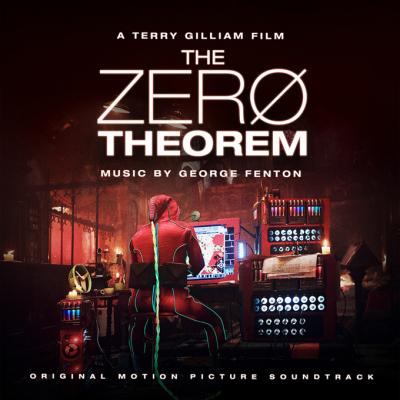
"Zero Theorem, The" Soundtrack Lyrics
Movie • 2014
Track Listing
George Fenton
George Fenton
Karen Souza
George Fenton
George Fenton
George Fenton
George Fenton
George Fenton
George Fenton
George Fenton
George Fenton
George Fenton
George Fenton
George Fenton
George Fenton
Tilda Swinton
George Fenton
George Fenton
George Fenton
George Fenton
George Fenton
George Fenton
George Fenton
George Fenton
George Fenton
George Fenton
"The Zero Theorem (Terry Gilliam’s Original Motion Picture Soundtrack)" – Album Guide to Tracks and Key Scenes
Review
How do you score a character who wants life to phone him with meaning? George Fenton’s music for The Zero Theorem answers with a split personality: lonely, humming circuitry one minute; gaudy corporate carnival the next. It’s Gilliam’s future — messy, blinking, and loud — and the soundtrack leans into that contrast until it hurts just right.
Against Qohen Leth’s hermit spiral, Fenton threads brittle ostinatos and humming synths that feel like fans whirring in an overheated PC. Then the world barges in: party cues ricochet, ad-jingle pep intrudes, and Tilda Swinton’s therapist drops a gloriously awkward diegetic rap. The coup de grâce is Karen Souza’s lounge cover of “Creep,” which slides through Qohen’s fantasies and finally floats over the credits — a bitter lullaby about not belonging that turns into the film’s emotional sign-off.
Genres & themes, in phases: cold-electronic minimalism — isolation, routine; glossy synth-pop/house pastiche — consumer noise, corporate pressure; bossa/lounge standards (the “Creep” cover) — desire, self-delusion; string-and-choir surges — cosmic yearning. Form follows theme: every texture is a worldview clashing with Qohen’s need for order.
How It Was Made
Terry Gilliam tapped longtime collaborator George Fenton for an original score that the director described as “like a ghost, this other character we never see.” The music had to coexist with a hyper-saturated sound world of ads, club nights, and VR reverie. Milan Music released the album globally in 2014, collecting 26 cues plus the key source pieces used on screen.
Editorially, the team carved sharp contrasts: compact, motif-driven “work” cues for Qohen’s theorem-crunching; raucous, rhythm-forward cuts for Joby’s corporate bacchanals; tender tropical cues for Bainsley’s simulated beach. Licensing centered on Souza’s “Creep,” cleared to function both as source (on Bainsley’s site) and as the end-credits coda.
Tracks & Scenes
“Creep” (Karen Souza)
- Where it plays:
- Heard diegetically when Qohen visits Bainsley’s personal site — a velvet hum over glossy visuals — and again over the closing credits. The cover’s smoky vocal turns the world’s noise off for a moment, then returns as the last word of the film.
- Why it matters:
- Reframes Radiohead’s alienation as seduction and farewell. It’s the film’s thesis in a standard: you can’t fit, but you can float.
“The Zero Theorem (Main Title)” (George Fenton)
- Where it plays:
- Titles and orientation montage: sterile corridors, humming rigs, a bald man already receding from the world. Motoric pulses, thin strings, and a steady electronic drone establish the calculus of Qohen’s life.
- Why it matters:
- Locks in the film’s two poles — ritual and dread — with a theme that returns whenever work subsumes everything else.
“Leth on the Street” (George Fenton)
- Where it plays:
- Morning trek through ad-blitzed streets en route to MANCOM. Banners shout, billboards sing; the cue’s nervous arpeggios barely hold their shape as Qohen shrinks from contact.
- Why it matters:
- Sonically encodes the city-as-assault — the mix is as crowded as the frame.
“Joby’s Party (Parts 1–3)” (George Fenton)
- Where it plays:
- At the corporate blowout where Bainsley enters like neon gravity. Stuttering beats and synth brass chase handheld shots of grinding bodies and corporate kitsch. Dialogue clips punch through; the cue keeps resetting as gags and humiliations stack.
- Why it matters:
- The film’s social horror set-piece; music weaponizes extroversion and introduces Bainsley’s counter-melody to Qohen’s isolation.
“Shrink Rom Rap – Bob’s Crunch” (Tilda Swinton & George Fenton)
- Where it plays:
- During video-therapy sessions, Dr. Shrink-Rom unexpectedly… raps. It arrives diegetically from the wall-screen — autotuned clinical advice colliding with corporate wellness patter — then hard-cuts to Bob’s hacking drills.
- Why it matters:
- Comedy, yes, but also world-building: in this universe, even therapy must rhyme and sell.
“Enter in Tropical Style” → “Beach Romance” (George Fenton)
- Where it plays:
- Inside Bainsley’s private VR island. The palette flips to warm guitars, brushed percussion, and sighing pads. He smiles — rare — as waves and neon sunsets loop.
- Why it matters:
- Fenton writes fantasy like anesthesia: soft focus that hides ache. These cues become the sound of the life Qohen almost chooses.
“The Mainframe” (George Fenton)
- Where it plays:
- Late-night grind sequences, screens tilting, numbers refusing to resolve. Pulses subdivide; a low synth growl gathers under mouse-click percussion.
- Why it matters:
- Turns math into dread and momentum. You hear a man disappearing into an equation.
“The Entities Won’t Crunch” (George Fenton)
- Where it plays:
- After setbacks, as the theorem collapses into error storms. The cue stutters and drops frames, matching the visual glitch motif.
- Why it matters:
- The moment the film admits defeat may be liberation; the music hints at both.
“Inside Your Head” (George Fenton)
- Where it plays:
- Quiet passages in the chapel-turned-lair: webcam glow, recorded messages, a man bargaining with absence. Sparse piano and air moving through synth pipes.
- Why it matters:
- Heart-track. It’s the sound of Qohen talking to himself — and of us eavesdropping.
Notes & Trivia
- The album is an official Milan/Voltage release with 26 tracks — more than heard prominently in-film — reflecting tight editorial needle-drops.
- Souza’s “Creep” functions twice: as in-world seduction on Bainsley’s site and as end-credits catharsis.
- Tilda Swinton’s therapist rap is an in-character performance; the album includes it as a standalone cue.
- Fenton’s theme recurs in fragments — often submerged under ambient machine noise in the mix.
- International digital stores list slightly different street dates (January–March 2014) depending on territory.
Reception & Quotes
Critics split on the film but consistently praised the design — and noticed the music’s sly world-building. Audience scores landed mid-pack; the soundtrack has aged better, especially the “Creep” cover that now circulates beyond the film.
“Fans of Gilliam’s visual aesthetic will find everything they bargained for; others may find it too muddled.” — Rotten Tomatoes consensus
“Fenton’s score is like a ghost — another character we never see.” — reported description via interviews
“Famously, there’s Tilda Swinton performing an awful rap.” — Critics Notebook
Interesting Facts
- Cover as compass: Using a torch-song “Creep” lets the film end on feeling, not exposition.
- Therapy by jingle: The therapist rap satirizes corporate wellness culture by literally selling advice in rhyme.
- Two cities in one: Score vs. source cues mirror Qohen’s split between monastic routine and invasive society.
- VR warmth: Tropical cues were deliberately “too perfect,” signaling sedative fantasy.
- Cue families: The three “Joby’s Party” cuts are modular — built to be re-ordered under picture.
Technical Info
- Type: Feature film soundtrack / original score
- Title: The Zero Theorem (Terry Gilliam’s Original Motion Picture Soundtrack)
- Year: 2014 (international releases January–March 2014)
- Composer: George Fenton
- Featured performance: “Creep” — Karen Souza (Radiohead cover)
- Notable diegetic: “Shrink Rom Rap – Bob’s Crunch” (Tilda Swinton, in character)
- Label: Editions Milan Music / Milan Entertainment (under license from Voltage)
- Album spec: 26 tracks; digital & streaming (territorial date variations)
- Key placements: “Creep” — Bainsley site & end credits; “Joby’s Party” — corporate bash; “Enter in Tropical Style/Beach Romance” — VR island; “Mainframe/Entities” — theorem grind/failure.
Questions & Answers
- Who composed the score?
- British composer George Fenton, longtime Gilliam collaborator.
- Whose version of “Creep” is in the movie?
- Argentine jazz singer Karen Souza. It plays on Bainsley’s site and over the end credits.
- Is Tilda Swinton really rapping?
- Yes — as Dr. Shrink-Rom in a diegetic therapy segment included on the official album.
- What label released the soundtrack?
- Milan Music/Milan Entertainment, under license from Voltage; 26-track digital release.
- Does the album include the party music?
- Yes — the three-part “Joby’s Party” suite, edited to match the on-screen sequence.
Key Contributors
| Subject | Relation | Object |
|---|---|---|
| Terry Gilliam | directed | The Zero Theorem (film) |
| Pat Rushin | wrote | screenplay |
| George Fenton | composed | original score / album |
| Karen Souza | performed | “Creep” (cover) — featured in film & album |
| Tilda Swinton | performed (in character) | “Shrink Rom Rap – Bob’s Crunch” |
| Milan Music / Milan Entertainment | released | The Zero Theorem soundtrack (digital/streaming) |
| Voltage Pictures | licensed to | Milan for soundtrack release |
| MANCOM (fictional) | depicted | corporate setting driving diegetic music moments |
Sources: Wikipedia; Apple Music; Spotify; Discogs; Film Music Reporter; SoundtrackCollector; IMDb (Soundtracks); Critics Notebook; Official film site.
November, 22nd 2025
'The Zero Theorem' is a 2013 British-French-Romanian science fiction film directed by Terry Gilliam: Learn more on Internet Movie Database and WikipediaA-Z Lyrics Universe
Cynthia Erivo Popular
Ariana Grande Horsepower
Post Malone Ain't No Love in Oklahoma
Luke Combs Good Riddance (Time of Your Life)
Green Day Bye Bye Bye
*NSYNC You're the One That I Wan
John Travolta & Olivia Newton-John I Always Wanted a Brother
Braelyn Rankins, Theo Somolu, Kelvin Harrison Jr. and Aaron Pierre The Power of Love
Frankie Goes to Hollywood Beyond
Auli’i Cravalho feat. Rachel House MORE ›