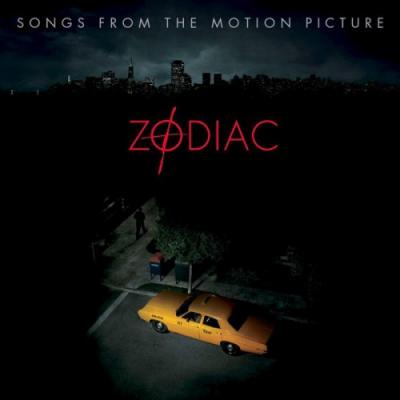
"Zodiac" Soundtrack Lyrics
Movie • 2007
Track Listing
Three Dog Night
Eric Burdon and The Animals
Santana
Four Tops
Lynn Anderson
Sly and the Family Stone
Isaac Hayes
Marvin Gaye
Stories
Donovan
Johnny Mathis
John Coltrane
Miles Davis
Johnny Mann Singers
"Zodiac (Songs from the Motion Picture & Original Score)" – Album Guide to Tracks and Key Scenes
Review
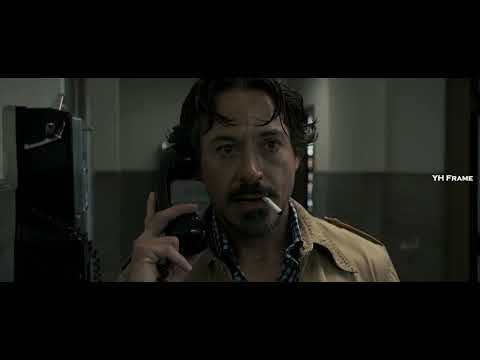
What does paranoia sound like when the killer rarely appears? Zodiac answers with a meticulous collage: era-defining radio cuts that timestamp the manhunt, a KSFO jingle that feels like civic wallpaper, and David Shire’s stealthy, piano-forward score that seeps in only when obsession takes over. The songs paint the Bay Area’s pulse; the score tightens the noose around Robert Graysmith’s routines.
Heard straight through, the “album” is really two interlocking records — songs as documentary patina (Three Dog Night, Marvin Gaye, Donovan) and score as inner thought. Fincher’s team licenses needle-drops to leap years at a time, then Shire’s cues whisper during breakthroughs and dead ends. The contrast is the point: party jukeboxes, cab radios, KSFO’s “Sound of the City” keep life loud; Shire’s austere motifs remind us that the case lives in private headspace.
Genres & themes, in phases: AM/FM pop & soul — time, place, bureaucracy; psychedelic folk-rock — dread and myth (“Hurdy Gurdy Man” brackets the film like a curse); jazz instrumentals — late-night reportage; atonal/12-tone inflected score — calculations, hunches, and the cold comfort of patterns.
How It Was Made
David Fincher initially wanted only period songs and sound design — no original score — a tapestry of KFRC/KSFO airchecks, ads, and pop tracks stretching across the late ’60s–’70s. During the cut, sound designer Ren Klyce temped in music from David Shire’s The Conversation, which led Fincher to hire Shire. The composer built about 37 minutes of new music (more than the 15–20 minutes first requested), blending piano, small ensemble, and textures echoing Charles Ives’ The Unanswered Question
. He even mapped character timbres — trumpet for Toschi, piano for Graysmith, tense strings for the killer. The songs album landed via Lakeshore; the score album via Varèse Sarabande.
Tracks & Scenes
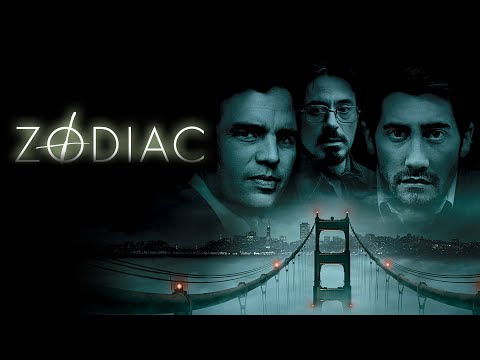
“Hurdy Gurdy Man” (Donovan)
- Where it plays:
- Opening lovers-lane attack in Vallejo on July 4, 1969 — fireworks in the distance, playful banter in a Corvair, then headlights flood the rearview. The sinuous groove turns malignant as the gunman steps from the shadows; the same song returns over the film’s closing movements like a curse completing a circle. Approx. opening minutes and end credits.
- Why it matters:
- Brackets the narrative: summer-of-love residue curdled into terror. The needle-drop becomes a memory trigger the film can’t shake.
“Bang Bang (My Baby Shot Me Down)” (Vanilla Fudge)
- Where it plays:
- Over the Paul Stine cab murder beat in San Francisco — radio chatter, a street corner, a stalled breath as a young witness phones police. The heavy psych cover floods the track at roughly the 25-minute mark (theatrical cut), acting as counterpoint to forensic images.
- Why it matters:
- The title’s cruel on-the-nose becomes Fincher’s black irony: pop melodrama over procedural quiet.
“Don’t Let the Sun Catch You Crying” (José Feliciano)
- Where it plays:
- Toschi and Armstrong drive toward the cab crime scene near the Presidio — windshield wipers, dashboard glow, and a melancholy guitar as blue lights rise ahead (≈0:27).
- Why it matters:
- Mood calibration: the investigation will be more sorrow than triumph.
“Jean” (Oliver)
- Where it plays:
- A couple cruises toward Lake Berryessa — a postcard drive that slowly grows uneasy (≈0:17). Ambient radio turns into a metronome for dread as wide daylight shots give way to close handheld framing.
- Why it matters:
- Shows Fincher’s trick: let an innocent soft-pop hit mark time, then let reality rupture it.
“Young Girl” (Gary Puckett & The Union Gap)
- Where it plays:
- Graysmith walks past a raucous newspapermen’s hangout — the track blasts from inside as he lingers outdoors, envy and curiosity mixing in his look.
- Why it matters:
- An outsider’s theme — Graysmith hovering at the edge of the club he’ll one day out-obsess.
“Lowdown” (Boz Scaggs)
- Where it plays:
- Late-night diner. Graysmith meets Toschi and lays out what he thinks he knows about Arthur Leigh Allen; a smooth-groove radio bed hums under their uneasy rapport.
- Why it matters:
- Casual funk vs. life-consuming obsession — the needle-drop undercuts any notion of a clean break from the case.
“Baker Street” (Gerry Rafferty)
- Where it plays:
- Endgame stretch — Graysmith closes in and finally looks Allen in the eye. The sax hook floats like a tired victory that never lands.
- Why it matters:
- An anthem of restless striving — perfect for a maybe answer.
“The Sound of the City (KSFO)” (The Johnny Mann Singers)
- Where it plays:
- As radio montage texture — IDs and jingles that place us in Bay Area media churn. It pops like civic wallpaper between letters, press rooms, and talk radio snippets.
- Why it matters:
- World-building: the city sings its own branding while a killer writes his.
Score highlights (David Shire)
- Where it plays:
- “Aftermaths,” “Law & Disorder,” “Graysmith Obsessed,” and the brittle “The Unanswered Question” textures swim under code-breaking, basement dread, and jump-cut timelines; Shire’s 12-tone/tone-row fingerprints surface as piano ticks and icy strings.
- Why it matters:
- Shire saves music for the inner life — when the noise of the world drops, the math of obsession starts to hum.
Notes & Trivia
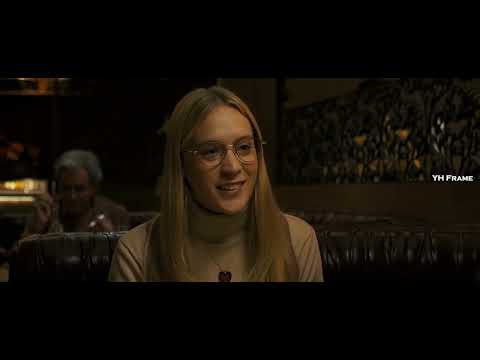
- Two commercial releases: Zodiac: Songs from the Motion Picture (Lakeshore) and Zodiac (Original Motion Picture Score) (Varèse Sarabande).
- Music supervision by George Drakoulias; Fincher and Drakoulias chased period-correct pop across 1969–late ’70s.
- The KSFO “Sound of the City” jingle appears as a diegetic radio ID — a Bay Area deep cut that fans still celebrate.
- “Hurdy Gurdy Man” famously opens the movie and returns at the end, reframed by everything we’ve learned.
- Shire’s score was built after temp tracks from The Conversation; his final music uses 12-tone manipulations and small ensemble.
Reception & Quotes
Critics praised the film’s rigor and mood — and noticed how sound and music do the quiet heavy lifting. The songs album doubles as a Bay Area time capsule; Shire’s score earned cult admiration for restraint.
“Fincher’s most mature and accomplished work.” — Variety (Todd McCarthy)
“A basement scene… one of the best I’ve ever seen along those lines.” — Roger Ebert
“The ending is the most haunting.” — Rogerebert.com/Scanners
Interesting Facts
- Song-first plan: Fincher originally wanted no score — just vintage tracks, ads, and radio ephemera.
- From temp to hire: Shire got the gig after Klyce temped cues from The Conversation and contacted Walter Murch.
- Character timbres: Trumpet (Toschi), piano (Graysmith), tense strings (Zodiac) — Shire’s private leitmotifs.
- Director’s Cut extras: The “four years later” montage (home video cut) packs additional ’70s hits not in the theatrical run.
- Jingle love: KSFO’s “Sound of the City” is a needle-drop fans call out as a perfect Bay Area touch.
Technical Info
- Type: Feature film soundtrack & original score
- Title(s): Zodiac: Songs from the Motion Picture (various artists); Zodiac (Original Motion Picture Score) (David Shire)
- Year: 2007
- Composer: David Shire
- Music supervision: George Drakoulias
- Labels: Lakeshore Records (songs); Varèse Sarabande (score)
- Album specs: Songs set includes KSFO “Sound of the City,” Donovan, Marvin Gaye, Isaac Hayes, etc.; score album runs 13 cues (~40 minutes)
- Key placements (select): “Hurdy Gurdy Man” — opener & close; “Bang Bang” — Paul Stine murder; “Don’t Let the Sun Catch You Crying” — drive to scene; “Lowdown” — diner meet; “Baker Street” — confrontation coda; KSFO “Sound of the City” — radio IDs.
- Release context: Theatrical 2007; Director’s Cut adds a ’70s montage with additional songs.
- Availability: Streaming (albums) on Apple Music/Spotify; physical CD releases for both albums.
Questions & Answers
- Who composed the original score?
- David Shire, brought in after temping cues from his The Conversation score proved essential.
- Is there more than one album?
- Yes — a songs compilation (Lakeshore) and a separate original score album (Varèse Sarabande).
- What’s the opening song at Lover’s Lane?
- Donovan’s “Hurdy Gurdy Man,” which also returns at the end to mirror the film’s circular dread.
- What’s playing under the Paul Stine cab killing?
- Vanilla Fudge’s heavy psych cover of “Bang Bang (My Baby Shot Me Down).”
- Who handled music supervision?
- George Drakoulias — he and Fincher chased period-correct radio cuts to anchor each time jump.
Key Contributors
| Subject | Relation | Object |
|---|---|---|
| David Fincher | directed | Zodiac (2007) |
| James Vanderbilt | wrote | screenplay |
| David Shire | composed | original score |
| George Drakoulias | music supervisor | songs & licensing |
| Ren Klyce | sound design / mix | led temp that led to Shire hire |
| Lakeshore Records | released | Zodiac: Songs from the Motion Picture |
| Varèse Sarabande | released | Zodiac (Original Motion Picture Score) |
| Johnny Mann Singers | performed | “The Sound of the City” (KSFO jingle) |
| Donovan | performed | “Hurdy Gurdy Man” (opening/closing needle-drop) |
| Boz Scaggs | performed | “Lowdown” (diner scene) |
Sources: Wikipedia (film & music sections); Apple Music (score album); Spotify (score album); Discogs (score & songs releases); SoundtrackInfo Q&A; SoundtrackRadar (timestamps); Mix Magazine reporting; Time Out feature; IMDb Soundtracks; Ebert review; Variety review.
November, 22nd 2025
A-Z Lyrics Universe
Cynthia Erivo Popular
Ariana Grande Horsepower
Post Malone Ain't No Love in Oklahoma
Luke Combs Good Riddance (Time of Your Life)
Green Day Bye Bye Bye
*NSYNC You're the One That I Wan
John Travolta & Olivia Newton-John I Always Wanted a Brother
Braelyn Rankins, Theo Somolu, Kelvin Harrison Jr. and Aaron Pierre The Power of Love
Frankie Goes to Hollywood Beyond
Auli’i Cravalho feat. Rachel House MORE ›