Say You, Say Me Lyrics – Lionel Richie
Soundtrack Album: Baywatch
[Chorus:]
Say you, say me
Say it for always, that's the way it should be
Say you, say me
Say it together, naturally
I had a dream,
I had an awesome dream
People in the park
Playing games in the dark
And what they played
Was a masquerade
And from behind the walls of doubt
A voice was crying out
[Chorus]
As we go down
Life's lonesome highway
Seems the hardest thing to do
Is to find a friend or two
That helping hand
Someone who understands
That when you feel you lost your way
You've got someone there to say,
I'll show you
[Chorus]
So you think you know the answers, oh no
Well the whole world's got you dancing
That's right, I'm telling you
It's time to start believing, oh yes
Believing who you are, you are a shining star
[Chorus]
Say it together, naturally

Baywatch
Soundtrack Lyrics for Movie, 2017
Track Listing
Notorious B.I.G.
Sean Paul
A$AP Rocky
Vince Staples
Run the Jewels
The Chemical Brothers
STS X RJD2
Lionel Richie
KSI
Party Favor
Desiigner
Song Overview

Review and Highlights
Quick summary
- Written for Taylor Hackford’s film White Nights and released as a standalone single in late 1985.
- Hit No. 1 on the Billboard Hot 100 and the R&B and Adult Contemporary charts, with a four-week run at the summit across 1985-1986.
- Won both the Academy Award and the Golden Globe for Best Original Song.
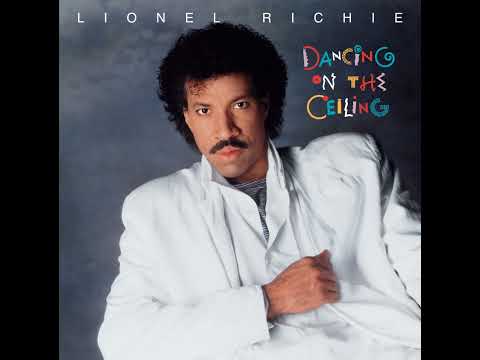
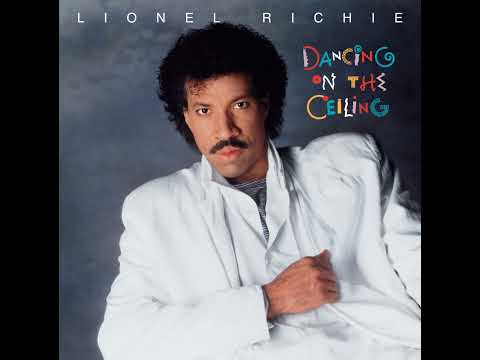
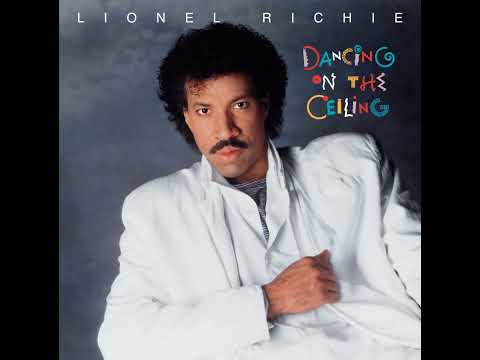
- Initially omitted from the White Nights soundtrack album for label reasons, then folded into Richie’s 1986 LP Dancing on the Ceiling.
- Later revived in a 2012 duet for Tuskegee, extending its life into a new generation of listeners.
Review
There is an ease to this ballad that sneaks up on you. The opening chorus is almost disarmingly simple - a pledge phrased in everyday language and sung like a confidant leaning in - and yet it carries the heft of a vintage standard. Lionel Richie had spent the early 80s perfecting the pop-soul slow burner, and here he strips the arrangement to essentials: a soft drum pulse, glassy keys, a bass that moves like a heartbeat. He does not chase the hook so much as arrive at it, the way a late-night conversation naturally circles back to what matters.
Listen to the verse design. Verse 1 plays like a parable - a dream of a masquerade, a voice cutting through walls of doubt. Verse 2 slides into counsel, plain and kind: the highway is lonesome, finding a friend is hard, here is my hand. Between them sits the chorus that keeps promising togetherness. The bridge tightens the grip, telling the listener to start believing who they are. If it sounds obvious on paper, that is the point. The entire song is a bet on sincerity. And Richie, with that unreachable warmth in the timbre, wins the bet almost instantly. As stated in a Billboard artist profile, the record’s chart climb in December 1985 confirmed what radio had heard - a tune that felt like it had always been there.
Creation history
Director Taylor Hackford asked Richie for a title theme to White Nights, the Baryshnikov and Hines ballet drama. Rather than force a lyric around the film’s name, Richie delivered a new ballad that captured the story’s undercurrent of displacement and connection. The recording - produced by Richie with longtime collaborator James Anthony Carmichael - was tracked with studio aces: Greg Phillinganes and Michael Boddicker on keys and synths, Abraham Laboriel on bass, John "JR" Robinson on drums, Paulinho da Costa on percussion, and guitar lines from Steve Lukather and Tim May. The single went out through Motown in October 1985; the label elected not to license it to another company’s soundtrack album, so the hit lived its first life as a non-album single tied to a major film, then later as an anchor cut on Dancing on the Ceiling.
Highlights
- Conversation as chorus - the title phrase works like real speech, which makes it impossible not to sing back.
- Two-part soul architecture - tender verse storytelling and a bridge that briefly tightens rhythm and attitude before resolving.
- Studio stillness - near-whisper drums, suspended chords, and guitar filigree create a late-evening space where the vocal can glow.
- Movie-to-radio crossover - a film commission that became a pop moment, then a signature career song.
Song Meaning
Plot
The lyric sketches a wake-up from hiding. A dream of people playing masked games in the dark gives way to a voice that cuts through doubt. The road gets lonely, but the offer is simple: I will stand with you, say the quiet thing with you, and remind you of your own light. The bridge challenges posturing - the world has you dancing to the wrong tune - and nudges the listener back toward self-belief.
Meaning
Call it a friendship hymn. The chorus asks for a mutual pledge, not a grand confession - say the thing, and say it together. In the mid-80s marketplace that prized spectacle, this record made intimacy the event. That mattered for a movie about exile and return; it mattered on radio the same way. The emotional arc is uncluttered: doubt, recognition, community. According to NME magazine’s retrospectives on 80s power ballads, the songs that stuck were the ones that let ordinary promises sound brave. This one does that without raising its voice.
Style and production
Musically, this is modern soul-pop trimmed for clarity. The rhythm track is steady and polite. Keys provide the cushion, with Minimoog bass lines quietly anchoring the harmony. The arrangement leaves an air pocket around the vocal, which keeps the chorus from turning syrupy. The famous middle section - a brief, brighter lift - gives the song a sip of momentum before it returns to the whisper. It is handsomely made without being fussy, the kind of record that sounds just as good on tiny radios as it does on hi-fi gear.
Key Facts
- Artist: Lionel Richie
- Featured: None on original single; later duet versions exist
- Composer: Lionel Richie
- Producer: Lionel Richie; James Anthony Carmichael
- Release Date: October 29, 1985 (single); added to Dancing on the Ceiling in 1986
- Genre: Pop, soul-pop ballad
- Instruments: Vocals, keyboards, synth bass, electric and acoustic guitars, drums, percussion
- Label: Motown
- Mood: reassuring, reflective, quietly affirmative
- Length: about 4:03
- Track #: Standalone single; later album placement varies by edition
- Language: English
- Album tie-ins: theme for White Nights; later on Dancing on the Ceiling; appears on compilations like The Definitive Collection
- Music style: soft-focus pop-soul with a mid-song lift
- Poetic meter: accentual-syllabic lines with conversational cadences
Canonical Entities & Relations
- Taylor Hackford - directed White Nights, the film for which the song was commissioned.
- James Anthony Carmichael - co-produced and arranged rhythm and strings.
- Greg Phillinganes, Michael Boddicker, Abraham Laboriel, John "JR" Robinson, Paulinho da Costa, Steve Lukather, Tim May - session players on the hit recording.
- Motown Records - released the single; retained it from the White Nights soundtrack album and later issued it on Dancing on the Ceiling.
- Academy of Motion Picture Arts and Sciences - awarded Best Original Song.
- Hollywood Foreign Press Association - awarded Golden Globe for Best Original Song.
Questions and Answers
- Was it actually on the White Nights soundtrack album?
- No. It plays in the film, but Motown did not license it for the original soundtrack LP, choosing to keep Richie’s first post-Can’t Slow Down single under its own umbrella. The song later appeared on Dancing on the Ceiling.
- How fast did it reach No. 1?
- It topped the Billboard Hot 100 dated December 21, 1985 and ran four total weeks at No. 1 across late 1985 and early 1986. It also hit No. 1 on Adult Contemporary and the R&B chart.
- How did it fare in the UK?
- It peaked at No. 8 on the Official Singles Chart and logged a healthy multi-week run.
- What awards did it win?
- Best Original Song at the Oscars and the Golden Globes, both tied to White Nights.
- Is there a notable later version?
- Yes. Richie re-recorded it as a duet with Danish pop singer Rasmus Seebach in 2012 for Tuskegee, part of a project pairing Richie with artists across genres and countries.
- Why does the bridge feel so different?
- Arrangers briefly tighten rhythm and brighten harmony to give the lyric’s self-belief message a lift before easing back into the ballad’s original glow.
- Does the lyric carry a larger theme beyond romance?
- It reads like a solidarity pledge between friends or partners. The chorus is communal by design - say it together, naturally - which is why it worked so well in a film about dislocation and belonging.
Awards and Chart Positions
| Year | Territory | Recognition / Chart | Peak / Result | Notes |
|---|---|---|---|---|
| 1986 | USA | Academy Award - Best Original Song | Winner | For White Nights; presented at the 58th Academy Awards. |
| 1986 | USA | Golden Globe - Best Original Song | Winner | HFPA honored Richie for the film theme. |
| 1985-1986 | USA | Billboard Hot 100 | No. 1 (4 weeks total) | First week at No. 1 dated December 21, 1985; continued into January 1986. |
| 1985-1986 | USA | Billboard Adult Contemporary | No. 1 | Ninth AC chart-topper for Richie. |
| 1985-1986 | USA | Billboard Hot Black Singles (R&B) | No. 1 | Also reached the summit on the R&B chart. |
| 1985-1986 | UK | Official Singles Chart | No. 8 | Top 10 peak with 13 weeks on chart. |
How to Sing Say You, Say Me
It is a soft-focus ballad, but it still needs craft. The trick is to keep the center warm and the edges clean.
- Vocal range: roughly A2 to E4 for the lead melody in common keys, with gentle head-voice options on the bridge if transposed up.
- Key: often performed in C major or D major for male voice; transpose for comfort.
- Tempo: around 92 BPM in 4/4. Do not rush the pickups into the chorus.
- Style: pop-soul ballad phrasing, speech-like attacks, no heavy vibrato until phrase ends.
Step-by-step
- Tempo - Set a metronome near 92 BPM. Speak the first chorus in time to feel the natural cadence of the title line.
- Diction - Keep consonants soft. Land the T in “together” late, not clipped, so the line flows.
- Breath - Plan quiet top-ups before “Say you, say me,” and a larger inhale before the bridge.
- Flow/rhythm - Sit slightly behind the beat in verses to keep intimacy; move a hair forward on the bridge to lift energy without belting.
- Accents - Lean on “say” and “always,” but avoid hard stress. The feeling should be invitation, not declaration.
- Ensemble/doubles - If layering, add a light double on the chorus unisons and a soft harmony a third above on “naturally.”
- Mic - Work close proximity for warmth; slide an inch back for the bridge to keep headroom.
- Pitfalls - Oversinging the bridge. Keep it buoyant rather than belted so the return to the final chorus feels natural.
Additional Info
Award-season snapshot: The song did the rare double - Oscar and Golden Globe - while also being one of the year’s longest-running Hot 100 No. 1s. Those parallel wins underline how neatly it bridged screen and radio. As stated in a 2017 Golden Globes feature, the tune stood alongside Out of Africa in a near-clean sweep for the year.
Tuskegee revival: In 2012 Richie recut the song as a duet with Rasmus Seebach for Tuskegee, a set of cross-genre collaborations that recontextualized his catalog for new markets. The Danish single charted locally and signaled how elastic the melody remains when paired with different voices.
Why it still lands: The lyric favors plain words over flourish. That simplicity makes it portable - weddings, reunions, quiet moments when people need a line to hold. According to Rolling Stone’s long view on 80s ballads, the era’s keepers are the ones that sound like common sense sung beautifully. This one is a case study.
Sources: Billboard; Official Charts Company; Academy of Motion Picture Arts and Sciences; Golden Globes; Wikipedia; Apple Music; Sessiondays.
A-Z Lyrics Universe
Cynthia Erivo Popular
Ariana Grande Horsepower
Post Malone Ain't No Love in Oklahoma
Luke Combs Good Riddance (Time of Your Life)
Green Day Bye Bye Bye
*NSYNC You're the One That I Wan
John Travolta & Olivia Newton-John I Always Wanted a Brother
Braelyn Rankins, Theo Somolu, Kelvin Harrison Jr. and Aaron Pierre The Power of Love
Frankie Goes to Hollywood Beyond
Auli’i Cravalho feat. Rachel House MORE ›