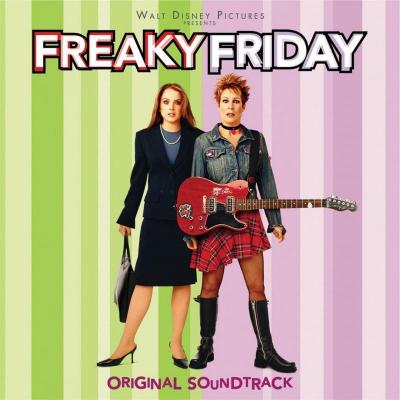
Song Overview
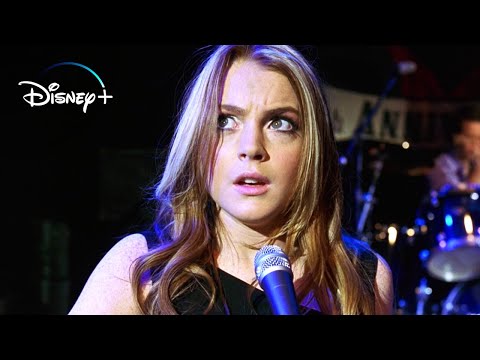
The pop-punk spark that drives this track didn’t start in a Disney soundstage. It began in Perth, where Australian quartet Lash issued their debut single in 2001, then jumped hemispheres when Christina Vidal cut a fierce cover for the 2003 soundtrack. The cut sits right at the film’s emotional hinge - a teen anthem, a plot device, and a crowd-pleaser in one shot.
Review and Highlights
Quick summary
- Originates as a 2001 single by Australian band Lash; covered in 2003 for the Freaky Friday soundtrack.
- Christina Vidal Mitchell fronts the cover; producer credit goes to Michael Simpson - better known as E.Z. Mike of The Dust Brothers.
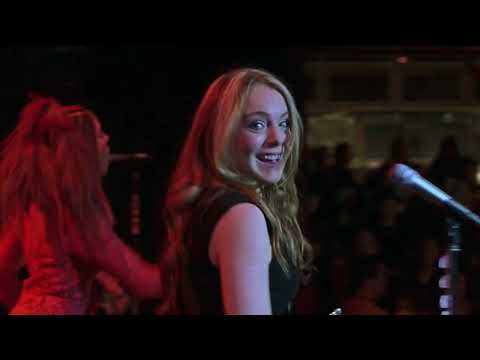
- In-film staging at the House of Blues gives the song narrative purpose and a climactic guitar spotlight.
- A new 2025 recording reunited Pink Slip energy for the sequel’s soundtrack.
- Key feel: punchy guitars, driving backbeat, and a hook that doubles as a teenage mission statement.
Listen with the story in mind and the lyrics land like diary entries. Short lines - “Get up, get out” - fire like cues for the rhythm section. Guitars chug in eighths, drums slam a four-on-the-floor with skate-punk momentum, and the chorus strikes where the coming-of-age plot needs release: “Don’t wanna grow up, I wanna get out.” According to AllMusic, the soundtrack leans into pop-punk sheen while threading alt-rock textures, and this cut is one of the package’s most durable moments.
Creation History
Lash tracked the original in Perth and pushed it to Australian radio in March 2001. Their version peaked domestically before the hook took on a new life two years later. For Freaky Friday, director Mark Waters reshaped the protagonist into a guitarist fronting a garage band, which is why the song could be staged as a true character beat rather than a drop-in needle cue. In Teen Vogue’s oral history, Waters even flags the shredding moment as crucial to selling the film’s climax - that solo had to hit or the scene would wobble.
For the soundtrack recording, Vidal’s performance was tailored to a leaner rock delivery. Producer Michael Simpson - the E.Z. Mike half of The Dust Brothers - brought a tight, radio-coded punch. He keeps the vocal upfront, guitars crisp, and the bridge built like a springboard into that final shout-along hook. The result feels less club-grunge than Lash’s original and more cinematic - built to pop on a multiplex sound system.
Song Meaning and Annotations
Plot
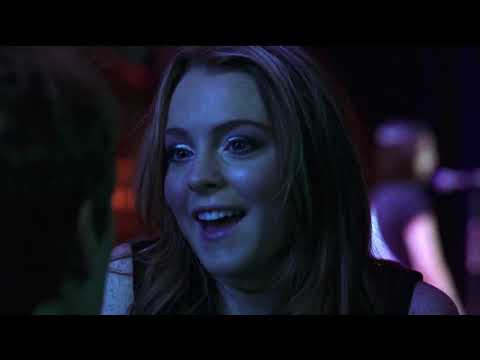
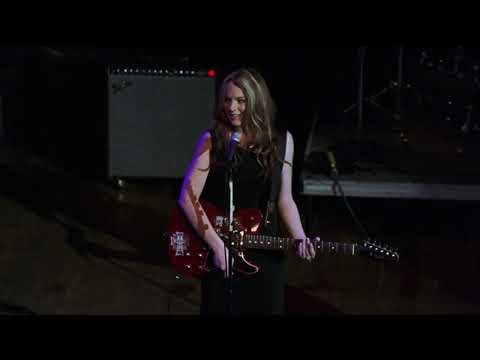
In the 2003 film, the band Pink Slip finally lands a shot at the House of Blues. Anna’s mother and daughter have swapped bodies, stakes are sky-high, and the performance becomes a test of trust. The song cues up as the band’s chance to prove itself and as Anna’s moment to claim a voice in front of family, crushes, and rivals. The guitar break becomes a baton pass - confidence shifting between characters - before the chorus hammers home their defiant unity.
Song Meaning
It’s a classic release valve. The narrator rejects no-win feedback loops - “same old stuff never ends” - and dreams of escape, or at least of agency. The mood is defiance, but not nihilism; it’s the kind of suburban-teen impatience that keeps bands practicing in garages after curfew. Musically, the pop-punk chassis and alt-rock gloss mirror that push-pull: rebellious abrasion softened by major-label polish. In Teen Vogue’s retrospective, the creative team nods to riot grrrl DNA and a deliberate feature for a female lead guitarist - a choice that gives the hook another ring of meaning: freedom as skill, not just attitude.
Annotations
“The guitar solo is the only part of this cover not in the original song.”
This is a sharp observation. Lash’s single barrels through verses and choruses without the same spotlight; the film arrangement opens space for an on-screen solo so the plot can crest. It matches the director’s note that the solo had to land for the scene to work. The change matters because it transforms the track from a wall-to-wall chant into drama - a breath, a build, a payoff. That’s cinema talking back to the song.
Rhythm engine
At roughly the high-120s BPM, drums punch straight eighths, with open hi-hat accents to square the groove. It’s skate-park brisk - a tempo that lets the vocal phrase in clipped pushes without crowding the downbeat.
Guitars and harmony
Guitars hang on fifths and octave shapes, creating a bright wall that rings without muddying the vocal. The chorus harmony opens slightly - more stacked thirds, just enough density to feel like a shout-crew stepped up to the same mic. That sound - small club energy, big room focus - is a careful mix decision, not an accident.
Vocal delivery
Vidal uses a narrow vibrato and a forward placement that reads “nasal” on purpose. It slices through the midrange buzz and gives the hook that bratty glint the lyric begs for. The phrasing is square, even martial in the pre-chorus, so the chorus can feel like taking the governor off the engine.
Images and idioms
“Round and round” sets the problem - cycles of adult rules and peer criticism - and “take me away” is the answer line. It’s not literal flight so much as a demand for a new scene: play the gig, own the night, exit the loop.
Key Facts
- Artist: Christina Vidal Mitchell; producer credit E.Z. Mike (Michael Simpson)
- Featured: Pink Slip as the fictional band in the film; the 2025 single re-credits Pink Slip with Christina Vidal Mitchell
- Composer: Andrew Klippel, Barry Palmer; with contributions by Lash members
- Producer: Michael Simpson (E.Z. Mike)
- Release Date: July 22, 2003 (soundtrack album); July 11, 2025 (new single for sequel)
- Genre: Pop-punk, alternative rock
- Instruments: Electric guitar, bass, drums, lead vocal with backing harmonies
- Label: Hollywood Records
- Mood: Defiant, cathartic, high-energy
- Length: 3:09 (2003 soundtrack version)
- Track #: 7 on Freaky Friday: Original Soundtrack
- Language: English
- Album: Freaky Friday: Original Soundtrack
- Music style: Tight verse-chorus form; mid-gain guitars; dry, upfront vocal
- Poetic meter: Predominantly trochaic four-beat lines with catalexis, clipped diction
Canonical Entities & Relations
People and groups, as they relate to this track:
- Christina Vidal Mitchell - performed lead vocal on the 2003 cover for the soundtrack.
- E.Z. Mike - produced the 2003 soundtrack recording as Michael Simpson.
- Lash - wrote and first recorded the 2001 original single.
- Mark Waters - directed the 2003 film and built the scene around the on-stage solo.
- Pink Slip - the film’s fictional band that performs the song in-story.
- Hollywood Records - released the 2003 soundtrack and the 2025 single.
- House of Blues, Los Angeles - venue setting used for the film performance scene.
Questions and Answers
- What’s the origin of the song before the film?
- It debuted in Australia as Lash’s first single in March 2001, a guitar-forward alt-pop track that set the blueprint the film version would streamline.
- How does the soundtrack version differ from Lash’s original?
- It tightens the structure, brightens the guitars, leans into a harder-driving drum feel, and adds a set-piece guitar solo designed to lift the on-screen climax.
- Why does the solo matter so much in the movie?
- Because it’s story architecture: that break is where trust flips, confidence returns, and the scene earns its payoff. It’s music as character work.
- Who produced the 2003 recording?
- Michael Simpson - known as E.Z. Mike from The Dust Brothers - produced the soundtrack cut, which explains the taut, radio-slick mix.
- Was the song a single in 2003?
- It served as a soundtrack highlight rather than a broad commercial single in the U.S., but it anchored marketing clips and the film’s band identity.
- Did it chart?
- The original Lash single reached the Australian charts; the U.S. soundtrack went gold and registered on Billboard’s year-end tallies, showing the cut’s footprint via the album’s success.
- Is there a newer version?
- Yes. A 2025 recording coincided with the sequel, reviving Pink Slip’s sound for a new generation while keeping the bones of the hook intact.
- What’s the musical DNA?
- Pop-punk rhythm section, alt-rock guitar sheen, a chant-ready chorus, and vocal phrasing that favors bite over melisma.
- Who wrote it?
- Songwriting credits include Andrew Klippel, Barry Palmer, and members of Lash.
- Where in the film do we hear it?
- At the House of Blues showcase sequence, the moment that tests friendships, family bonds, and stage nerves in one go.
- Any notable covers?
- Pop-punk torchbearers have taken it on stage; acts tied to the sequel cycle and fan communities have kept it alive with live covers and studio updates.
- What makes the lyric stick?
- Short commands and a universal itch for autonomy - it’s the economy of a rallying cry.
Awards and Chart Positions
| Work | Chart / Award | Region | Date | Peak / Status |
|---|---|---|---|---|
| Lash - original single | ARIA Singles Chart | Australia | 2001 | No. 33 |
| Lash - original single | ARIA Awards | Australia | 2001 | Breakthrough Artist - Single, nomination |
| Freaky Friday - soundtrack album | RIAA Certification | United States | December 2003 | Gold |
| Freaky Friday - soundtrack album | Billboard Soundtrack Albums - Year-end | United States | 2004 | No. 8 |
| Freaky Friday - soundtrack album | Billboard 200 - Year-end | United States | 2004 | No. 195 |
How to Sing Take Me Away
Metrics to frame your practice:
- Tempo: about 129 BPM for the 2003 cover; Lash’s original sits closer to 125 BPM.
- Key: film-cover readings often land around E minor to F sharp minor; karaoke stems are circulated in F sharp minor.
- Vocal range: low-to-mid alto placement works; expect verses around G3 to A3 with choruses peaking near C5 in a chest-dominant mix.
- Style notes: brisk pop-punk articulation, light grit, compressed sustain, minimal vibrato.
Step-by-step HowTo
- Tempo lock: Warm up at 110 BPM to map phrasing, then ramp to 125-130. Use a metronome and keep consonants on the grid.
- Diction: Clip commands - “Get up, get out” - with clean plosives. Aim for forward resonance and a little nasal ping.
- Breath plan: Inhale before “Don’t wanna grow up,” then quick top-ups between “I wanna” and “get out.” Save a larger breath for the second chorus run.
- Flow and rhythm: Keep verses straight-eighth and avoid back-phrasing. The pre-chorus is metronomic on purpose; let the chorus relax by microseconds on vowels.
- Accents: Punch the first word of each line and the “away” syllable on beat 3 or 4 for lift.
- Doubles and gang vocals: Stack a tight double on the chorus lead; add one loose harmony a third above on “away” for width.
- Mic craft: If you’re belting, back off the capsule on peaks; keep the mic centered for verse intimacy.
- Pitfalls: Don’t oversing the verse - the hook needs contrast. Avoid scoops that smear the rhythmic bite.
- Practice materials: Use a karaoke mix in F sharp minor or create a -1 semitone stem to sit in E minor; loop the pre-chorus-to-chorus handoff.
Additional Info
According to Teen Vogue’s oral history, the creative team cites riot grrrl influence for centering a female guitarist and building a finale around live performance. That choice explains why this track - and not just the ballads and covers elsewhere on the album - has stayed sticky in memory. The story and the song help each other stand up.
Apple Music’s credits tie the 2003 soundtrack cut to producer Michael Simpson, whose E.Z. Mike alias links him to The Dust Brothers. If the mix sounds radio-tough yet clean enough for teen multiplexes, that lineage checks out. And in 2025, with the sequel rolling, Disney’s music arm teased and then issued a fresh studio version fronted by Vidal, while the cast kept the song alive with live promo moments. As stated in AllMusic’s summary of the album, the broader soundtrack mixes pop-punk charm with alt-rock edges - this cut being a prime example.
Sources: Wikipedia; AllMusic; Apple Music; Spotify; Teen Vogue; ABC7 On The Red Carpet; PerthNow; 9Celebrity; Discogs; Tunebat; SongBPM; Disney Music social pages.