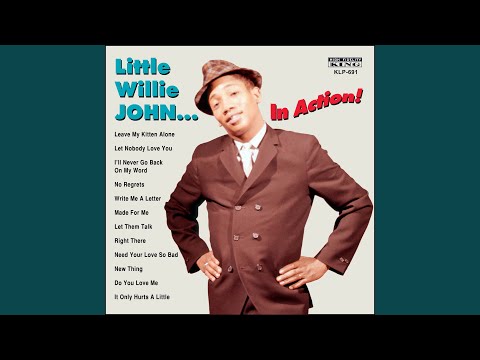
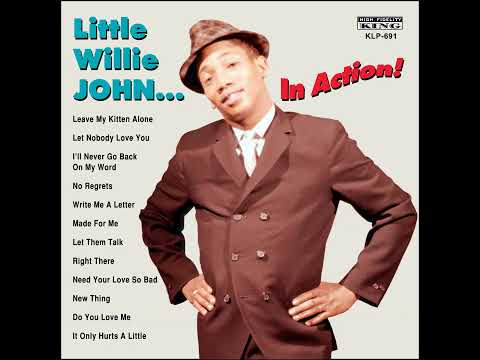
Need Your Love So Bad Lyrics – Little Willie John
Soundtrack Album: Her
I need someone's hand, to lead me through the night
I need someone arms to hold and squeeze me tight
When the night begins an' the dew remains
I need your love so bad
I need some lips to feel next to mine
I need someone to stand up an' tell me, when I'm lyin'
When the lights are low, an' it's time to go
I need your love so bad
So give it up an' bring it home to me
Or write it on a paper, so it can be read to me
Tell me you love me an' stop drivin' me mad
'Cause I need your love so bad
I need a soft voice that will talk to me at night
Don't worry baby, we won't fuss an' fight
Listen to my plea, bring it home to me
I need your love so bad
Ooh, I need your love so bad-yeah.
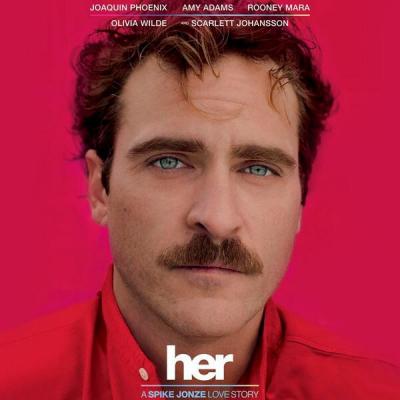
Her
Soundtrack Lyrics for Movie, 2013
Track Listing
The Breeders
Arcade Fire
Will Collins
Arcade Fire
Nickodemus
N.A.S.A.
Entrance
Scarlett Johansson and Joaquin Phoenix
Barrie Gledden, Tim Reilly and Jason Pedder
Philip Guyler
Little Willie John
The Chantels
Arcade Fire
Karen O.
Song Overview
Review and Highlights
Quick summary
- First recorded by Little Willie John in late September 1955 and issued by King Records in October 1955; it became a Top 5 hit on the US R&B chart the following year.
- Written by Little Willie John with his brother Mertis John Jr.; early pressings often credited only Willie, later sources credit both.
- Signature slow blues ballad with gospel inflections, arranged around piano, tenor saxes, and a restrained electric guitar figure from Mickey Baker.
- Widely covered: Fleetwood Mac took it to the UK singles chart in 1968; Gary Moore revived it in 1995; Whitesnake cut a reverent B-side version in the mid-80s.
- Heard on major soundtracks, including Wonder Boys (2000), Her (2013) and later period pieces; clearance typically via the King/Gusto catalog.
The 1955 recording fixes the standard for the tune: a pleading, unhurried address to a lover, framed by a 12/8 slow-dance groove and a horn arrangement that moves like a tide. John’s vocal sits high and bright - youthful but unguarded - and the band leaves space around him. The drummer leans back, the piano answers in clipped phrases, and the tenor saxes swell under long notes. The lyric is simple, almost spare, but the performance adds grain and gravity: you hear the ache in his vowels and the short catches in breath that land just ahead of the snare. It is the sound of a door half open at 2 a.m., and the courage it takes to knock.
In the British blues era the song found a second life. Fleetwood Mac’s 1968 cut added strings and a smoother, more opulent sound; Peter Green’s lead guitar turned the vocal’s quiver into a line that bends and lingers. That reading helped canonize the tune in rock circles, but it never obscured the origin: the Little Willie John single remains the benchmark for emotional concision.
Where it plays:
Her (2013) - non-diegetic. A scene in Theodore’s apartment uses the 1955 recording as a mood setter just before the surrogate date arrives, around the 1:16 mark. The choice signals his loneliness without telegraphing it; the needle-drop’s warmth and vulnerability mirror the film’s premise about intimacy mediated by technology.
Wonder Boys (2000) - non-diegetic. The track appears as part of the film’s curated collage of mid-century singer cuts that frame Grady Tripp’s drifting weekend in Pittsburgh. It functions as an undertow in a soundtrack otherwise dominated by Bob Dylan’s new material.
Don't Worry Darling (2022) - period-flavored use of the 1955 performance to situate a fraught domestic mood inside a stylized mid-century frame.
Why it matters:
The cue works because the song projects tenderness without false comfort. Its harmonic language is church-adjacent, but the lyric never sermonizes; it just asks, plainly. In each film the cut underscores characters at the edge of self-knowledge: insecurity voiced as a plea. A slow blues in triplet feel can turn a room reflective in seconds - and that is exactly the point.
Creation History
Little Willie John recorded the track in New York with a small combo that included Robert “Bubber” Johnson on piano, Mickey Baker on guitar, Milton Hinton on bass, Calvin Shields on drums, and a tenor-and-bari sax line. The composition came from family: Mertis John Jr. began the song while overseas, and Willie completed it on return. The record arrived on King 4841 with “Home at Last” on the flip. One year later the single had climbed the R&B charts, cementing John’s emergence after “All Around the World.”
Song Meaning and Annotations
Plot
The narrative is straightforward: a speaker asks a lover to come back or come closer. He offers contrition in exchange for presence, and he imagines stability if the lover will supply what he lacks. The arc moves from uncertainty to a precarious hope; nothing final is promised.
Song Meaning
This is a plea-piece, but not a melodrama. The musical grammar - 12/8 sway, chord moves that linger on the IV - suggests church without preaching. The vocal is intimate rather than showy; the emotional center is humility. The hook functions like the title of a letter, repeated to steady the writer’s hand. In short: need, not threat; closeness, not conquest.
Arrangement and feel
The rhythm section sits behind the beat, a slow triplet tide. Piano punctuates with gospel voicings, guitar threads restrained octaves, and horns pad the edges. The palette leaves air for the vocal to crack and mend in real time. That restraint is the secret: no one rushes the singer.
Historical touchpoints
Mid-50s R&B ballads often borrowed from church phrasing; Little Willie John’s record leans into that lineage while keeping the form concise. Later British blues covers - Fleetwood Mac foremost - reframed the piece for electric guitar-led audiences, adding strings and, in live takes, extended solos. According to NME magazine’s period coverage, the 1968 UK single was reviewed as soulful yet niche; time proved otherwise as the cut became a catalog staple.
Annotations
“A tightly wound and intense plea for love.”
That liner-note characterization nails the core: brevity plus pressure. Notice how the band sustains tension by delaying cadences; it leaves the vocal to carry release.
“Unique amalgam of gospel, blues and rhythm & blues.”
The balance matters. If it were purely gospel, the lyric might resolve to assurance; purely blues, it might lean fatalistic. Here, the hybrid permits vulnerability without despair.
“Mertis Jr wrote much of the song in Korea, and brought it to Willie.”
That origin story explains the lyric’s simplicity: it reads like correspondence from a distance, then gets polished into a message that anyone can voice at close range.
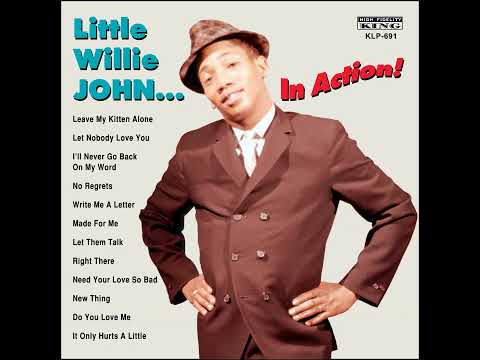
Deep-dive: vocal arc and subtext
Listen to the way John shapes beginnings of phrases with a slight aspirate; it sounds as if he has rehearsed courage and then chosen not to hide the tremor. The lyric’s promises are modest - “I will” statements drawn small - and that restraint keeps the plea convincing. The horns answer like a choir in a chapel where everyone knows the names on the prayer list.
Production and instrumentation
Guitar avoids flamboyance; Mickey Baker’s touch is conversational. Piano voicings echo hymn-book triads with blues color tones. The bass walks in long arcs, not busy, and the drums tap the backbeat with brushes that lift and fold. The recording is dry by design; you feel room, not reverb. In later covers, especially Fleetwood Mac’s, strings add pathos and widen the stereo field; Peter Green’s guitar becomes a second narrator, bending whole-note laments in A major. As stated in a Rolling Stone report on archival releases, the tune continued to reveal new corners when a historic Green-and-Gilmour version surfaced decades later.
Idioms, metaphors, symbols
The title phrase functions as both refrain and thesis; “so bad” is the idiom that turns desire into ache. There are no elaborate metaphors because the performance supplies them: cracks as confession, held notes as persistence. The horn swells become the embrace the singer seeks.
Key Facts
- Artist: Little Willie John
- Featured: None
- Composer: Little Willie John; Mertis John Jr.
- Producer: King Records studio team (producer credit varies in sources; often associated with Henry Glover at King in this period - documentation for this specific session is limited)
- Release Date: October 20, 1955
- Genre: Blues; Rhythm and blues
- Instruments: Lead vocal, piano, electric guitar, upright bass, drums, tenor saxes, baritone sax
- Label: King Records
- Mood: Tender, pleading, nocturnal
- Length: 2:14 - 2:17 depending on master
- Track #: Issued as single; later included on compilations and the Fever LP era material
- Language: English
- Album (if any): Appears on Fever-era releases and numerous compilations
- Music style: Slow 12/8 R&B ballad with gospel inflection
- Poetic meter: Conversational quatrains with iambic-leaning stresses; refrain-centered
Canonical Entities & Relations
- Little Willie John - co-wrote and recorded the song; vocalist on the 1955 King single.
- Mertis John Jr. - co-writer; older brother of Little Willie John; originated key portions of the composition.
- King Records - issued the 1955 single; catalog steward later represented by Gusto Records for licensing.
- Mickey Baker - guitarist on the 1955 session; later wrote orchestral score for Fleetwood Mac’s 1968 arrangement.
- Fleetwood Mac - recorded a 1968 UK single version; Peter Green on lead guitar and vocal; Mike Vernon produced.
- Gary Moore - recorded a 1995 cover for a Peter Green tribute album; released as a UK single.
- Films: Wonder Boys (uses the 1955 recording on the soundtrack); Her (uses the 1955 recording in a pivotal apartment scene); Don't Worry Darling (licensed the 1955 recording).
- Venues/Locations: New York recording studios used by King in 1955 for the session personnel listed above.
Questions and Answers
- Who wrote Need Your Love So Bad?
- Little Willie John and his brother Mertis John Jr. Early releases often listed only Willie; later credits reflect both.
- When was the original single released?
- October 20, 1955, on King Records, backed with Home at Last.
- How high did it chart in the United States?
- Number 5 on Billboard’s R&B chart in early 1956.
- What makes the arrangement distinctive?
- A slow triplet sway, church-bred piano voicings, restrained guitar, and a small horn section that pads the vocal instead of arguing with it.
- Why is the Fleetwood Mac version often referenced?
- It carried the tune into the UK charts in 1968 and recast the song around Peter Green’s lyrical guitar and added strings, making it a touchstone for British blues interpreters.
- Where has the original been used on screen?
- Notably in Wonder Boys (2000), and in Her (2013) during a key apartment sequence; also credited in Don't Worry Darling (2022).
- What key and tempo characterize Little Willie John’s cut?
- C sharp major around 107 BPM in a slow compound meter feel; the vocal sits in a high baritone-tenor sweet spot.
- What is the emotional arc of the lyric?
- From admission of need to a fragile hope built on the beloved’s presence; the refrain repeats like a mantra to steady the confession.
- Who played guitar on the 1955 recording?
- Mickey Baker, whose conversational lines keep the focus on the vocal; he later arranged strings for the 1968 Fleetwood Mac single.
- Are there notable later covers?
- Yes: Fleetwood Mac (1968 UK hit), Gary Moore (1995 UK chart entry), and Whitesnake (mid-80s B-side later anthologized).
- How do the covers differ from the original?
- Fleetwood Mac moves to A major with strings and a more expansive guitar lead; Gary Moore amplifies the guitar lament; Whitesnake’s version returns to organ-led soul pacing.
- What is the recording’s place in Little Willie John’s career?
- It was his second charting single and helped set up Fever the following year, establishing his run of late-50s hits.
- Why does the song resonate across eras?
- Because it treats vulnerability as strength. The melody is simple, the harmony familiar, but the performance refuses bravado - a quality that travels well in film and on stage.
Awards and Chart Positions
| Artist | Release | Territory | Chart | Peak | Date/Year |
|---|---|---|---|---|---|
| Little Willie John | Need Your Love So Bad | US | Billboard R&B | 5 | 1956 |
| Fleetwood Mac | Need Your Love So Bad | UK | UK Singles | 31 | 1968 |
| Fleetwood Mac | Need Your Love So Bad | Netherlands | Single Top | 7 | 1968 |
| Gary Moore | Need Your Love So Bad | UK | UK Singles | 48 | 1995 |
How to Sing Need Your Love So Bad
Tempo & key: Original studio cut sits around 107 BPM in C sharp major; the common cover key is A major (Fleetwood Mac) at roughly 147 BPM. Choose the key that sets your top phrase just under the edge of your comfortable mix.
- Tempo placement: Practice at 90-95 BPM in 12/8 to internalize the triplet sway, then bring it to performance tempo. Keep phrases slightly behind the snare - this supplies the “plea” feel.
- Diction: Consonants must be soft-edged. Vowels carry the emotion; lean into long “ee” and “ah” shapes without forcing brightness.
- Breath plan: Mark breaths before each refrain entrance. Take a low, quiet breath one beat early; avoid gasps that break the spell.
- Flow & phrasing: Treat each refrain like an open letter. Let the first two words touch lightly; swell into the long note at the end of the line rather than at the start.
- Accents: Save your strongest emphasis for the second pass of the hook; that contour mimics the original’s emotional arc.
- Ensemble balance: If you have horns, keep pads thin and below the staff during verses. Guitar should speak in answers, not commentary.
- Mic technique: Work close on a cardioid dynamic or ribbon; pull back an inch for the title line to avoid overload and keep intimacy.
- Pitfalls: Oversinging the first verse; clipping breaths; straight-eighth phrasing that erases the triplet feel. If you hear square corners, slow down and re-center the 12/8 lilt.
Practice materials: For the Willie John key, rehearse with a C sharp drone and a metronome subdividing in triplets. Then sing with a piano playing I-IV progressions in 12/8. For the A major cover approach, map your bends and fall-offs to the bar lines first, then overlay vibrato.
Additional Info
Fleetwood Mac’s single history around the tune is full of small production dramas. Producer Mike Vernon suggested strings to broaden the record’s appeal; Peter Green later argued that the string sound felt dated and that the record might have performed even better without them. That debate - lean band vs. lush overdubs - is the story of how a 1955 R&B prayer became a late-60s UK hit. Whitesnake’s later take folded the song back toward Hammond organ and slow-burn soul; their 1984 B-side version resurfaced in anniversary box sets, a reminder that the tune survives every new coat of paint.
On the film side, licensing for the 1955 master typically routes through Gusto’s stewardship of the King catalog. The recording’s compact length and clear emotional signal make it an ideal editor’s tool: it can turn a cut without stepping on dialogue. As a result the track appears in projects that need intimacy rather than spectacle.
Sources: Whitburn’s chart reference; BMI repertoire data; King/Discogs release listings; Rolling Stone reporting; UK chart references; film soundtrack listings and studio notes.
A-Z Lyrics Universe
Cynthia Erivo Popular
Ariana Grande Horsepower
Post Malone Ain't No Love in Oklahoma
Luke Combs Good Riddance (Time of Your Life)
Green Day Bye Bye Bye
*NSYNC You're the One That I Wan
John Travolta & Olivia Newton-John I Always Wanted a Brother
Braelyn Rankins, Theo Somolu, Kelvin Harrison Jr. and Aaron Pierre The Power of Love
Frankie Goes to Hollywood Beyond
Auli’i Cravalho feat. Rachel House MORE ›