I'll Make a Man Out of You Lyrics – Donny Osmond
Soundtrack Album: Mulan
Let's get down to business
To defeat the Huns.
Did they send me daughters
When I asked for sons?
You're the saddest bunch I ever met
But you can bet before we're through
Mister, I'll make a man
Out of you.
Tranquil as a forest
But on fire within.
Once you find your center
You are sure to win.
You're a spineless, pale pathetic lot
And you haven't got a clue.
Somehow I'll make a man
Out of you.
Chien-po: I'm never gonna catch my breath
Yao: Say goodbye to those who knew me
Ling: Boy, was I a fool in school for cutting gym
Mushu: This guy's got them scared to death
Mulan: Hope he doesn't see right through me
Chien-po: Now I really wish that I knew how to swim
[men] BE A MAN
We must be swift as a coursing river
[men] BE A MAN
With all the force of a great typhoon
[men] BE A MAN
With all the strength of a raging fire
Mysterious as the dark side of the moon
Time is racing toward us
'til the Huns arrive.
Heed my every order
And you might survive.
You're unsuited for the rage of war
So pack up, go home you're through
How could I make a man
Out of you?
[men] BE A MAN
We must be swift as a coursing river
[men] BE A MAN
With all the force of a great typhoon
[men] BE A MAN
With all the strength of a raging fire
Mysterious as the dark side of the moon
[everyone] BE A MAN
We must be swift as a coursing river
BE A MAN
With all the force of a great typhoon
BE A MAN
With all the strength of a raging fire
Mysterious as the dark side of the moon
Hoo-ah!

Mulan
Soundtrack Lyrics for Cartoon, 1998
Track Listing
Lea Salonga
Donny Osmond
Sandy Leah
Song Overview

Personal Review
This cut remains the heartbeat of Disney’s 1998 war-camp montage - a pop-smarts, drumline-tight charger whose lyrics drill discipline while the arrangement lets swagger breathe. The lyrics turn old-school commands into hooks you still shout at the gym. One line in and the training field snaps into focus.
- Theme snapshot: a commander whips green recruits into soldiers while a disguised heroine flips the script on gender and power.
- Key takeaways: martial groove, call-and-response chorus, sly irony, and a payoff that belongs to the underdog.
Song Meaning and Annotations

The frame is simple: a hard-charging captain, a ragtag unit, and a clock ticking toward battle. Under that, it’s a tug-of-war between ideals of masculinity and what actually wins a war - craft, composure, brains. The training orders land like snare hits; the subtext rolls in on a bigger tide.
“The principal underlying theme of this film is Mulan’s subversion of traditional feminine gender roles.”
This is the lever that lifts the whole scene. The command rhetoric runs hot, but the plot quietly demonstrates the opposite - the soldier who survives is the one who adapts.
The lyric’s nature imagery works like a mnemonic - quick, portable, oddly elegant for boot camp talk. Each image cues a physical adjustment: speed, flow, power, restraint.
“These references to nature are loosely representative of four of the five elements of Wu Xing.”
Whether or not you buy the strict mapping, the idea lands: fight well by aligning body and mind to a system bigger than yourself.
Shang’s bravado isn’t flat; it frays. That’s the hinge that makes the scene feel human.
“‘Somehow’ shows Shang’s drop in confidence and his increase in doubt of actually being able to prepare these men for war.”
That one adverb tells you he’s not a drill-bot - he’s a young officer with orders, a legacy on his shoulders, and recruits who can barely lift a spear.
The chorus punches like a motto. It’s catchy for kids and coded for adults: performance masculinity as a costume that doesn’t always fit.
“General Shang’s repeated use of the phrase represents the hyper-masculinity of the Chinese army, when the irony is that there is a woman among them.”
The movie lets the irony breathe. The camera keeps cutting back to the one soldier learning how to win on different terms.
Meanwhile, the side characters sketch real fears - breath, survival, regret - to ground the anthem.
“Evidently Yao doesn’t hold his prospects for surviving very highly.”
The jokes land, but they also underline the stakes. Fear is part of the drill; so is failing in public until the skill clicks.
Message
“It is about finding an inner balance to the end of being a better person and fighter.”
The message points past macho posturing: center yourself, then act. The training sequence is a parable about composure under pressure - and about redefining what “a man” means when a woman outperforms the field.
Emotional tone
“With the threats of the Huns on the horizon, China’s desperation has grown.”
It starts all bark and bluster, then warms into determination. By the last chorus the choir drops to near-a cappella - a subtle “we found the groove” signal.
Historical context
“Chinese citizens were asked to give the eldest male member of the family to the army.”
The conscription note gives the montage bite. These aren’t elite lifers - they’re drafted neighbors trying to learn overnight.
Production
“Mushu is commenting on Shang’s leadership – all of Shang’s soldiers are scared to go to war because of his vigorous training.”
The song is built like a training tool - barked imperatives, percussive accents, a melody that sits in a comfortable, repeatable range. Studio polish keeps it radio-clean while the drums and men’s chorus keep it armored.
Instrumentation
“Once you find your center, you are sure to win.”
Think martial snare, brass stabs, string ostinatos, unison male choir. A few pentatonic-leaning figures paint the setting without caricature. The groove rides about mid-tempo - brisk, not frantic.
Analysis of key phrases and idioms
“Shang is speaking directly to his soldiers but also himself, as he aspires for the approval of his father.”
The command voice doubles as self-pep talk. Orders aimed outward ricochet inward - he’s training his own doubt into discipline.
About metaphors and symbols
“These comparisons in the chorus are meant to evoke the analogies used in works like The Art of War.”
Wind, river, fire, moon - the images make the technique sticky. They also smuggle an ethics lesson: power without balance loses.
Creation history
The songwriting baton passed mid-production - Stephen Schwartz exited; Matthew Wilder and David Zippel took over and leaned into a militarized pop hybrid with an ironic title that sharpened the narrative stakes. Jackie Chan later recorded the piece in Mandarin and Cantonese for regional releases, and Spanish versions carried the number across the hemisphere.
Verse Highlights
Verse 1
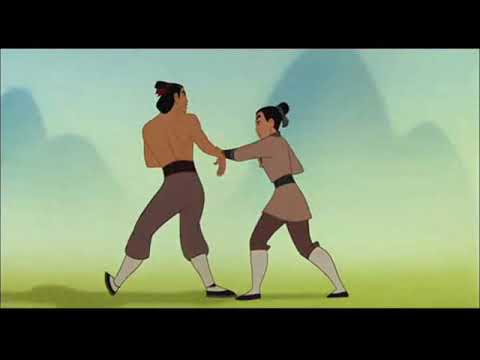
Set-up in four bars: threat incoming, standards announced, patience short. The captain’s voice is clipped, rhythmic, all edges. Underneath, strings pulse to keep the footwork tight.
Chorus
Call-and-response turns into a team chant. It’s the earworm and the thesis - a checklist of traits carried by elemental images. Men’s choir thickens the attack like armor plating.
Bridge/Second cycle
The clock becomes a character - the language gets harsher, then the scene pivots when a clever solution beats brute force. The music doesn’t have to shout that; the arrangement simply opens to let the victory breathe.
Key Facts
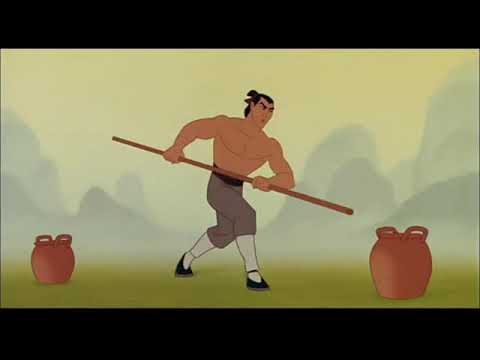
- Featured: Donny Osmond (singing voice of Li Shang); additional voices include Lea Salonga, Eddie Murphy, Harvey Fierstein, Jerry Tondo.
- Producer: Matthew Wilder.
- Composer: Matthew Wilder; Lyricist: David Zippel.
- Release Date: June 2, 1998.
- Genre: Pop, soundtrack, musical theatre pop.
- Instruments: orchestral strings, brass, woodwinds, military snare and percussion, men’s chorus.
- Label: Walt Disney Records.
- Mood: driving, triumphant, wry.
- Length: 3:21.
- Track #: 3 on the original soundtrack.
- Language: English; widely adapted into Mandarin, Cantonese, Spanish and more for local releases.
- Album: Mulan (Original Motion Picture Soundtrack).
- Music style: up-tempo, military-style pop with Eastern-Western fusion touches.
- Poetic meter: predominantly anapestic lines with trochaic accents in imperative phrases.
- © Copyrights: Disney; publishing administered by Walt Disney Music Company.
Questions and Answers
- Who produced “I’ll Make a Man Out of You”?
- Matthew Wilder produced the track and co-wrote it with David Zippel.
- Was it a standalone single or a soundtrack cut?
- It’s best known as a flagship soundtrack cut from Disney’s Mulan, released with the album on June 2, 1998.
- Whose voice do we hear as Li Shang?
- Donny Osmond handles the singing; BD Wong performs the speaking voice in the film.
- Are there official non-English versions?
- Yes - notably Jackie Chan recorded Mandarin and Cantonese versions, and Spanish releases featured regional casts led by Cristian Castro in Latin America.
- Where else has the song shown up?
- Beyond the film, it’s become a sports and workout staple and was added to Just Dance’s Disney season rollout for the 2024 edition on the Just Dance+ service.
Awards and Chart Positions
The film’s music team - Wilder, Zippel, and Jerry Goldsmith - earned an Academy Award nomination for Original Musical or Comedy Score, with “Reflection” taking a Golden Globe song nod in the same cycle. The track itself has piled up hardware in the streaming era: certified multi-platinum in the U.S. and certified in the U.K., and it keeps surfacing on “best Disney songs” lists and training-montage rankings. A rock cover by Peyton Parrish even topped Billboard’s Rock Digital Song Sales, showing how sturdy the bones are when you swap armor for guitars.
How to Sing?
Range and placement: baritone-friendly, roughly B2–E4 in common arrangements, with frequent sustained notes around D4. Keep the consonants percussive - they’re part of the groove.
- Breath and phrasing: aim for one breath per imperative phrase; stagger breath on the chorus repetitions to keep pressure even.
- Tempo: about mid-tempo (around 110–115 BPM). Practice with a click, then release into the choir feel.
- Tone: start with clipped authority, then open the vowel space as the recruits “level up.” Avoid a snarl - think command, not bark.
- Blends: if singing with a men’s section, unify the attack on plosive consonants; let tenors float the top without pushing weight.
- Keys: original sits in G major. If you drop to F or E for comfort, protect the final chorus energy by brightening vowels instead of forcing height.
A-Z Lyrics Universe
Cynthia Erivo Popular
Ariana Grande Horsepower
Post Malone Ain't No Love in Oklahoma
Luke Combs Good Riddance (Time of Your Life)
Green Day Bye Bye Bye
*NSYNC You're the One That I Wan
John Travolta & Olivia Newton-John I Always Wanted a Brother
Braelyn Rankins, Theo Somolu, Kelvin Harrison Jr. and Aaron Pierre The Power of Love
Frankie Goes to Hollywood Beyond
Auli’i Cravalho feat. Rachel House MORE ›