Stayin' Alive Lyrics – Bee Gees
Soundtrack Album: Saturday Night Fever
Well, you can tell by the way I use my walk,
I'm a woman's man: no time to talk.
Music loud and women warm.
I've been kicked around since I was born.
And now it's all right - it's O.K. -
And you may look the other way.
We can try to understand the New York Times' effect on man.
Whether you're a brother or whether you're a mother,
You're stayin alive, stayin' alive.
Feel the city breakin' and ev'rybody shakin'
and we're stayin' alive, stayin' alive.
Ah, ha, ha, ha, Stayin' Alive.
Well now, I get low and I get high
And if I can't get either I really try.
Got the wings of heaven on my shoes
I'm a dancin' man and I just can't lose.
You know it's all right, it's O.K.
I'll live to see another day.
We can try to understand the New York Times' effect on man.
Whether you're a brother or whether you're a mother,
You're stayin alive, stayin' alive.
Feel the city breakin' and ev'rybody shakin'
and we're stayin' alive, stayin' alive.
Ah, ha, ha, ha, Stayin' Alive.
Life goin' nowhere. Somebody help me.
Somebody help, me, yeah.
Life goin' nowhere. Somebody help, me, yeah.
Stayin' Alive --- (to beginning and fade... Well, you can tell.... )
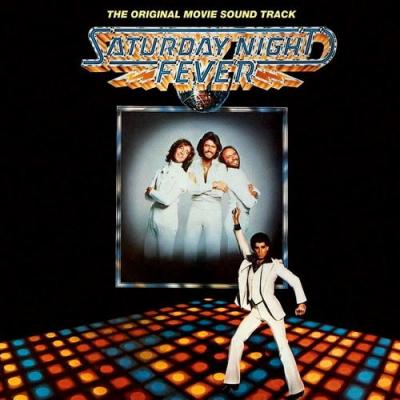
Saturday Night Fever
Soundtrack Lyrics for Movie, 1996
Track Listing
Song Overview
Personal Review
The staying power of these lyrics is simple - they walk like they talk. A clipped groove, a city strut, and a hook that won’t leave your head even if you try. Reading the lyrics on paper you catch the survival script; hearing them, you feel the chin lift. One-sentence snapshot: disco as street armor - swagger as a survival skill in late 70s New York.
Key takeaways: that relentless four-on-the-floor heartbeat, the falsetto that cuts like neon, and the sly humor in lines that still read like a hustler’s pep-talk. The record is both mirror and mask - the lyrics say “life goin’ nowhere,” but the groove refuses to lie down.
Song Meaning and Annotations
The message is survival. Robin Gibb said the subject is the struggle to make it through New York life - a straight line from lyric to lived reality. The brothers wrote it for the Saturday Night Fever project, and the film’s opening sequence stamped the image forever: a lone walk, fresh shoes, a city that doesn’t blink.
Stylistically it’s disco fused with pop architecture: a locking bass figure, clipped guitars, horns on cue, and that famous falsetto lead. The rhythm’s not just dancefloor math - it’s a tape-loop heartbeat built from two bars of “Night Fever,” spliced into a hypnotic grid by producers Albhy Galuten and Karl Richardson when the drummer had to leave town. Studio folklore gave the phantom drummer a name - Bernard Lupe - a joke that worked a little too well.
The emotional arc starts cocky, turns wary, then flashes the plea: “Somebody help me.” That swing between bravado and doubt is the record’s trick - the lyrics keep admitting the floor might drop, the beat keeps insisting it won’t. It’s a contradiction that makes the song human rather than glossy.
Cultural touchpoints stack up. The “New York Times’ effect on man” nods to media gravity in the city - how headlines shape appetite and fear. As the film’s opener, the track redefined Saturday night: not just leisure, but identity construction on a lighted floor.
“Well, you can tell by the way I use my walk”
That first line is character design - gait as biography. It frames Tony Manero’s stride, but it also works as any striver’s calling card: move first, talk later.
“Life goin’ nowhere - somebody help me”
That’s the mask slipping. In the film, the character’s dead-end dread keeps leaking through the gloss, and the lyric folds it into the dance. The beat’s refusal to slow is the counterargument.
Production notes matter here. The loop gave the band zero drift, letting Blue Weaver’s keys and Barry Gibb’s falsetto stack like glass. When Dennis Bryon returned, he added cymbals and tom accents on top of the loop - human punctuation over a mechanized pulse.
History has its side plot: the tempo sits right in the range recommended for CPR compressions. Trainers used the song as a mnemonic because it hits roughly 103-104 BPM, comfortably inside the 100-120 guideline. A disco hit became public-health metronome - strange world, helpful coincidence.
Creation history
Written rapid-fire for the soundtrack brief, tracked between Château d’Hérouville and Criteria in Miami, and released mid-December 1977 by RSO. The single topped the US Hot 100 for four straight weeks starting February 4, 1978.
Verse Highlights
Verse 1
Character enters with swagger as shield. The language is clipped, monosyllabic, rhythmic - perfect for the pocket. The city’s heat shows up as “music loud,” “women warm,” but the kicker is the origin story: “kicked around since I was born.” Tough talk with scuff marks.
Chorus
The hook does double work: a chant for the floor and a motto for the grind. “Whether you’re a brother or whether you’re a mother” frames solidarity by rhythm more than rhetoric. The repetition is medicinal - if you say you’re stayin’ alive enough times, maybe you will.
Bridge
The plea breaks through the gloss. Harmonies thin, the message hardens. It’s the closest the record gets to dropping its guard - then the groove yanks the mask back up.
Key Facts

- Featured: Barry Gibb lead falsetto with Robin and Maurice on harmonies; Boneroo Horns overdubs.
- Producer: Bee Gees, Albhy Galuten, Karl Richardson.
- Composer: Barry Gibb, Robin Gibb, Maurice Gibb.
- Release Date: December 15, 1977.
- Genre: Disco with pop songwriting craft.
- Instruments: bass, rhythm guitar, electric piano and synth, horns, timbales, tape-loop drums with live cymbal and tom accents.
- Label: RSO Records.
- Mood: strutting, alert, street-wise.
- Length: 4:45 album version; approx 3:29 single edit.
- Track #: 1 on the Saturday Night Fever soundtrack (Record One).
- Language: English.
- Album: Saturday Night Fever - The Original Movie Soundtrack.
- Music style: tightly looped disco pulse with stacked falsetto harmonies.
- Poetic meter: accentual pop phrasing rather than strict iambic or trochaic lines.
- © Copyrights: © RSO Records & Paramount Pictures; publishing via Chappell & Co.
Questions and Answers
- Why did the Bee Gees lean so hard into falsetto on this track?
- Because the glassy top end rode that metronomic groove perfectly - the falsetto sits above the dense midrange of horns and keys, cutting through like signage on a night street.
- Is the “New York Times’ effect on man” line political or just observational?
- More observational: it nods to how media frames city life and daily mood, a quick wink to the headline ecosystem New Yorkers swim in.
- What’s with the famous drums?
- It’s a loop - two bars borrowed from “Night Fever,” spliced into a tape ring and run around mic stands. Human feel, machine consistency.
- Did the song really help CPR training?
- Yes. Trainers use its tempo as a mnemonic for the recommended 100-120 compressions per minute. It’s become the unexpected classroom classic.
- How big was it on the charts outside the US?
- In the UK it peaked at No. 4 on the Official Singles Chart; in Italy it topped national listings.
Awards and Chart Positions
US: Billboard Hot 100 No. 1 for four weeks starting February 4, 1978. UK: Official Singles Chart peak No. 4. Italy: national No. 1. At the Grammys, the track won Best Vocal Arrangement for Two or More Voices in 1979. On movie and critics lists, AFI ranked it No. 9 among cinema songs, and Rolling Stone’s 500 list placed it No. 189 in 2004 and No. 99 in the 2021 overhaul.
Soundtrack uses and revivals: the Saturday Night Fever opener cemented its image; later, it turned up on the Ready Player One soundtrack and animated chaos like Madagascar, proving the groove’s elastic afterlife.
How to Sing?
Tempo sits near 104 BPM. That means breath planning in eight-bar parcels works well: inhale on the barline before the “ah, ah, ah, ah.” Keep consonants crisp so the falsetto floats without smearing the groove.
Key center trends around B flat minor on many releases, so the lead often flips between chest setup in the verses and head-dominant mix in the hook. Keep the larynx neutral, let the vowel narrow on “alive,” and resist over-pressurizing air.
For breath economy, think staccato air on the chorus interjections and longer air on sustained “stay-in-a-live” arcs. If you’re coaching a group, stack thirds on the response “stayin’ alive” and place the brightest voice on top to mimic the record’s sheen.
Fun and useful crossover note: many coaches practice at CPR-friendly rates. A metronome set 100-120 bpm or the song itself keeps training honest.
Songs Exploring Themes of Survival
Gloria Gaynor - “I Will Survive”. A different kind of strut - disco as self-rescue monologue. Where the Bee Gees dress survival in streetlight shimmer, Gaynor frames it as a diary entry that ends in a door slam. The strings carry the argument and the lyrics do the paperwork, but the kick pattern keeps it from turning into a lecture. When the final refrain lands, it’s less “I’m okay” and more “I’m in control.”
Survivor - “Eye of the Tiger”. Meanwhile, the rock gym-anthem version of the same idea. Guitars do what mirror-balls did for the Bee Gees: focus the will. The lyrics are blunt - fewer quips, more grit. Its square pulse trades the slink of “Stayin’ Alive” for punch, but both records teach momentum as a habit.
JAY-Z & Alicia Keys - “Empire State of Mind”. In contrast, this one treats survival as civic faith. Concrete names and proper nouns turn the city into a choir, and Keys’ chorus functions as the welcome sign. The lyrics double as a map where every corner is a comeback story. It’s the same city as Saturday Night Fever, just with the skyline speaking back.
A-Z Lyrics Universe
Cynthia Erivo Popular
Ariana Grande Horsepower
Post Malone Ain't No Love in Oklahoma
Luke Combs Good Riddance (Time of Your Life)
Green Day Bye Bye Bye
*NSYNC You're the One That I Wan
John Travolta & Olivia Newton-John I Always Wanted a Brother
Braelyn Rankins, Theo Somolu, Kelvin Harrison Jr. and Aaron Pierre The Power of Love
Frankie Goes to Hollywood Beyond
Auli’i Cravalho feat. Rachel House MORE ›