Rockit Lyrics – Herbie Hancock
Soundtrack Album: Zoolander
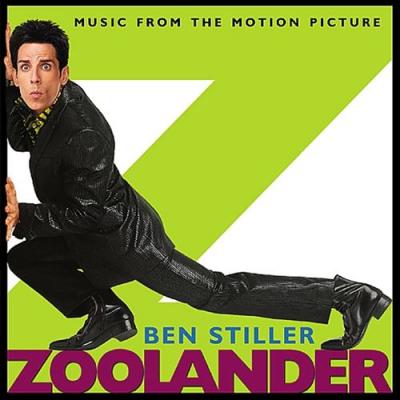
Zoolander
Soundtrack Lyrics for Movie, 2001
Track Listing
Wiseguys / Greg Nice
Frankie Goes to Hollywood
Nikka Costa
No Doubt
The Wallflowers
Rufus Wainwright
Wham!
Herbie Hancock
Michael Jackson
BT
Orgy
Freestylers / Navigator
The Crystal Method
Powerman 5000
Song Overview

Review & Highlights
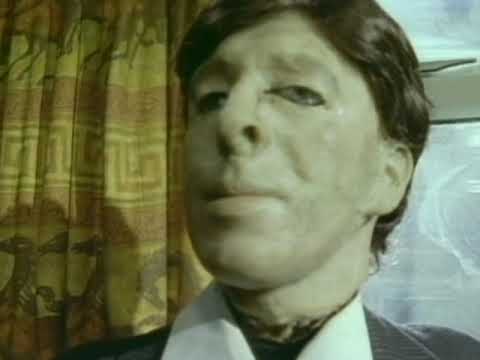
“Rockit” lands like a UFO: a jazz titan dropping a club missile where the turntable sings lead and the synths taunt back. It’s famously an instrumental, yet the track feels weirdly vocal - the scratches read like lyrics, the vocoder snippets nudge a hook, and the video brands it into memory. Released in July 1983, it cracked the zeitgeist by fusing electro, early hip hop, and synth-funk into one neon circuit.
On record, Bill Laswell and Michael Beinhorn build a mechanical groove - Oberheim DMX ticks, batá drums rumble, then Grandmixer D.ST (later DXT) turns “fresh” into a kinetic riff. Godley & Creme’s video of Jim Whiting’s twitching robotic sculptures did the rest, blasting it into heavy MTV rotation and rewiring what a jazz artist could look and sound like in the 80s.
Verse 1
The “intro” is a street ritual: DMX claps, batá polyrhythms, a sly synth lead. It’s sparse on purpose, leaving room for the deck to talk.
Chorus
The hook is a short, rubbery lead line and that chopped “rock it” idea - not sung, but implied by the vocal circuitry and the DJ’s phrasing. The melody loops with small synth nudges, like graffiti getting traced again and again.
Exchange/Bridge
D.ST’s solos become the call, Hancock’s synth stabs the response. Laswell’s low-end and Beinhorn’s programmed fills flip the floor from bounce to glide.
Final Build
Everything tightens: more scratch flurries, the DMX punching through, a last glance from the keytar. The fade doesn’t feel like goodbye, just lights out in a warehouse that keeps partying after the cameras leave.
Song Meaning and Annotations
At heart, “Rockit” is a handshake between jazz’s risk ethic and hip hop’s new hardware. Hancock framed it simply:
“It really comes from the hip-hop scene… it was my record that really brought hip-hop forward to be the cutting edge music recognized internationally.”
That’s less chest-beating than context - a veteran betting on the Bronx when most of the industry didn’t get it yet.
The emotional arc moves from curiosity to swagger. Early bars feel playful and tentative; by the time scratching takes center stage, the track is flat-out defiant.
“D.ST… treated the Technics 1200s as if they were an electric guitar and he was Eddie Van Halen.”
Suddenly, the turntable isn’t a garnish - it’s the soloist, an instrument among instruments.
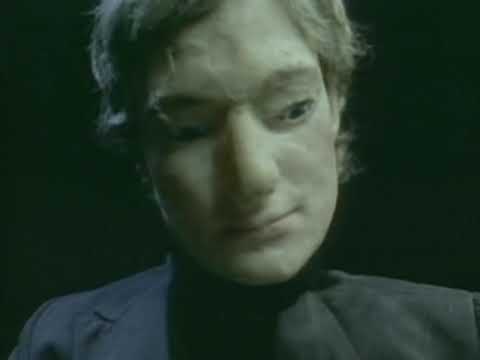
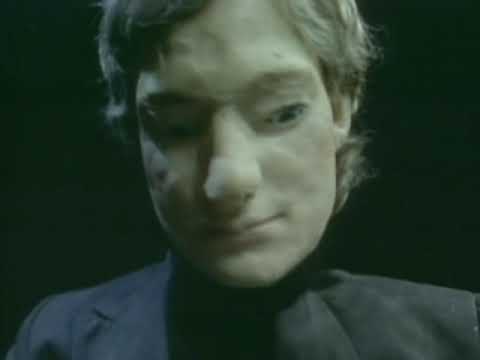
The video reframes the music as uncanny theater. Robot limbs jerk, a TV shows Hancock’s hands, and the house seems haunted by rhythm.
Godley & Creme’s clip turned the song into “a genuine WTF mindblower.”
That line nails it - the imagery didn’t “explain” the music; it multiplied it.
Historically, this is how scratching crossed over. For many listeners, this was their first time hearing that serrated voice of vinyl.
“His work on… ‘Rockit’ was the first scratching many people heard.”
That’s not hyperbole; it’s what visibility looks like when a cable channel beams a new language into suburban living rooms.
The groove’s feel is electro with human fingerprints. Programmed drums lock the grid, but batá drums add swing and ceremony, pointing to Afro-Caribbean threads inside an ostensibly “machine” track.
“All the rhythms he would play on those batá drums were associated with a Yoruba deity.”
That detail explains why “Rockit” feels ritualistic even when it’s icy and synthetic.
Production-wise, “Rockit” thrives on happy accidents and resourcefulness. Sampling technology was scarce, so a Lexicon delay became a sampler, a stray guitar stab replaced the planned snare lift, and a stray “fresh” became an anthem.
“We did it with the repeat hold function of a Lexicon… it caught a sound… a guitar chord.”
Innovation wasn’t gear; it was nerve.
Culturally, it sits with “Planet Rock,” Kraftwerk, and downtown New York’s Roxy parties - a blueprint moment where scenes braided together.
“By the summer of 1983, ‘Rockit’ was all over the radio on its way to becoming a Billboard #1 Dance hit.”
And it wasn’t just the audio - MTV’s appetite for the video made the whole experiment unavoidable.
Message
“Rockit” argues that new tools deserve center stage. The song treats the DJ as a lead voice and jazz improvisation as a method, not a museum piece.
“That’s the first time a turntable was used as a soloist instrument in an ensemble.”
Call it tech-human poetry.
Emotional tone
Curious, then cocky. The track starts exploratory, then leans into bravado once the scratches take flight.
“There was something… that felt fated in some way to be something.”
It sounds like destiny because the parts lock together like magnets.
Production & Instrumentation
Key ingredients: Oberheim DMX, Minimoog textures, vocoder flickers, batá drums, live bass and samples, and the deck.
“I did the programming… had to teach myself.”
Beinhorn’s self-taught drum programming is the skeleton the rest of the body snaps onto.
Creation history
Laswell and Beinhorn built the bed at BC Studio in Brooklyn, overdubs hit RPM Studios, Hancock added melody and vocoder in West Hollywood, and Dave Jerden mixed at Eldorado in L.A. The title and wink come from the “rock it, don’t stop it” phrase orbiting early electro.
1) How the lyrics were created — step-by-step, with concrete context
Lived source material (late 1950s–60s): Jim Jacobs drew on his own days as a Chicago “greaser” at Taft High—teen slang, hallway swagger, and doo-wop harmonies—then teamed with Warren Casey to turn that world into songs and scenes. tafthighschool.org Time Out Worldwide First draft in Chicago (1970–71): Jacobs & Casey co-wrote book, music, and lyrics as a gritty, slang-heavy piece that sounded like early rock-’n’-roll. The raw Chicago version was frank and raunchy; the language and local references were baked into the lyrics. It premiered at Kingston Mines in February 1971. Википедия WTTW Chicago New York reshaping (1972): When producers moved Grease to New York, the team rebalanced the structure “from about three-quarters book and one-quarter music to one-quarter book and three-quarters music.” Result: more songs, tighter hooks, and cleaner language so audiences would embrace the characters. (Opening Off-Broadway Feb 14, 1972.) Википедия ibdb.com Pastiche craft: Jacobs & Casey’s lyric style intentionally echoed 1950s hits—call-and-response choruses, teen-idol rhymes, car/engine innuendo—yielding numbers like “Summer Nights,” “Greased Lightnin’,” and “We Go Together.” (They are credited as both lyricists and composers on the stage score.) Playbill Film additions that changed the songbook (1978): For the movie, John Farrar wrote “You’re the One That I Want” and “Hopelessly Devoted to You,” while Barry Gibb wrote the title song “Grease”; “Sandy” was by Louis St. Louis & “Screamin’” Scott Simon. Later stage revivals (including 2007) often folded these film hits back in, so modern audiences expect them in the theatre. 2007 revival’s lyric set: Director-choreographer Kathleen Marshall used the crowd-pleasing film songs alongside the original stage numbers; the official synopsis for the revival and its cast album explicitly includes “You’re the One That I Want.”2) History of the musical’s creation — key milestones, fast and factual
Chicago birth (Feb 1971): World premiere at Kingston Mines; a rough-edged, Chicago-specific show by Jim Jacobs & Warren Casey with their own music and lyrics. New York launch (Feb–Jun 1972): Opened Off-Broadway at the Eden Theatre on Feb 14, 1972, then moved to Broadway’s Broadhurst on Jun 7, 1972, later the Royale and Majestic. The original Broadway run totaled 3,388 performances—a record at the time. Cultural explosion (1978): Film adaptation added the Farrar/Gibb/St. Louis–Simon songs, supercharging the property’s popularity and forever entwining the movie numbers with the stage brand. Broadway revivals: Major revivals in 1994 and 2007 kept Grease in the mainstream; the 2007 second revival cast its leads via NBC’s Grease: You’re the One That I Want!, began previews July 24, 2007, and opened Aug 19, 2007 at the Brooks Atkinson Theatre, running 554 performances. 2007 cast album: Recorded for Masterworks Broadway, released Oct 2, 2007; produced by David Lai and tracked at Legacy Studios—a recording designed to capture the revival’s blend of original stage score and movie additions.Bottom line: Grease’s lyrics started as Jacobs & Casey’s Chicago-born, 1950s-style pastiche—salty, specific, and rooted in lived experience—then expanded and cleaned up for Broadway, and finally absorbed blockbuster film songs that later revivals (notably 2007) adopted as canon. That’s why today’s stage Grease sounds like the show and the movie you know. Википедия+1Background and Conception (1982–83)
After a long stretch of jazz-fusion in the 1970s, Herbie Hancock was looking for a fresh sound.
Producer Bill Laswell and Michael Beinhorn (both from the experimental band Material) invited Hancock to join a project that would fuse jazz improvisation with the new electro-funk and hip-hop energy coming out of New York.
They began sessions in late 1982, working at RPM Studios and OAO Studio in New York City.
The Studio Process
Hancock brought in his keyboards and sequencers: Oberheim OB-Xa, Prophet-5, Yamaha DX7 (brand-new at the time), plus the Linn LM-1 drum machine.
Laswell and Beinhorn constructed grooves with drum programming and tape loops, layering deep synth-bass and percussion.
The turning point was inviting GrandMixer D.ST (Derek Showard), a Bronx DJ known for scratching vinyl records live. In the studio he set up two Technics SL-1200 turntables and a small Numark mixer.
Night Sessions
Accounts from Laswell describe long nights where the band experimented almost like scientists: Hancock sitting at the keyboard rig, Beinhorn patching sounds, Laswell shaping the low end, and D.ST literally carving patterns out of records.
D.ST scratched fragments from Fab Five Freddy’s “Change the Beat” (the famous “aaah, this stuff is really fresh” sample) into the track. It was the first time scratching wasn’t just a background effect but the lead voice of a pop single.
Final Track and Release
“Rockit” was finished in early 1983 and released as the lead single from Future Shock in June 1983.
It peaked at #8 on the UK Singles Chart and broke into the US Billboard Hot 100.
The music video, directed by Godley & Creme, featured surreal robotic mannequins jerking in time to the music—on heavy MTV rotation.
“We basically composed the melody… by humming.”
Low-tech human method for a high-tech banger.
Key Facts
- Artist: Herbie Hancock
- Featured: Grandmixer D.ST (DXT) - turntables
- Composer: Herbie Hancock, Bill Laswell, Michael Beinhorn
- Producer: Bill Laswell, Michael Beinhorn
- Release Date: July 1983
- Genre: synth-funk, synth-pop, new wave
- Instruments: Oberheim DMX drum machine, Minimoog/CMI-style synths, batá drums, turntables, vocoder
- Label: Columbia
- Mood: curious to defiant, cool to combustible
- Length: 5:25 (album), 3:54 US single edit
- Language: instrumental
- Album: Future Shock - released August 1983
- Music style: electro-funk with hip hop turntablism
- Poetic meter: n/a - instrumental phrasing
- © Copyrights: © 1983 Columbia Records
Questions and Answers
- Why did “Rockit” matter in 1983?
- It mainstreamed scratching and electro aesthetics via a jazz icon, with an MTV-dominant video amplifying the shock.
- Who is the DJ on the record, and what’s he doing?
- Grandmixer D.ST (DXT) treats the turntable as lead instrument, cutting the famous “fresh” from Fab 5 Freddy’s “Change the Beat.”
- What made the video so iconic?
- Kevin Godley & Lol Creme staged Jim Whiting’s kinetic sculptures in a haunted-house tableau; the clip won five awards at the inaugural MTV VMAs in 1984.
- How did it chart?
- No. 1 on Billboard Dance Club Play, No. 6 on Hot Black Singles, No. 71 on Hot 100; in the UK it peaked at No. 8.
- Where has “Rockit” shown up since?
- On the official Grand Theft Auto: Vice City Wildstyle soundtrack, and spoofed in The Simpsons’ “Treehouse of Horror XVI.”
Awards and Chart Positions
Grammy: Best R&B Instrumental Performance at the 26th GRAMMY Awards on February 28, 1984.
MTV VMAs 1984: Five wins including Best Concept Video, Most Experimental Video, Best Special Effects, Best Art Direction, and Best Editing; “most awards” of the night.
Billboard charts: Dance Club Play No. 1; Hot Black Singles No. 6; Hot 100 No. 71.
UK Official Singles Chart: No. 8, weeks on chart: 12 (first chart date July 30, 1983).
Certifications: RIAA Gold single, certified January 17, 1990.
Critical lists: Rolling Stone’s 200 Greatest Dance Songs (2022) and Billboard’s 100 Best Dance Songs (2025) include “Rockit.”
Versions & covers: 7-inch edits at ~3:37–3:54; extended dance versions; later remixes and covers by acts including dZihan & Kamien, The Dynamics, and Nils Landgren Funk Unit; a Grooverider remix appears on a 12-inch release.
A-Z Lyrics Universe
Cynthia Erivo Popular
Ariana Grande Horsepower
Post Malone Ain't No Love in Oklahoma
Luke Combs Good Riddance (Time of Your Life)
Green Day Bye Bye Bye
*NSYNC You're the One That I Wan
John Travolta & Olivia Newton-John I Always Wanted a Brother
Braelyn Rankins, Theo Somolu, Kelvin Harrison Jr. and Aaron Pierre The Power of Love
Frankie Goes to Hollywood Beyond
Auli’i Cravalho feat. Rachel House MORE ›