Soundtracks:  A B C D E F G H I J K L M N O P Q R S T U V W X Y Z #


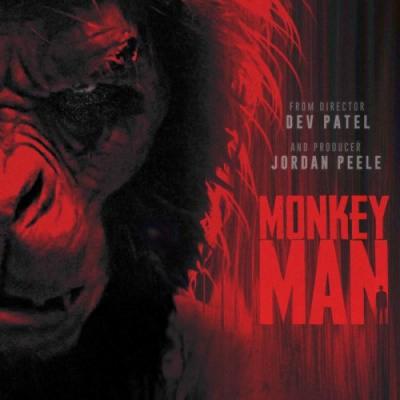
Monkey Man Album Cover

"Monkey Man" Soundtrack Lyrics

Movie • 2024

Track Listing


"Monkey Man (Original Motion Picture Soundtrack)" – Album Guide to Tracks and Key Scenes

Monkey Man official trailer frame — Dev Patel’s Kid masked, framed in neon and shadow
Neon, ritual, retribution — the soundtrack fuses club cuts, folk-metal, and a feral modern score.

Overview

What does vengeance sound like when it’s part myth, part street, part prayer? Monkey Man answers with a hybrid: razor-edged score cues, sweat-slick club bangers, old-school disco irony, and a folk-metal sledgehammer that detonates the climax. Jed Kurzel’s score is the spine — distorted low end, scraped strings, and ritual pulses that keep Kid’s rage on a leash until it snaps.

Arrival → adaptation → rebellion → collapse: early diegetic cuts paint the brothel/club with glossy bravado; mid-film drops and chant-like score pieces harden the world; the elevator gauntlet and Diwali siege flip to bladed percussion, then the finale lets metal do the talking. The palette swings between Hindi/Indian source, global pop, and modern minimalism without losing narrative focus.

Genres & themes by phase: bass-heavy EDM & hip-hop — swagger and temptation; retro/disco — dark joke over ultraviolence; metal & drums — righteous fury; chant/strings — grief ritual. As per official credits, music supervision steers a wide roster while Kurzel’s 32-track album anchors the dramatic beats.

How It Was Made

Composer: Jed Kurzel, replacing an earlier temp path. Music supervision by Peymon Maskan (Radish). The official album (Monkey Man — Original Motion Picture Soundtrack) is released by Back Lot Music (digital; later vinyl via Waxwork Records). Sessions credit a global team of editors/orchestrators, with Sam Okell mixing the score and Robert Ames conducting. According to trade notes, Patel pushed for a needle-drop in the finale that felt “Indian, but metal,” landing on Bloodywood’s “Dana-Dan.”

Trailer frame — club corridor leading into the fight floors that the soundtrack energizes
Architecture of a fight movie: corridors, elevators, thrum — the music maps the movement.

Tracks & Scenes

Selections below; placements reflect the theatrical/Peacock cut. Timestamps are scene markers, not exact SMPTE. Not a full tracklist.

"151 Rum" — JID
Where it plays: ~00:09 — purse-snatch chain in alleys until it lands with Kid. Non-diegetic push across quick cuts.
Why it matters: Establishes urban tempo and Kid’s opportunist rhythm.

"Maushi" — Sneha Khanwalkar & RADA
Where it plays: ~00:21 — Kid pitches a betting scheme to Alphonso; bleeds into a fight beat. Semi-diegetic vibe in kitchen/club spaces.
Why it matters: Local color + hustle; grounds the film in Indian sonic textures.

"I Don’t Wanna Fight" — Tina Turner
Where it plays: ~00:23 — elevator small talk with Alphonso; plays from the system (diegetic).
Why it matters: Irony needle-drop — softens the frame before the storm.

"I Believe in Love" — Polyrhythmics
Where it plays: ~00:23 — club floor; Kid gets the promotion as the camera roams tables.
Why it matters: Warms the social mask Kid must wear.

"The Devil Is a Lie" — Rick Ross (feat. JAY-Z)
Where it plays: ~00:25 — “Nicki” joyride, parking-lot exit; cruising montage.
Why it matters: Brag-rap as character study; Alphonso’s flex in one cue.

"Redlight" — Swedish House Mafia & Sting
Where it plays: ~00:34 — elevator to club; source system in the lounge while deals and drugs circulate.
Why it matters: Polished menace; lights and bass lock the camera’s glide.

"Somebody to Love (Gorgon City Remix)" — Ben Kim & Gorgon City
Where it plays: ~00:38 — floor-level coverage; Rana hoovers lines off Sita’s leg.
Why it matters: Pleasure weaponized; the mix sells power imbalance.

"Ooh La La" — Bappi Lahiri & Shreya Ghoshal
Where it plays: ~00:49 — Kid threads through brothel rooms; fight erupts.
Why it matters: Candy-colored source over savagery — classic Patel irony.

"Naam Sera" — Bappi Lahiri & Shreya Ghoshal
Where it plays: ~01:23 — radio/Election cuts; Tiger hypes a bout.
Why it matters: Broadcast texture resets stakes.

"Diwali Madness" — Ganesh Chandanshive & Sneha Khanwalkar
Where it plays: ~01:30 — Kid funds the temple; washing the mask; festival night approaches.
Why it matters: Ritual meets resolve; rhythm signals the siege.

"Rivers of Babylon" — Boney M.
Where it plays: ~01:35 — elevator beat-down; diegetic speaker. Knife, bite, pressure. The smile on that chorus is the joke.
Why it matters: Sacred text in disco drag — the film’s blackest comedy.

"Dana-Dan" — Bloodywood
Where it plays: ~01:38 — Diwali assault; Alpha & the hijra warriors join; brass knuckles, explosives, roar.
Why it matters: Folk-metal catharsis — the score yields and the needle-drop wins.

"Grow — A COLORS Encore" — FACESOUL
Where it plays: ~01:53 — end credits, first slot.
Why it matters: Breath after blood; the film steps back from fury.

"The Wallet Song" — Sneha Khanwalkar
Where it plays: ~01:58 — additional credits.
Why it matters: Local, playful cadence to walk you out.

Other notable placements (heard in film/marketing mixes): Vessel “Red Sex”; Sarah Natasya Hutauruk “Waltz of Senza Sea,” “Ballade of Ginanti”; Swedish House Mafia/Sting “Redlight.”

Trailer montage — elevators, kitchens, alleyway chases; the cue switches drive the edits
Needle-drops for the surfaces; Kurzel for the trauma underneath.

Notes & Trivia

  • Back Lot Music issued the digital score album (32 tracks); Waxwork pressed the vinyl edition later.
  • Volker Bertelmann was attached earlier; Kurzel ultimately scored the released cut.
  • Music supervisor Peymon Maskan and team pulled from Indian film/pop, EDM, hip-hop, and metal catalogs.
  • Zakir Hussain appears on-screen as a tabla maestro in the film’s world.
  • The official “Monkey Man — Official Playlist” aggregates licensed songs beyond the score album.

Music–Story Links

Club sources (“Redlight,” “Somebody to Love” remix) mirror Kid’s infiltration mask — stylish, controlled, fake. When the mask slips, Kurzel’s cues kick scars to the surface. “Rivers of Babylon” turns a cramped elevator into a theological joke about power. “Dana-Dan” is the point: once community enters the fight, the soundtrack shifts from solitary pulse to collective roar.

Reception & Quotes

Critics clocked the needle-drop choices as character work, not just polish. Reviewers also called out the finale’s metal cue as a crowd surge in theaters.

“Kurzel’s textures are ritual and rust — then the film lets a needle-drop set the temple on fire.”
— film-music note
“The elevator massacre to Boney M. is a sick joke that lands.”
— soundtrack column
“The mixed playlist makes sense: every room in Monkey Man has its own heartbeat.”
— critic capsule
End-card — blade and blaze; the score’s last sustained chord under the final image
Last image, last chord — grief doesn’t vanish; it reverberates.

Interesting Facts

  • The soundtrack marketing listed multiple featured voices on score tracks (dialogue fragments embedded as texture).
  • Back Lot’s public playlist includes high-profile catalog (Rick Ross/JAY-Z; Swedish House Mafia/Sting) beside Indian indie cuts.
  • Kurzel’s album sequencing mirrors the plot — short action stingers cluster around the temple and elevator chapters.
  • Vinyl art (Waxwork) leans into red/black iconography that matches the theatrical poster scheme.
  • The Peacock window boosted “soundtrack ID” traffic; longform song-by-scene breakdowns circulated soon after.

Technical Info

  • Title: Monkey Man (Original Motion Picture Soundtrack)
  • Year / Label: 2024 — Back Lot Music (digital); Waxwork Records (vinyl)
  • Composer: Jed Kurzel
  • Music Supervision: Peymon Maskan (Radish)
  • Selected placements: JID “151 Rum”; Sneha Khanwalkar & RADA “Maushi”; Polyrhythmics “I Believe in Love”; Rick Ross “The Devil Is a Lie”; Swedish House Mafia & Sting “Redlight”; Ben Kim & Gorgon City “Somebody to Love (Gorgon City Remix)”; Bappi Lahiri/Shreya Ghoshal “Ooh La La,” “Naam Sera”; Ganesh Chandanshive/Sneha Khanwalkar “Diwali Madness”; Boney M. “Rivers of Babylon”; Bloodywood “Dana-Dan”; FACESOUL “Grow — A COLORS Encore”; Sneha Khanwalkar “The Wallet Song”.
  • Film: Monkey Man (2024) — dir. Dev Patel; distributor Universal.

Questions & Answers

Who composed the score?
Jed Kurzel wrote the released score; he replaced an earlier composer during post.
Is there a commercial album?
Yes — a 32-track score album (Back Lot Music). Licensed songs appear on an official playlist rather than a dedicated “songs” CD.
Which track scores the big Diwali fight?
Bloodywood’s “Dana-Dan,” used as a centerpiece needle-drop.
What’s the elevator fight song?
Boney M.’s “Rivers of Babylon,” playing diegetically from the car speakers.
Who handled music supervision?
Peymon Maskan, with coordination and a large music-team back end.

Canonical Entities & Relations

SubjectRelationObjectNotes
Dev Pateldirected / co-wrote / starred inMonkey Man (2024)Feature directorial debut
Universal PicturesdistributedMonkey ManUS/CA/UK/IE theatrical
Jed KurzelcomposedMonkey Man score album32 tracks (digital)
Back Lot MusicreleasedMonkey Man (Original Motion Picture Soundtrack)Digital
Waxwork RecordsissuedMonkey Man vinylLP edition
Peymon Maskanmusic supervisionMonkey ManRadish
Bloodywoodperformed“Dana-Dan”Finale fight needle-drop
Boney M.performed“Rivers of Babylon”Elevator sequence

Sources: Film Music Reporter (composer and album details); Wikipedia (film/credits overview); Vague Visages (scene-by-scene song placements, time markers); Back Lot Music official playlist; Waxwork Records (vinyl edition); Loudersound/Metal Hammer (Bloodywood feature).

November, 16th 2025


A-Z Lyrics Universe

Lyrics / song texts are property and copyright of their owners and provided for educational purposes only.