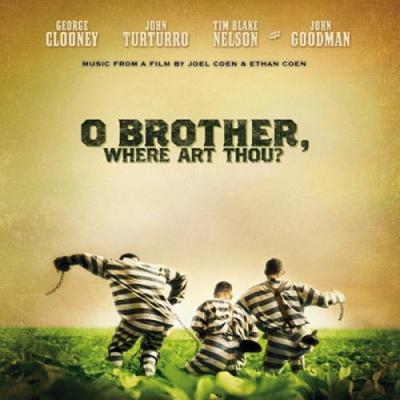
"O Brother, Where Art Thou?" Soundtrack Lyrics
Movie • 2000
Track Listing
James Carter & the Prisoners
Harry McClintock
Norman Blake
Alison Krauss
The Soggy Bottom Boys
Chris Thomas King
The Whites
Alison Krauss and Gillian Welch
Emmylou Harris, Alison Krauss and Gillian Welch
Sarah, Hannah and Leah Peasall
The Cox Family
Ralph Stanley
The Soggy Bottom Boys
Fairfield Four
The Stanley Brothers
“O Brother, Where Art Thou? (Music from the Motion Picture)” – Album Guide to Tracks and Key Scenes
Overview
How often does a prison work song open a Hollywood comedy and end up on a chart-topping, Grammy-winning album? The O Brother, Where Art Thou? soundtrack turns that unlikely scenario into its entire mission statement.
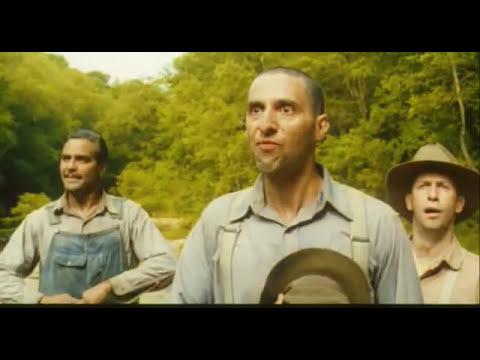
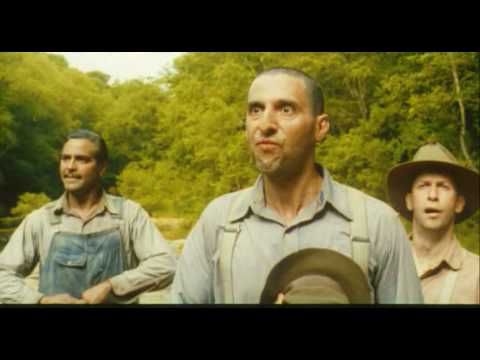
The film follows Ulysses Everett McGill and fellow escapees Pete and Delmar as they flee a Mississippi chain gang in the 1930s, loosely mirroring The Odyssey. The soundtrack traces the same journey: arrival in a harsh, mythic South; adaptation to its folk traditions; rebellion through the Soggy Bottom Boys’ accidental stardom; and a kind of spiritual collapse and renewal in the flood-soaked finale. The songs don’t just sit under the dialogue — they tell the story in parallel.
Across the album, old spirituals, fiddle tunes, blues laments and shape-note hymns are treated as living characters. “Po Lazarus” foreshadows the sheriff who stalks the trio. “Down to the River to Pray” reframes a simple baptism as a mass, almost dreamlike ritual. “I Am a Man of Constant Sorrow” becomes Everett’s unofficial autobiography and the plot’s main engine. The music acts like fate in a Greek epic: always there, always nudging people toward trouble or grace.
What makes this soundtrack distinct is how self-contained it feels. You can follow the emotional arc of the movie just by listening. The sequencing walks you from prison work song and hobo fantasy, through campfire blues and siren lullabies, into Klan chants and jubilant campaign-rally string band music, and finally out into quiet gospel. It’s a story album disguised as a compilation.
Stylistically, the record moves in clear phases. Early tracks lean on field recordings and vintage sides — chain-gang work song, 1920s hobo ballad — that stand in for a brutal, unequal South. Midway, bluegrass, string-band and country-gospel pieces mark the heroes’ improvisation and hustle. In the last stretch, unaccompanied dirges and church harmonies (“O Death”, “Lonesome Valley”, “Angel Band”) carry the film into open talk of mortality and redemption. Old-time fiddle equals chaos; tight harmony equals community; stark a cappella equals judgment.
How It Was Made
The Coen brothers didn’t ask for background music; they asked for a musical backbone. They hired T Bone Burnett not just as a producer but as a kind of ethnographic dramaturg. Before cameras rolled, Burnett went crate-digging through early 20th-century American recordings, then convened sessions at Sound Emporium in Nashville in spring 1999 to cut most of the modern tracks live, straight to tape.
Only a handful of pieces — notably Harry McClintock’s 1928 “Big Rock Candy Mountain” and James Carter’s Parchman Farm field recording of “Po Lazarus” — are archival. Almost everything else was newly recorded with contemporary roots players asked to sound like 1937 without pastiche. Alison Krauss, Gillian Welch, Emmylou Harris, Norman Blake, the Fairfield Four, the Cox Family, John Hartford and others form a rotating house band of American vernacular music.
Gillian Welch isn’t just on the mic; she worked behind the scenes as an associate producer. She and Burnett expanded the traditional lullaby that became “Didn’t Leave Nobody but the Baby” for the siren scene, turning a fragment collected by folklorist Alan Lomax into something gauzy and sinister. Ralph Stanley recorded “O Death” a cappella in the stark, Primitive Baptist style he grew up with rather than the banjo version Burnett initially imagined, a choice that gives the Klan sequence its chill.
According to one Grammy oral history, Burnett approached the project as a way to “shine a light” on classic roots music using the Coens’ movie as a giant amplifier, reasoning that a George Clooney vehicle would reach people a normal folk compilation never could. The album was also assembled with multiple editions in mind: the original 19-track release, and later a 10th-anniversary deluxe set adding alternates and cues that had only existed on film prints or bootlegs.
Tracks & Scenes
“Po Lazarus” — James Carter and the Prisoners
Where it plays: Over the opening sequence, a real 1950s Parchman Farm chain-gang recording plays while shackled prisoners swing pickaxes in harsh sunlight. Everett, Pete and Delmar appear among them before making their break for freedom. The song is non-diegetic but tightly synced to the workers’ motions and the clank of tools.
Why it matters: It sets the film’s stakes immediately: incarceration, labor, racial violence. The lyrics about a hunted man foreshadow Sheriff Cooley’s relentless pursuit and frame the whole odyssey as doomed from the start.
“Big Rock Candy Mountain” — Harry McClintock
Where it plays: After the work-song prelude, McClintock’s vintage 1928 recording rolls under the stylized opening credits and early landscape shots. As the three convicts run and hide across fields and rail lines, the hobo’s utopian fantasy about lemonade springs and cigarette trees plays against dry, dusty reality.
Why it matters: The song sells Everett’s “treasure” story as pure hucksterism. He’s promising his friends a candy-colored future that never existed, just like the hobo luring kids toward the mythical mountain.
“Down to the River to Pray” — Alison Krauss
Where it plays: In one of the film’s most iconic images, Everett and the others wander through the woods and stumble upon a white-robed congregation processing to a river. Krauss’s voice and a swelling choir track the long, unbroken shot of people wading into the water for full-immersion baptism. Pete and Delmar rush forward to be baptized while Everett hangs back on the bank, skeptical.
Why it matters: The hymn momentarily suspends the film’s irony. It gives Pete and Delmar a shot at spiritual reset while underlining Everett’s stubborn attachment to his own schemes.
“Hard Time Killing Floor Blues” — Chris Thomas King
Where it plays: Around a campfire after picking up guitarist Tommy Johnson, he picks out Skip James’s blues on an acoustic guitar. The camera stays close on his hands and face as the others listen in near silence; the surrounding woods feel heavy and still. It’s diegetic, a song Tommy plays to pass time, but it also seems to bleed into the score as the night deepens.
Why it matters: The lyric about the “killing floor” ties the trio’s money troubles to the wider economic despair of the Depression. It also marks Tommy as a serious musician rather than just comic relief.
“I Am a Man of Constant Sorrow” (radio version) — The Soggy Bottom Boys
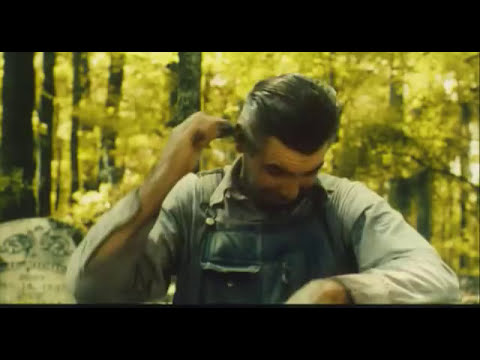
Where it plays: Broke and desperate, the four travelers duck into WEZY, a little back-road radio station. They sing into a hanging microphone for a blind engineer who has no idea they’re white convicts. On screen, Clooney sells Everett’s swagger; on the soundtrack, Dan Tyminski’s tenor carries the vocal. The take is cut live, with the band ringed around a single mic, then pressed straight to disc in-story.
Why it matters: This is the turning point where the music starts shaping the plot. The boys earn quick cash, but more importantly, their anonymous record becomes a regional hit, transforming a throwaway hustle into destiny.
“Didn’t Leave Nobody but the Baby” — Emmylou Harris, Alison Krauss, Gillian Welch
Where it plays: Drifting along a wooded creek, the trio hears ethereal voices and finds three women washing clothes on the rocks. The sirens ply them with corn liquor and sing this eerie lullaby as the sound design softens and the light turns gauzy. The song is diegetic; we see the women singing, but the mix pushes their voices forward like a spell. The scene cuts to black after the men pass out, and Delmar later wakes to find only Pete’s clothes and a toad.
Why it matters: The track dresses up one of The Odyssey’s mythic encounters in Southern Gothic costume. It’s soothing and ominous at the same time, hinting that surrender — to drink, to desire, to fantasy — always has a cost.
“O Death” — Ralph Stanley
Where it plays: Everett, Pete and Delmar sneak into a Ku Klux Klan rally to rescue Tommy. Hooded marchers move in rigid formation around a burning cross while the Imperial Wizard sings “O Death” a cappella on screen. On the soundtrack, Stanley’s disembodied voice delivers each line slowly, with cavernous reverb and no instruments, as the camera tracks the ritualistic choreography.
Why it matters: The dirge freezes the film’s comedy. For a few minutes, the soundtrack looks straight at racial terror instead of dancing around it. It also exposes politician Homer Stokes as the man behind the hood.
“I’ll Fly Away” — Kossoy Sisters (film) / Alison Krauss & Gillian Welch (album)
Where it plays: After a stretch of small cons and close calls, the boys wander country roads again, thumbing rides, sometimes leaving money on windowsills after stealing cooling pies. In the film, the 1956 Kossoy Sisters recording plays over a montage of their rambling. On the album, a new duet by Krauss and Welch stands in, with slightly cleaner, more modern harmony.
Why it matters: The hymn’s promise of escape “to a home on God’s celestial shore” doubles as a wink at the trio’s bumbling attempts to outrun the law and Everett’s wish to reunite with his family.
“Keep on the Sunny Side” — The Whites
Where it plays: A cheery performance of the old Carter Family favorite rings out over a campaign event for Pappy O’Daniel. Upbeat fiddles and three-part harmony roll while candidates shake hands and sell their versions of hope and reform. The crowd claps along, half to the song and half to the spectacle.
Why it matters: The tune is pure optimism on its own, but in this context it feels a little ironic — political theater piggybacking on a gospel message about staying righteous.
“In the Jailhouse Now” — Tim Blake Nelson / The Soggy Bottom Boys
Where it plays: At the big governor’s dinner, after the Soggy Bottom Boys’ initial success with “Constant Sorrow,” Delmar steps to the mic for a comic, yodel-heavy version of this old vaudeville number. The crowd that moments earlier might have lynched them now stomps, claps and whistles.
Why it matters: The song is a joke about never learning from your mistakes — which is essentially the trio’s entire lifestyle. It also seals their popularity with the voters and forces Pappy O’Daniel’s political hand.
“I Am a Man of Constant Sorrow” (live finale) — The Soggy Bottom Boys
Where it plays: Same rally, second round. The boys return to the stage disguised in false beards and perform the song again, this time with the crowd fully primed. Camera cuts between ecstatic dancers, stunned lawmen and a panicking Homer Stokes as the hall erupts. The mix pushes the band hot and loud, as if we’re in the middle of the crowd.
Why it matters: This performance is the story’s hinge: the convicts become folk heroes, Pappy co-opts them, and Stokes is publicly humiliated. The anthem of personal misfortune turns into a populist victory song.
“Lonesome Valley” — The Fairfield Four
Where it plays: Near the end, as Everett’s last-minute prayer for deliverance goes up, grave diggers sing this spiritual while preparing the trio’s execution site. Their rich bass harmonies echo off the trees. Moments later, the newly opened dam floods the valley, washing away scaffold and sheriff alike.
Why it matters: The lyric insists everyone must walk the valley alone, yet the film answers with a literal deus ex machina. The song underlines the tension between personal responsibility and miraculous rescue.
“Angel Band” — Stanley Brothers (album version)
Where it plays: Used toward the close of the film’s arc and featured on the album’s late sequence, this hymn cools the story down after the chaos of the flood and political farce. Gentle harmonies and slow tempo accompany images of a world reset: family negotiations, a home that may or may not be permanent.
Why it matters: “Angel Band” functions like end credits for the characters’ souls, suggesting that, however crooked their path, somebody is keeping score.
Notes & Trivia
- The opening “Po Lazarus” isn’t a studio recreation; it’s a real prison work song recorded by folklorist Alan Lomax at Mississippi’s Parchman Farm.
- James Carter, the lead singer on that field recording, reportedly received a royalty check decades later when the soundtrack blew up.
- George Clooney rehearsed “I Am a Man of Constant Sorrow” but was ultimately dubbed by Dan Tyminski; Clooney’s lip-sync is acting, not singing.
- The “I’ll Fly Away” you hear in the film is by the Kossoy Sisters, but the album swaps in a new Krauss/Welch version, confusing more than a few fans.
- Ralph Stanley’s “O Death” won him a Grammy for Best Male Country Vocal Performance — a rare case of an unaccompanied dirge taking a major category.
- T Bone Burnett cut most of the new tracks before filming so the Coens could choreograph and block scenes around finished performances.
- The soundtrack’s success spawned the concert film and album Down from the Mountain, documenting a one-off live revue of its performers.
- Two cues listed in the film’s music credits — “Admiration” and “What Is Sweeter” — still don’t appear on the main commercial soundtrack editions.
Music–Story Links
The simplest way to read the soundtrack is as Everett’s subconscious. When he boasts and schemes, “I Am a Man of Constant Sorrow” plays like his inner monologue, insisting he’s the center of some grand tragedy even as the film keeps proving he’s just another small-time talker.
Tommy Johnson’s blues numbers mark moral crossroads. His “Hard Time Killing Floor Blues” arrives right after the men pick him up at a literal crossroads and just before their disastrous encounter with Baby Face Nelson. The song’s fatalism leaks into the choices they make: quick money, bad partners, no long-term plan.
Religious pieces signal moments when Everett could change but refuses. The baptism procession to “Down to the River to Pray” offers him a fresh start he won’t take; “Lonesome Valley” and “Angel Band” bookend his last-minute prayer and the flood, where he finally begs for mercy only after all his scams collapse.
“Didn’t Leave Nobody but the Baby” and “O Death” are the soundtrack’s two purest horror cues. The sirens’ lullaby turns desire into a trap, literally dissolving Pete’s body (as far as Delmar knows). “O Death” turns politics into ritualized menace: the song is sung by Stokes as Imperial Wizard, linking his “reform” campaign to lethal racism.
Even the cheerful songs carry narrative weight. “Keep on the Sunny Side” props up a governor selling optimism while backing policies that keep people like Tommy on the margins. “I’ll Fly Away” reassures the boys and lets the audience exhale, but its promise of a better world “up there” quietly admits nothing much will change down here.
Reception & Quotes
On paper, a compilation of uncommercial country, gospel, bluegrass and old blues should have been a niche item. Instead, the soundtrack topped the Billboard 200, dominated country charts for months, went multi-platinum and won the 2002 Grammy for Album of the Year — the only film soundtrack of the 21st century to take that prize so far.
Roots and country outlets often treat it as a watershed. One long-view country history describes it as “one of the most important albums in country music history,” arguing that it legitimized acoustic, pre-Nashville sounds inside the mainstream again. At the same time, some critics — notably in Rolling Stone — have pushed back, suggesting the album helped cement a narrow, idealized vision of “authentic” rural music that underplays Black innovation and commercial hybrids.
Two decades on, it still shows up on lists of key recordings of the 2000s and of the Coen brothers’ most enduring contributions. More recent commentary about newer films like Ryan Coogler’s Sinners openly frame them as spiritual heirs to O Brother’s model: not musicals, but stories in which roots music quietly drives everything.
“The mountain music of the O Brother, Where Art Thou? soundtrack eclipsed the movie.” — The A.V. Club
“One of the most important albums in country music history.” — Saving Country Music
Interesting Facts
- The soundtrack was released on 5 December 2000, weeks before the film’s wide U.S. release, so some listeners heard the “story” on CD first.
- Most album tracks are modern recordings, but “Big Rock Candy Mountain” and “Po Lazarus” are genuine pre-war and mid-century documents dropped straight into a 2000 film.
- Ralph Stanley’s “O Death” helped spur a late-career revival; the song became a staple of his live shows for the rest of his life.
- The 10th-anniversary deluxe edition adds 14 tracks, including film-used versions of “You Are My Sunshine” and “I’ll Fly Away” that didn’t appear on the original CD.
- Chris Thomas King’s performance of “Hard Time Killing Floor Blues” was recorded live on set, blurring the line between acting and documentary performance.
- Gillian Welch has a small cameo in the movie as one of the town’s “Siren”-adjacent performers and turns up in the “Down from the Mountain” concert film.
- The album shows up in NPR’s lists of the decade’s most important recordings and in multiple “best soundtracks” round-ups from mainstream and niche outlets.
- Despite how closely fans associate it with bluegrass, the official genre tags also include folk, blues, gospel, Americana and “Stage & Screen”.
- The Soggy Bottom Boys as a “band” are a studio construction: different singers and players combined, then wrapped in a single fictional name.
- Some later trailers and TV spots for the film leaned so heavily on “Man of Constant Sorrow” that casual viewers assumed it was the only song in the movie.
Technical Info
- Title: O Brother, Where Art Thou? (Music from the Motion Picture)
- Year: 2000
- Type: Compilation film soundtrack album
- Primary producer / music supervisor: T Bone Burnett
- Film directors: Joel Coen & Ethan Coen
- Recording dates & studio: Modern tracks cut spring 1999 at Sound Emporium, Nashville; select archival recordings licensed in.
- Main genres: Country, bluegrass, folk, blues, gospel, Americana, film soundtrack
- Length (original edition): About 61 minutes, 19 tracks
- Labels: Lost Highway Records / Mercury Records
- Key vocal contributors: Dan Tyminski, Alison Krauss, Ralph Stanley, Gillian Welch, Emmylou Harris, Norman Blake, Chris Thomas King, the Fairfield Four, the Cox Family, the Peasall Sisters
- Notable placements in film: “Po Lazarus” (chain-gang opening), “Big Rock Candy Mountain” (credits), “Down to the River to Pray” (baptism), “I Am a Man of Constant Sorrow” (radio & rally), “O Death” (Klan rally), “Lonesome Valley” (pre-flood execution), “Angel Band” (closing mood).
- Major awards: Grammy Award for Album of the Year (2002); multiple additional Grammys for individual tracks and collaborations; major country and bluegrass awards for the album and performers.
- Chart performance: Reached No. 1 on the Billboard 200 in 2001; spent more than 20 weeks at No. 1 on Top Country Albums; long-running presence on soundtrack charts.
- Certifications (U.S.): Certified multi-platinum by the RIAA with over eight million copies sold.
- Key editions: Original 2000 CD; 2003 vinyl; 2011 10th-anniversary deluxe edition with additional film cues and alternates.
- Related releases: Down from the Mountain live concert film/album; various reissues and digital editions on streaming platforms.
- Availability: Widely available on major streaming services (often in both original and deluxe forms), plus CD and LP reissues.
Questions & Answers
- Why did the O Brother, Where Art Thou? soundtrack become so influential?
- It arrived when mainstream country skewed pop, then used a hit film to reintroduce old-time, gospel and bluegrass sounds to a broad audience at once.
- Who actually sings “I Am a Man of Constant Sorrow” in the film?
- On screen you see George Clooney, but the lead vocal is by bluegrass singer Dan Tyminski, with supporting voices from Harley Allen and Pat Enright.
- Why is “I’ll Fly Away” different on the album than in the movie?
- The movie uses a 1956 Kossoy Sisters recording; licensing and aesthetic choices led the album to feature a new performance by Alison Krauss and Gillian Welch instead.
- Are all the songs used in the film on the original soundtrack CD?
- No. A few cues listed in the film’s credits, plus some alternates, only show up on the 10th-anniversary deluxe edition or remain unreleased commercially.
- What’s the best way to hear the soundtrack today?
- The core album is on major streaming platforms, often alongside the deluxe edition. Physical copies on CD and vinyl remain easy to find on reissue.
Canonical Entities & Relations
| Subject | Relation | Object |
|---|---|---|
| O Brother, Where Art Thou? (Music from the Motion Picture) | is soundtrack to | O Brother, Where Art Thou? (2000 film) |
| T Bone Burnett | produced / supervised music for | O Brother, Where Art Thou? (Music from the Motion Picture) |
| Joel Coen & Ethan Coen | directed | O Brother, Where Art Thou? (2000 film) |
| Alison Krauss | performed on | “Down to the River to Pray”, “I’ll Fly Away” (album version) |
| Gillian Welch | associate-produced and co-wrote | “Didn’t Leave Nobody but the Baby”; also performed on “I’ll Fly Away” |
| Ralph Stanley | performed | “O Death” for the soundtrack |
| Chris Thomas King | performed | “Hard Time Killing Floor Blues”; portrayed Tommy Johnson in the film |
| Dan Tyminski | provided singing voice for | George Clooney’s character on “I Am a Man of Constant Sorrow” |
| Lost Highway Records & Mercury Records | released | O Brother, Where Art Thou? (Music from the Motion Picture) |
| Sound Emporium (Nashville) | hosted recording sessions for | modern tracks on the soundtrack |
Sources: Wikipedia (film and soundtrack entries); Grammy, NPR and AV Club retrospectives; Saving Country Music and Taste of Country features; Independent and Rolling Stone articles; Discogs, MusicBrainz, Apple Music and Spotify album pages; academic and legal commentary on the soundtrack’s impact.
"O Brother, Where Art Thou?" soundtrack penetrates the barriers of cinematic music, transforming to an artifact of cultural magnitude since its 2000 release. This music collection, curated for the Coen Brothers' cinematic masterpiece, is an exploration into the traditional music of the American South, consisting of richly textured bluegrass, country, gospel, and folk melodies. These harmonies don't only support the film's atmosphere during the Great Depression, but they have also faithfully rekindled these musical genres' value for modern-day listeners. Renown selection in the album, "Man of Constant Sorrow," executed by the Soggy Bottom Boys (a made-up group in the film featuring vocals from Dan Tyminski of Union Station), envelops the film's Homeric narrative within its rugged lyrics and charm. Further notable performances were delivered by Alison Krauss, Emmylou Harris, and Ralph Stanley, whose chilling solo vocal performance of "O Death" reverberates chillingly, capturing the film's moodier, intense themes. The album's creation spearheaded by T Bone Burnett, a connoisseur in crafting soundtracks entrenched in American musical history, is more than just background music for the film. Itizes plays a crucial structural role within the storytelling. Burnett's selected and produced tracks rekindled a fascination in traditional American music, unveiling a previously unheard era of sound to a contemporary audience with a modernized twist. The impressive achievement of the album—marked as eight times platinum in America—emphasizes its influence, extending far beyond being just a movie soundtrack, but instead a standalone musical phenomenon that breathed fresh life into forgotten melodies and stories. Possessing a legacy much more profound than its commercial success or critical endorsement, the soundtrack succeeded in connecting generations, resurfaced hidden music to the forefront, and demonstrated the steadfast power of narrating through music. "O Brother, Where Art Thou?" stands as a tribute to its timeless music and the universal stories it unfold, mirroring the film's expedition through adversity, deliverance, and the chase for a mythical home, whilst creating a sonic painting of the American South that as vivid as it evokes emotion.November, 17th 2025
A-Z Lyrics Universe
Cynthia Erivo Popular
Ariana Grande Horsepower
Post Malone Ain't No Love in Oklahoma
Luke Combs Good Riddance (Time of Your Life)
Green Day Bye Bye Bye
*NSYNC You're the One That I Wan
John Travolta & Olivia Newton-John I Always Wanted a Brother
Braelyn Rankins, Theo Somolu, Kelvin Harrison Jr. and Aaron Pierre The Power of Love
Frankie Goes to Hollywood Beyond
Auli’i Cravalho feat. Rachel House MORE ›