I am a Man of Constant Sorrow Lyrics – The Soggy Bottom Boys
Soundtrack Album: O Brother, Where Art Thou?
(In constant sorrow through his days)
I am a man of constant sorrow
I've seen trouble all my day.
I bid farewell to old Kentucky
The place where I was born and raised.
(The place where he was born and raised)
For six long years I've been in trouble
No pleasures here on earth I found
For in this world I'm bound to ramble
I have no friends to help me now.
[chorus] He has no friends to help him now
It's fare thee well my old lover
I never expect to see you again
For I'm bound to ride that northern railroad
Perhaps I'll die upon this train.
[chorus] Perhaps he'll die upon this train.
You can bury me in some deep valley
For many years where I may lay
Then you may learn to love another
While I am sleeping in my grave.
[chorus] While he is sleeping in his grave.
Maybe your friends think I'm just a stranger
My face you'll never see no more.
But there is one promise that is given
I'll meet you on God's golden shore.
[chorus] He'll meet you on God's golden shore.
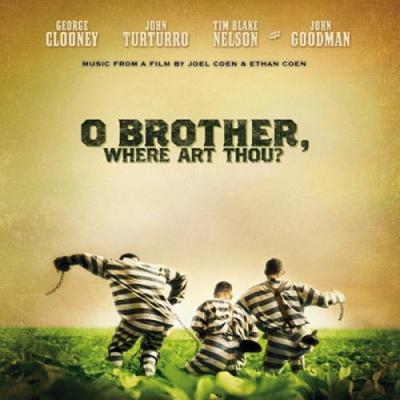
O Brother, Where Art Thou?
Soundtrack Lyrics for Movie, 2000
Track Listing
James Carter & the Prisoners
Harry McClintock
Norman Blake
Alison Krauss
The Soggy Bottom Boys
Chris Thomas King
The Whites
Alison Krauss and Gillian Welch
Emmylou Harris, Alison Krauss and Gillian Welch
Sarah, Hannah and Leah Peasall
The Cox Family
Ralph Stanley
The Soggy Bottom Boys
Fairfield Four
The Stanley Brothers
Song Overview

Review and Highlights
Quick summary
- Traditional folk song, reframed as a hit-in-the-plot bluegrass single for a fictional band.
- Released on the 2000 soundtrack album, with multiple versions across the tracklist.
- Lead vocal is Dan Tyminski, backed by tight trio harmony that sells the hook like it was born for radio.
- Key idea: a weary narrator keeps moving, waving goodbye to home, love, and certainty.
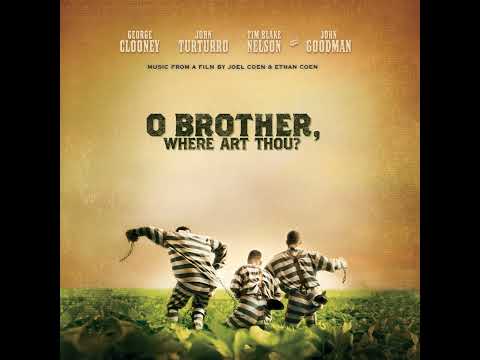
O Brother, Where Art Thou? (2000) - film soundtrack and film performance - diegetic. Mid-film, the trio records the tune at a radio station to make quick money, not realizing they have cut a local smash. Late film, the same song returns as a crowd-igniting set piece at a political rally. Why it matters: the track becomes their accidental identity, the kind of hit that drags you into fame while your boots are still muddy.
I have heard a lot of folk standards treated like museum pieces. This one is the opposite: it sounds like it just happened. The arrangement moves with bluegrass purpose - snap-tight rhythm guitar, a forward-rolling pulse, and harmony parts that do not decorate the lead so much as grab its elbows and steer it toward the chorus. The effect is a singalong that still keeps its lonesome spine.
The trick is sincerity. Even when you know the context is playful, the performance does not wink. Tyminski sings the narrator like a man trying to keep his dignity while the road keeps taking it. The backing voices answer like companions who have heard this story before and are willing to underline it again, one more time, for anyone in the cheap seats.
Creation History
For the 2000 soundtrack, producer T Bone Burnett and the music team shaped a period-flavored recording that could function as a believable radio hit inside the film. The plan initially involved the lead actor singing, but the released version uses Dan Tyminski on lead vocal, with a small circle of bluegrass specialists supplying the band sound. As stated in the Recording Academy feature marking the soundtrack anniversary, the cut earned major awards attention and became one of the signature moments of the project.
Song Meaning and Annotations
Plot
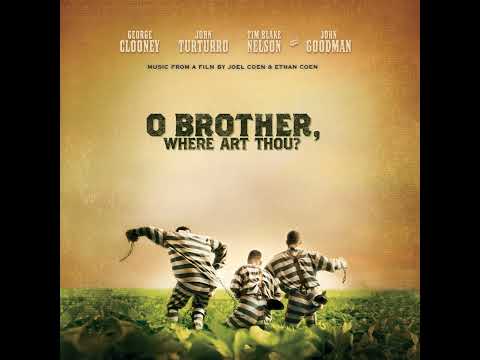
The narrator introduces himself as a lifelong traveler marked by trouble. He says goodbye to Kentucky, then to an old lover, and imagines death or burial far from home. The arc is a sequence of departures: leaving place, leaving people, leaving the idea that life will settle down. In the film context, that theme hits twice - once as a hustle, then again as a victory lap that the characters did not even ask for.
Song Meaning
At its core, the song is a walking confession. The narrator does not argue his case, he simply reports a pattern: hardship, wandering, and a private grief that keeps repeating. The religious ending - meeting again on a golden shore - is not a plot twist, it is a coping strategy. When the road feels endless, you make the horizon do some work.
What I love is how little it begs. The language is plain, the melody is direct, and the sorrow is carried by forward motion rather than by melodrama. The band keeps the wheels turning, as if staying still would be the real danger.
Annotations
-
"I am a man of constant sorrow"
In this version, the line reads like a job title. The narrator has stopped treating trouble as an episode and started treating it as a biography.
-
"I bid farewell to ol' Kentucky"
Goodbye is not just geographic - it is social. Leaving the place you were "born and raised" often means leaving the last people who can vouch for who you were.
-
"The place where he was born and raised"
The answering voices can be heard as friends, witnesses, or an old-time chorus device that makes one man sound like a legend. In the film, that chorus quality matters: it helps turn a private lament into a public hit.
-
"For six long years I've been in trouble"
A number like this does not need to be literal to land. It signals duration - long enough that the narrator now expects hardship the way you expect weather.
-
"I have no friends to help me now"
The line is loneliness spoken in the plainest words. The irony, if you know the story context, is that companionship might be closer than he admits.
-
"It's fare thee well, my old true lover"
This is the folk-song hinge: once love leaves the room, the road becomes a sentence rather than a choice.
-
"I'll meet you on God's golden shore"
The promise is both comfort and distance. He cannot offer return, so he offers reunion somewhere outside time.
Style fusion and the engine of the performance
The sound sits at a crossroads: country directness, bluegrass drive, and folk narrative economy. The rhythm is firm enough to feel like a train track, while the harmony blend keeps the chorus bright and communal. It is a sad song that moves like it has places to be.
Symbols, plain speech, and why it sticks
The imagery is everyday: trains, valleys, graves, farewells. That is the point. The song does not need ornate metaphors because the scenario is already huge - a man realizing he may never get back. When the final promise gestures to heaven, it is not preachy. It is the last remaining address where the narrator thinks someone might still be waiting.
Technical Information
- Artist: The Soggy Bottom Boys (feat. Dan Tyminski)
- Featured: Dan Tyminski; harmony parts by Pat Enright and Harley Allen
- Composer: Traditional; credited to Richard (Dick) Burnett (writer credit), with Carter Stanley widely cited for arrangement lineage
- Producer: T Bone Burnett
- Release Date: December 5, 2000
- Genre: country; bluegrass; folk; soundtrack
- Instruments: vocals; acoustic guitar; banjo; mandolin; fiddle; dobro; bass
- Label: Lost Highway (Mercury)
- Mood: weary, steady, resolute
- Length: 4:16 (with-band album cut)
- Track #: 16 (full version on the 2000 soundtrack)
- Language: English
- Album (if any): O Brother, Where Art Thou? (Music from the Motion Picture)
- Music style: harmony-led bluegrass in a pop-ready arc
- Poetic meter: mixed, ballad phrasing with chorus responses
Questions and Answers
- Who produced the track?
- T Bone Burnett is credited as producer for the soundtrack recording.
- When was it released?
- The soundtrack album release date is December 5, 2000, and that is the standard release reference for the recording.
- Who wrote it?
- It is a traditional song most often credited in print to Richard (Dick) Burnett, with long-running debate about earlier sources and later arrangement influence.
- Is the film lead actor the singer?
- No. The widely credited lead vocal on the soundtrack recording is Dan Tyminski.
- Why does the chorus keep repeating lines?
- The responses function like a folk chorus and also like a crowd witnessing a confession, turning one man into a story people can carry.
- What is the central promise at the end?
- The narrator cannot promise return, so he promises reunion in the afterlife, framing separation as temporary in a spiritual timeline.
- Why did this version break out beyond the film?
- It behaves like a radio single: short, hooky, and built on harmony blend that makes the chorus feel communal.
- Are there multiple official soundtrack versions?
- Yes. The album includes a radio edit and instrumental tracks in addition to the longer with-band performance.
Awards and Chart Positions
The joke about a fictional band stops being a joke once the industry starts handing out trophies. According to Billboard magazine chart data, the recording reached a peak of No. 35 on the Hot Country Songs chart. The song won Country Music Association Single of the Year (2001) and earned International Bluegrass Music Association Song of the Year (2001). It also received a Grammy for Best Country Collaboration with Vocals at the 2002 Grammy Awards, while the soundtrack itself took Album of the Year the same night.
| Category | Result | Date or Year |
|---|---|---|
| Billboard Hot Country Songs | Peak No. 35 | 2001-2002 chart run |
| Country Music Association | Single of the Year - won | November 7, 2001 |
| International Bluegrass Music Association | Song of the Year - won | 2001 |
| Grammy Awards | Best Country Collaboration with Vocals - won | February 27, 2002 |
| Grammy Awards | Soundtrack Album of the Year - won | February 27, 2002 |
| RIAA certification (soundtrack album) | Gold, then 8x Platinum | 2001 and 2007 certification milestones |
How to Sing I Am a Man of Constant Sorrow
Reference metrics: Common listings place the with-band performance around 170 BPM in F major, with a frequently cited vocal range of F3-E4. Treat those numbers as a practical map: enough to plan rehearsal, not a substitute for listening.
- Tempo first: Start at 140 BPM and lock the groove. Bluegrass drive comes from steadiness, not from rushing.
- Diction: Keep vowels clean and consonants light. The words need to feel spoken, not chewed.
- Breath planning: Mark breaths at phrase ends, not mid-thought. The song works best when the narrator sounds like he can keep walking.
- Lead tone: Aim for a forward, conversational placement. This is not operatic sorrow - it is a man telling the truth in public.
- Harmony blend: If you have two harmony singers, rehearse them as one unit. Match vowels on the repeated chorus lines so the responses sound like a single answer.
- Rhythm guitar feel: Keep the strum percussive and consistent. The voice rides on that pocket.
- Accent choices: Let key nouns land: Kentucky, railroad, valley, shore. These are the signposts of the story.
- Pitfalls: Avoid over-singing. The power here is restraint, the sense that the narrator has been tired for a long time.
Additional Info
The song has lived many lives. It was first published in the early 20th century and later carried into bluegrass canon by the Stanley Brothers, then into the 1960s folk revival by artists such as Bob Dylan. The soundtrack version is essentially a modern folk process in fast-forward: an old ballad, reframed with new voices, then recirculated until it sounds timeless again.
Outside the film world, the track even crossed into hip-hop sampling culture. A WhoSampled credit trail notes that B.o.B sampled the with-band recording for "I Am the Man," proving that a dusty railroad lyric can still end up in a very different kind of club.
Key Contributors
| Entity | Type | Relationship (S-V-O) |
|---|---|---|
| Dan Tyminski | Person | Tyminski sang lead vocal for the soundtrack recording credited to the fictional band. |
| T Bone Burnett | Person | Burnett produced the soundtrack sessions and curated the roots-centered sound. |
| Stuart Duncan | Person | Duncan played fiddle on the credited session lineup for the track. |
| Mike Compton | Person | Compton played mandolin on the credited session lineup for the track. |
| Ron Block | Person | Block played banjo on the credited session lineup for the track. |
| Jerry Douglas | Person | Douglas played dobro on the credited session lineup for the track. |
| Barry Bales | Person | Bales played bass on the credited session lineup for the track. |
| Pat Enright | Person | Enright sang harmony parts that support the lead and thicken the chorus. |
| Harley Allen | Person | Allen sang harmony parts and is credited among the award recipients for the recording. |
| Lost Highway (Mercury) | Organization | The label released the soundtrack album that housed the track and its alternate versions. |
| International Bluegrass Music Association | Organization | The association awarded Song of the Year to the recording in 2001. |
| Country Music Association | Organization | The association awarded Single of the Year to the recording in 2001. |
| Recording Academy | Organization | The Academy honored the recording and soundtrack with Grammy Awards in 2002. |
Sources: Recording Academy feature on the soundtrack anniversary, Billboard Hot Country Songs chart archive, BMI CMA Awards news release, IBMA awards recipient page, Wikipedia entries on the folk song and soundtrack album, Musicstax track metrics, Tunebat track metrics, Singing Carrots range listing, GRAMMY video page for Album of the Year acceptance, Rolling Stone Grammy flashback, WhoSampled sample credit page
A-Z Lyrics Universe
Cynthia Erivo Popular
Ariana Grande Horsepower
Post Malone Ain't No Love in Oklahoma
Luke Combs Good Riddance (Time of Your Life)
Green Day Bye Bye Bye
*NSYNC You're the One That I Wan
John Travolta & Olivia Newton-John I Always Wanted a Brother
Braelyn Rankins, Theo Somolu, Kelvin Harrison Jr. and Aaron Pierre The Power of Love
Frankie Goes to Hollywood Beyond
Auli’i Cravalho feat. Rachel House MORE ›