Soundtracks:  A B C D E F G H I J K L M N O P Q R S T U V W X Y Z #


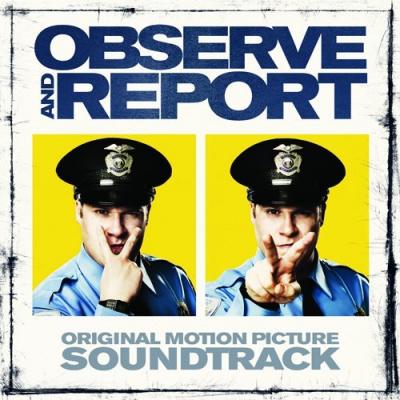
Observe and Report Album Cover

"Observe and Report" Soundtrack Lyrics

Movie • 2009

Track Listing


"Observe & Report (Original Motion Picture Soundtrack)" – Album Guide to Tracks and Key Scenes

Observe and Report 2009 theatrical trailer still with mall security guard Ronnie Barnhardt
Observe & Report film soundtrack moments as glimpsed in the 2009 trailer.

Overview

What happens when a mall cop movie steals its soul from Taxi Driver instead of family comedy, and then doubles down with a crate-digger’s rock collection? Observe & Report answers that with a soundtrack that treats Ronnie Barnhardt’s delusions as seriously as the film treats its jokes. The album and song choices frame him not as a punchline, but as a tragic hero in his own head — and that tension is exactly where the music lives.

The film follows Ronnie, a bipolar head of mall security who turns a flasher case into his personal war. The songs turn the Forest Ridge Mall into a mythic arena: classic rock epics, punk outbursts, and a haunted Pixies cover paint over the bland retail lights with Ronnie’s inner drama. The Original Motion Picture Soundtrack cherry-picks those cues into a compact album that feels like a deranged rock mixtape: The Band, Patto, The Yardbirds, Little River Band, City Wolf’s cover of “Where Is My Mind?”, and Joseph Stephens’ raw, guitar-heavy score suite.

Across the film, the soundtrack charts a four-stage arc: arrival, adaptation, rebellion, collapse. Ronnie “arrives” over a stately classic-rock overture, adapts to his self-image with swaggering 70s guitar workouts, hits full rebellion in feral punk and noise-rock, and finally crashes into the late-film exhaustion of Queen and City Wolf. The music constantly argues with the images — sometimes cheering him on, sometimes exposing how pathetic his fantasy is.

Genre-wise, the album runs a tight but meaningful range. Classic rock and 70s prog-jazz (The Band, Patto, Little River Band) stand in for Ronnie’s self-mythologizing: big, romantic, “important” songs for a guy who thinks he is one step from greatness. British mod and garage sounds (The Action, The Yardbirds) add nervy momentum to his pseudo-heroic patrols. Punk and noise-rock (Dwarves, McLusky) erupt whenever the film shows how ugly his violence really is. And then there is City Wolf’s cover of “Where Is My Mind?” — an alt-rock ghost that finally admits the truth: Ronnie is lost, and the movie knows it.

How It Was Made

The film’s score and much of its musical DNA come from composer Joseph Stephens, a longtime collaborator of writer-director Jody Hill. Stephens came from a band background (including the group Pyramid), and he approached Observe & Report like a scrappy rock record more than a traditional orchestral score — a lot of guitars, drums, and rough-edged vocals rather than lush strings. In one interview, he described the score as deliberately “guttural and raw”, like a band playing live inside the movie rather than a polished studio orchestra.

Hill, meanwhile, pushed hard for left-field song choices. Instead of obvious classic-rock anthems, he leaned on deep cuts: The Band’s version of Bob Dylan’s “When I Paint My Masterpiece”, British prog-jazz oddities from Patto, and punk blasts from The Dwarves. In another piece, Hill talked about trying to use songs that could be “everyone’s favorite” if they actually knew them — the attitude is very much “if you know, you know”. Queen’s “It’s Late” and “The Hero” are perfect examples: significant in the film, missing from the album, and used like secret weapons in key scenes.

The official soundtrack album itself came out just before the film, as a New Line / WaterTower compilation. It folds together licensed songs and Stephens’ “Observe and Report Score Suite” into a coherent listen. In practice, the music team had to juggle licensing (especially for Queen), the tonal tightrope of the film’s black comedy, and the desire to avoid obvious, on-the-nose needle drops. The result is a set of cues that feel like they were curated by one obsessive DJ, not by a marketing department.

Observe and Report trailer frame highlighting the bleak shopping mall setting
Observe & Report uses classic and punk tracks to turn an ordinary mall into Ronnie’s imagined battleground.

Tracks & Scenes

“When I Paint My Masterpiece” — The Band
Where it plays: Over the opening credits, we drift across the mall: parking lot, storefronts, escalators, the whole fluorescent kingdom Ronnie believes he rules. The Band’s stately, slightly wistful take on Dylan sits over slow, almost romantic shots of shoppers and employees starting their day. Later in the film, a softer reprise of the song reappears around one of Ronnie’s emotional low points, undercutting his self-image with the sense that his “masterpiece” may never arrive.
Why it matters: This cue is the movie’s mission statement. The lyrics about striving for some great work mirror Ronnie’s belief that this silly mall job is his epic calling. The warm, classic texture also clashes with the grim behavior we’ll see, making the film feel more tragic than goofy.

“Super Freek (Remix)” — Amanda Blank & Aaron LaCrate
Where it plays: Brandi drives to the mall in her car, makeup perfect, phone glued to her hand, moving through her day with oblivious confidence. The track blares like a trashy club hit, the low end bouncing while she barely glances at the world outside her windshield. It’s non-diegetic, functioning as her own imagined soundtrack as she glides into work late and unbothered.
Why it matters: The brash electro beat throws us straight into Brandi’s worldview: shallow, self-absorbed, and yet weirdly magnetic. Juxtaposed with Ronnie’s grandiose rock cues, it sketches their mismatch in about thirty seconds.

“The Man” — Patto
Where it plays: On the escalator, Ronnie rides up through the mall in what the camera frames as a hero shot: low angles, slow motion, his security jacket flapping like a cape. Patto’s groove — loose, jazzy, slightly sinister — rolls underneath as shoppers pass by, unaware of the drama in his head. The moment runs long enough to feel like a fantasy music video for Ronnie’s ego.
Why it matters: The song title alone is a joke: Ronnie absolutely thinks he is “the man”, while everyone else sees an overzealous mall cop. The proggy, off-kilter rhythm hints that something in his self-image is fundamentally skewed.

“Lightsabre Cocksucking Blues” — McLusky
Where it plays: The track hits over one of Ronnie’s more feral bursts of aggression — a montage of him pushing his authority too far, escalating situations that don’t require violence. The noise-rock guitars and shouted vocals slam over jump cuts of chaos: running, grappling, shoving. The sound sits slightly above the action in the mix, like his rage has its own amplifier in the scene.
Why it matters: McLusky’s song is short, vicious, and funny in how extreme it is. That makes it perfect for showing how Ronnie’s hero fantasy keeps tipping into outright brutality; the cue tells you he has left “quirky mall cop” behind.

“Over Under Sideways Down” — The Yardbirds
Where it plays: During a drugs-and-mayhem stretch — Ronnie partying, drinking, and later attacking skateboarders — The Yardbirds kick in. The classic riff rides over handheld shots of parking-lot scuffles, broken boards, and stunned teenagers. The cue gives the sequence a vintage, almost 60s-rebel vibe even as what we see is closer to a sad, violent meltdown.
Why it matters: The song is both fun and queasy here. On one level, it turns the scene into a rock montage. On another, it makes Ronnie look like a guy who has soundtracked his own bad behavior with the coolest song he could imagine, without noticing he is the villain.

“Dwarves Must Die” — The Dwarves
Where it plays: In a frenetic fight sequence — fists flying, bodies slamming into mall fixtures — this hardcore punk track detonates. The guitars are all distortion and speed, cut sharply against fast edits and wild swings. Extras scramble, merchandise spills, and the scene turns from comedy to something closer to a riot.
Why it matters: This is the moment the film stops pretending Ronnie’s violence is harmless. The song’s title and sheer obnoxious force underline how self-destructive the character has become. It feels less like a soundtrack cue and more like the movie screaming back at its own protagonist.

“Help Is On Its Way” — Little River Band
Where it plays: Over the stolen-car sequence, a smooth 70s soft-rock groove plays as chaos unfolds. We see the car gliding through traffic in ways that are very much not helpful, and Ronnie’s notion of “saving the day” clashes with the mellow optimism of the song. The camera alternates between wide shots of the vehicle and Ronnie’s intense, unblinking focus.
Why it matters: The irony is almost too neat: help is not on its way, at least not the healthy kind. The track gives the scene a strange, almost nostalgic calm on top of something genuinely dangerous, which fits the film’s habit of underscoring violence with pleasant music.

“Where Is My Mind?” — City Wolf
Where it plays: As the flasher finally runs naked through the mall, panic erupts. Shoppers scream, security chases, and fluorescent corridors blur into a surreal racetrack. Over it all, City Wolf’s cover of the Pixies classic swells — chiming guitars, echoing vocals, a familiar melody slightly warped. The cue carries through Ronnie’s pursuit, turning the chase into something weirdly grand and disorienting at once.
Why it matters: This is the film’s most famous musical moment. The original song already has a strong association with mental breakdown, and using a cover lets Hill echo that without copying Fight Club directly. Heard here, it finally admits what the whole movie has implied: Ronnie’s mind is not where he thinks it is.

“It’s Late” — Queen
Where it plays: Late in the film, as Ronnie parades the wounded flasher to the police station and the final movements roll into the credits, Queen’s guitar epic surges in. We cut between Ronnie’s triumphant strut, the bloodied perpetrator, and reactions from the mall and police. The guitar solo stretches the moment, almost in slow motion, while dialogue about not needing anyone’s approval rings in the background.
Why it matters: The cue is emotionally complicated. On the surface, it crowns Ronnie’s victory. Underneath, the title — “It’s Late” — reads like a warning that his revelation about himself has arrived only after serious damage. Several commentators have pointed out how perfectly the song’s weary grandeur matches the film’s uneasy ending.

“The Hero” — Queen
Where it plays: During one of Ronnie’s most over-the-top confrontations — particularly the sequence where he takes on a line of cops and refuses to stand down — “The Hero” kicks in with full arena-rock bravado. The song syncs with baton swings, takedowns, and a crescendo of slow-motion hits that make Ronnie look like the unstoppable action star he imagines himself to be.
Why it matters: It is almost parody: a bombastic superhero anthem attached to a mall security guard beating law enforcement officers with a flashlight. The gap between the music’s scale and the reality on screen is the entire film in miniature.

“Babyteeth” — Pyramid
Where it plays: A second credits song, this one slides in after the big Queen moment has passed. As names scroll, we hear a more indie-leaning track with a slightly off-kilter rhythm and a sense of unresolved tension. It feels smaller, more intimate, almost like a palate cleanser after all the grandstanding rock.
Why it matters: Given that composer Joseph Stephens is tied to Pyramid, the track works as a bridge between the licensed songs and the score. It’s the film quietly returning to the band-level aesthetic that shaped its entire musical identity.

“Observe and Report Score Suite” — Joseph Stephens
Where it plays: On album, this suite stitches together key motifs from the film into a compact instrumental ride: guitars, drums, and moody textures instead of traditional themes. In the movie, related material surfaces in transitions and reflective beats — Ronnie alone in the mall after hours, trudging home, or staring just a bit too long at Brandi across the cosmetics counter.
Why it matters: The suite makes it clear that the score and the songs share a common DNA. It sounds less like “background” and more like an alternate rock tracklist, which matches Hill’s choice to treat music as another character rather than wallpaper.

Observe and Report montage of Ronnie Barnhardt set to classic rock music
Key montage moments in Observe & Report lean heavily on aggressive rock and punk cues.

Notes & Trivia

  • The official album omits Queen’s “It’s Late” and “The Hero”, even though both play crucial roles in the film; licensing complications are the most commonly cited reason.
  • City Wolf’s “Where Is My Mind?” is a cover of the Pixies song, sidestepping the iconic use of the original in Fight Club while still invoking the same fractured state of mind.
  • Jody Hill has openly said he wanted obscure tracks that might become “everyone’s favorite song if they knew it”, which explains deep cuts from Patto, The Action, and The Dwarves.
  • Several critics and fans have argued that the soundtrack is stronger and more consistent than the film itself, treating it as an “epic throwback” rock compilation.
  • Composer Joseph Stephens later noted that his early work, including Observe & Report, relied heavily on vocals, guitars, and a “band making the score” approach rather than big orchestras.

Music–Story Links

The opening use of “When I Paint My Masterpiece” does more than set a mood; it lays out Ronnie’s psychological blueprint. He sees the mall as his canvas, himself as a misunderstood artist-hero, and every routine patrol as one more brushstroke toward greatness. When fragments of the song reappear after his failures, the music quietly mocks that fantasy — the “masterpiece” has become a mess.

Brandi’s scenes are painted with abrasive, contemporary tracks like “Super Freek (Remix)”. Those cues treat her life as a perpetual party, even when nothing particularly glamorous is happening. In contrast, whenever Nell appears, the film tends to lean on score or less flashy songs, emphasizing how grounded and un-mythic she is compared to Ronnie’s idealized crush.

The film’s violent turns almost always arrive with harder music. “Over Under Sideways Down” and “Dwarves Must Die” frame Ronnie’s assaults on skateboarders and brawls as chaotic power trips. They feel exhilarating for a moment, then sour as the scenes drag on, mirroring how Ronnie’s sense of righteousness curdles into outright cruelty.

The climactic chase and resolution hinge on two back-to-back musical statements. “Where Is My Mind?” plays as the naked flasher sprints through the mall, effectively asking that question about Ronnie as well. Immediately following, “It’s Late” supports his final strut to the police station and the credits; the song sounds triumphant, but its title suggests his moment of self-knowledge has come dangerously close to too late. Put together, those cues tell a harsher story than the imagery alone.

Even Stephens’ score material ties into character beats. Guitar-driven motifs recur whenever Ronnie slips into fantasy mode, echoing stadium rock without fully becoming it. When the film returns to quieter, more vulnerable scenes — Ronnie with his mother, for example — the music shrinks back down, as if his inner soundtrack can’t quite justify itself there.

Reception & Quotes

Critically, Observe & Report landed in mixed territory: roughly split reviews and a “C” grade from CinemaScore for the film overall. But within those reviews and fan discussions, the soundtrack frequently gets singled out as one of the movie’s sharpest assets — a surprisingly cohesive rock record embedded inside a divisive dark comedy.

One soundtrack-focused blog argued that the “songs are better than the movie”, praising the Queen cues, City Wolf’s Pixies cover, and the way the music keeps pushing the film into stranger emotional territory. Another movie-site piece called the album an “epic classic rock throwback”, highlighting the depth of crate-digging behind choices like Patto and The Dwarves.

Some critics of the film’s tone still acknowledged how well the music works. The contrast between sweet soft rock, gleeful punk, and Ronnie’s brutality became an easy reference point for writing about why the movie feels so unsettling. Even writers who disliked the plot often recommended the soundtrack on its own terms.

“The soundtrack feels like a deranged greatest-hits tape somebody left in the mall’s security office.” – fan commentary on a soundtrack blog
“It’s a black comedy that opens on The Band and ends on Queen — the songs are the straightest thing in it.” – online review summary
“Whatever you think of the movie, the music supervision is bold as hell.” – paraphrased from a film-criticism site
Observe and Report closing montage hinting at end credits songs
End credits roll out over Queen and Pyramid, giving the soundtrack one last emotional twist.

Interesting Facts

  • Album vs. film: The official album lists 11 tracks, but the movie uses more songs — including “It’s Late”, “The Hero”, “Fattie Boom Boom”, and “Constantly Falling” — that never appeared on the commercial release.
  • Label shuffle: The soundtrack is tied to New Line’s in-house music arm and is now associated with WaterTower Music, reflecting corporate changes rather than a re-recording.
  • Cover strategy: Using City Wolf instead of the Pixies for “Where Is My Mind?” avoided repeating Fight Club outright and likely made licensing simpler.
  • Trailer cues: Marketing leaned heavily on The Yardbirds and other recognizable classic-rock hooks, which made some viewers expect a broader, more conventional comedy than the film actually delivers.
  • Hidden training montage: Queen’s “It’s Late” scored a police-academy training montage in the film that many fans now cite as one of the best uses of the song in cinema, despite its absence from the album.
  • Score fingerprints: Stephens later carried some of the same “band-as-score” energy into his TV work on Eastbound & Down and Vice Principals, making Observe & Report an early template.
  • Physical media: The soundtrack has mainly lived as a digital release and streaming album; physical CD pressings exist but are relatively scarce compared with bigger studio comedies from the same era.
  • Comparisons with Paul Blart: Writers often contrast the two 2009 mall-cop movies by pointing out that Observe & Report soundtracks its violence with punk and Queen, while Paul Blart leans on lighter, safer pop.

Technical Info

  • Title: Observe & Report (Original Motion Picture Soundtrack)
  • Film: Observe and Report (2009), U.S. black comedy set in the Forest Ridge Mall
  • Year of soundtrack release: 2009
  • Type: Film soundtrack (songs + score suite)
  • Director of film: Jody Hill
  • Composer / score: Joseph Stephens
  • Key featured artists: The Band, Patto, The Yardbirds, The Dwarves, Little River Band, City Wolf, Pyramid, Amanda Blank & Aaron LaCrate
  • Label / imprint: New Line Records / WaterTower Music (Warner Bros. music arm)
  • Release context: Issued a few days before the film’s U.S. theatrical release as a companion album
  • Format & availability: Widely available on major streaming platforms (Spotify, Apple Music, etc.); digital download and limited physical CD releases.
  • Notable omissions: Queen’s “It’s Late” and “The Hero”, plus several other diegetic cues, are present in the film but absent from the commercial album.
  • Supervision & selection: Music choices guided by Jody Hill and collaborators, emphasizing deep cuts and vintage rock over contemporary hits.

Questions & Answers

Is the Observe & Report soundtrack mostly songs or score?
The commercial album leans heavily on licensed songs — classic rock, punk, and covers — with Joseph Stephens’ “Observe and Report Score Suite” representing the score. In the film, score and songs are more evenly interwoven.
Which songs in the movie are missing from the official album?
The best-known omissions are Queen’s “It’s Late” and “The Hero”. Other cues like “Fattie Boom Boom”, “Constantly Falling”, and “Mine” also appear in the film but not on the standard soundtrack.
What song plays during the flasher’s final run through the mall?
That sequence uses City Wolf’s cover of “Where Is My Mind?”. The cover nods to the Pixies original while giving the scene its own slightly off-kilter energy.
Who composed the score, and what does it sound like?
Joseph Stephens composed the score. It sounds more like a rock band than an orchestra — guitars, drums, and rough textures, often blending almost seamlessly into the licensed tracks.
Where can I listen to the Observe & Report soundtrack today?
The main album is available on major streaming services and digital music stores. Individual songs by The Band, Queen, and others are also accessible on their respective catalog releases, though not all film-only cues appear on the album.

Canonical Entities & Relations

Jody HilldirectsObserve and Report (film)
Joseph Stephenscomposes score forObserve and Report (film)
The Bandperforms“When I Paint My Masterpiece” on Observe & Report soundtrack
Pattoperforms“The Man” and “Sittin’ Back Easy” in Observe and Report
The Yardbirdsperform“Over Under Sideways Down” used in film and marketing
The Dwarvesperform“Dwarves Must Die” used in a major fight scene
Little River Bandperform“Help Is On Its Way” in the stolen-car sequence
City Wolfperforms cover of“Where Is My Mind?” featured in the flasher chase
Queenperform“It’s Late” and “The Hero” used in the film but not on the album
New Line Records / WaterTower MusicreleaseObserve & Report (Original Motion Picture Soundtrack)
Legendary Pictures & De Line PicturesproduceObserve and Report (film)
Warner Bros. PicturesdistributesObserve and Report (film)

Sources: Wikipedia (film and soundtrack entries); WaterTower Music / New Line Records notes; Reelsoundtrack blog; The Playlist; film reviews and essays from major outlets; interviews and profiles featuring Joseph Stephens and Jody Hill; soundtrack databases and discography sites.

November, 18th 2025


A-Z Lyrics Universe

Lyrics / song texts are property and copyright of their owners and provided for educational purposes only.