Soundtracks:  A B C D E F G H I J K L M N O P Q R S T U V W X Y Z #


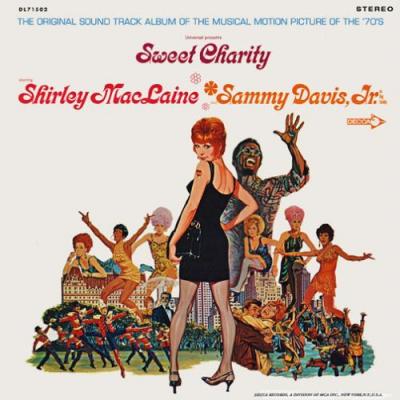
Sweet Charity Album Cover

"Sweet Charity" Soundtrack Lyrics

Musical • 1999

Track Listing


“Sweet Charity (Original Broadway Cast Recording — 1999 Remastered Edition)” – Album Guide to Tracks and Key Scenes

Sweet Charity trailer still — neon-lit 1960s glamour framing Charity’s world
Sweet Charity — trailer imagery that shaped the musical’s pop sheen

Overview

How do you refresh a canonical cast album without messing with its heartbeat? The 1999 remastered Sweet Charity does it the smart way — polishing the 1966 Broadway tapes and adding historically revealing bonus material that reframes Cy Coleman & Dorothy Fields’ score as both pop artifact and dramatic engine.

In Neil Simon’s book, Charity Hope Valentine ricochets through New York City with optimism that makes even cynics root for her. On record, Gwen Verdon’s storytelling soprano meets Coleman’s brass-and-woodwind sparkle: horns flirt, flutes tease, and percussion clicks like high heels on tile. The 1999 edition sweetens the sound and folds in composer demos/performances that show how these songs were built.

Genres & themes in phases: Broadway jazz-pop — appetite and hustle; go-go/mambo pastiche — spectacle-as-armor; waltz-kissed ballads — private doubt; gospel-soul parody — collective delusion; reprise psychology — hope recalibrated.

How It Was Made

The original album was recorded at Columbia’s legendary 30th Street Studio in 1966, with Jonathan Tunick among the orchestrators in Fosse’s camp, capturing Robert Ginzler’s pit-band bite. In 1999, Sony/Columbia issued a remastered CD with bonus tracks and two previously unreleased items from the sessions, plus three vintage Cy Coleman performances lifted from a 1966 Columbia LP. The upgrade sharpens the stereo image, warms the brass, and preserves Verdon’s mic-close character acting.

Sweet Charity trailer frame — split-screen silhouettes and kinetic titles
How it was made — classic 1966 studio sound, cleaned up for 1999

Tracks & Scenes

“Big Spender” (Company of Fandango Ballroom)

Where it plays:
The hostesses’ slow-burn come-on — a lineup that freezes into weaponized boredom. Brass smirks, bass walks; time stops until somebody takes the bait.
Why it matters:
Bob Fosse’s attitude in a bottle. The number defines the ballroom’s economy — flirt, stall, collect.

“Charity’s Soliloquy” (Gwen Verdon)

Where it plays:
After another romantic pratfall, Charity talks herself upright. Woodwinds flutter while muted brass nudges her back into the ring.
Why it matters:
Hero thesis: resilience as rhythm. Verdon shades optimism with bruises you can hear.

“If My Friends Could See Me Now” (Gwen Verdon)

Where it plays:
In movie-star Vittorio’s penthouse, Charity narrates her own Cinderella moment. Trumpet struts; the groove winks.
Why it matters:
Fields’ lyric turns self-deprecation into triumph — a showstopper that’s really self-talk.

“There’s Gotta Be Something Better Than This” (Gwen Verdon, Helen Gallagher, Thelma Oliver)

Where it plays:
Three friends daydream out loud: passports in the chorus, promises in the counter-melodies.
Why it matters:
Girl-group uplift meets paycheck reality — ambition scored for harmony.

“The Rhythm of Life” (Sammy & the Congregation)

Where it plays:
Oscar drags Charity to an underground “church” of beat philosophy. Organ vamps and horn riffs parody revival swagger.
Why it matters:
Coleman’s satire is affectionate and sharp — a comic set piece that still grooves.

“I’m a Brass Band” → “I Love to Cry at Weddings” (Gwen Verdon; Company)

Where it plays:
Charity’s euphoria blasts open into parade music; the act-two celebration caps it — and on this edition, the wedding number runs longer than the old LP cut.
Why it matters:
Marching-band metaphor becomes character x-ray: she is her own fanfare.

Bonus spotlight — Cy Coleman’s composer takes

Where they appear:
The remastered CD closes with Coleman himself at the piano, including “You Wanna Bet” — the melody later repurposed as the title song with new lyric — and composer performances of key tunes.
Why it matters:
Blueprints on tape. You hear the writing before the choreography — swing first, staging later.
Sweet Charity trailer frame — chorus silhouetted against swinging mid-60s graphics
Tracks & Scenes — Fosse attitude, Fields wit, Coleman swing

Notes & Trivia

  • The 1999 CD adds previously unreleased material from the 1966 sessions and three Cy Coleman performances from his Columbia album — including “You Wanna Bet,” whose tune became “Sweet Charity.”
  • Remastering brings out Columbia 30th Street Studio’s roomy acoustics — the brass sits tighter, rhythm section pops.
  • The reissue restores an extended “I Love to Cry at Weddings,” not heard in full on earlier LP pressings.
  • Gwen Verdon’s OBC remains the benchmark; later cast albums (1986 Debbie Allen; 2005 Christina Applegate) trace back to this interpretation.

Music–Story Links

Charity’s optimism has a groove — Coleman literally scores persistence. “Big Spender” weaponizes stillness; “If My Friends…” converts imposter syndrome into brass-band self-belief; “Rhythm of Life” lets a cult’s bounce expose Oscar’s awkward sincerity. When “I’m a Brass Band” bursts, the orchestration matches Charity’s heartbeat — louder than her circumstances.

Reception & Quotes

Critics and collectors welcomed the reissue for its historical extras and sonic cleanup — not a rewrite, a revealing polish.

“1999 CD reissue… previously unreleased extended ‘Weddings’ and three Cy Coleman tracks from 1966.” Cast-album column
“Columbia 30th Street glow, now with detail — the band snaps and Verdon’s nuance reads.” Album notes round-up
Sweet Charity trailer frame — marquee lights and brass hits in sync
Reception — the classic album, newly dusted and annotated

Interesting Facts

  • Studio lore: Recorded at Columbia’s deconsecrated church on 30th Street — a room loved by Bernstein, Miles, and cast albums alike.
  • Song DNA: “You Wanna Bet” (bonus) shares its melody with the eventual title song “Sweet Charity.”
  • Pare & polish: The 1999 disc smooths edits audible on earlier LPs, especially in dance music transitions.
  • Throughline: Verdon’s phrasing choices seeded vocal approaches in the 1986 and 2005 revivals.
  • Catalog context: The reissue arrived amid Sony/Columbia’s late-’90s Broadway remaster program.

Technical Info

  • Title: Sweet Charity (Original Broadway Cast Recording) — 1999 Remastered Edition with Bonus Tracks
  • Year: 1999 (reissue/remaster of 1966 OBC)
  • Music/Lyrics: Cy Coleman / Dorothy Fields; Book: Neil Simon
  • Lead vocals: Gwen Verdon (Charity); John McMartin (Oscar); Helen Gallagher (Nickie); Thelma Oliver (Helene)
  • Label: Columbia / Sony Music (CD catalog SK 60960)
  • Recording location (original): Columbia 30th Street Studio, NYC (1966)
  • 1999 highlights: Previously unreleased session material; extended “I Love to Cry at Weddings”; three Cy Coleman tracks from his 1966 Columbia LP
  • Availability: Streaming (digital mirrors of the 1999 program vary by region); CD widely available second-hand

Questions & Answers

What’s special about the 1999 edition?
It’s remastered, adds two previously unreleased session items, and ends with three Cy Coleman performances — historical gold.
Is Gwen Verdon the lead on this album?
Yes — this is the 1966 Original Broadway Cast, newly remastered in 1999.
Does the reissue change the running order?
No major reshuffle; it follows the original program and appends bonuses at the end.
Which bonuses stand out?
The extended “I Love to Cry at Weddings” and Coleman’s piano take on “You Wanna Bet,” the melody that became “Sweet Charity.”
How does it compare to revival albums?
Different stars, same bones; the 1999 disc is the clearest window into Fosse-era style and Verdon’s blueprint.

Key Contributors

EntityRelation
Cy ColemanComposer; appears on bonus tracks (piano/vocals)
Dorothy FieldsLyricist
Neil SimonBook
Gwen VerdonCharity Hope Valentine — lead vocal
John McMartinOscar — featured vocal
Helen Gallagher; Thelma OliverNickie; Helene — featured vocals
Columbia / Sony Music1999 remaster and release
Columbia 30th Street StudioOriginal 1966 recording venue

Sources: label/retail listings; discography databases; historical cast-album columns; encyclopedic overviews; trailer channel.

November, 27th 2025


A-Z Lyrics Universe

Lyrics / song texts are property and copyright of their owners and provided for educational purposes only.