Soundtracks:  A B C D E F G H I J K L M N O P Q R S T U V W X Y Z #


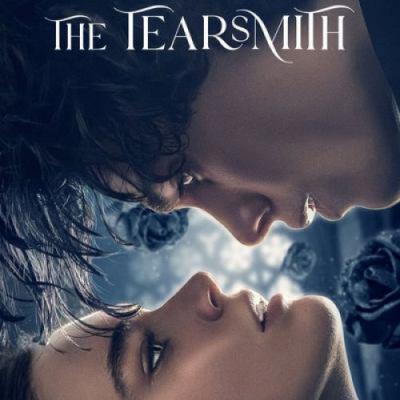
Tearsmith Album Cover

"Tearsmith" Soundtrack Lyrics

Movie • 2024

Track Listing


"The Tearsmith (Music from the Netflix Film)" – Album Guide to Tracks and Key Scenes

The Tearsmith official Netflix trailer thumbnail with Nica and Rigel facing each other in cool blue light
The Tearsmith — Andrea Farri’s score meets pop needle-drops, 2024

Overview

What happens when a dark-romance fairy tale wants to sound both tender and haunted? The Tearsmith answers with a two-part palette: Andrea Farri’s glassy, lullaby-haunted score and a handful of contemporary and classic needle-drops that map teen longing to modern pop. The music gives Nica and Rigel a sonic diary — whispered vocals, pulsing motifs, and the sudden rush of a well-placed chorus.

Set around the legend of a maker of tears and the trauma-shadowed bond between two fostered teens, the film leans on contrast. Farri’s themes (“Rigel’s Theme,” “Nica’s Theme,” “The Tear Maker”) thread motifs through quiet rooms and courtroom reckonings; songs by George Ezra, Olivia Rodrigo, Billie Eilish and others puncture the hush with memory and mood. It’s romance scored like a bedtime story that keeps turning the light back on.

Genres & themes in phases: indie/alt-pop — desire, appearance, social theater; electro-ambient score — fear, imprinting, fate; classic yé-yé — glamour and danger at the club; lullaby-folk (with ethereal vocals) — belonging vs. loss. Each phase flips the lens: pop for surfaces and signals; score for the inside voice.

How It Was Made

Director Alessandro Genovesi anchors the adaptation; composer Andrea Farri crafts an eight-track score release built around recurring character motifs and vocal textures (with contributions from Valentina Costanzo). A music consultant, Giovanni Arcadu, supported the curation of source tracks — the pop selections that punctuate high-school entrances, parties, and first kisses. The official score album arrived digitally in early April 2024 via San Isidro Edizioni Musicali.

The Tearsmith trailer close-up of Rigel at the piano under soft practical light
Behind the cues — Farri’s motifs (piano, voices, soft electronics) braid the film’s fairy-tale and trauma threads.

Tracks & Scenes

Key placements below — with time marks from widely available home cuts (hh:mm). “Diegetic” notes when characters hear the music in-scene.

“Budapest” (George Ezra)

Where it plays:
00:00 — Opening sequence on the road, then a sudden crash cuts the song. Non-diegetic, functioning as a bright misdirect before tragedy.
Why it matters:
Sunny, humming intimacy smashed by fate — the film’s thesis in one needle-drop.

“vampire” (Olivia Rodrigo)

Where it plays:
~00:19 — First day at Barnaby High; hallway glide, new faces, old defenses. Non-diegetic.
Why it matters:
Gossip and performance; the song’s bite mirrors the social pecking order Nica walks into.

“You Should Be Here” (Atmosphere Music – Danny Cope)

Where it plays:
~00:23 — Quiet chat in Nica’s room about school and fitting in. Likely source/ambient, mixed soft.
Why it matters:
Domestic warmth against institutional memories — the “new home” motif in pop form.

“Someone Somewhere” (Elizabeth Riordan & Louise Bernadette Dowd)

Where it plays:
~00:53 — Walk-and-talk with Billie to a classmate’s house; low-stakes plotting turns to friendship. Non-diegetic.
Why it matters:
Gives Nica a breather track — a little hope at normalcy.

“Laisse tomber les filles” (Serge Gainsbourg)

Where it plays:
~01:13 — Club sequence; colored lights and predatory glances as Nica dances with Lionel. Diegetic in-venue playback.
Why it matters:
Iconic yé-yé bite turns the dancefloor into a warning label.

“I Love You” (Billie Eilish)

Where it plays:
~01:19 — After Rigel intervenes, the two finally drop their armor; hands to face, first real kiss. Non-diegetic.
Why it matters:
A hushed confession that lets the scene play in negative space — barely there, completely felt.

Score: “Lullaby” (Andrea Farri & Valentina Costanzo)

Where it plays:
00:11 — Arrival at the new home; 00:50 — Nica nods off in Rigel’s bed; 01:07 — return-and-kiss; 01:38 — first end-credits cue. Non-diegetic theme.
Why it matters:
The film’s heart motif — innocence straining against dread; the vocal gives it a folk-myth shimmer.

Score: “The Tear Maker”

Where it plays:
~01:34 — After Nica’s testimony, a hospital visit resolves the arc; strings and voice swell, then release. Non-diegetic.
Why it matters:
Title-theme catharsis; it binds legend to choice.

Score: “Rigel’s Theme” / “Nica’s Theme”

Where it plays:
Character-anchored interludes: early piano imagery, medicine-care scene (~00:46), title-card/opening (~00:02) and end-credits tail. Non-diegetic.
Why it matters:
Doubles as psychological POV — you can hear whose memory we’re inside.
Trailer & extra cues
  • The official trailer leans on breathy ballad textures; some uploads tag Billie Eilish’s “i love you” over the cut.
  • Library and production-music cuts (“Brutal Love/Brutal Hope,” “When You See Me,” “I Can Never Leave You”) surface in transitional scenes; they’re not on the eight-track score album.
Trailer montage: Nica and Rigel across a crowded party, neon lights and slow-motion glances
Pop for the surface, score for the soul — the placements keep toggling perspective.

Notes & Trivia

  • Andrea Farri’s official score album runs eight tracks (~23 minutes) and was released digitally on April 4, 2024.
  • Valentina Costanzo’s voice is featured on score cuts like “Lullaby” and “Hell.”
  • “Budapest,” “vampire,” and “i love you” are the best-known retail songs heard in-film; they don’t appear on the score EP.
  • Music consultant Giovanni Arcadu is credited for the needle-drop selections.

Reception & Quotes

The movie split critics; the music drew steady attention from fans tracking scenes and timecodes. Reviewers flagged the fairy-tale framing and the pop/score blend as the film’s emotional scaffolding.

“A teen-romance phenomenon with a pop-score backbone; the songs do the signaling, the motifs do the healing.” — soundtrack roundups
“Hush-hush ballads and lullabies make the love story feel haunted.” — capsule impressions
Trailer shot: Nica in close-up, eyes wet, as a soft piano motif swells
Reception snapshot — whatever you think of the plot, the music choices lock in the mood.

Interesting Facts

  • Legend as leitmotif: the “Tear Maker” idea becomes a rising-falling figure you’ll hear whenever the myth re-enters the room.
  • Club classic with teeth: Gainsbourg’s “Laisse tomber les filles” frames Nica’s danger dance with vintage irony.
  • End-credits echo: “Lullaby” reprises under the first credits card — a circular goodnight after a storm.
  • Time-coded fandom: scene-by-scene song logs circulated the week of release, helping the film’s global word-of-mouth.
  • Trailer haze: trailer uploads showcasing “i love you” primed viewers for breathy ballads inside the film.

Technical Info

  • Title: The Tearsmith (Fabbricante di lacrime) — Music from the Netflix Film
  • Year: 2024
  • Type: Movie soundtrack (original score EP) + licensed songs in-film
  • Director: Alessandro Genovesi
  • Composer: Andrea Farri (score); featured vocals by Valentina Costanzo
  • Music consultant: Giovanni Arcadu
  • Label/album status: Digital score EP (8 tracks) via San Isidro Edizioni Musicali — streaming/download
  • Notable placements: “Budapest” (George Ezra); “vampire” (Olivia Rodrigo); “I Love You” (Billie Eilish); “Laisse tomber les filles” (Serge Gainsbourg); Farri’s “Lullaby,” “The Tear Maker,” character themes
  • Release context: Netflix global premiere April 4, 2024

Questions & Answers

Is there a separate songs album?
No official “songs” album — the retail release is Farri’s eight-track score EP; the pop tracks remain licensed within the film/trailers.
Who wrote the score and what does it sound like?
Andrea Farri — intimate piano/strings, airy pads, and wordless vocals; two strong character themes plus the legend-linked title cue.
Which big pop songs show up?
George Ezra’s “Budapest,” Olivia Rodrigo’s “vampire,” and Billie Eilish’s “I Love You,” among others.
What’s the end-credits song?
Farri’s “Lullaby” is reprised during the first end-credits card.
Where can I stream the score?
On major platforms (Apple Music, Spotify, Bandcamp) under Fabbricante di lacrime – The Tearsmith (Soundtrack from the Netflix Film).

Key Contributors

SubjectRelationObject
Andrea FarriComposedThe Tearsmith original score
Valentina CostanzoFeatured vocals on“Lullaby,” “Hell” (score tracks)
Giovanni ArcaduConsulted onneedle-drop/song selections
Alessandro GenovesiDirectedThe Tearsmith (film)
San Isidro Edizioni MusicaliReleaseddigital score EP
NetflixDistributedthe 2024 film worldwide
Colorado Film / Rainbow S.p.A.ProducedThe Tearsmith (film)

Sources: Vague Visages (song list & timecodes); Soundtracki (scene-by-scene placements); Cineblog (Italian OST article & track names); Film Music Reporter (album announcement/details); Apple Music & Spotify (official score release); Bandcamp (label/credits); Netflix (trailer page & film listing).

November, 27th 2025


A-Z Lyrics Universe

Lyrics / song texts are property and copyright of their owners and provided for educational purposes only.