
"The Music Never Stopped" Soundtrack Lyrics
Movie • 2011
Track Listing
Peggy Lee
Grateful Dead
Grateful Dead
Bob Dylan
Steppenwolf
Donovan
Crosby, Stills & Nash
Grateful Dead
Grateful Dead
Grateful Dead
Grateful Dead
Tulips
Paul Cantelon
"The Music Never Stopped (Music from the Motion Picture)" – Album Guide to Tracks and Key Scenes
Review
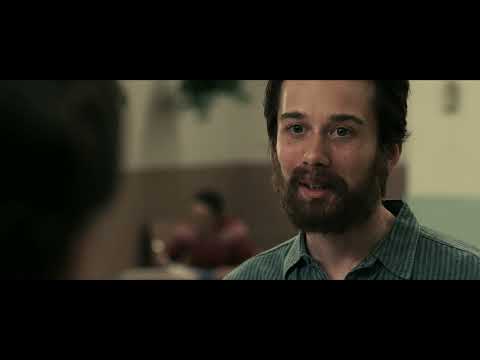
What heals faster — memory or music? Jim Kohlberg’s The Music Never Stopped wagers on songs. The soundtrack leans hard on the Grateful Dead (plus Dylan, CSN, Donovan, Steppenwolf, Peggy Lee), while Paul Cantelon’s gentle score threads father–son reconciliation without syrup. It’s a rare needle-drop album that is the story engine.
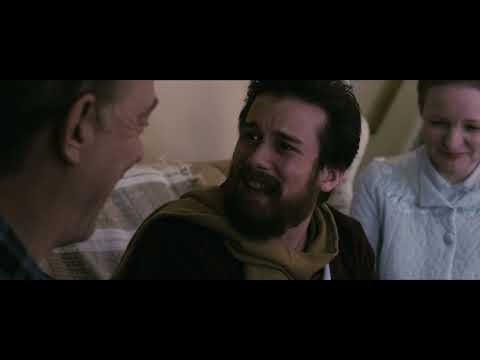
The conceit is simple and beautiful: Gabriel’s damaged memory blooms when the music of his youth plays. That lets the Dead’s harmonies, Dylan’s resignation, and CSN’s sunlight act like keys — unlocking flashbacks, loosening grief, and finally forging a brand-new memory. The album mirrors that arc: cozy standards to counterculture rock to late-era Dead, where one brand-new song becomes the hinge of the finale.
Genres & themes, in phases: supper-club standard — parental nostalgia; folk-rock and psych — youth and rupture; jam-band communion — forgiveness and presence; intimate score — the quiet afterglow.
How It Was Made
The film adapts Oliver Sacks’ case study “The Last Hippie” and premiered at Sundance 2011. Kohlberg built the soundtrack around Grateful Dead material — the album ultimately features six Dead tracks, including three previously unreleased live recordings — alongside era-defining cuts by Bob Dylan, Crosby, Stills & Nash, Donovan and more. Rhino released the 13-track compilation in March 2011; one cue from Paul Cantelon’s original score (“Gabriel’s Theme”) appears on the album.

Tracks & Scenes
“Till There Was You” (Peggy Lee)
- Where it plays:
- An early, old-fashioned touchstone for Henry — music that predates Gabriel’s 60s palette. It colors home-front memories and the generational gap the film has to bridge.
- Why it matters:
- Establishes Dad’s comfort zone: pre-rock, polished, safe — the very shore he’ll leave to meet his son mid-stream.
“Uncle John’s Band” (Grateful Dead)
- Where it plays:
- Therapy breakthroughs. When this spins, Gabriel turns articulate and present; images of teenage rehearsals and street-corner harmonies flood back.
- Why it matters:
- The film’s Rosetta Stone: harmony as memory trigger and as a model for father–son listening.
“Sugar Magnolia” (Grateful Dead — live)
- Where it plays:
- Used as high-spirited connective tissue around youthful flashbacks and therapy “wins.”
- Why it matters:
- That sun-burst chorus stands in for the romance of being young — and how the body remembers joy.
“I Threw It All Away” (Bob Dylan)
- Where it plays:
- Heard in reflective passages tied to regret and the cost of stubbornness; functions like a confession the characters can’t quite say aloud.
- Why it matters:
- Dylan’s plain-spoken contrition mirrors Henry’s slow turn from pride to apology.
“Magic Carpet Ride” (Steppenwolf)
- Where it plays:
- Montage energy for 60s freedom and escape; flashes of gigs, friends, and road-trip legends.
- Why it matters:
- Signals the fork where Gabriel’s life ran away from home and toward a scene.
“Suite: Judy Blue Eyes” (Crosby, Stills & Nash)
- Where it plays:
- Underscores the sweetness and fracture of young love; appears as warm diegetic/ambient texture around relationship memories.
- Why it matters:
- Counterbalances Dad’s standards with the kid’s California harmony ideal.
“Not Fade Away / Goin’ Down the Road Feeling Bad” (Grateful Dead — live)
- Where it plays:
- Ritual drum-and-chant momentum during late-film sequences; the groove feels communal, not illustrative.
- Why it matters:
- Shows how the Dead’s beat can carry memory like a crowd carries a person.
“Truckin’” (Grateful Dead — live)
- Where it plays:
- As the bond rebuilds, this becomes a road-anthem echo — a wink about life’s detours.
- Why it matters:
- Lyric snapshots (“what a long strange trip…”) map neatly onto Henry and Gabriel’s journey.
“Touch of Grey” (Grateful Dead — live)
- Where it plays:
- The concert sequence. Father and son finally see the Dead together; hearing this post-1987 song gives Gabriel a new memory he can actually retain.
- Why it matters:
- Proof of concept: music can make a memory, not just unlock one. The film’s emotional checkmate.
“Ripple” (Grateful Dead)
- Where it plays:
- As a calm coda — a hymn for after the storm — it surfaces around mourning and acceptance.
- Why it matters:
- Ends the album in benediction: “Let it be known there is a fountain…”
Score cue: “Gabriel’s Theme” (Paul Cantelon)
- Where it plays:
- Spare piano and strings wrap the quieter father–son scenes between the rock staples; one selection appears on the album.
- Why it matters:
- Keeps the film from becoming only a playlist — a gentle through-line that breathes between songs.
Notes & Trivia
- The soundtrack comp includes six Grateful Dead tracks; three are previously unreleased live recordings prepared for the album.
- Rhino issued the album in March 2011; it features one original cue from Cantelon’s score (“Gabriel’s Theme”).
- The concert set-piece was designed specifically so a new Dead song (“Touch of Grey,” released after Gabriel’s memory cutoff) could form a fresh memory.
- Yes, that crooner standard up top is Peggy Lee’s “Till There Was You” — a tidy way to sketch Dad’s generation in one needle-drop.
Reception & Quotes
Reviews called the film sentimental but honest — and repeatedly singled out the soundtrack’s Dead-heavy spine as the secret sauce.
“A father–son heart-mender that leans on classic rock with grace.” Collider (Sundance review)
“Maybe the closest re-creation of a Grateful Dead concert we’ll ever get on film.” Movie Show Plus
Availability: Digital album (13 tracks) on major platforms; CD via Rhino. Film debuted limited March 18, 2011 after Sundance.
Interesting Facts
- Unheard Dead: The album premiered three previously unreleased live Dead recordings.
- Title lineage: The film title comes from the Dead’s 1975 song “The Music Never Stopped.”
- Case-study roots: The story draws from Oliver Sacks’ “The Last Hippie.”
- Score cameo: Only one Cantelon cue appears on the album — the rest is wall-to-wall source music.
- Concert logic: Making “Touch of Grey” the pivotal track smartly uses its post-’80s release to test memory formation.
Technical Info
- Title: The Music Never Stopped (Music from the Motion Picture)
- Year: 2011
- Type: Film soundtrack (songs) with original score by Paul Cantelon
- Composer: Paul Cantelon
- Key artists: Grateful Dead; Bob Dylan; Crosby, Stills & Nash; Donovan; Steppenwolf; Peggy Lee
- Label: Rhino Entertainment (Warner Music Group)
- Notable placements (album selections): “Uncle John’s Band,” “Sugar Magnolia” (live), “Not Fade Away/Goin’ Down the Road Feeling Bad” (live), “Truckin’” (live), “Touch of Grey” (live), “Ripple,” Dylan’s “I Threw It All Away,” CSN’s “Suite: Judy Blue Eyes,” Peggy Lee’s “Till There Was You,” “Gabriel’s Theme” (Cantelon)
- Release context: Sundance 2011 premiere; U.S. limited release March 18, 2011; soundtrack issued March 2011 (digital/CD)
Key Contributors
| Entity | Relation |
|---|---|
| Jim Kohlberg | Director — built story around music-therapy arc |
| J.K. Simmons; Lou Taylor Pucci | Lead actors — father & son whose bond is musical |
| Julia Ormond | Actor — therapist guiding the sessions |
| Paul Cantelon | Composer — original score; album includes “Gabriel’s Theme” |
| Grateful Dead | Primary catalog presence — six tracks on soundtrack |
| Rhino Entertainment | Label — released the soundtrack |
| Roadside Attractions | Distributor — U.S. release |
| Oliver Sacks | Author — source case study “The Last Hippie” |
Questions & Answers
- Who composed the score?
- Paul Cantelon. The album includes one of his cues, “Gabriel’s Theme,” alongside licensed songs.
- How many Grateful Dead tracks are on the album?
- Six — including three previously unreleased live recordings prepared specifically for this release.
- What song anchors the concert finale?
- “Touch of Grey.” In the story it’s newly heard by Gabriel, allowing a new memory to form.
- Is the soundtrack mostly songs or score?
- Mostly songs (Dead/Dylan/CSN/et al.). Cantelon’s score plays in the film; just one cue is on the album.
- Where can I hear it?
- On major platforms (digital), and on CD via Rhino — 13 tracks, ~51 minutes.
Sources: Official trailer; Rhino press release; Apple Music album page; Spotify listing; DeadDisc/Grateful Dead discography notes; IMDb soundtrack & credits; Wikipedia film page; production notes PDF; reviews (Collider, Movie Show Plus).
November, 28th 2025
A-Z Lyrics Universe
Cynthia Erivo Popular
Ariana Grande Horsepower
Post Malone Ain't No Love in Oklahoma
Luke Combs Good Riddance (Time of Your Life)
Green Day Bye Bye Bye
*NSYNC You're the One That I Wan
John Travolta & Olivia Newton-John I Always Wanted a Brother
Braelyn Rankins, Theo Somolu, Kelvin Harrison Jr. and Aaron Pierre The Power of Love
Frankie Goes to Hollywood Beyond
Auli’i Cravalho feat. Rachel House MORE ›