Soundtracks:  A B C D E F G H I J K L M N O P Q R S T U V W X Y Z #


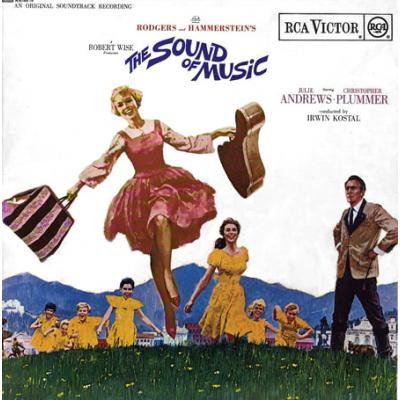
The Sound of Music Album Cover

"The Sound of Music" Soundtrack Lyrics

Movie • 1965

Track Listing


“The Sound of Music — Original Motion Picture Soundtrack (1965)” – Album Guide to Tracks and Key Scenes

1965 The Sound of Music trailer frame with Julie Andrews on the Alpine meadow
The Sound of Music — classic trailer that set the film’s musical promise.

Review

How can a soundtrack be both a travel postcard and a farewell letter? The Sound of Music album does both — sweeping you across Alpine vistas, then whispering about home, courage, and the cost of leaving. It’s the rare movie soundtrack that functions as a complete drama: overture to benediction, innocence to resistance.

On record, the performances feel immediate — Julie Andrews’ crystalline vowels, the children’s bright blend, Irwin Kostal’s warm, courtly orchestrations. But what makes this score distinct is function: songs teach (solfège as character therapy), songs test (a party waltz as social X-ray), songs defy (a folk-hymn turned public act of refusal). The film added two crucial Rodgers numbers — “I Have Confidence” and “Something Good” — that deepen Maria’s inner voice and transform the Captain’s guarded heart. The album captures that arc.

Genre & theme map in phases: golden-age show tune and Viennese lilt — surface polish vs. inner mess; folk-pastoral color — belonging and memory; hymn/anthem strain — community and conscience; playful Landler rhythms — flirtation, restraint, release. Together they chart a passage from private solace to public courage.

How It Was Made

Richard Rodgers (music) and Oscar Hammerstein II (lyrics) supplied the core score from the 1959 stage musical; for the film, Rodgers wrote two new songs (“I Have Confidence,” “Something Good”) after Hammerstein’s death. Robert Wise directed; Ernest Lehman adapted the screenplay. Irwin Kostal arranged/orchestrated and conducted, weaving underscoring out of R&H motifs so cues glide between diegetic performance and score. RCA Victor issued the soundtrack in 1965; Neely Plumb produced. The album became a chart phenomenon in the U.S. and a record-setting bestseller in the U.K.

Trailer still of Salzburg and the Alps underscoring the film’s orchestral-pastoral palette
How it was made — stage score reshaped for cinema with new songs and lush Kostal orchestrations.

Tracks & Scenes

Scene-by-scene highlights (album inclusions plus key film moments). Timestamps are approximate within the 174-minute roadshow cut; placement notes flag diegetic vs. non-diegetic and narrative purpose.

“The Sound of Music” (Maria)

Where it plays:
Opening sequence (≈ 0:00–0:03:30). Helicopter glide across the Alps finds Maria on the meadow as her voice blooms. Fully diegetic — she’s singing to the hills.
Why it matters:
States the film’s thesis: music as sanctuary and compass. Its melodic DNA threads the underscore all the way to the finale.

“Maria” (The Nuns)

Where it plays:
Abbey corridors (early Act I, ≈ 0:10). A choral character sketch as the sisters debate Maria’s free-spirit ways. Diegetic within the abbey world.
Why it matters:
Comic exposition that frames Maria as beautiful chaos — the problem and the solution.

“My Favorite Things” (Maria & Mother Abbess; later Maria & Children)

Where it plays:
First as counsel in the Abbey (early Act I), later in the thunderstorm bedroom scene (≈ 0:35). Diegetic lullaby-turned-coping ritual.
Why it matters:
Turns anxiety into agency — teaching the children to reframe fear.

“I Have Confidence” (Maria)

Where it plays:
Film-only song. Travel montage from Abbey gates through Salzburg streets to the von Trapp villa (≈ 0:20–0:24). Diegetic self-pep talk that blends into montage scoring.
Why it matters:
Gives Maria a proactive engine; the orchestration mirrors nerves settling into resolve.

“Do-Re-Mi” (Maria & Children)

Where it plays:
City-to-mountain montage (mid-Act I, ≈ 0:45–0:55). Landmarks include Mirabell Gardens, Residenzplatz, steps/terraces — cut together as a learning adventure. Diegetic performance woven into travel cutting.
Why it matters:
A pedagogy banger. The family bonds as Salzburg becomes a playground; music re-orders a household.

“The Lonely Goatherd” (Maria & Children)

Where it plays:
Marionette show in the villa (≈ 1:05). Diegetic: handmade theater, yodels, laughter, the Captain overhears.
Why it matters:
Breaks the Captain’s ice; play heals distance better than lectures.

“Sixteen Going on Seventeen” (Liesl & Rolf)

Where it plays:
Gazebo at night after the storm (≈ 1:15). Diegetic duet with choreographed flirtation; reprise later when Liesl seeks Maria’s counsel.
Why it matters:
Young love meets ideology’s shadow — naïveté that won’t survive the second act.

“Edelweiss” (Captain; later Family & Audience)

Where it plays:
First in the drawing room when the Captain rediscovers music (≈ 1:10). Later at the Salzburg Festival near the climax (≈ 2:35), the crowd joins. Diegetic in both.
Why it matters:
From private lullaby to public dissent — a folk-styled hymn that becomes an act of civil courage.

“Something Good” (Maria & Captain)

Where it plays:
Film-only song. Gazebo confession and kiss at night (≈ 1:50). Diegetic duet under strings and soft choir.
Why it matters:
Resolves the romance quietly; the humility of the lyric disarms the story’s grandeur.

“So Long, Farewell” (The Children; reprise at Festival)

Where it plays:
Party at the villa (≈ 1:30) and later as the family’s planned exit on the festival stage (≈ 2:40). Diegetic performance both times.
Why it matters:
A charming goodnight becomes a tactical goodbye — form repurposed as escape.

“Climb Ev’ry Mountain” (Mother Abbess)

Where it plays:
Act-break benediction (≈ 1:40). Non-diegetic feel despite on-screen performance: it functions as spiritual underscoring for Maria’s choice.
Why it matters:
Shifts the frame from personal comfort to vocation and courage — the score’s moral spine.
Trailer collage of Salzburg landmarks used in the Do-Re-Mi montage
Tracks & scenes — pedagogy, romance, and resistance in song.

Notes & Trivia

  • Two film-only songs by Richard Rodgers — “I Have Confidence” and “Something Good” — were written after Hammerstein’s death.
  • Christopher Plummer’s singing was dubbed by Bill Lee in the final film, though Plummer recorded vocals during production.
  • The 2023 Super Deluxe reissue unveiled previously unheard materials, including Plummer’s original vocal takes.
  • “Edelweiss” is often mistaken for an Austrian folk song; it was composed for the musical and later became a symbol of quiet protest in the film.
  • Salzburg locations (Mirabell Gardens, Residenzplatz, Winkler Terrace) anchor the “Do-Re-Mi” montage’s city beats.

Reception & Quotes

The film won Best Picture and became a box-office phenomenon. The soundtrack topped charts for years and remains a perennial seller.

“Three hours of visual and vocal brilliance.” Variety (contemporary trade reaction)
“The album’s hold was astonishing — months in the U.S. Top 10, years at No. 1 in the U.K.” Chart retrospectives

Availability: Original RCA Victor LP (1965) with many reissues; anniversary editions expand alternates and underscore. Digital/streaming editions mirror most variants; the 60th-anniversary restorations surface film versions long unavailable.

Trailer end card promising romance, family, and music — the film’s calling card
Reception & afterlife — a soundtrack that taught generations to sing.

Interesting Facts

  • Gazebo lore: The famous gazebo interiors were filmed in Hollywood; the exterior became a Salzburg photo-pilgrimage stop.
  • Waltz diagnostics: The villa party’s elegant waltzes act as social X-rays, revealing alliances and fractures before intermission.
  • Anthem that isn’t: “Edelweiss” is not Austria’s national anthem — just a convincing pastiche that fooled the world.
  • Tourism in 4/4: The “Do-Re-Mi” montage canonized Salzburg landmarks and still fuels guided tours.
  • From lullaby to protest: The reprise of “Edelweiss” at the festival transforms a private song into a public stand.

Technical Info

  • Title: The Sound of Music — Original Motion Picture Soundtrack
  • Year: 1965 (album release March 2, 1965)
  • Type: Film soundtrack (various cast; original songs by Rodgers & Hammerstein)
  • Composer/Lyricist: Richard Rodgers (music); Oscar Hammerstein II (lyrics)
  • Additional film songs: “I Have Confidence,” “Something Good” (music & lyrics by Richard Rodgers)
  • Orchestration/Conduction: Irwin Kostal
  • Producer (album): Neely Plumb
  • Label: RCA Victor
  • Chart notes: U.S. Billboard 200 No.1 (1965); record Top-10 longevity; 70 weeks at No.1 in the U.K. across multiple years
  • Recent edition: 60th-anniversary Super Deluxe with 40+ unreleased items, including Plummer vocals and full film versions

Questions & Answers

Which songs were written specifically for the film?
“I Have Confidence” and “Something Good,” both by Richard Rodgers after Hammerstein’s death.
Is “Edelweiss” an Austrian folk song?
No — it’s an original Rodgers & Hammerstein song fashioned to sound folk-authentic.
Who handled the film’s arrangements and underscore?
Irwin Kostal arranged/orchestrated and underscored the film using R&H themes.
Did Christopher Plummer sing in the movie?
His vocals were dubbed by Bill Lee in the final cut, though Plummer recorded tracks; some appear in modern reissues.
Where was the “Do-Re-Mi” montage filmed?
Across Salzburg landmarks (e.g., Mirabell Gardens, Residenzplatz, terraces), stitched into one exuberant learning journey.

Key Contributors

SubjectRelationObject
Richard RodgersComposed songs forThe Sound of Music (film)
Oscar Hammerstein IIWrote lyrics forThe Sound of Music (stage & film)
Irwin KostalOrchestrated & conductedThe Sound of Music (film score/underscore)
Neely PlumbProduced soundtrack album forRCA Victor
Robert WiseDirectedThe Sound of Music (1965 film)
Ernest LehmanAdapted screenplay ofThe Sound of Music (film)
Julie AndrewsPerformed asMaria (lead vocals on multiple tracks)
Christopher PlummerPerformed asCaptain von Trapp (dialogue; singing dubbed by Bill Lee in release)
RCA VictorReleasedThe Sound of Music (1965 soundtrack)
20th Century FoxDistributedThe Sound of Music (film)

Sources: Wikipedia (film; soundtrack); Rodgers & Hammerstein Organization; Entertainment Weekly; Variety/box-office retrospectives; 20th Century Fox/Movieclips trailers; Salzburg tourism & locations features; Discogs/collector listings.

November, 29th 2025


A-Z Lyrics Universe

Lyrics / song texts are property and copyright of their owners and provided for educational purposes only.