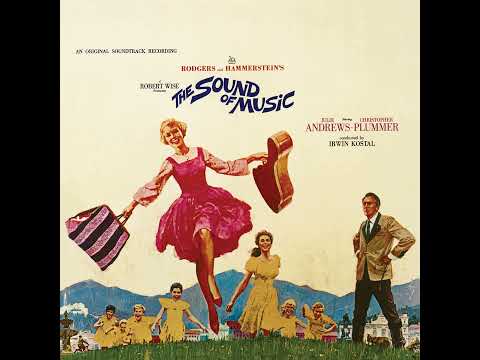
My Favorite Things Lyrics – Julie Andrews
Soundtrack Album: The Sound of Music
Raindrops on roses and whiskers on kittens
Bright copper kettles and warm woolen mittens
Brown paper packages tied up with strings
These are a few of my favorite things
Cream colored ponies and crisp apple streudels
Doorbells and sleigh bells and schnitzel with noodles
Wild geese that fly with the moon on their wings
These are a few of my favorite things
Girls in white dresses with blue satin sashes
Snowflakes that stay on my nose and eyelashes
Silver white winters that melt into springs
These are a few of my favorite things
When the dog bites
When the bee stings
When I'm feeling sad
I simply remember my favorite things
And then I don't feel so bad
[Repeat all verses]
The Sound of Music
Soundtrack Lyrics for Movie, 1965
Track Listing
Julie Andrews & Irwin Kostal
Cast
Evadne Baker
the Nuns
Maria
Dan Truhitte & Charmian Carr
Julie Andrews
Margery McKay
Maria and the Children
Charmain Carr
Maria and the Children
Maria and the Captain
Cast
the Captain
the Children
Cast
Song Overview
Review and Highlights
Quick summary
- Show tune by Richard Rodgers and Oscar Hammerstein II, written for the 1959 stage musical and recorded for the 1965 film soundtrack.
- On screen, Maria uses a quick, practical ritual: list small comforts until the room feels safer.
- The film re-places the number into a thunderstorm scene with the children, a switch from how many stage versions originally handled the moment.
- Arrangement and orchestral shaping are credited to Irwin Kostal on the film side, with Neely Plumb producing the soundtrack album.
The Sound of Music (1965) - Film soundtrack - diegetic. Maria sings to calm the children during the thunderstorm bed scene. Why it matters: it turns fear management into a singable routine, so the audience watches comfort get built in real time.
If you come to this number expecting a sugary postcard, the film gently corrects you. The verse lists are bright, yes, but the job is practical: keep the kids from spiraling. The melody sits like a familiar handrail, and the lyric works like a counting exercise. Each image is simple enough to picture fast, yet specific enough to feel owned.
What lifts it beyond a mere list is the propulsion. The line piles up consonants, food nouns, weather nouns, tiny domestic props, and it keeps moving. That forward motion is the real dramatic action. I have seen stage performers milk the charm; the film chooses tempo, cleanliness, and a touch of urgency.
Key takeaways: The lyric is a coping method disguised as a catalog. The tune toggles between darker and lighter colors to mirror the swing from fear to calm. And the scene makes the number less a concert moment than a small piece of caregiving, done with style.
Creation History
The song was created for the late-1950s Broadway score by Rodgers and Hammerstein, then recorded again when Julie Andrews played Maria in the 1965 film adaptation. The official clip circulated online under the Rodgers and Hammerstein channel family, keeping the film performance in active rotation for modern listeners. As stated on the Rodgers and Hammerstein site, the piece is built as a list song, and it has long been treated as a signature early-show beat for Maria.
Song Meaning and Annotations
Plot
Maria is surrounded by children who are frightened by a storm. Rather than scold the fear away, she redirects it. She offers a sequence of images: small, touchable pleasures and seasonal details. The list grows until the kids have something else to hold. Then the lyric admits the trigger points - the dog bite, the bee sting, the sad day - and answers them with the same tool: remember the list, and the body settles.
Song Meaning
The meaning is less "be cheerful" than "choose a mental anchor." The number suggests a personal inventory of safe images, a method that works because it is concrete. Maria does not preach. She models. The mood is brisk and warm, with a wink of discipline: say the words, picture the things, breathe, and keep going.
Annotations
These verses list simple, comforting images and experiences that bring joy to Maria.
Yes, but notice the craft: the images are sensory and fast. They land like stage business, even on film. The singer does not drift into reverie; she stacks pictures the way you stack blankets.
The repetitive listing suggests a kind of meditation or coping mechanism, especially when the lyric turns toward adversity.
This is the hinge. The lyric does not hide the bad day. It names it plainly, then offers a procedure. That is why the refrain feels earned, not ornamental.
The individualized list becomes universally relatable as listeners are invited to consider their own small joys.
The trick is specificity. "Warm mittens" is not an abstract mood. It is a texture. In performance, that kind of noun invites the audience to do half the acting work by remembering their own version.
Rhythm and style fusion
On paper, it is a classic show tune. In practice, it borrows the motor of a patter song without fully becoming one. The phrasing snaps forward, then relaxes at the cadence. That push-pull creates the emotional arc: anxiety rising, comfort asserted, calm restored.
Images and symbols
The winter set dressing is not random. Snowflakes, sleigh bells, and silver-white seasons turn fear into weather you can name and outlast. The list also refuses grandeur. No royal dreams, no grand destiny - just small objects, animals, and food. That modesty is the point: comfort is available, not rare.
Technical Information (Quick Facts)
- Song: My Favorite Things
- Artist: Julie Andrews
- Featured: None
- Composer: Richard Rodgers
- Lyricist: Oscar Hammerstein II
- Producer: Neely Plumb
- Arranger / Conductor (film soundtrack): Irwin Kostal
- Release Date (film soundtrack album): March 2, 1965
- Genre: Show tune; musical theatre
- Instruments: Voice; orchestra
- Label (soundtrack album): RCA Victor
- Mood: comforting; brisk; reassuring
- Length (common digital track listing): about 2 minutes 18 seconds
- Track # (common LP listings): varies by edition
- Language: English
- Album (film soundtrack): The Sound of Music - Original Soundtrack Recording
- Music style: list song with quick diction and waltz-leaning feel
- Poetic meter: mixed, driven by internal rhyme and brisk stress patterns
Frequently Asked Questions
- Where does the song appear in the film story?
- It is staged during the thunderstorm bed scene, with Maria singing directly to the children as part of the action.
- Was that placement always the same in stage productions?
- No. Many productions have used different placements, and the film is known for reshuffling some numbers compared to common stage ordering.
- Why do the lyrics focus on everyday objects?
- Because the method depends on concreteness. Specific images are easier to picture under stress than abstract promises.
- Is it meant as a holiday song?
- It was not written as a seasonal number, but winter imagery and repeated broadcasts helped it become a frequent December staple.
- What makes the diction feel fast without sounding messy?
- Clear consonants, forward vowels, and a steady pulse. The lyric is packed, so the performer cannot let the breath lag.
- Why does the refrain mention the dog bite and the bee sting?
- It names ordinary trouble bluntly, then shows the pivot: shift attention to a practiced list and the mood changes.
- Are there famous versions outside musical theatre?
- Yes. John Coltrane turned the tune into a modern jazz standard, using it as a long-form improvisation vehicle.
- Does the film arrangement change the feel?
- It leans into warmth and clarity, keeping the song light on its feet while still giving the harmony room to brighten.
- Is the song hard to sing?
- It is often more about articulation and breath pacing than extreme range, which is why it is a popular training piece.
- What is the dramatic goal of the number?
- To move a room from fear to calm, quickly and credibly, without turning the moment into a lecture.
Awards and Chart Positions
The recording itself is best understood as part of a blockbuster soundtrack story. The film soundtrack album became a chart phenomenon, reaching number one on the Billboard 200 in 1965 and staying on that chart for years. It is also frequently cited as one of the best-selling soundtrack albums, with figures commonly given above 20 million units worldwide in later summaries by the Rodgers and Hammerstein organization.
| Area | What the record achieved | Why it matters for the song |
|---|---|---|
| Billboard 200 (album) | Reached number one in 1965; long top-ten run reported in historical summaries | Kept the film performances in constant circulation beyond the movie theater |
| Tony Awards (stage musical) | The Sound of Music won Best Musical in 1960 (shared) | Confirms the stage score's stature before the film made it a mass-media event |
| Academy Awards (film) | The Sound of Music won Best Picture at the 1966 ceremony | The film's prestige helped cement the soundtrack as a permanent library item |
How to Sing My Favorite Things
Most guides agree the main hazards are breath budgeting and crisp diction. One widely shared set of metrics places the published vocal line roughly around B3 to C5, a range that invites clean mix rather than brute force. Tempo listings for common digital releases tend to hover around 114 to 115 BPM, fast enough to punish lazy consonants.
- Tempo first: Practice on a slow metronome, then step up in small increments until the patter stays clean.
- Diction: Consonants lead the phrase. Treat each list item as a separate thought, not a mushy run-on.
- Breathing: Plan breaths at logical commas, not in the middle of compound nouns. Silent inhales beat gasps.
- Flow and rhythm: Keep the pulse steady even when the melody repeats. The groove is the comfort.
- Accents: Stress the sensory nouns, not the filler words. Let the images do the acting.
- Ensemble and doubles: If singing with a chorus, agree on consonant timing so the list lands together.
- Mic and space: For amplified singing, back off slightly on the busiest lines to avoid spit noise and harsh plosives.
- Pitfalls: Rushing the tongue, under-supporting long lines, and turning the refrain into a belted sermon.
Additional Info
The tune has a second life far from musical theatre. In 1961, John Coltrane used it as the title track for a landmark Atlantic release, turning the melody into a platform for long improvisations and making it a jazz standard by force of repetition and radio play. That pivot is one reason the number feels strangely elastic: it can be sung to calm children, or stretched into modal trance.
On the media side, the official online clip and reissue campaigns for the film soundtrack keep the performance circulating for new audiences. According to the Academy of Motion Picture Arts and Sciences, the film dominated its season and won Best Picture at the 1966 Oscars, a fact that continues to boost interest in the soundtrack catalog.
Key Contributors
| Entity | Type | Relationship (S-V-O) |
|---|---|---|
| Julie Andrews | Person | Performs the film recording as Maria. |
| Richard Rodgers | Person | Composed the music. |
| Oscar Hammerstein II | Person | Wrote the lyrics for the stage score. |
| Irwin Kostal | Person | Arranged and conducted the film soundtrack music. |
| Neely Plumb | Person | Produced the 1965 soundtrack album. |
| RCA Victor | Organization | Released the soundtrack album. |
| Rodgers and Hammerstein | Organization | Maintains official catalog notes and reissue information. |
| The Sound of Music | CreativeWork | Frames the number as a diegetic scene of comfort in the 1965 film. |
Sources
Sources: Rodgers and Hammerstein official record page for The Sound of Music (1965 motion picture), Billboard chart page for the Billboard 200 (1965), The Academy Awards official site (38th ceremony, 1966), Tony Awards winners page (1960), Musicnotes sheet listing for the song, Tunebat and Singing Carrots metric pages
A-Z Lyrics Universe
Cynthia Erivo Popular
Ariana Grande Horsepower
Post Malone Ain't No Love in Oklahoma
Luke Combs Good Riddance (Time of Your Life)
Green Day Bye Bye Bye
*NSYNC You're the One That I Wan
John Travolta & Olivia Newton-John I Always Wanted a Brother
Braelyn Rankins, Theo Somolu, Kelvin Harrison Jr. and Aaron Pierre The Power of Love
Frankie Goes to Hollywood Beyond
Auli’i Cravalho feat. Rachel House MORE ›