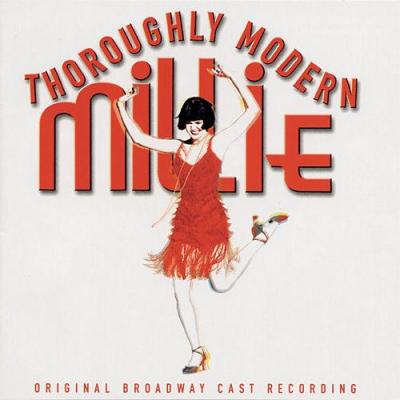
"Thoroughly Modern Millie" Soundtrack Lyrics
Movie • 2002
Track Listing
Sutton Foster
“Thoroughly Modern Millie (Original Motion Picture Soundtrack)” – Album Guide to Tracks and Key Scenes
Review
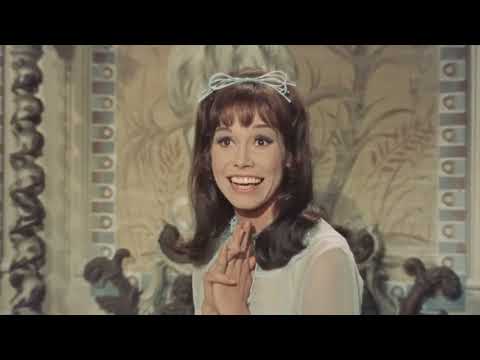
Can nostalgia feel modern? Thoroughly Modern Millie plays it both ways — a 1920s pastiche whose soundtrack fuses brand-new tunes with Tin Pan Alley favorites, then lets Elmer Bernstein’s orchestral muscle carry the comedy. It’s a glossy confection: Julie Andrews sings with crystalline poise, Carol Channing turns vamp into vaudeville, and André Previn’s slick arrangements make old songs strut like new money.
The film’s needle-drops are purposeful: standards sketch the flapper fantasy, while the newly written title song and “The Tapioca” waltz the plot forward. Bernstein’s underscore (the one the Academy noticed) does the cohesion — sly saxes, buoyant brass, and that champagne-bubble rhythm that keeps Millie racing through Manhattan. The overall mood? Big band sparkle with Broadway wink.
Genres & themes in phases — 1920s standards & revue songs: surface polish and social climbing; new pop-tunes: romance as modern plan; comic patter & novelty dance: satire of “It” girl culture; orchestral score: screwball propulsion and postcard glamour.
How It Was Made
The 1967 soundtrack album (Decca) mirrors the film’s hybrid DNA: brand-new numbers by Jimmy Van Heusen & Sammy Cahn (title song; “The Tapioca”) and Jay Thompson (“Jimmy”), plus 1910s–1920s standards (“Baby Face,” “Jazz Baby,” “Do It Again!,” “Poor Butterfly,” “Rose of Washington Square”). André Previn arranged and conducted the songs; Elmer Bernstein composed and conducted the underscore — which won the film its Academy Award for music. Producer Ross Hunter packaged the LP deluxe for the era, leaning into nostalgia with photos and notes.

Tracks & Scenes
“Thoroughly Modern Millie” (Julie Andrews) — Van Heusen/Cahn
- Where it plays:
- Early in the film as Millie bobs her hair and remakes herself in a rented room. Quick cuts of hemlines, typing drills, and fearless grins. Non-diegetic vocal layered with bustling foley.
- Why it matters:
- It’s the thesis: reinvention scored as a pep talk. Andrews sells modernity with a wink.
“Jimmy” (Julie Andrews) — Jay Thompson
- Where it plays:
- A wistful confession after Millie’s plans wobble. Close shots, soft lighting, and a melody that puts heart over hustle. Non-diegetic song moment in a quiet interior.
- Why it matters:
- Rom-com reality check — the scheme meets the feelings.
“The Tapioca” (Julie Andrews & James Fox) — Van Heusen/Cahn
- Where it plays:
- In a social set-piece where a novelty dance turns flirtation into choreography. Room-wide blocking lets the chorus echo their steps. Diegetic dance-band energy.
- Why it matters:
- Shows the movie’s musical-comedy gear: plot points via party dances.
“Jazz Baby” (Carol Channing)
- Where it plays:
- Muzzy Van Hossmere’s club performance — feathers, footlights, and a band that purrs. Diegetic onstage number with audience cutaways.
- Why it matters:
- Channing’s star turn distills the 1920s fantasy the film revels in.
“Do It Again!” (Carol Channing)
- Where it plays:
- A coy reprise of cabaret glamour — slowed pulse, side-eye humor, and audience swoons. Diegetic club performance.
- Why it matters:
- Comic seduction as period pastiche; Channing winks and the room melts.
“Baby Face” (Julie Andrews)
- Where it plays:
- A cheeky, uptempo set-piece as Millie leans into her “It girl” act. Montage-friendly staging through party rooms. Non-diegetic song threaded with crowd noise.
- Why it matters:
- Old standard, new purpose — social climbing with a chorus line.
“Jewish Wedding Song (Trinkt Le Chaim)” (Julie Andrews)
- Where it plays:
- A celebratory vignette in the film’s midsection — fiddles, claps, and a swirl of guests. Diegetic, with on-screen musicians.
- Why it matters:
- Nods to the era’s melting-pot soundtrack; community joy as plot palate cleanser.
“Poor Butterfly” (Julie Andrews & John Gavin)
- Where it plays:
- Romantic quiet between schemes: dusk lighting, balcony breeze, hesitant smiles. Non-diegetic vocal highlight.
- Why it matters:
- Gives the story a tender center — the dream behind the ambition.
“Rose of Washington Square” (Ann Dee)
- Where it plays:
- A theater-in-the-movie moment — footlights, choristers, and a straight-ahead performance style. Diegetic stage number.
- Why it matters:
- Period color; the soundtrack’s scrapbook side.
Bernstein’s underscore (various cues)
- Where it plays:
- Throughout — a champagne-bright orchestral current beneath chases, flirtations, and capers.
- Why it matters:
- It’s the glue. The Academy Award went to this — not the song album — for good reason.
Notes & Trivia
- Elmer Bernstein won the film’s only Oscar (Best Original Score) — his lone Academy Award win.
- The LP was released by Decca in 1967 with deluxe packaging; later CD issues appeared on MCA/UMe.
- New songs were written by Jimmy Van Heusen & Sammy Cahn (“Thoroughly Modern Millie,” “The Tapioca”) and Jay Thompson (“Jimmy”).
- André Previn arranged and conducted the song numbers; Bernstein handled underscore and score production.
- Multiple standards (“Baby Face,” “Jazz Baby,” “Do It Again!,” “Poor Butterfly”) anchor the film’s 1920s pastiche.
Reception & Quotes
Audiences made it one of 1967’s big hits; critics admired the showmanship more than the sprawl. The soundtrack sold briskly and charted well; the score took home the Oscar.
“Packs plenty of fun… but with Ross Hunter–style excess.” 1967 capsule, The New Yorker
“Elmer Bernstein’s only Academy Award — for a film not even his best work, some argue.” Obituary context
“Decca pushes ‘Millie’ as deluxe soundtrack; Previn’s arrangements sparkle.” Trade promotion notes
Interesting Facts
- Movie vs. musical: The later Broadway stage musical (2002) is a re-adaptation — different score by Jeanine Tesori/Dick Scanlan. Don’t confuse it with the 1967 film album.
- Deluxe LP launch: Decca touted the album as the first in a new “Deluxe” series, complete with booklet art.
- Chart run: The soundtrack hit the U.S. album charts (Top 20) and cracked the U.K. Top 10 during the film’s run.
- Cabaret royalty: Carol Channing’s two numbers (“Jazz Baby,” “Do It Again!”) are pure star-vehicle showcases.
- Title tune DNA: “Thoroughly Modern Millie” was written brand-new for the film — then became the seed for later stage adaptations.
Technical Info
- Type: Film soundtrack (songs + score)
- Title: Thoroughly Modern Millie — The Original Sound Track Album
- Film: Thoroughly Modern Millie (1967), dir. George Roy Hill
- Composed by (score): Elmer Bernstein (Academy Award winner)
- Song arrangements & conductor: André Previn
- Songwriters (new): Jimmy Van Heusen & Sammy Cahn; Jay Thompson
- Label: Decca (1967); later reissues on MCA/UMe
- Selected notable placements: “Thoroughly Modern Millie” (makeover montage); “The Tapioca” (novelty-dance set-piece); “Jazz Baby” & “Do It Again!” (Muzzy’s club); “Jimmy” (intimate confession); “Baby Face,” “Poor Butterfly,” “Trinkt Le Chaim,” “Rose of Washington Square” (revue/party/theater vignettes)
- Clarification: A 2002 stage musical (not a film) reimagines the story with a different score and its own cast album.
Questions & Answers
- Is the famous title song an old standard?
- No — it was newly written for the 1967 film by Jimmy Van Heusen & Sammy Cahn.
- Who won the Oscar — songs or score?
- The score. Elmer Bernstein won Best Original Score; the album’s songs were arranged/conducted by André Previn.
- Why does the soundtrack mix old songs with new?
- To evoke 1920s New York while giving the film fresh hooks. It’s deliberate pastiche.
- What’s the difference from the 2002 Broadway album?
- Completely new score by Jeanine Tesori/Dick Scanlan; different song list and orchestrations. That’s a stage recording, not the film OST.
- Is there a modern reissue?
- Yes — CD/digital editions have circulated via MCA/UMe; vintage Decca LPs are also common in collector markets.
Key Contributors
| Subject | Relation | Object |
|---|---|---|
| Elmer Bernstein | composed & conducted score for | Thoroughly Modern Millie (1967 film) |
| André Previn | arranged & conducted songs for | Thoroughly Modern Millie soundtrack |
| Jimmy Van Heusen & Sammy Cahn | wrote | “Thoroughly Modern Millie”; “The Tapioca” |
| Jay Thompson | wrote | “Jimmy” |
| Julie Andrews | performed | lead vocals on multiple tracks |
| Carol Channing | performed | “Jazz Baby”; “Do It Again!” |
| Decca Records | released | original 1967 soundtrack album |
| Universal Pictures | produced/distributed | 1967 film |
Sources: Wikipedia (film & soundtrack pages); Discogs (1967 Decca LP); Masterworks/MCA reissue notes; IMDb (awards); Elmer Bernstein official site (Oscar); contemporary trade coverage; Movieclips trailer.
November, 29th 2025
A-Z Lyrics Universe
Cynthia Erivo Popular
Ariana Grande Horsepower
Post Malone Ain't No Love in Oklahoma
Luke Combs Good Riddance (Time of Your Life)
Green Day Bye Bye Bye
*NSYNC You're the One That I Wan
John Travolta & Olivia Newton-John I Always Wanted a Brother
Braelyn Rankins, Theo Somolu, Kelvin Harrison Jr. and Aaron Pierre The Power of Love
Frankie Goes to Hollywood Beyond
Auli’i Cravalho feat. Rachel House MORE ›