
"Titanic: Musical" Soundtrack Lyrics
Musical • 1997
Track Listing
"Titanic: A New Musical (Original Broadway Cast Recording)" – Album Guide to Tracks and Key Scenes
Review
Can a tragedy sing without tipping into melodrama? Maury Yeston’s Titanic does it with dignity — massed chorus for the crowd, clean solos for private hope, and orchestration that sounds like steel, steam, and prayer. The cast album moves from bustle to benediction: curiosity, class aspiration, then inevitability, all under a single sweeping idea — human ambition set against an indifferent sea.
The narrative mosaics align as portraits: stokers and stewards; three Kates in steerage; upwardly mobile second-class dreamers; first-class confidence men of industry. On record you hear the engine room’s drive (“How Did They Build Titanic?” / “Barrett’s Song”), society’s glitter (“What a Remarkable Age This Is,” “Doing the Latest Rag”), and crystalline stillness at the end (“We’ll Meet Tomorrow,” “Still”). It’s a through-sung pageant with choral backbone: when the company launches the ship in “Godspeed Titanic,” the harmony feels as enormous as the set looked on Broadway — a rare case where the album alone conjures the ship.
In phases: engine ostinati — work, modernity; parlor/dance tunes — class performance; hymn & chorale — collective fate; intimate ballads — stubborn love and small courage. The balance is the point: nobody’s the “lead,” and the music honors that.
How It Was Made
Composer–lyricist Maury Yeston and book writer Peter Stone opened the show at the Lunt-Fontanne Theatre in April 1997. Jonathan Tunick orchestrated for a 26-piece pit, giving the voices a symphonic floor. The Original Broadway Cast Recording was issued by RCA Victor in 1997 (later handled by Masterworks Broadway for catalog/streaming). The production would win five Tony Awards including Best Musical, Score, Book, and the first-ever Tony for Best Orchestrations.
Tracks & Scenes
What you hear on the album — and how it lands in the story. (Stage timings vary; descriptions reflect the Broadway script and standard licensing text.)
“Prologue: In Every Age” (Thomas Andrews / Company)
- Where it plays:
- Designer Thomas Andrews contemplates the march of progress as the company gathers at Southampton. The music starts hushed, almost like a pre-service hymn, then widens into orchestral light.
- Why it matters:
- Frames the show’s thesis — wonder and hubris in the same chord.
“How Did They Build Titanic?” → “There She Is” (Fred Barrett, Bride, Fleet & Company)
- Where it plays:
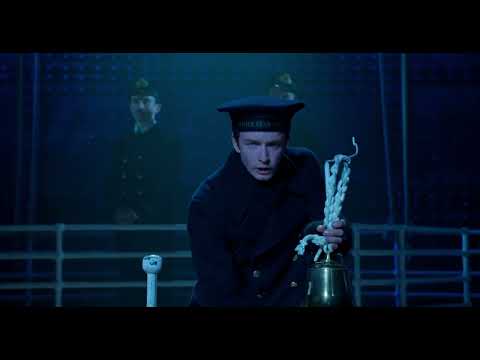
- A stoker’s awe becomes a brisk engine-room rhythm; lookouts and the wireless operator join as the crew sizes up the “Ship of Dreams.”
- Why it matters:
- Work song as spectacle: the orchestra turns into pistons and screws.
“The First Class Roster” → “Godspeed Titanic” (Pitman, Alice Beane & Company)
- Where it plays:
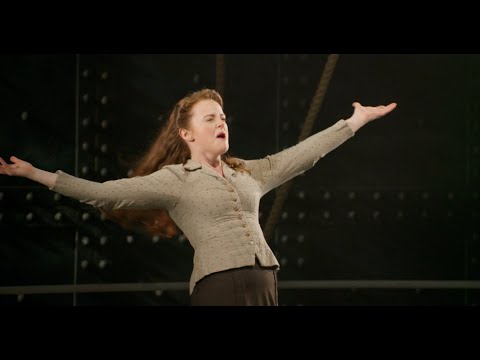
- As the manifest is read, social climber Alice narrates glamour from a distance; then a radiant launch chorale blesses the voyage.
- Why it matters:
- Class comedy into sacred chorus — giddy, then reverent. The album’s first true goosebump.
“Barrett’s Song (The Screws Are Turning)” (Fred Barrett)
- Where it plays:
- Below decks, Barrett sings to the relentless machinery — and to the better life he’s chasing on the other side of the ocean.
- Why it matters:
- A working man’s aria; the show’s heartbeat.
“What a Remarkable Age This Is” (Etches & First Class)
- Where it plays:
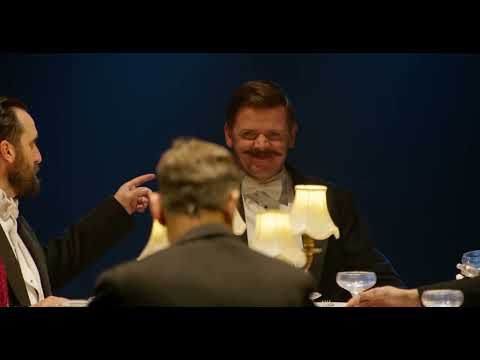
- Salon chatter catalogs marvels of the age — electricity, skyscrapers, liners — to a sparkling two-step.
- Why it matters:
- Self-congratulation, musically charming — and dramatically ominous.
“To Be a Captain” (Murdoch)
- Where it plays:
- On the bridge, First Officer Murdoch doubts his readiness even as Captain Smith praises him.
- Why it matters:
- Duty and humility in a spare soliloquy — the bridge’s quiet humanity.
“Lady’s Maid” (The Three Kates & Steerage)
- Where it plays:
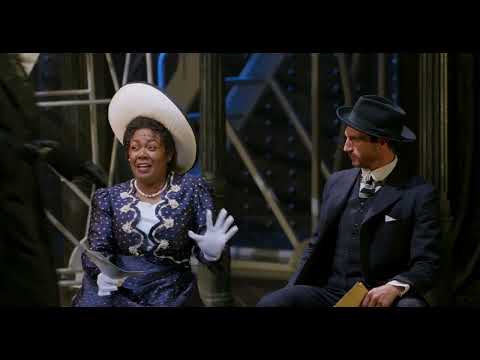
- In steerage, three women named Kate dream aloud of American futures, joined by fellow third-class passengers.
- Why it matters:
- The immigrant chorus; hope sung in harmony.
“The Proposal / The Night Was Alive” (Barrett & Harold Bride)
- Where it plays:
- Barrett dictates a Morse proposal to sweetheart Darlene; Bride, intoxicated by the crackling airwaves, answers with his own love song to the wireless night.
- Why it matters:
- Two kinds of longing — one earthly, one electric — interlock like gears.
“Doing the Latest Rag” (Band & Ensemble)
- Where it plays:
- Deck dancing by daylight; polite society spins while speed orders tick forward offstage.
- Why it matters:
- Foam on the bow — effervescence before the turn.
“No Moon” (Fleet & Company)
- Where it plays:
- Night watch. The lookout marks a flat, star-bright sky — ideal for glamour, terrible for spotting ice.
- Why it matters:
- Pure foreboding. The lyric is meteorology as omen.
“The Blame” (Ismay, Smith & Andrews)
- Where it plays:
- Post-impact confrontation: shipowner, captain, and designer argue causality as the list worsens.
- Why it matters:
- Three philosophies in counterpoint — speed, command, design — each insufficient alone.
“We’ll Meet Tomorrow” (Barrett, Clarke & Company)
- Where it plays:
- Lifeboats lower; separations multiply. Passengers promise a reunion they likely know they won’t keep.
- Why it matters:
- A lullaby against disaster — the album’s quietest devastator.
“Still” (Ida & Isidor Straus)
- Where it plays:
- On the boat deck, the Strauses choose to remain together. A marital memory becomes a final vow.
- Why it matters:
- Understatement wins: the smallest love song becomes the show’s soul.
“Mr. Andrews’ Vision” → Finale (“In Every Age / Godspeed Titanic” reprise)
- Where it plays:
- Andrews walks the plans one last time; the chorus returns to the prologue and launch, now as memorial.
- Why it matters:
- Cycle complete — aspiration remembered, cost acknowledged.
Notes & Trivia
- The Broadway production won five Tonys: Best Musical, Best Score (Yeston), Best Book (Stone), Best Orchestrations (Tunick), and Best Scenic Design.
- The original cast recording was released by RCA Victor in 1997; Masterworks Broadway now manages the catalog/streaming edition.
- Key characters tied to signature songs: Barrett (“Barrett’s Song”; the proposal telegram), Harold Bride (“The Night Was Alive”), the Three Kates (“Lady’s Maid”), Fleet (“No Moon”), Ida & Isidor (“Still”).
- The pit had 26 players — unusually large for a late-’90s Broadway musical.
Reception & Quotes
Opening with technical hiccups but fast-rising word of mouth, the show became a Tony-night sweeper and a cast-album staple. Later revivals and concert stagings keep proving how sturdily the score carries a huge ensemble without star romantic leads.
“Sweeping, symphonic, and humane — a memorial you can hum.” album capsules
“Karimloo turns ‘The Proposal/The Night Was Alive’ into a lesson in longing.” revival notices
“A genuine addition to American musical theatre.” early critical reappraisal
Interesting Facts
- Chorus over leads: No Jack & Rose — the album privileges a ship of voices, not a single love story.
- Wireless poetry: “The Night Was Alive” turns Morse code into romance.
- Dance as warning: Ragtime sparkle sits right next to speed orders — dramatic counterpoint by design.
- Engine-room aria: “Barrett’s Song” is a bona fide Anthem for Tenor & Boilers.
- History in harmony: “Still” and “We’ll Meet Tomorrow” are drawn from true couples and partings.
Technical Info
- Title: Titanic: A New Musical (Original Broadway Cast Recording)
- Year: 1997
- Type: Stage musical — cast recording
- Music & Lyrics: Maury Yeston
- Book: Peter Stone
- Orchestrations: Jonathan Tunick (Tony winner)
- Label(s): RCA Victor (1997 original); Masterworks Broadway (catalog/streaming)
- Key numbers (selected): “In Every Age,” “Godspeed Titanic,” “Barrett’s Song,” “What a Remarkable Age This Is,” “Lady’s Maid,” “The Proposal/The Night Was Alive,” “Doing the Latest Rag,” “No Moon,” “We’ll Meet Tomorrow,” “Still,” “Mr. Andrews’ Vision.”
- Awards: Tony Awards — Best Musical, Best Original Score, Best Book, Best Orchestrations; Grammy nomination for the cast album.
- Availability: Widely streaming; original 1997 RCA CD (UPC 090266883424) circulates; Masterworks Broadway provides the digital edition.
Questions & Answers
- Is this connected to the 1997 movie?
- No — different story approach. The musical focuses on real passengers and crew, told via ensemble numbers rather than a single central romance.
- Who are the principal creative artists on the album?
- Maury Yeston (music/lyrics), Peter Stone (book), Jonathan Tunick (orchestrations), with the Original Broadway company.
- What’s the big launch number everyone talks about?
- “Godspeed Titanic,” a radiant choral benediction that caps the embarkation sequence.
- Which song features the wireless operator?
- “The Proposal/The Night Was Alive,” a duet for stoker Fred Barrett and wireless man Harold Bride.
- Where can I hear it?
- On major streaming platforms via Masterworks Broadway; the original RCA Victor CD is common on the secondhand market.
Key Contributors
| Entity | Relation (S–V–O) |
|---|---|
| Maury Yeston | Composer–Lyricist — wrote the score and lyrics. |
| Peter Stone | Book Writer — structured the multi-story mosaic. |
| Jonathan Tunick | Orchestrator — scored for a 26-piece pit; won the Tony for Orchestrations. |
| RCA Victor | Label — released the 1997 Original Broadway Cast Recording. |
| Masterworks Broadway | Label — handles catalog/streaming reissue. |
| Original Broadway Cast | Ensemble — including Michael Cerveris (Andrews), Brian d’Arcy James (Barrett), Victoria Clark (Alice Beane), John Cunningham (Capt. Smith). |
| Richard Jones | Director — staged the 1997 Broadway production. |
| Lynne Taylor-Corbett | Choreographer — shaped the parlor/dance sequences. |
Sources: Wikipedia (musical overview & song list); Masterworks Broadway (album page); RCA Victor release details (library/catalog); Discogs (RCA Victor catalog entries); Playbill & Tony Awards (1997 winners); StageAgent (song contexts); recent Encores! coverage for performance references; official & revival trailers on YouTube.
November, 29th 2025
A-Z Lyrics Universe
Cynthia Erivo Popular
Ariana Grande Horsepower
Post Malone Ain't No Love in Oklahoma
Luke Combs Good Riddance (Time of Your Life)
Green Day Bye Bye Bye
*NSYNC You're the One That I Wan
John Travolta & Olivia Newton-John I Always Wanted a Brother
Braelyn Rankins, Theo Somolu, Kelvin Harrison Jr. and Aaron Pierre The Power of Love
Frankie Goes to Hollywood Beyond
Auli’i Cravalho feat. Rachel House MORE ›