Soundtracks:  A B C D E F G H I J K L M N O P Q R S T U V W X Y Z #


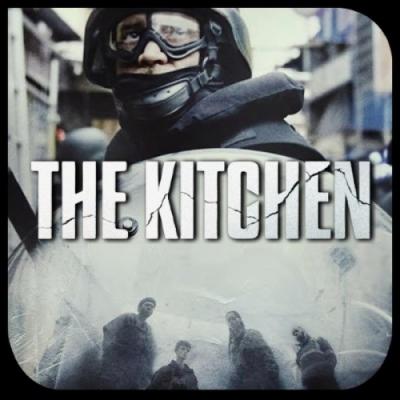
Kitchen 2024 Album Cover

"Kitchen 2024" Soundtrack Lyrics

Movie • 2024

Track Listing


"The Kitchen (Score from the Netflix Film)" – Album Guide to Tracks and Key Scenes

The Kitchen 2024 Netflix trailer frame: Izi and Benji cross a barricaded London estate at dusk
Trailer imagery: a near-future London and a community called “The Kitchen”.

Overview

A city squeezes its poorest; music keeps them breathing. The film’s sound design runs on two engines: a co-composed score by Labrinth and Alex Baranowski, and a densely curated set of songs that move from UK pirate-radio DNA to highlife, grime, gospel, and vintage R&B. The score album—The Kitchen (Score from the Netflix Film)—collects 12 cues (≈31 minutes) issued by Netflix Music on March 8, 2024, while the picture itself threads dozens of licensed tracks through life in the estate.

Functionally, songs are the neighborhood’s public voice (block parties, tannoys, a DJ called Lord Kitchener); the score handles private reckoning—parenthood, loss, the risk of choosing community over survival. As RadioTimes and other coverage laid out, the needle-drops range from Tirzah and SBTRKT/Sampha to Fela Kuti and Cameo, with UK rap figures (Giggs) and dancehall (Busy Signal) anchoring the grime-to-garage lineage.

Trailer still: estate stairwell lit in sodium orange as a low synth pulse gathers
Songs set the street; score sits with the people.

Questions & Answers

Who composed the score?
Labrinth and Alex Baranowski co-scored the film; their album bundles 12 cues (digital release, Netflix Music).
Is there a separate “songs” album?
No single “songs” disc. Press roundups and playlists enumerate all licensed tracks used in the film.
When did the score album come out?
March 8, 2024 (digital). Track names include “Welcome to the Kitchen,” “Ruby Eviction,” “Benji Puts His Mum to Rest.”
Who supervised the licensed music?
A UK team led by Khalil Asmall with co-supervision from Jumi Akinfenwa (credits and professional bios confirm the roles).
What styles dominate the soundtrack?
Garage/grime and UK rap; Afrobeats/highlife; dancehall; classic funk/R&B; plus choral and ambient-orchestral score.
What’s the film’s release context?
Premiere at BFI London Film Festival (Oct 15, 2023); UK cinemas Jan 12, 2024; Netflix worldwide Jan 19, 2024.

Notes & Trivia

  • The film explicitly centers a community DJ (Lord Kitchener), so diegetic music—announcements, dedications, pirate-radio texture—drives plot and place.
  • The licensed song list spans Ghanaian highlife (“Kyenkyen Bi Adi M’awu”), US R&B (“How ’Bout Us”), and London grime instrumentals (Ruff Sqwad’s “Xtra”).
  • The score album is short by design (≈30 minutes); most street music remains film-only needles and playlist items.
  • Critics highlighted the soundtrack’s range as part of the film’s world-building—street anthems beside tender cues.

Genres & Themes

Grime/garage → Resistance as routine. Minimal beats and sub-bass read like infrastructure—tough, repetitive, communal.

Highlife/Afrobeats → Joy that refuses eviction. Guitar vamps and percussion put warmth back into concrete spaces.

Dancehall/UK rap → Edges and swagger. Hooks organize crowds and confidence; lyrics double as commentary.

Gospel/choral → Grief with dignity. Hymn fragments and choir textures appear around death, ritual, and care.

Ambient-orchestral score → Interior life. Pads, small strings, and piano carry Izi/Benji’s choices when the estate goes quiet.

Montage panel: pirate radio booth, courtyard crowd, quiet flat with a night lamp
Style map: broadcast → block → breath.

Tracks & Scenes

“Holding On” — Tirzah
Scene: Early-act street montage: faces, flyers, quick cuts as the estate’s rhythm introduces itself (non-diegetic).
Why it matters: A fragile insistence that frames the community before the crackdowns.

“Living Like I Do” — SBTRKT & Sampha
Scene: Bus windows and estate corridors; a pulse for indecision and wandering (non-diegetic).
Why it matters: Mirrors Izi’s hover between escape and obligation.

“Lock Doh” — Giggs
Scene: Yard swagger: vendors shout, bikes snake through alleys, kids orbit the camera (source-adjacent from street speakers).
Why it matters: Unmistakable London cadence—local, loud, owned.

“Stay So” — Busy Signal
Scene: Market hustle; a moving camera glides past food stalls and hair braiders (diegetic).
Why it matters: Dancehall as social glue—beats make space feel safe.

“Kyenkyen Bi Adi M’awu” — Alhaji K. Frimpong
Scene: Courtyard gathering; elders nod, little ones copy the steps (diegetic).
Why it matters: Highlife warmth that insists on joy.

“Candy” — Cameo
Scene: Celebration cutaway; a few bars flip a gray room into a party (diegetic/needle).
Why it matters: One of the film’s purest “we’re still here” moments.

“How ’Bout Us” — Champaign
Scene: Night drive and second thoughts; city sodium lights smear across glass (non-diegetic).
Why it matters: Soft-soul ache to underline a hard choice.

“Walk Away (Dub Mix)” — Bitty McLean
Scene: Street-level radio segue; the camera floats past doorways (diegetic from the DJ feed).
Why it matters: Pirate-radio texture that sells the world.

“Xtra (Instrumental)” — Ruff Sqwad
Scene: Rooftop glide and scheming; the beat is all angles and air (non-diegetic).
Why it matters: Grime’s skeletal build = quiet tension.

“AK47” — Sayfar, Cyfred, 2woBunnies
Scene: Crowd surge during a courtyard set; bodies move like one organism (diegetic).
Why it matters: Amapiano swing that turns the space elastic.

“Odo Nwom” — Kofi Nti feat. Ofori Amponsah & Barosky
Scene: Kitchen table becomes dance floor; a held-too-long smile breaks (diegetic).
Why it matters: Domestic joy as resistance.

“Zombie” — Fela Kuti
Scene: Marches, sirens, orders; a blunt, political needle that needs no translation (non-diegetic).
Why it matters: The film’s most overt protest groove.

“How Great Thou Art” — cast (hymn)
Scene: Mourning ritual; close frames, no cutting flourishes (diegetic/choral).
Why it matters: Communal grief given its own time signature.

Score cue: “Ruby Eviction” — Labrinth & Alex Baranowski
Scene: Doors splinter; strings fall in steps as the world shrinks (non-diegetic).
Why it matters: Orchestral language that hears the human scale.

Score cue: “Welcome to the Kitchen” — Labrinth & Alex Baranowski
Scene: Opening orientation to the estate—the motif that keeps returning (non-diegetic).
Why it matters: A signature patchwork: synth bed, small strings, restrained piano.

Music–Story Links

Whenever the estate speaks as one—protests, parties, announcements—songs lead, often as literal broadcasts. When the film narrows to Izi and Benji, the score pares back to breath and pulse. The switch is deliberate: public sound for public life, private sound for private cost.

Final trailer beat: a crowd raises hands to a rooftop speaker; the music cuts to a quiet synth and strings
From speakers to strings: how the film changes gears.

How It Was Made

Score by Labrinth and Alex Baranowski; album released digitally by Netflix Music. Music supervision led by Khalil Asmall with co-supervision from Jumi Akinfenwa. Filmmakers have cited inspirations like Do the Right Thing and La Haine, which tracks with the DJ-as-chorus device and the street-level eclecticism.

Reception & Quotes

Coverage repeatedly singled out the soundtrack’s breadth and its role in world-building; several outlets published full song rundowns on release weekend.

“One of the standout movie soundtracks of 2024.” release-week roundups
“Eclectic and lived-in… you hear the community before you fully meet it.” UK press features

Additional Info

  • Score album: 12 tracks, ≈30:52; digital only at launch.
  • Notable licensed tracks (film only): Tirzah “Holding On”; Giggs “Lock Doh”; Busy Signal “Stay So”; Alhaji K. Frimpong “Kyenkyen Bi Adi M’awu”; SBTRKT & Sampha “Living Like I Do”; Cameo “Candy”; Fela Kuti “Zombie”.
  • Playlist support: Editorial/curated playlists mirror the film’s needle-drops.
  • Trailer Video ID used here: GgT5cEV5Qt0.

Technical Info

  • Title: The Kitchen (Score from the Netflix Film)
  • Year / Type: 2024 / Film score album; film uses extensive licensed songs
  • Composers: Labrinth; Alex Baranowski
  • Music Supervision (film): Khalil Asmall (lead); Jumi Akinfenwa (co-supervision)
  • Label: Netflix Music (digital)
  • Release context (film): BFI LFF premiere Oct 15, 2023 → UK cinemas Jan 12, 2024 → Netflix Jan 19, 2024
  • Selected notable placements: “Holding On” (Tirzah); “Living Like I Do” (SBTRKT & Sampha); “Lock Doh” (Giggs); “Stay So” (Busy Signal); “Kyenkyen Bi Adi M’awu” (Alhaji K. Frimpong); “Candy” (Cameo); “How ’Bout Us” (Champaign); “Zombie” (Fela Kuti); “Walk Away (Dub Mix)” (Bitty McLean); “Xtra (Instrumental)” (Ruff Sqwad); hymn “How Great Thou Art”.

Canonical Entities & Relations

SubjectRelationObject
The Kitchen (2023/2024 film)Directed byKibwe Tavares; Daniel Kaluuya
The Kitchen (film)Music byLabrinth; Alex Baranowski
The Kitchen (Score from the Netflix Film)Record labelNetflix Music
Licensed soundtrack (film)FeaturesTirzah; SBTRKT & Sampha; Giggs; Busy Signal; Alhaji K. Frimpong; Cameo; Fela Kuti; Bitty McLean; Ruff Sqwad; Champaign
Music supervisionLed byKhalil Asmall (co-supervision: Jumi Akinfenwa)
DistributionReleased byNetflix (streaming, Jan 2024)

Sources: RadioTimes soundtrack rundown; TheWrap/NME/Mixmag song lists; Netflix score-album announcement and store pages; official trailer post; film info pages (title/credits/release).

November, 12th 2025


A-Z Lyrics Universe

Lyrics / song texts are property and copyright of their owners and provided for educational purposes only.