Singing At The Party Lyrics – Jack Black with Ismael Garcia Ruiz Y Su Trio / for Ramses
Soundtrack Album: Nacho Libre
(First song was Piel Canela)
[Jack Black: ]
I am singing at the party,
I am singing it's my turn to sing, at the party.
Everyone is dancing, happy, party,
But Ramses is not dancing, he does not dance at the party.
At night, I play my games, I go to sleep, I think of Ramses.
The people in the street they eating treats, they eating candies.
Will he ever lose, we'll never know, he'll never fight me,
Ramses is the greatest, even though he rhymes with pansies (or panties)
Ramses number one, he knows the secrets of desire,
RAPAPAPAPILIAPUPALIAPUPPA
Ramses number one, he put the people all on fire,
RAPAPAPAPILIAPUPALIAPUPPA
Ramses number one, he likes to run down to the playa (beach)
RAPAPAPAPILIAPUPALIAPUPPA
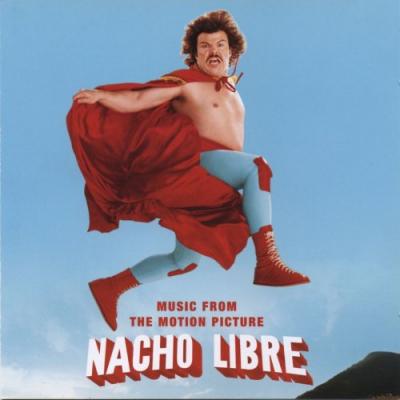
Nacho Libre
Soundtrack Lyrics for Movie, 2006
Track Listing
Mr. Loco
Nacho
Alan Hawkshaw & Alan Parker
Mr. Loco
Jack Black with Ismael Garcia Ruiz Y Su Trio / for Ramses
Danny Elfman
Nacho & Esqueleto
Beck
Nacho
Beck
Caetano Veleso
Cholotronic
Eddie Santiago
John Cameron
Jack Black
Beck
Los Lobos
Nacho
Jack Black & Mucha Mucho Acapulco
Song Overview
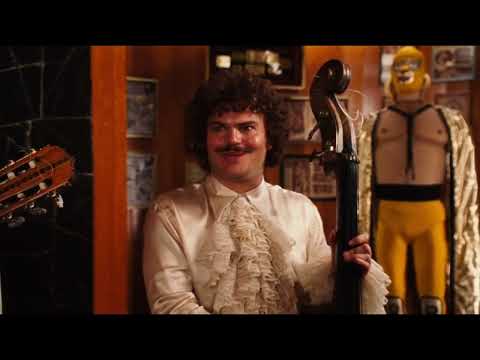
Some movie tunes land, take a polite bow, and slip away. Others—short, cheeky, infectious—settle into the pop-culture bloodstream. “Singing At The Party” belongs to the second camp. At just eighty-five seconds, the track is a mariachi-bolero wink delivered by Jack Black in Nacho Libre (2006). It’s half serenade, half self-pep talk, and all swagger. The song’s verses pivot around Ramses, the golden-masked wrestling demigod who refuses to dance. Those upbeat yet slightly yearning Lyrics have echoed across YouTube, TikTok, and countless dorm-room screenings ever since.
Song Credits
- Featured: Ismael García Ruiz y Su Trio
- Producer: Danny Elfman
- Composer: Bobby Capó (original “Piel Canela”) / adaptation by Jack Black
- Release Date: October 24 2006
- Genre: Mariachi, Bolero-Pop, Comedy-Soundtrack
- Instruments: nylon-string guitar, guitarrón, trumpets, maracas, hand-claps, voice
- Label: Lakeshore Records
- Mood: festive, tongue-in-cheek, admiring
- Length: 1 minute 25 seconds
- Track #: 5 on Nacho Libre: Music from the Motion Picture
- Language: English sprinkled with Spanish cadence
- Music Style: Mariachi-bolero fusion with comic phrasing
- Poetic Meter: free-verse with trochaic bursts
- Copyrights: © 2006 Paramount Pictures & Lakeshore Records
Song Meaning and Annotations
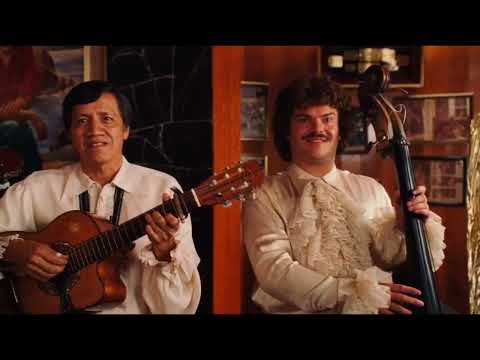
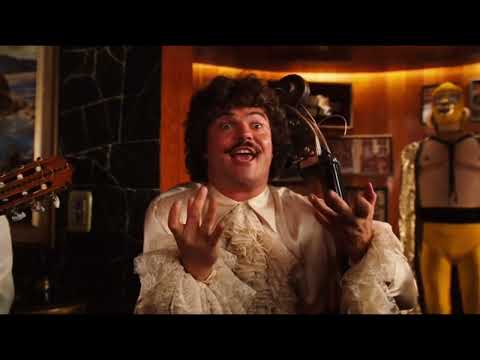
Let’s set the scene. A candle-lit courtyard in Oaxaca. Rich wrestlers mingle with oligarchs while a mariachi trio plucks calm bolero chords. Then Ignacio—our earnest monk-turned-luchador—grabs the mic. His Lyrics start almost childlike: “I am singing at the party.” Instantly, the rhythm lopes like a donkey trot, guitars chugging on a simple I – V – V cadence. Black’s delivery tilts between croon and stage whisper: part pedestal, part apology.
The emotional arc is sly. Verse one paints a room full of dancers—but zero eye contact from the idolized Ramses. Verse two, sung under moonlight, exposes Ignacio’s insecurity: he plays video games, crunches candies, dreams of glory. The chorus—a nonsense trumpet syllable “RAPAPAPAPILIAPUPALIAPUPPA”—mocks the macho brass fanfare of classic lucha entrances. Under the jokes hum two serious ideas: hero worship and self-worth. The merry bolero mask slips each time Nacho admits Ramses “will never fight me.” That line, though tossed off, is his confession of feeling small in a sequined world.
Verse 1
I am singing at the party,
Everyone is dancing, happy, party,
But Ramses is not dancing…
Those plainspoken song words frame Ramses as both absent and all-present—he owns the floor by refusing to use it.
Chorus
Ramses number one, he knows the secrets of desire,
RAPAPAPAPILIAPUPA…
The chorus flips adulation into parody. Black stretches “desire” across four beats, then detonates into onomatopoeic brass—like a mariachi horn section crammed into one human mouth.
Verse 2
At night I play my games, I go to sleep, I think of Ramses…
The lines blur prayer and fangirl diary entry. They also reference small-town Mexican nocturnes: sweets from street vendors, household Catholic rituals, and the perennial hum of papitas frying. Funny moment. Ramses interrupts the bassist’s singing by splashing wine in his face. :)
Production-wise, Elfman keeps the palette homespun: two acoustic guitars dead-center, a guitarrón rounding the low-end, trumpet stabs on beat three, and a room mic capturing laughter from off-screen extras. The mix feels like eavesdropping on neighbors—perfect for an under-dog anthem.
Similar Songs
- “Peaches” – Jack Black (2023)
Another Black-penned jewel, this time for The Super Mario Bros. Movie. Both tracks spoof romantic balladry while leaning on exaggerated vocal theatre. “Peaches” trades mariachi strums for arena piano, yet the DNA is identical: a theatrical baritone professing love (Bowser for Peach, Nacho for Ramses) with camp sincerity. Each song’s Lyrics go viral precisely because they balance big-kid earnestness and Looney-Tunes absurdity. - “Tribute” – Tenacious D (2002)
Where “Singing At The Party” parodies bolero, “Tribute” parodies metal epicness. Both pieces celebrate musical storytelling—one about slaying the devil with “the greatest song in the world,” the other about serenading a silent demigod. The comic escalation, sudden dynamic swings, and self-mythologizing lines (“This is not the greatest song in the world, no…”) shadow Nacho’s boastful yet self-deprecating verse. - “Hakuna Matata” – The Lion King OST (1994)
Disney’s feel-good duet shares the same goofy-philosopher energy. Timon & Pumbaa coax Simba into carefree bliss; Nacho tries coaxing Ramses into rhythm. Both songs use call-and-response hooks, animalistic mouth sounds, and moral punch-lines disguised as party chants—making the Lyrics stick in kids’ heads long after the credits roll.
Questions and Answers
- Was “Singing At The Party” ever released as a standalone single?
- No. It appears exclusively on the Nacho Libre soundtrack and digital platforms that mirror the album track list.
- Who plays the mariachi backing band in the film?
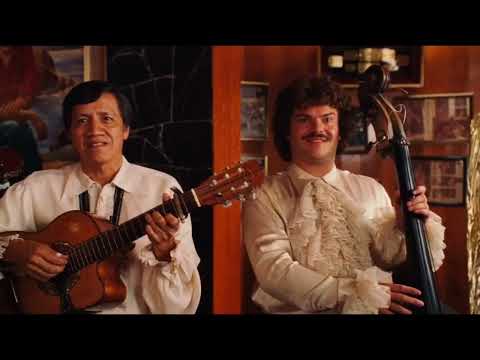
- Ismael García Ruiz y Su Trio—a real Oaxacan ensemble—recorded and appear on screen.
- Is the melody borrowed from another song?
- Partly. The cue is listed as “Piel Canela (Singing At The Party)” on some releases, nodding to Bobby Capó’s 1952 bolero “Piel Canela.”
- Did the soundtrack win any awards?
- The film score netted Danny Elfman a 2007 BMI Film Music Award, but the individual track received no separate accolades.
- Why does Nacho pour wine on himself at the end?
- Director Jared Hess told press screenings the moment symbolizes Nacho’s willingness to become “a fool for love”—love of wrestling, of recognition, of Ramses’ respect.
Awards and Chart Positions
While “Singing At The Party” never cracked commercial charts, its parent soundtrack earned cult-favorite status and contributed to Danny Elfman’s BMI Film Music Award for Nacho Libre in 2007. Jack Black’s riotous performance also helped land a Best Fight nomination (with Héctor Jiménez) at the 2007 MTV Movie Awards.
Fan and Media Reactions
“I quote these Lyrics every time someone refuses to dance.” @luchalover — YouTube
“The ‘RAPAPAPAPILIAPUPPA’ bit lives rent-free in my skull.” @voxbravo — TikTok
“Shortest song on my gym playlist, still makes me feel undefeated.” @ironmonk — Reddit
“Jack Black teaches a masterclass in comedic timing here.” @filmfiend — YouTube
“Not sure if I’m laughing at the Lyrics or crying because Ramses ignores him—maybe both.” @cinemarteacher — Instagram
A-Z Lyrics Universe
Cynthia Erivo Popular
Ariana Grande Horsepower
Post Malone Ain't No Love in Oklahoma
Luke Combs Good Riddance (Time of Your Life)
Green Day Bye Bye Bye
*NSYNC You're the One That I Wan
John Travolta & Olivia Newton-John I Always Wanted a Brother
Braelyn Rankins, Theo Somolu, Kelvin Harrison Jr. and Aaron Pierre The Power of Love
Frankie Goes to Hollywood Beyond
Auli’i Cravalho feat. Rachel House MORE ›