I Want You Back Lyrics – Jackson 5
Soundtrack Album: Nativity!
Uh-huh huh huh huh
Let me tell ya now
Uh-huh
When I had you to myself
I didn't want you around
Those pretty faces always made you stand out in a crowd
But someone picked you from the bunch
when glance was all it took
Now it's much too late for me to take a second look
Oh baby give me one more chance
(show you that I love you)
Won't you please let me
(back to your heart)
Oh darlin' I was blind to let you go
(let you go baby)
But now since I see you in his arms
(I want you back)
Yes I do now
(I want you back)
Ooh ooh baby
(I want you back)
Ya ya ya ya
(I want you back)
Na na na na
Tryin' to live without your love
Is one long sleepless night
Let me show you girl
That I know wrong from right
Every street you walk on
I leave tearstains on the ground
Following the girl
I didn't even want around
Let me tell you now
Oh baby all I need is one more chance
(show you that I love you)
Won't you please let me
(back to your heart)
Oh darlin' I was blind to let you go
(let you go baby)
But now since I see you in his arms
Uh-huh
A buh buh buh buh (2 times)
All I want
A buh buh buh buh
All I need
A buh buh buh buh
All I want
A buh buh buh buh
All I need
(Jermaine):
Oh just one more chance
to show you that I love you
baby (6 times)
(I want you back)
(Jackie):
Forget what happened then
(I want you back)
(Jermaine):
Let me live again
Oh baby I was blind to let you go
But now since I see you in his arms
(I want you back)
(Jackie):
Spare me of this cause
(Jermaine):
Gimme back what I lost
Oh baby I need one more chance ha
I tell ya that I love you

Nativity!
Soundtrack Lyrics for Movie, 2009
Track Listing
The MGM Orchestra
Jackson 5
Diana Decker
Ron Sexsmith
Bleu
Jackson 5
Jesse Belvin
The Ronettes
Hayley Westenra
Nativity! Cast
Nativity! Cast
Nativity! Cast
Nativity! Cast
Nativity! Cast
Nativity! Cast
Hayley Westenra & Nativity! Cast
Song Overview

Recorded in Los Angeles in 1969, “I Want You Back” introduced the Jackson brothers to the Motown machine and to the wider world. It is bright, fast, and full of rhythmic hooks, yet the lyric is pure panic: a kid who threw away a relationship and is suddenly terrified that he has lost it for good. The Corporation - Berry Gordy, Freddie Perren, Alphonzo “Fonce” Mizell, and Deke Richards - built a miniature pop drama around a then pre-teen Michael Jackson, whose voice cuts through the track like a spotlight.
For Nativity! (2009), the original Motown recording is licensed as part of the film’s collage of Christmas-adjacent classics, sitting alongside “Santa Claus Is Coming to Town” on the official soundtrack album and giving the school-set story a blast of vintage soul-pop energy. At the same time, the track lives a parallel life in other screen moments, from Guardians of the Galaxy’s Baby Groot dance to TV covers and talent-show renditions, which keep pulling new generations back to this three-minute blast.
Review and Highlights
Quick summary
- 1969 Motown debut single for the Jackson 5, released October 7 and later folded into retrospectives such as Soulsation!.
- Written and produced by The Corporation, pairing bubblegum melody with a story of regret and second chances.
- Became the first of four consecutive US number-one singles for the group and a cornerstone of their live shows.
- Used as a licensed needle-drop on the Nativity! soundtrack and in other films like Guardians of the Galaxy.
- Frequently covered (from Cleopatra to Twice and Taylor Swift) and widely sampled across hip hop and R&B.
Review: music, performance, and key moments
If you strip “I Want You Back” down to its chassis, you get a masterclass in pop architecture. The piano riff that opens the track spirals around a syncopated bass line, while the drums push the groove slightly ahead of the beat, creating that nervous, spring-loaded feel. The arrangement folds in strings, handclaps, guitar stabs, and tambourine without ever sounding crowded. Everything is built to clear space for a tiny lead singer with a huge job.
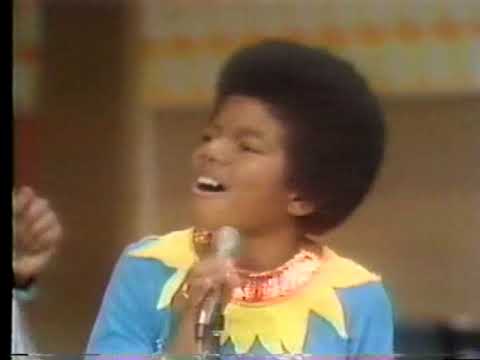
Michael’s lead is the real shock, especially when you remember he is around 11 at the time. He does not just belt; he phrases like an older soul singer, leaning on syllables and flipping from chest voice into a youthful rasp when he begs for “one more chance.” Jermaine and Jackie’s lines, plus the full group’s interjections, turn the chorus into a kind of pleading gang vocal, a crowd of brothers trying to talk one girl round.
The rhythm section deserve their own spotlight. Wilton Felder’s bass part practically sings its own counter-melody, darting around the chord changes, while Gene Pello’s drumming locks into that bouncy Motown pocket. The groove has the swing of late-60s R&B, but it is tighter, prefiguring the funk and disco rhythms that would dominate the next decade. Critics at Motown and elsewhere have often singled out that chorus progression as one of the most satisfying in pop; Pitchfork even highlighted it as a textbook example of how harmony can feel like a rollercoaster drop.
Vocally and structurally, the track is built like a miniature three-act play: intro riff; verse where the mistake is admitted; explosive chorus; second verse that escalates the desperation; and a bridge that strips things back to chants and syllables before the final plea. According to Classic Motown’s own retrospective, the songwriting team originally aimed the piece at Gladys Knight, which helps explain why the melody has such grown-up curves; the shock is that a tween kid rides those curves so naturally.
Key takeaways
- Classic Motown fusion of pop, soul, and early funk, with a bass line as memorable as any vocal hook.
- High-energy arrangement masking a story of romantic error, guilt, and longing.
- Michael Jackson’s vocal gives the lyric surprising gravity for such a young performer.
- The song’s structure and chord movement have made it a go-to template for later R&B and boy-band singles.
Soundtrack & promo uses
Nativity! (2009) - feature film - largely non-diegetic. The original Motown recording is licensed for the family Christmas comedy and appears on the official Nativity! soundtrack album, where it sits among other retro pop cuts. The song’s bright groove reinforces the film’s blend of school chaos and showbiz aspiration, and it functions as a familiar Motown “hook” for adult viewers while the children on screen run riot.
Guardians of the Galaxy (2014) - feature film - diegetic/mixtape cue. The track appears on Peter Quill’s in-universe cassette, Awesome Mix Vol. 1, and plays over the closing stretch and into the credits while Baby Groot dances in his plant pot. It works as a tiny character beat for Groot, a callback to Quill’s mother’s music, and a final sugar rush before the Marvel logos roll.
Sensei Kunshu (2018) - live-action film (Japan) - theme song (cover). A Japanese-language cover by Twice is used as the theme for this romantic comedy, pulling the melody into a completely different teen context while preserving the original’s buoyant groove and storyline of young love in trouble.
Now and Then (1995) - feature film - non-diegetic. The original Jackson 5 recording appears on the official Columbia Records soundtrack album Now and Then - Music From The Motion Picture, where it is listed as track 3 (2:53). It plays as part of the film’s early-70s pop tapestry, sitting alongside “Sugar, Sugar,” “Knock Three Times,” and other period hits, helping to anchor the girls’ coming-of-age story in a very specific radio world.
Television & stage spin-offs - various covers and medleys pop up in shows like Victorious and in stage tours such as Glee-related productions, where choirs and vocal groups reframe the track as an a cappella showpiece. Over time, it has become a kind of shorthand for “youthful Motown joy plus a hint of drama.”
Creation History
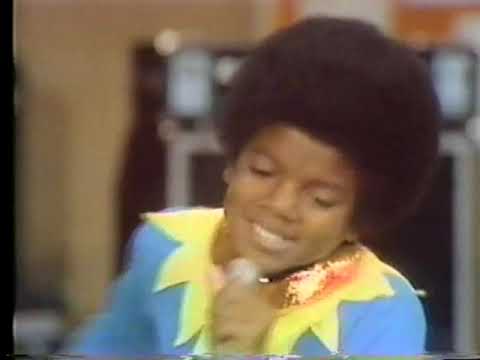
The story behind the single is almost as intricate as the record itself. Motown had just signed the Jackson brothers after their earlier regional single “Big Boy,” and Berry Gordy wanted an unstoppable calling card. The Corporation team initially wrote the song under the working title “I Wanna Be Free” with Gladys Knight and then Diana Ross in mind, but Gordy redirected it to his new act. They cut the track in Los Angeles at the Sound Factory, layering multiple keyboard parts, guitars, and a hyper-melodic bass line. Michael’s lead was recorded in sections, with the producers coaching him through phrasing that had been conceived for an adult soul singer. The label rolled out an aggressive promotion campaign, including appearances on The Hollywood Palace and The Ed Sullivan Show, and the track shot to number one in early 1970, effectively launching both the group and Michael as long-term forces in pop.
Song Meaning and Annotations
Plot
The narrative is simple enough to sketch in one breath. A boy had a girlfriend he did not fully appreciate. Surrounded by “pretty faces,” he kept her at arm’s length, treating her as someone who did not quite fit into his social world. Only when another guy notices her, “picks her from the bunch,” and she happily moves on does the narrator wake up. Suddenly he is haunted by sleepless nights, following her around town, and begging her for one more chance. The story stops where the begging starts; we never learn whether she takes him back.
Song Meaning
Underneath the sugar-coated surface, this is a song about hindsight and accountability. The narrator is not railing against the rival boy, and he is not blaming the girl; he is blaming his own blindness. The key emotional pivot is that new vision: seeing her “in his arms” is what makes the loss real. That moment turns the song from confident, almost cocky verse lines into a pleading, near-panicked chorus that keeps circling the same phrase: he wants her back and he knows he has no right to demand it.
The mood is doubly layered. On one level, the track is bright and fast, almost party-like, which is why it works so well in films. On another, the lyric is all about regret. There is a long tradition in Motown and soul of pairing desperate subject matter with danceable grooves, and this is one of the clearest examples. The tension between joy and guilt is what keeps the record from feeling like simple bubblegum pop; you can dance to it while singing about your worst romantic mistake.
Annotations
“When I had you to myself, I did not want you around”
The opening line sketches the whole problem in miniature. The narrator admits he pushed her away when he had the chance to treat her well. Some fan readings lean into the idea that his friends saw her as a misfit, that she did not fit his peer group, which adds a social-pressure layer: he chose status over affection. Whether or not we take that literally, the line makes it clear he now sees that choice as foolish.
“Someone picked you from the bunch, one glance was all it took”
Here, the lyric quietly contrasts the narrator’s hesitation with the new guy’s confidence. One look is enough for the rival to recognise her value, where the original boyfriend only understood after she had gone. That is why “it’s much too late” in his mind; the emotional bond has moved on, even if he is still living in the past.
“Oh baby, give me one more chance … Won’t you please let me back in your heart”
The chorus turns his private realisation into direct pleading. There is a slightly selfish streak in the way he asks her to “let” him back in, framing reconciliation as something he needs in order to fix his mistake. At the same time, the choice of “heart” rather than “life” keeps it rooted in teenage terms; it is not about marriage or long-term logistics, but about that immediate sense of being shut out.
Repetition does a lot of the heavy lifting. The constant chant of “I want you back” is both catchy and obsessive. A useful way to hear it is as the soundtrack of a mind that cannot move on: he is replaying the same thought until it almost becomes nonsense syllables (“na na na na”) near the end. That obsessive quality is what makes the track such a good fit for scenes of hyperactive kids in Nativity! or for Baby Groot’s dance in Guardians of the Galaxy - it captures energy verging on desperation.
Deeper analysis: sound, story, and symbols
Genre blend and rhythmic drive
Stylistically, the track sits at a crossroads. It is often labelled pop and soul, but the rhythm section pushes toward early funk: syncopated bass figures, drum accents on unexpected beats, and that irrepressible tambourine. The tempo hovers around the high 90s BPM range, fast enough to feel urgent but not so fast that the groove loses its swing. This blend is part of what makes the single so reusable across media; it works equally well as dance-floor filler, montage fuel, or a show-choir showcase.
Emotional arc in the arrangement
The song’s emotional arc is built into its arrangement. The verses are relatively sparse by Motown standards, leaving room for the lead vocal to confess. The choruses hit with full strings and group vocals, almost like a Greek chorus of brothers backing up the plea. The bridge, with its nonsense syllables and call-and-response, feels like a kind of emotional overload: language breaks down, the kid has said everything he can say, and he is just circling the same feeling.
Idioms and phrases
Several phrases carry more weight than they first appear to. “Blind to let you go” taps into a long history of blindness as metaphor for ignorance or emotional immaturity. “Every street you walk on, I leave tear stains on the ground” is cartoonish if you take it literally, but as a pop-image it sells that teenage drama where every corner of your town reminds you of someone. It is melodramatic, but that melodrama is part of the fun; films like Nativity! lean into exactly that kind of oversized feeling.
Historical and cultural touchpoints
Historically, “I Want You Back” arrives just after the height of the civil rights era. A group of Black brothers from Gary, Indiana, fronted by a kid, suddenly dominate mainstream American pop TV shows. The song’s success helped open up space for Black youth acts in spaces that had previously been gatekept. Later critics have pointed out how a record like this, played on family television, quietly shifted who could be the face of “family entertainment.” According to Rolling Stone, the track has since featured in multiple “greatest songs” lists, and it still anchors discussions about the best boy-band singles.
Production details
The studio team uses classic Motown tricks: double-tracked keyboards, subtly overdriven bass, and tight horn and string voicings that never obscure the beat. The Corporation structure the lyric so that the biggest hook lands as early as possible, then keep adding tiny variations - extra ad-libs, different backing vocal answers, a slightly more urgent delivery each chorus. That attention to incremental change is part of why the track rarely feels static, even though it is built on a very repetitive groove.
Technical Information
- Artist: The Jackson 5
- Featured: Lead vocal focus on Michael Jackson, with Jermaine and Jackie sharing key lines
- Composer: The Corporation (Berry Gordy, Freddie Perren, Alphonzo “Fonce” Mizell, Deke Richards)
- Producer: The Corporation
- Release Date: October 7, 1969
- Genre: Pop, soul, early funk
- Instruments: Lead and rhythm guitars, electric bass, piano, additional keyboards, drums, percussion (including tambourine), strings
- Label: Motown Records
- Mood: Upbeat, yearning, restless
- Length: Approximately 2:59
- Track #: Originally track 1 on Diana Ross Presents The Jackson 5; later included on compilations such as Soulsation!
- Language: English
- Album: Diana Ross Presents The Jackson 5 (original studio album); Soulsation! (archival box set)
- Music style: Motown pop-soul with funk-inflected rhythm section and group-vocal hooks
- Poetic meter: Mainly iambic feet in short lines, heavily syncopated against the backbeat
Questions and Answers
- Who produced “I Want You Back” by the Jackson 5?
- The track was produced by The Corporation, Motown’s in-house team of Berry Gordy, Freddie Perren, Alphonzo “Fonce” Mizell, and Deke Richards. They wrote, arranged, and supervised the recording, effectively designing the sound that would define the group’s early run of hits.
- When was “I Want You Back” first released?
- Motown issued the single on October 7, 1969 in the United States, backed with a version of “Who’s Lovin’ You.” It began climbing the charts later that year and reached number one on the Billboard Hot 100 in early 1970.
- Who wrote “I Want You Back”?
- The song is credited to The Corporation: Berry Gordy, Freddie Perren, Alphonzo “Fonce” Mizell, and Deke Richards. They crafted both music and lyric, and their names appear on a long list of Jackson 5 classics from the same era.
- How does the song function in Nativity!?
- In Nativity!, the original Motown recording is used as one of several needle-dropped pop songs that colour the school world around the children’s play. It appears on the official soundtrack album alongside “Santa Claus Is Coming to Town,” giving the film a shot of late-60s soul-pop that aligns with its playful, slightly chaotic tone.
- Why does the music sound so joyful when the story is about regret?
- This contrast is a classic Motown move. The label often paired upbeat, danceable arrangements with lyrics about heartbreak or anxiety. Here, the bouncy piano riff and tight rhythm section sell the record as a party track, while the words tell a story of a boy who knows he has made a serious mistake. That tension makes the song memorable and gives performers space to lean either into the fun or the hurt, depending on context.
- What makes Michael Jackson’s performance on this track stand out?
- He combines technical control with a kind of conversational phrasing that you normally hear from older soul singers. Listen to how he leans into certain consonants, or how he slightly delays phrases in the chorus to ride the groove. Critics have often pointed out that this single announced him not just as a child star, but as a serious vocalist.
- Which films and TV shows beyond Nativity! have made notable use of the song?
- Beyond Nativity!, the track is especially famous for its use in Guardians of the Galaxy, where it plays as part of Peter Quill’s beloved mixtape during the closing stretch and Baby Groot’s dance. It has also featured in promotional materials and trailers for various romantic comedies and in shows like Victorious, where it becomes an ensemble performance piece.
- What are some notable cover versions?
- There are dozens. Cleopatra’s late-1990s version turned it into a slick R&B-pop single in its own right. The Victorious cast recorded a bubblegum cover for the Nickelodeon series. Twice’s Japanese-language version served as a film theme, while Taylor Swift has performed it live in a stripped-down acoustic arrangement. According to Rolling Stone’s coverage of boy-band history, it still sits near the top when people rank group pop songs.
- How does the song fit into the Jackson 5’s wider story?
- This is the ignition point. It became their first Motown single and first number-one hit, followed in quick succession by “ABC,” “The Love You Save,” and “I’ll Be There.” Those four consecutive chart-toppers established them as a phenomenon and laid the groundwork for Michael’s later solo career. According to NME magazine’s reporting on later compilation projects, Motown even built vault releases around outtakes from this era, a sign of how central the material remains.
- Why is the bass line so talked about?
- The bass does more than mark the root notes; it plays a melodic, almost vocal role, sliding and jumping around the changes. That gives the track a sense of forward motion even when the chords repeat. Musicians often cite it as a prime example of how a bass line can be hooky in its own right without crowding the singer.
- How did critics receive the song at the time, and how is it seen now?
- Contemporary trade reviews praised the energy and the “new soul kings” Motown was putting forward. In later years, outlets like Pitchfork and The Daily Telegraph have described it as one of the defining pop records of the late 60s, while Rolling Stone has repeatedly listed it among the greatest songs and debut singles ever recorded. In more recent boy-band surveys, it regularly appears near the top of all-time rankings.
- Does the lyric resolve, or is it intentionally left open?
- We never get an answer to the narrator’s plea, and that is part of the point. The song captures the moment of dawning regret, not the aftermath. That open ending is one reason it remains so adaptable in film and television; storytellers can drop it under scenes of longing, humour, or determined pursuit without having to commit to whether the couple actually reunite.
Awards and Chart Positions
The single’s commercial performance matched the ambition Motown had for the group. It reached number one on the US Billboard Hot 100 and the soul singles chart, topped US Cash Box, and went top ten or better in markets such as Canada and Ireland. Later digital-era resurgences - often tied to film placements or renewed interest in Michael Jackson - pushed it back into charts in the late 2000s. In year-end tallies for 1970, it appeared among the top US and UK singles, underlining just how dominant it was across that period.
Critically and institutionally, the track has gathered honours over the decades. It has been inducted into the Grammy Hall of Fame, listed among the Rock and Roll Hall of Fame’s “Songs that Shaped Rock and Roll,” and featured repeatedly in Rolling Stone’s major rankings, including their lists of the 500 greatest songs, the 100 greatest pop songs since 1963, and the 100 greatest debut singles. Pitchfork, in a large-scale 1960s survey, placed it near the very top of that decade’s tracks, highlighting its harmonic inventiveness. According to one Classic Motown retrospective, it has also racked up multi-platinum certification in the UK, reflecting its long-term sales and streaming life.
| Chart | Territory | Peak position | Notes |
|---|---|---|---|
| Billboard Hot 100 | United States | 1 | First number-one single for the group; part of a run of four consecutive US chart-toppers. |
| Billboard Best Selling Soul Singles | United States | 1 | Dominated the soul/R&B chart for multiple weeks. |
| RPM Top Singles | Canada | 2 | One of the biggest international hits of early 1970 for the band. |
| Official Singles Chart | United Kingdom | Top 10 (year-end top 40) | Strong UK performance, later boosted again by catalogue reissues. |
| Various download charts | Multiple territories | Top 50 | Reappeared in 2009 digital charts during renewed interest in Michael Jackson and in connection with film uses. |
How to Sing I Want You Back
If you want to sing this track in a way that works for both the record and something like a Nativity!-style school performance, you need groove, breath control, and a feel for that mix of joy and urgency.
- Key and range: Most charts place the original studio recording in A-flat major, with teaching resources noting a practical range that sits comfortably for a young tenor or high alto. For many singers, transposing down a tone or two can keep the top notes comfortable while preserving the feel.
- Tempo: Educational charts and performance tools usually mark the tempo around 97–100 BPM. It should feel buoyant, not frantic; think “quick dance floor” rather than “sprint.”
- Common issues: Singers often rush the verses, run out of breath in the long chorus lines, or over-sing the ad-libs, losing the bounce of the rhythm section.
Step-by-step practice guide
- Lock in the tempo. Practice with a metronome at roughly 98 BPM, clapping on beats 2 and 4. Only once that feels natural should you start adding the melody on simple syllables like “da” or “la.” The goal is to keep your phrasing sitting inside the groove, not racing ahead of it.
- Shape the diction. The lyric is conversational, with plenty of consonants that can trip you up. Work line by line, speaking the words in rhythm before singing them. Pay attention to “t” and “d” sounds, which should be clear but not explosive, and keep vowels short and focused so they do not smear across the beat.
- Plan your breathing. Mark breaths before big phrases like the main chorus line so you do not gasp in the middle. In the studio original, the lead tends to take quick “sip” breaths just before phrases rather than long pauses; imitate that by practising short, silent inhales that do not break the groove.
- Work on flow and accent. Once words and breathing are in place, start leaning into the natural accents of the melody. The strongest stresses land slightly after the beat, giving that Motown lilt. Record yourself and listen for spots where you are punching everything equally; then experiment with lighter touches on less important syllables so the big notes pop.
- Add ensemble or doubles. If you have backing singers - a choir in a Nativity!-style show, for example - build the group parts first on the “I want you back” response lines. Keep their phrasing tight and slightly shorter than the lead’s so they do not blur together. For a solo cover, try doubling the chorus an octave below or above in the studio to mimic that thickness.
- Microphone technique. On stage, back off the mic slightly on the loudest shouts (“Baby!”) and move closer for the more confessional verse lines. This helps you keep dynamics without straining your voice.
- Avoid common pitfalls. Do not treat the track as a pure belt showcase; if you shout every line, you lose the story. Also, resist the temptation to cram in too many extra runs. The original works because the ad-libs are carefully placed; choose a few moments - late-chorus cries, the outro - and keep the rest clean.
For practice material, a dedicated backing track in the original key can be helpful; some services provide versions where you can mute the lead vocal and slow the tempo slightly while you get the feel into your body.
Additional Info
Behind the scenes, the path to this single ran through several different artists. Early drafts were pitched to Gladys Knight and then considered for Diana Ross before Berry Gordy decided to use it to launch his new family group. In a later interview with The Guardian, members of the band recalled how astonishing it felt to watch Michael carry such a demanding vocal at such a young age, and how everything changed after their appearance on The Ed Sullivan Show. That performance, which ended with “I Want You Back,” turned the Jacksons from a buzzed-about act into a mass-market sensation.
The song’s afterlife kept expanding. Motown constructed archival releases like I Want You Back! Unreleased Masters around period material, an idea covered in NME magazine’s reporting on the set. Streaming-era playlists have further cemented it as the default entry point for new fans. According to Rolling Stone’s surveys of boy-band history, it still functions as a benchmark: later groups are often praised when their debut singles capture a fraction of the immediacy that this one had in 1969.
The track has also become a teaching tool. Music education charities and school programs regularly use it to demonstrate classic Motown song form and groove, breaking down its intro-verse-chorus-bridge structure and its tight rhythm section writing. That makes it an especially apt choice for a film like Nativity!, where children learn to perform and find confidence on stage; even when the kids on screen are not literally singing this track, its presence on the soundtrack binds the fictional classroom to a wider pop tradition of young voices making big, confident noise.
Key Contributors
| Entity | Type | Relation (S–V–O) |
|---|---|---|
| Michael Jackson | Person | Michael Jackson sings lead vocals on the studio recording. |
| Jermaine Jackson | Person | Jermaine Jackson shares lead passages and sings backing vocals. |
| Jackie Jackson | Person | Jackie Jackson provides co-lead lines and group responses. |
| Tito Jackson | Person | Tito Jackson contributes backing vocals within the group blend. |
| Marlon Jackson | Person | Marlon Jackson supports the group vocal arrangement. |
| Berry Gordy | Person | Berry Gordy co-writes and co-produces the song as part of The Corporation. |
| Freddie Perren | Person | Freddie Perren co-writes, co-produces, and plays piano on the track. |
| Alphonzo “Fonce” Mizell | Person | Fonce Mizell co-writes, co-produces, and contributes keyboard parts. |
| Deke Richards | Person | Deke Richards co-writes, co-produces, and helps shape the arrangement. |
| Wilton Felder | Person | Wilton Felder plays the prominent electric bass line. |
| Gene Pello | Person | Gene Pello plays drums, driving the track’s groove. |
| Clarence McDonald | Person | Clarence McDonald contributes additional keyboard textures. |
| David T. Walker | Person | David T. Walker plays rhythm guitar parts on the recording. |
| Don Peake | Person | Don Peake adds guitar lines that punctuate the arrangement. |
| Louis Shelton | Person | Louis Shelton provides further guitar work in the studio ensemble. |
| Sandra Crouch | Person | Sandra Crouch plays tambourine, reinforcing the backbeat. |
| Motown Records | Organization | Motown Records signs the Jackson 5 and releases the single. |
| Diana Ross Presents The Jackson 5 | Work (Album) | The album serves as the studio home for the song. |
| Soulsation! | Work (Compilation) | The box set later anthologises the track among archival material. |
| Nativity! | Work (Film) | The film incorporates the original recording on its soundtrack. |
| Guardians of the Galaxy | Work (Film) | The film uses the song as part of its in-world mixtape and credits. |
| The Ed Sullivan Show | Venue/Program | The television program showcases a defining early performance of the song. |
Sources: Classic Motown feature on “I Want You Back”; Wikipedia entries on the song, the Jackson 5, and related compilations; Radio Times Nativity! soundtrack guide; Marvel and film soundtrack listings; Rolling Stone and Pitchfork critical surveys; NME coverage of Jackson 5 archive releases.
A-Z Lyrics Universe
Cynthia Erivo Popular
Ariana Grande Horsepower
Post Malone Ain't No Love in Oklahoma
Luke Combs Good Riddance (Time of Your Life)
Green Day Bye Bye Bye
*NSYNC You're the One That I Wan
John Travolta & Olivia Newton-John I Always Wanted a Brother
Braelyn Rankins, Theo Somolu, Kelvin Harrison Jr. and Aaron Pierre The Power of Love
Frankie Goes to Hollywood Beyond
Auli’i Cravalho feat. Rachel House MORE ›