Somewhere Over The Rainbow Lyrics – Harold Arlen
Soundtrack Album: The Wizard Of Oz
Somewhere over the rainbow
Way up high
There's a land that I heard of
Once in a lullaby.
Somewhere over the rainbow
Skies are blue
And the dreams that you dare to dream
Really do come true.
Someday I'll wish upon a star
And wake up where the clouds are far
Behind me.
Where troubles melt like lemon drops
Away above the chimney tops
That's where you'll find me.
Somewhere over the rainbow
Bluebirds fly
Birds fly over the rainbow
Why then, oh why can't I?
If happy little bluebirds fly
Beyond the rainbow
Why, oh why can't I?
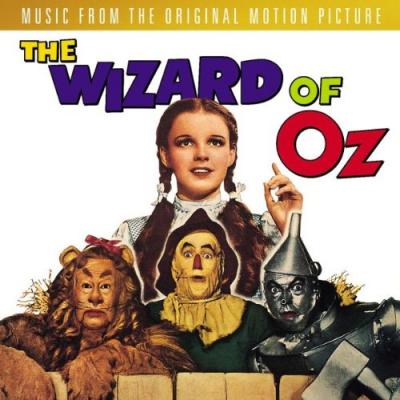
The Wizard Of Oz
Soundtrack Lyrics for Movie, 1995
Track Listing
Harold Arlen
Harold Arlen
Harold Arlen
Harold Arlen
Harold Arlen
Harold Arlen
Harold Arlen
Harold Arlen
Harold Arlen
Harold Arlen
Harold Arlen
Harold Arlen
Harold Arlen
Harold Arlen
Harold Arlen
Harold Arlen
Song Overview
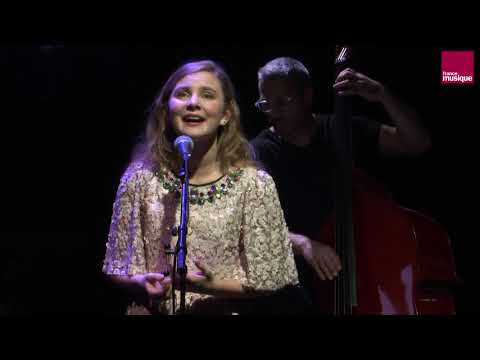
“Over the Rainbow” wafts into the Technicolor sky just minutes into The Wizard of Oz (1939), a plaintive dream sung by sixteen-year-old Judy Garland on her Kansas porch. Composer Harold Arlen and lyricist Yip Harburg wrapped a simple octave leap in velvet orchestration, and the song promptly claimed the Academy Award for Best Original Song at the 12th Oscars in 1940.
Time kept gilding its legacy. It later perched at No. 1 on the American Film Institute’s list of greatest movie songs and topped the RIAA/NEA poll of the 20th century’s essential tunes.
Song Credits
- Featured: —
- Producer: Arthur Freed (film); Bradley Flanagan & Marilee Bradford (2001 compilation)
- Composer: Harold Arlen
- Lyricist: E. Y. “Yip” Harburg
- Conductor / Arranger: George Stoll & Herbert Stothart; orchestration by Murray Cutter
- Release Date: September 1, 1939
- Genre: Traditional pop ballad / Show tune
- Instruments: Voice, strings, woodwinds, harp, subtle brass
- Label: Decca Records
- Mood: Wistful, hopeful
- Length: 2 min 48 s
- Track #: 1 on Over the Rainbow – The Very Best of Judy Garland (2001)
- Language: English
- Album: The Wizard of Oz (Original Motion Picture Soundtrack) (1939)
- Music style: 32-bar AABA torch-ballad
- Poetic meter: Predominantly iambic
- Copyrights ©: 1939 Metro-Goldwyn-Mayer Inc.; renewal 1966
Song Meaning and Annotations
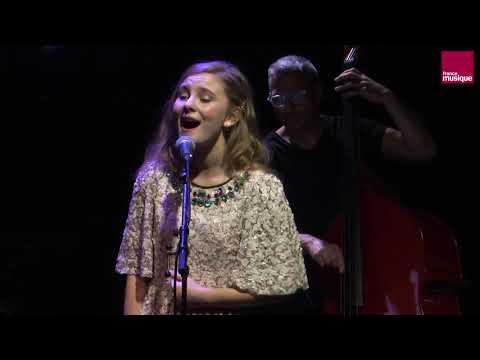
The verses trace a soft ascending arc, mirroring Dorothy’s gaze beyond dusty cornfields toward technicolor promise. A lilting waltz-like sway (3/4 sneaks beneath the 4/4 phrasing) nudges the listener skyward, while Garland’s pure timbre suggests childhood yet tinged with weariness—America’s mood on the eve of World War II.
Harburg, son of Russian-Jewish immigrants, folded his own yearning for safety into Dorothy’s dream. In Depression-era parlance, over the rainbow became shorthand for any place untouched by breadlines or looming fascism.
Verse 1
Somewhere over the rainbow / Way up high
The octave leap on “some-where” feels like a single brave step out of black-and-white Kansas, stretching vocal and emotional reach at once.
Verse 2
And the dreams that you dare to dream / Really do come true
An almost nursery-rhyme reassurance—yet “dare to dream” hints that hope itself is an act of courage during grim times.
Bridge
Where troubles melt like lemon drops
Harburg swaps political dread for candy metaphors, shrinking adult fears to child-sized confection.
Chorus (Verse 3 refrain)
Why, then, oh why can’t I?
Dorothy’s question is rhetorical but piercing; the unresolved “I?” leaves the chord hanging on a dominant, suspending the answer till Oz.
Similar Songs
- “What a Wonderful World” – Louis Armstrong (1967) The same wide-eyed optimism animates both tracks, though Armstrong’s gravelly baritone contrasts Garland’s crystal clarity. Each song peers past present tension—racial unrest for Louis, global conflict for Judy—and plants hope in nature’s palette (“skies of blue,” “rainbow”). Instrumentally, lush strings bind them, but Armstrong’s New Orleans roots add swing phrasing absent from the Oz ballad. Listeners often pair them in playlists, and Israel Kamakawiwoʻole fused them outright into his 1993 medley, proving their thematic kinship.
- “Somewhere” – Barbra Streisand (from West Side Story, 1961) Bernstein’s soaring melody and Sondheim’s plea for “a place for us” echo Dorothy’s yearning for a land “once in a lullaby.” Both songs stop their respective narratives cold—time pauses to let characters day-dream. Harmonically, “Somewhere” ventures into jazz-tinged dissonance, whereas “Over the Rainbow” keeps to diatonic warmth, yet each ends unresolved, underscoring longing.
- “Dream a Little Dream of Me” – Ella Fitzgerald & Louis Armstrong (1950 revival) Night-time imagery, lullaby cadence, and gentle swing connect this standard to Garland’s dream song. Where “Over the Rainbow” seeks another world, “Dream” invites that world to drift down in sleep. Both share an easy tempo and orchestral cushion, making them staples on “standards” radio rotations.
Questions and Answers
- Has the song ever charted under Judy Garland’s own name?
- Pre-Billboard Hot 100 era charts show the film soundtrack topping U.S. sheet-music sales in 1940, but later cover versions (The Demensions, Patti LaBelle & the Bluebelles) cracked the Hot 100 and R&B lists.
- Which recording is archived by the Library of Congress?
- Garland’s 1939 Decca 78-rpm release was inducted into the National Recording Registry in 2016, honoring its cultural significance.
- Why was it almost cut from the film?
- Studio executives feared a “sad slow song” would stall pacing and felt a teenager singing in a barnyard looked “un-ladylike.” Happily, cooler heads prevailed after preview audiences adored the scene.
- What is the most commercially successful cover?
- Israel Kamakawiwoʻole’s ukulele-and-vocal take reached No. 1 in Germany for twelve non-consecutive weeks in 2010, went five-times-gold there, and has sold over four million downloads in the U.S.
- Did a modern pop star revive it at the Oscars?
- Yes – Ariana Grande opened the 97th Academy Awards on March 2 2025 with a crystalline rendition, segueing into “Home” from The Wiz and “Defying Gravity.”
Awards and Chart Positions
- Academy Award: Best Original Song (awarded February 29 1940).
- Grammy Hall of Fame: Inducted 1981.
- AFI 100 Years…100 Songs: Ranked No. 1 (2004).
- RIAA/NEA Songs of the Century: Ranked No. 1 (2001).
- Notable charting covers: The Demensions – #16 Billboard Hot 100 (1960); Patti LaBelle & the Bluebelles – #20 US R&B (1966); Israel Kamakawiwoʻole – #1 Germany, #4 France, Platinum U.S. digital sales (2010-11).
Fan and Media Reactions
“I’m 70 and still tear up at Judy’s final high note—proof some songs outrun time itself.” – YouTube user @VinylDad
“Bruddah Iz could make clouds part; his version feels like sitting on warm sand at dusk.” – Comment on Israel Kamakawiwoʻole official video
“2025 Oscars gave me goose-bumps—Ariana hit that octave leap and the Dolby went silent.” – @FilmCritGirl on X
“Harburg called it ‘a message for the world’—listening today, I finally get what he meant.” – Podcast reviewer Lee Chan
“Every pride parade I’ve marched ends with this song; it’s our unofficial national anthem.” – Activist Marco L.
A-Z Lyrics Universe
Cynthia Erivo Popular
Ariana Grande Horsepower
Post Malone Ain't No Love in Oklahoma
Luke Combs Good Riddance (Time of Your Life)
Green Day Bye Bye Bye
*NSYNC You're the One That I Wan
John Travolta & Olivia Newton-John I Always Wanted a Brother
Braelyn Rankins, Theo Somolu, Kelvin Harrison Jr. and Aaron Pierre The Power of Love
Frankie Goes to Hollywood Beyond
Auli’i Cravalho feat. Rachel House MORE ›