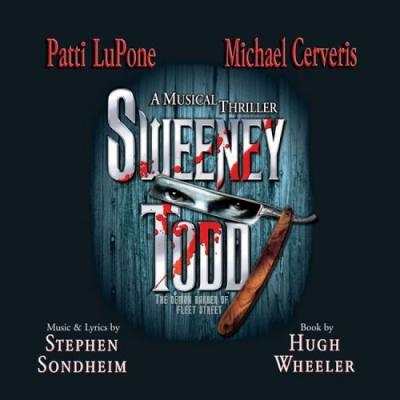
"Sweeney Todd" Soundtrack Lyrics
Musical • 2005
Track Listing
“Sweeney Todd: The Demon Barber of Fleet Street (2005 Broadway Cast Recording)” – Album Guide to Tracks and Key Scenes
Overview
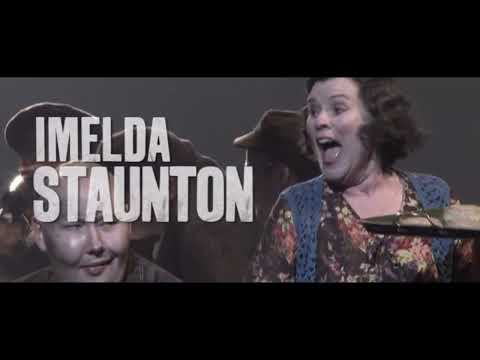
What happens when a grand guignol epic is squeezed into a chamber of ten actor–musicians? The 2005 Broadway revival of Sweeney Todd turns scale into intimacy — an asylum-framed memory play where performers sing and play the score in plain sight, and the cast album bottles that unnerving clarity.
Michael Cerveris (Sweeney) and Patti LuPone (Mrs. Lovett) headline a company that becomes its own orchestra: cello for Johanna’s captivity, trumpet for Turpin’s pomp, tuba for Lovett’s earthy pragmatism. Sarah Travis’s lean orchestrations — which won the Tony — peel Sondheim’s music to sinew and nerve. The result? A recording that sounds like confession: razor-bright, breath-close, and mercilessly focused on text.
Genres & themes in phases: music-hall gallows humor — deflection and salesmanship; lyrical waltzes — memory and delusion; patter and counterpoint — predation as clockwork; percussive minimalism — blood as rhythm; hymn-like finales — mercy vs. mania.
How It Was Made
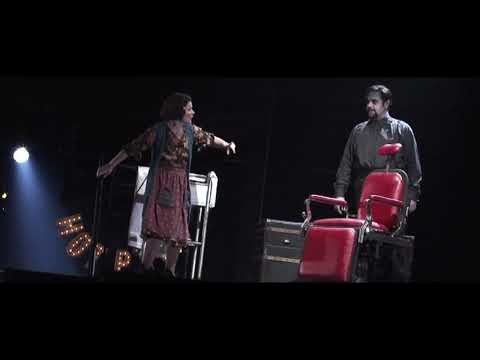
Director John Doyle imports his Watermill Theatre concept to Broadway: a stark asylum setting where characters play their own instruments. Sarah Travis reshapes the full orchestration into a chamber web tailored to the cast’s doubles (e.g., Cerveris on guitar, LuPone on tuba/glockenspiel). The Broadway production opened November 3, 2005 at the Eugene O’Neill Theatre and won Tonys for Doyle (Direction) and Travis (Orchestrations).
The Nonesuch Records 2-CD cast album (released January 2006) captures the company live-in-spirit with close-mic detail — the string scrape before a cut, a wheeze of bellows in patter — but keeps the stage concept legible in audio. It’s not simply another Sweeney; it’s the “actors-as-orchestra” document.
Tracks & Scenes
“The Ballad of Sweeney Todd”
- Where it plays:
- Company-as-chorus summons the tale; instruments materialize like weapons. In Doyle’s staging, the choristers feel like inmates or inner voices, driving us straight into the memory loop.
- Why it matters:
- Establishes the ritual: we play what we sing, we relive what we play — fate as a pit band.
“No Place Like London”
- Where it plays:
- Anthony’s hopeful line swims against Sweeney’s acid recitative. The chamber palette spotlights the lyric’s bite — less brass blast, more scraped string and seeing-eye contact.
- Why it matters:
- Colliding worldviews, etched by timbre: innocence vs. PTSD in two instrumental colors.
“The Worst Pies in London”
- Where it plays:
- Lovett’s comic patter over clanking hand percussion and tuba puffs (LuPone’s own). The physicality of the actor-band gag turns business (rolling, pounding) into underscoring.
- Why it matters:
- Character in orchestration: her tone is her instrument — brassy, blunt, resourceful.
“My Friends”
- Where it plays:
- Razor lullaby; Cerveris’s guitar and glassy strings float a private wedding vow to steel as Lovett layers counterfeit comfort.
- Why it matters:
- Love song to a weapon; the intimacy of the banding makes the delusion tender and terrifying.
“Green Finch and Linnet Bird”
- Where it plays:
- Johanna’s caged aria suspended on the company’s chamber strings — with Lauren Molina literally cradling a cello, threading melody and metaphor.
- Why it matters:
- Image and sound fuse: a girl and her instrument, both confined, both singing anyway.
“Pirelli’s Miracle Elixir” → “The Contest”
- Where it plays:
- Busker hustle to barber-duel; accordion and drum taps become a street band that can turn on a menace dime.
- Why it matters:
- Shows the production’s party trick — comedy scored by the characters themselves, until the mask slips.
“Kiss Me” (Quartet) / “Ladies in Their Sensitivities”
- Where it plays:
- Clockwork farce cross-cut between lovers’ plotting and Beadle’s etiquette lesson, each line riding its own instrumental strand.
- Why it matters:
- Sondheim’s counterpoint made literal — you can hear who’s lying by what they’re playing.
“Epiphany”
- Where it plays:
- The act-one break — Sweeney detonates. With no pit to hide in, the banded company becomes a siren, harmony tightening like a tourniquet.
- Why it matters:
- The concept’s payoff: rage with nowhere to go but through the players.
“A Little Priest”
- Where it plays:
- Vaudeville blackout — cannibal puns as soft-shoe — scored by onstage winds and rhythmic clinks from the pie shop’s “kitchen.”
- Why it matters:
- Horror rebranded as enterprise; the grins are syncopated.
“By the Sea”
- Where it plays:
- Lovett’s seaside fantasy floats on sugary keys and reeds, the band literally brightening as Sweeney dead-eyes the middle distance.
- Why it matters:
- Arrangements do the eye-roll for him — her dream sparkles; his line never warms.
“Not While I’m Around”
- Where it plays:
- Toby’s oath, quiet enough to hear fingertips on strings; the lullaby feels like a warning whispered under covers.
- Why it matters:
- Small band = big stakes. Safety sounds fragile — because it is.
Finale: “The Ballad of Sweeney Todd” (reprise)
- Where it plays:
- The loop resets; instruments return to their racks. The asylum lights remain.
- Why it matters:
- The album closes the circle — crimes as chorus, chorus as curse.
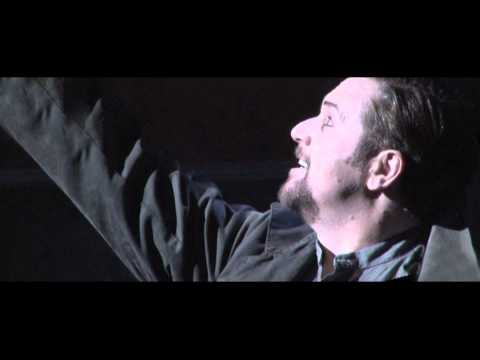
Trailer note: Stage marketing often used generic Sweeney Todd trailers; for the 2005 concept, press clips highlighted the actor–musician staging and close-up intensity rather than splashy period spectacle.
Notes & Trivia
- Actors with instruments: Cerveris (guitar), LuPone (tuba/glockenspiel), Molina (cello), Gemignani (piano/trumpet), Magnuson (cello/piano), and more — the whole company doubles as band.
- Tony wins (2006): Best Direction of a Musical (John Doyle) and Best Orchestrations (Sarah Travis).
- Album label: Nonesuch Records; 2-CD set with close-miked detail.
- Run: Opened Nov 3, 2005; 349 performances at the Eugene O’Neill Theatre.
- Concept roots: Doyle’s actor-musician approach began at the Watermill Theatre (UK) in 2004 before transferring to Broadway.
Music–Story Links
Because the players are the pit, orchestration is psychology: Johanna’s cello line makes her cage audible; Turpin’s trumpet toots piety into pomposity; Lovett’s tuba grounds every scheme in grease and profit. When Sweeney vows to his razors, the guitar in his own hands turns romance into self-accompanied obsession. In the counterpoint finales, the band’s lines knot like London’s alleys — you can hear the trap tighten.
Reception & Quotes
The revival split traditionalists and thrilled minimalists; most critics agreed the album preserves a stark, dangerous clarity — text first, blood implied.
“A nearly surgical focus… Doyle’s staging strips away comfort and leaves the nerves.” Variety (revival review)
“LuPone tuba in hand; Cerveris’s entrance is pure voltage.” New York theatre press
“Tony-winning orchestrations turn a giant into a chamber horror.” Awards roll-up
Interesting Facts
- Asylum frame: The revival plays as Toby’s looping memory in a mental ward — the company’s uniformity feeds the nightmare.
- Budget smarts: At ~$3.5M, the show recouped in nineteen weeks — intimacy sold.
- Cast-as-band quirks: LuPone famously played tuba; the tuba sound becomes Lovett’s signature timbre.
- Lineage: The production’s UK origins at the Watermill led to a West End transfer before Broadway.
- Album structure: The Nonesuch set follows stage flow without padding, emphasizing dialogue-as-music.
Technical Info
- Title: Sweeney Todd: The Demon Barber of Fleet Street (2005 Broadway Cast Recording)
- Year: Musical revival 2005; cast album released January 2006
- Type: Stage musical — actor–musician chamber revival
- Music & Lyrics: Stephen Sondheim; Book: Hugh Wheeler
- Director: John Doyle; Orchestrations/Music Supervision: Sarah Travis
- Leads: Michael Cerveris (Sweeney), Patti LuPone (Mrs. Lovett)
- Label: Nonesuch Records (2-CD)
- Venue: Eugene O’Neill Theatre, Broadway
- Awards: Tony Awards — Direction & Orchestrations (2006)
- Availability: Streaming/download (Apple Music/Spotify); physical CD via Nonesuch/retail
- Selected numbers on album: “Ballad of Sweeney Todd,” “No Place Like London,” “Worst Pies in London,” “My Friends,” “Green Finch and Linnet Bird,” “Pirelli’s Miracle Elixir / The Contest,” “Kiss Me,” “Epiphany,” “A Little Priest,” “By the Sea,” “Not While I’m Around,” Finale
Questions & Answers
- What makes the 2005 revival’s album different from earlier cast recordings?
- The band is the cast. Sarah Travis’s chamber orchestrations let you hear voices and instruments as character clues.
- Who released the Broadway cast recording?
- Nonesuch Records, as a 2-CD set issued in early 2006.
- Did the revival win any Tonys?
- Yes — Best Direction of a Musical (John Doyle) and Best Orchestrations (Sarah Travis).
- Do the performers really play live onstage?
- Yes. Cerveris plays guitar; LuPone plays tuba and percussion; the rest of the company doubles on strings, winds, keys, and more.
- Is this the version with the big film orchestrations?
- No. This is the intimate Broadway revival; the 2007 film has its own soundtrack and orchestration approach.
Key Contributors
| Entity | Relation |
|---|---|
| Stephen Sondheim | Composer & lyricist |
| Hugh Wheeler | Book |
| John Doyle | Director; actor–musician staging |
| Sarah Travis | Orchestrations & music supervision (Tony winner) |
| Michael Cerveris | Sweeney Todd; also guitar |
| Patti LuPone | Mrs. Lovett; also tuba/glockenspiel |
| Lauren Molina | Johanna; also cello |
| Alexander Gemignani | Beadle; piano/trumpet |
| Benjamin Magnuson | Anthony; cello/piano |
| Nonesuch Records | Label for the 2005 Broadway Cast Recording (2006 release) |
| Eugene O’Neill Theatre | Broadway venue (revival opened Nov 3, 2005) |
Sources: Nonesuch album page & track listing; Apple Music cast album listing; IBDB production record; Tony Awards winners archive; Los Angeles Times (actor–musician instrumentation); Variety (revival review & credits); Wikipedia production summary & instrument doubles; contemporary New Yorker notice on the revival’s effect.
November, 27th 2025
A-Z Lyrics Universe
Cynthia Erivo Popular
Ariana Grande Horsepower
Post Malone Ain't No Love in Oklahoma
Luke Combs Good Riddance (Time of Your Life)
Green Day Bye Bye Bye
*NSYNC You're the One That I Wan
John Travolta & Olivia Newton-John I Always Wanted a Brother
Braelyn Rankins, Theo Somolu, Kelvin Harrison Jr. and Aaron Pierre The Power of Love
Frankie Goes to Hollywood Beyond
Auli’i Cravalho feat. Rachel House MORE ›