Soundtracks:  A B C D E F G H I J K L M N O P Q R S T U V W X Y Z #


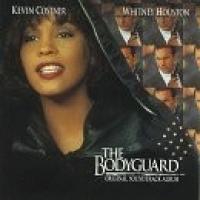
Bodyguard Album Cover

"Bodyguard" Soundtrack Lyrics

Movie • 1992

Track Listing


"The Bodyguard: Original Soundtrack Album" Soundtrack Description

The Bodyguard (1992) official trailer still with Whitney Houston and Kevin Costner
The Bodyguard — Official Trailer, 1992

Questions and Answers

Is there an official soundtrack album?
Yes. The Bodyguard: Original Soundtrack Album was released November 17, 1992 on Arista, led by six Whitney Houston recordings alongside various artists.
Who composed the original score?
Alan Silvestri composed the film score, including the orchestral “Theme from The Bodyguard.”
Who supervised the music for the film?
Music supervision was led by Maureen Crowe, coordinating song placements and clearances.
Did Kevin Costner really push for “I Will Always Love You”?
Yes. Costner championed Dolly Parton’s song for the pivotal farewell, including the a cappella intro (as reported by TIME).
Which songs were Oscar-nominated?
“Run to You” and “I Have Nothing” were both nominated for Best Original Song at the 65th Academy Awards.
How big was the album’s impact?
It became the best-selling movie soundtrack ever, with U.S. certifications recently updated; (according to Billboard) it remains the highest RIAA-certified soundtrack.

Notes & Trivia

  • Release day: November 17, 1992 (Arista). A U.S. box-office tie-in dropped eight days later.
  • Two originals written for the film—“I Have Nothing” and “Run to You”—landed Oscar nominations.
  • The score’s trumpet-tinged main theme mirrors Frank Farmer’s restrained presence on screen.
  • “Queen of the Night” plays over the closing credits; its rock/house edge is unique in Houston’s singles run.
  • In its 5th and 6th weeks, the album set back-to-back SoundScan weekly sales records during the 1992 holiday surge (per the Los Angeles Times).
  • Kevin Costner advocated the a cappella opening of “I Will Always Love You”—a bold, radio-defying choice (as stated by TIME).
  • Decades on, updated RIAA tallies still crown it the most certified soundtrack in the U.S. (according to Billboard).
Trailer moment: concert lights on Whitney Houston as Rachel Marron in performance
High-gloss performance sequences anchor the album’s biggest moments.

Overview

Why does a thriller about a superstar in danger double as a landmark pop document? Because the movie lets the songs carry the drama. The soundtrack binds radio-defining ballads (“I Will Always Love You,” “I Have Nothing”) to character beats, then punctuates suspense and tenderness with Alan Silvestri’s orchestral motifs. The effect: emotion first, plot close behind.

Arista’s curation threads Whitney Houston’s powerhouse vocals with complementary contributions (Lisa Stansfield, Kenny G & Aaron Neville, The S.O.U.L. S.Y.S.T.E.M., Joe Cocker with Sass Jordan), while Maureen Crowe’s supervision keeps placements narrative-sharp. The outcome isn’t just hits—it’s cohesion. And history: the album reset sales expectations for film music and cemented the template for pop-led biographical/romantic soundtracks that followed (as the GRAMMYs’ retrospective notes).

Genres & Themes

  • Power ballad pop ↔ confession and goodbye (the farewell scene’s ache lives inside “I Will Always Love You”).
  • Adult-contemporary R&B ↔ star persona under pressure (“I Have Nothing” as a professional mask and private plea).
  • Rock/house blends ↔ on-stage bravado and image management (the glam-armor of “Queen of the Night”).
  • Gospel flourishes ↔ grounding and refuge (“Jesus Loves Me” as a reset of spirit).
  • Orchestral suspense (Silvestri) ↔ duty, vigilance, and the quiet between spotlights.
Trailer frame: tense backstage corridor hinting at thriller elements that Silvestri's score supports
Backstage nerves: where songs end and Silvestri’s score takes over.

Key Tracks & Scenes

“I Will Always Love You” — Whitney Houston
Where it plays: Climactic farewell and end credits; non-diegetic, framing Rachel & Frank’s parting.
Why it matters: The a cappella entry freezes time; heartbreak becomes cinematic ritual.

“I Have Nothing” — Whitney Houston
Where it plays: Performed on stage at a high-stakes industry gala/performance sequence; diegetic.
Why it matters: A career-best vocal becomes character testimony—control meeting fear.

“Run to You” — Whitney Houston
Where it plays: Romantic montage/quiet interludes; non-diegetic.
Why it matters: Softens the film’s edges, letting vulnerability breathe.

“Queen of the Night” — Whitney Houston
Where it plays: Concert set-piece and over closing credits; diegetic in performance.
Why it matters: Armor-on persona—Rachel as a pop titan in full command.

“I’m Every Woman” — Whitney Houston
Where it plays: Heard in-world (radio/media) and in promotional contexts; mostly non-diegetic in the film proper.
Why it matters: A celebratory counterweight to the thriller mood; identity as chorus.

“Theme from The Bodyguard” — Alan Silvestri
Where it plays: Score cueing surveillance, threat escalations, and bittersweet resolution; non-diegetic.
Why it matters: Brass-led motif humanizes Frank; suspense with a heartbeat.

Track–Moment Index (select cues)
TrackScene / MomentApprox. placementDiegetic?Notes
I Will Always Love YouAirport/church farewell into creditsFinal 5–10 minNoA cappella intro as emotional pivot.
I Have NothingOn-stage gala/awards performanceMid–late filmYesShowstopper vocal, story catharsis.
Run to YouRomance montage & reflective beatsMiddle thirdNoSoft focus between threats.
Queen of the NightConcert sequence; closing creditsEarly set-piece & endYes/NoStage power then credit-roll release.
Theme from The BodyguardStakeouts, confrontations, aftermathThroughoutNoTrumpet-tinged Frank motif.

For granular scene-by-scene placements of Whitney’s cues, ScreenRant’s guide is a handy cross-reference.

Music–Story Links (characters & plot beats as connected to songs)

  • Guard vs. star persona: “I Have Nothing” doubles as Rachel’s public armor; lyrics mirror her private dependence on Frank’s steadiness.
  • Desire vs. danger: “Run to You” underlines the choice to trust—love threaded through a stalker narrative.
  • Public image: “Queen of the Night” stages Rachel’s superhuman brand; the soundtrack lets us feel the weight of that mask.
  • Goodbye as grace note: “I Will Always Love You” sanctifies the separation; the a cappella risk reads as absolute sincerity.
  • Duty’s theme: Silvestri’s trumpet motif tags Frank’s code—quiet, alert, resolute.
Trailer shot: close-up on Costner’s vigilant gaze underscored by orchestral tension
Melodrama meets minimalism: voice in the spotlight, score in the shadows.

How It Was Made (supervision, score, behind-the-scenes)

Composer Alan Silvestri shaped the film’s orchestral spine, weaving a restrained, trumpet-leaning main theme through thriller beats and intimate pauses. Music supervisor Maureen Crowe brokered the film’s pop architecture—placements, licensing, and tone management—while Arista’s production brain-trust (David Foster; L.A. Reid & Babyface; Narada Michael Walden; others) sculpted Houston’s six centerpiece tracks.

One late-stage pivot proved fateful: Kevin Costner advocated for Dolly Parton’s “I Will Always Love You,” pressing for the now-iconic a cappella opening. That creative gamble reframed the farewell scene and, honestly, the decade’s power-ballad playbook (as reported by TIME). The rest is chart history and award season mythology.

Reception & Quotes

Sales records fell immediately—holiday 1992 saw back-to-back weekly highs—while reviews praised the vocals and debated the album’s polish. Three GRAMMYs (including Album of the Year) followed; the soundtrack’s status as the top-selling of its kind has only solidified over time.

“Sold more than 831,000 copies last week—the most one-week total since SoundScan began.” —Los Angeles Times
“Nothing more than pleasant, tasteful and urbane… worthy of its numbers.” —Rolling Stone
“The highest RIAA-certified soundtrack of all time.” —Billboard

For context, trade reportage tracked the mania week by week (according to the Los Angeles Times), while later audits and updates kept the crown current (as noted by Billboard).

Technical Info

  • Title: The Bodyguard: Original Soundtrack Album
  • Year: 1992
  • Type: Movie soundtrack (romantic thriller)
  • Primary artist billing: Whitney Houston / Various Artists
  • Score composer: Alan Silvestri
  • Music supervision: Maureen Crowe
  • Label: Arista Records (BMG)
  • Notable placements (select): “I Will Always Love You,” “I Have Nothing,” “Run to You,” “Queen of the Night,” “I’m Every Woman,” “Theme from The Bodyguard.”
  • Awards: 3 GRAMMY wins incl. Album of the Year; 2 Oscar nominations (Best Original Song) for “Run to You” and “I Have Nothing.”
  • Commercial notes: First album to sell 1M+ in a single SoundScan week; remains the best-selling movie soundtrack worldwide (as stated in GRAMMY coverage).
  • Availability: Widely available on streaming/download; multiple physical pressings; anniversary reissues and companion releases exist.

Canonical Entities & Relations

SubjectRelationObject
The Bodyguard (1992 film)directed byMick Jackson
The Bodyguard (1992 film)starsWhitney Houston; Kevin Costner
The Bodyguard: Original Soundtrack Albumreleased byArista Records
The Bodyguard: Original Soundtrack Albumfeatures vocals byWhitney Houston
The Bodyguard (score)composed byAlan Silvestri
Film musicsupervised byMaureen Crowe
“I Will Always Love You”written byDolly Parton
“I Have Nothing”written byDavid Foster; Linda Thompson
“Run to You”written byAllan Rich; Jud Friedman
“I’m Every Woman”written byNickolas Ashford; Valerie Simpson

Sources: Billboard; Los Angeles Times; Rolling Stone; GRAMMY.com; Wikipedia (album & film entries); Apple Music; MOVIE MUSIC UK; IMDb (credits); TIME magazine.

October, 25th 2025


A-Z Lyrics Universe

Lyrics / song texts are property and copyright of their owners and provided for educational purposes only.