I Have Nothing Lyrics – Whitney Houston
Soundtrack Album: Bodyguard
Share my life, take me for what I am
Cause I'll never change all my colours for you
Take my love, I'll never ask for too much
Just all that you are and everything that you do
I don't really need to look very much further
I don't want to have to go where you don't follow
I won't hold it back again, this passion inside
Can't run from myself
There's nowhere to hide
(Your love I'll remember forever)
Don't make me close one more door
I don't wanna hurt anymore
Stay in my arms if you dare
Or must I imagine you there
Don't walk away from me...
I have nothing, nothing, nothing
If I don't have you, you, you, you.
You see through, right to the heart of me
You break down my walls with the strength of you love
I never knew love like I've known it with you
Will a memory survive, one I can hold on to
[repeat (chorus)]
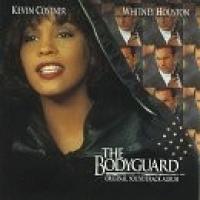
Bodyguard
Soundtrack Lyrics for Movie, 1992
Track Listing
Whitney Houston
Whitney Houston
Whitney Houston
Whitney Houston
Whitney Houston
Whitney Houston
Kenny G/Aaron Neville
Lisa Stansfield
The S.O.U.L. S.Y.S.T.E.M.
Curtis Stigers
Kenny G
Joe Cocker/Sass Jordan
Alan Silvestri
Song Overview

Personal Review
“I Have Nothing” is the power ballad that turns yearning into architecture - verse by verse, key by key, it raises the roof until the final sustained note feels inevitable. I come back to this track because the lyrics hit like a vow and a dare, and because David Foster’s arrangement gives Whitney a staircase to the stratosphere. Key takeaway: it’s a desperate plea for presence that becomes an ultimatum about self-worth. One-sentence snapshot: the narrator begs a lover to stay while admitting that without them, the room, the breath, the future - nothing.
Song Meaning and Annotations
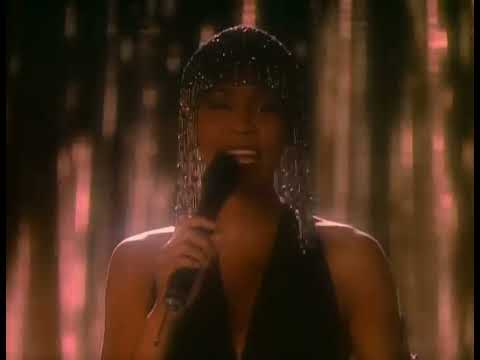
The song stitches pop, R&B, and soul into a single dramatic arc. The rhythm sits at a moderate pace, leaving space for melisma and those famous modulations. It begins vulnerable, rises to defiance, then lands on hard-earned resolve. Across The Bodyguard it functions like a spotlight monologue - the moment Rachel Marron drops the mask and says what the plot’s been circling all along.
Production-wise, Foster builds with piano, strings, and a bed of Synclavier programming, punctuated by guitar lines from Michael Landau. The mix, by Mick Guzauski, keeps Whitney’s voice front and center, no reverb crutch, just relentless presence. These credits come straight from the soundtrack liner notes and official archives.
Historically, the single arrived February 20, 1993, the third release from The Bodyguard soundtrack. It climbed to #4 on the Billboard Hot 100, hit #1 on Adult Contemporary, and went to #1 in Canada; in the UK it peaked at #3. The record has since earned multi-platinum status in the U.S. These aren’t just chart stats - they tell you how a slow, aching ballad could still dominate in the middle of a dance-pop feeding frenzy.
In the stage adaptation The Bodyguard – The Musical (2012), the song closes Act I or anchors late-act climaxes, proving its theatrical bones. Alexandra Burke’s cast recording cements that placement.
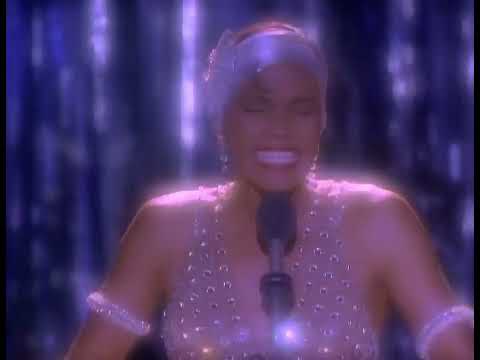
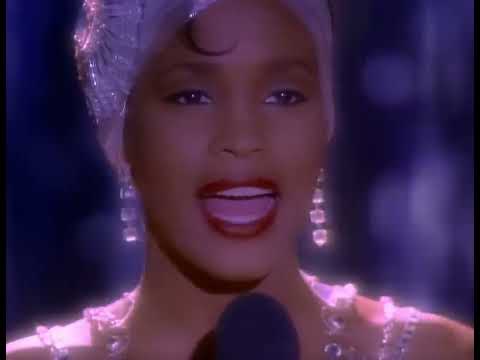
Video note: the official clip for “I Have Nothing” is directed by S.A. Baron, intercutting glam imagery with scenes from the film. It has soared past 900M views, a testament to how visual memory fuses with those last key changes.
Emotional arc: starts with an ask, turns to a plea, and then sets a line in the sand. Each chorus arrives higher - not just louder, higher - until the title phrase becomes a verdict, not a request.
“Share my life, take me for what I am.”
Thesis statement. She’ll offer everything, but not shapeshift beyond recognition. The simplicity of the line disarms you before the climb.
“Stay in my arms if you dare.”
That “if you dare” is the dagger - love as risk assessment, devotion framed like a challenge.
“Don’t walk away from me.”
The plea turns to command. By the last repetition, she’s defining boundaries: walking away has consequences.
Creation history
Written by David Foster and Linda Thompson, the lyric drew on Thompson’s memories of loving Elvis Presley - the mix of glamour and isolation, adoration and anxiety. Houston recorded the vocal November 12, 1991 at Encore Studios in California.
Annotations
Using your supplied notes and tying them to the lyric moments:
- “Take my love, I’ll never ask for too much” - She wants mutuality and trust, not spectacle.
- “I won’t hold it back again, this passion inside” - No more emotional hiding; honesty is the only workable path.
- “Don’t make me close one more door” - A life of closures has worn her down; she’s begging not to add another.
- “Stay in my arms if you dare / Or must I imagine you there?” - An ultimatum wrapped as a question - stay and face work, or become a memory.
- “You see through, right to the heart of me” - The lover dismantles defenses; intimacy isn’t a given, it’s earned.
- Across the final volley, she draws a boundary: if he leaves, there’s no revolving door.
Verse Highlights
Verse 1
Identity first. The opening frames love as acceptance of the whole person, not a costume change. Piano and strings cradle the melody while Whitney stays conversational - a strategic underplay that sets up the rocket launch.
Pre-Chorus
Harmonic tension tightens while the lyric admits there’s “nowhere to hide.” You can hear the key preparing to pivot - a coiled spring under the word “passion.”
Chorus
Here comes the architecture: each chorus lifts higher than the last, culminating in the final B-major landing. It’s drama by design, not just decibels.
Bridge
The bridge remembers the cost of love - what survives and what doesn’t - before the last modulation turns vulnerability into steel. That shift is why the ending feels like a verdict.
Key Facts
- Featured: none
- Producer: David Foster
- Composer/Lyricists: David Foster, Linda Thomps
- Album: The Bodyguard: Original Soundtrack Album
- Genre: pop, R&B, soul
- Instruments: piano/keys, Synclavier & synth programming, guitar, strings
- Label: Arista
- Mood: urgent, pleading, then resolute
- Length: 4:48
- Track #: 10 on Whitney: The Greatest Hits (CD1) [provided]
- Language: English
- Music style: classic power ballad with theatrical lift
- Poetic meter: predominantly iambic phrases with strategic anacrusis
- Publishers: Warner-Tamerlane, One Four Three Music, Linda’s Boys Music [provided]
- © Copyrights: Arista Records
- Video Director: S.A. Baron
Questions and Answers
- Why did the song resonate so widely beyond the film?
- Because its structure lets the voice tell the story - measured verses, pressure-building pre-chorus, then skyward choruses. The timing of release, riding the planetary success of The Bodyguard, gave it reach while the writing gave it staying power.
- What’s happening musically with all those key changes?
- It starts lower, then steps up through successive modulations, finally landing in B major for the home-stretch. That’s why each return of the title climbs emotionally and harmonically.
- Did it win big awards?
- It was nominated at the Oscars and Grammys and scored a BMI Film & TV Award for Most Performed Song from a Film.
- How did it chart?
- U.S. Hot 100 peak #4, Adult Contemporary #1, Canada #1, UK #3, with multi-platinum U.S. certification later. :contentReference[oaicite:21]{index=21}
- Most notable modern covers?
- Ariana Grande delivered a widely praised rendition at the White House in 2014; the song also anchored a Glee tribute episode sung by Kurt Hummel.
Awards and Chart Positions
Academy Awards: Nominated for Best Original Song at the 65th Academy Awards on March 29, 1993.
Grammy Awards: Nominated for Best Song Written for Visual Media at the 36th Grammys (March 1, 1994). :contentReference[oaicite:24]{index=24}
BMI Film & TV Awards: Won Most Performed Song From a Film in 1994. :contentReference[oaicite:25]{index=25}
Soul Train Music Awards: Nominated for Best R&B Single, Female (1994). :contentReference[oaicite:26]{index=26}
Peak positions: US Hot 100 #4, US Adult Contemporary #1, Canada RPM #1, UK Singles #3. Certification in the U.S. updated to RIAA 4x Platinum on June 25, 2025. :contentReference[oaicite:27]{index=27}
How to Sing?
Range & keys: Published arrangements place the vocal range roughly G3 to F♯5, with successive modulations culminating in B major. That means you need head-voice access up top and solid middle-voice anchoring down low. :contentReference[oaicite:28]{index=28}
Breath strategy: Treat the first verse like a spoken confidence. Keep breaths frequent and shallow early; save deep, rib-expanding inhales for the pre-chorus into the first chorus. The final chorus requires staggered planning - inhale before “don’t walk away” and again before the extended “nothing.”
Onset & support: Use a gentle onset in verse lines to prevent early fatigue. As the key rises, increase appoggio (balanced breath support) rather than volume. Think spin, not shove.
Stylistic notes: Limit vibrato in the first chorus so the later ones feel like escalation. Melisma matters less than clarity on the title phrase - let the lyric read.
Tempo & phrasing: At a moderate ballad tempo, it’s easy to rush. Sit behind the beat in verse openings; ride on the beat at the chorus crest to feel the lift the arrangement is building for you.
Songs Exploring Themes of Devotion and Vulnerability
Céline Dion - “All by Myself”: A different brand of pleading - solitary rather than relational. The lyrics stare down loneliness while the orchestration swells to an operatic climax. Vocally it’s a cathedral of sustained notes; thematically it’s what happens when the plea goes unanswered. Meanwhile “I Have Nothing” negotiates in real time, arguing for connection before the night ends.
Toni Braxton - “Un-Break My Heart”: Same ache, darker palette. Braxton’s contralto glides through a minor-key lament that trades key-change fireworks for hypnotic repetition. The lyrics ask for reversal, not boundaries. In contrast, Whitney’s narrator accepts reality and sets terms - stay and fight, or leave and concede.
Beyoncé - “Listen”: Here the vulnerability is about self - finding voice inside noise. The lyric frames devotion to one’s own truth rather than to a lover. While Whitney scales keys to plead for presence, Beyoncé scales rage into liberation. Two windows into courage, one inward, one relational.
Notable covers/performances: Ariana Grande covered “I Have Nothing” at the White House in 2014; the song featured prominently in Glee’s Whitney tribute episode; the West End stage musical The Bodyguard uses it as an act-closing showstopper.
A-Z Lyrics Universe
Cynthia Erivo Popular
Ariana Grande Horsepower
Post Malone Ain't No Love in Oklahoma
Luke Combs Good Riddance (Time of Your Life)
Green Day Bye Bye Bye
*NSYNC You're the One That I Wan
John Travolta & Olivia Newton-John I Always Wanted a Brother
Braelyn Rankins, Theo Somolu, Kelvin Harrison Jr. and Aaron Pierre The Power of Love
Frankie Goes to Hollywood Beyond
Auli’i Cravalho feat. Rachel House MORE ›