I'm Every Woman Lyrics – Whitney Houston
Soundtrack Album: Bodyguard
Whatever you want
Whatever you need
Anything you want done baby
I do it naturally
'Cause I'm every woman (Every woman)
It's all in me
It's all in me
Yeah
I'm every woman
It's all in me
Anything you want done baby
I do it naturally
I'm every woman
It's all in me
I can read your thoughts right now
Every woman, whoever made ya say...
Whoa whoa whoa
Whoa (oh) whoa (oh) whoa
I can cast a spell
See, but you can't tell
Mix a special groove
Put fire inside of you
Anytime you feel danger or fear
Then instantly
I will appear
Yeah oh
I'm every woman
It's all in me
Anything you want done baby
I do it naturally
Whoa whoa whoa
Whoa whoa whoa
I can set your knees
like playing unto the seas
I can make a rhyme of confusion in your mind
And when it comes down to some little flash of love
I got it, I got it
I got it, got it, baby baby
I'm every woman
It's all in me
Anything you want done baby
I do it naturally
I'm every woman
It's all in me
I can read your thoughts right now
Every woman, whoever made ya say...
Whoa whoa whoa
Whoa whoa whoa
I ain't braggin'
'Cause I'm the one
Just ask me
Oh, it shall be done
And don't bother
to compare
I've got it
Whoa whoa whoa
Whoa whoa whoa
Whoa whoa whoa
Ahhhhh
I'm every woman
I'm every woman
I'm every woman
I'm every woman
I'm every woman
I'm every woman
I'm every woman
I'm every woman
I'm every woman (Chaka)
I'm every woman (Chaka)
I'm every woman (Ha ha ha)
I'm every woman (Come on girl)
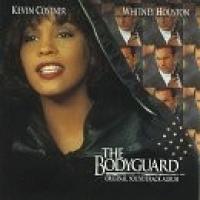
Bodyguard
Soundtrack Lyrics for Movie, 1992
Track Listing
Whitney Houston
Whitney Houston
Whitney Houston
Whitney Houston
Whitney Houston
Whitney Houston
Kenny G/Aaron Neville
Lisa Stansfield
The S.O.U.L. S.Y.S.T.E.M.
Curtis Stigers
Kenny G
Joe Cocker/Sass Jordan
Alan Silvestri
Song Overview

Personal Review
Whitney Houston’s “I’m Every Woman” is a relay race between groove and voice - the beat hands off energy, the vocals sprint with it, and the lyrics plant the flag. These lyrics double as a manifesto and a party invitation, stitching Chaka Khan’s 1978 spirit to early-90s house and R&B sparkle. The record feels like a mirror-ball sermon: confident, warm, and a little mischievous. One-sentence snapshot: a promise of capability and care that dances while it flexes.
Song Meaning and Annotations
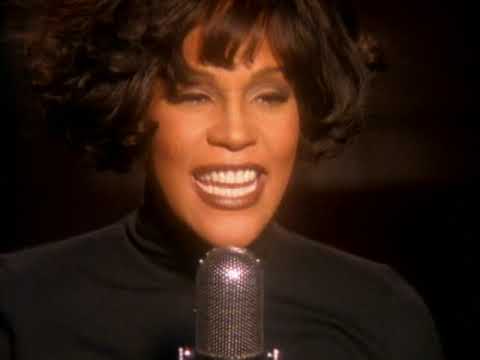
The message is self-possession with generosity: “I’m every woman” means capability without apology, care without erasing yourself. The style fuses disco’s uplift with 90s house textures and R&B phrasing, a production choice that lets the chorus bloom as a communal chant rather than a solo boast. Across the track, Houston makes empowerment feel social - you can dance to it, but you can also live by it.
The emotional arc starts playful and declarative, then grows celebratory as the arrangement thickens: stacked backgrounds answer the lead, the kick gets busier, and the ad-libs widen the frame. What begins as “I got you” turns into “we got us,” a subtle pivot from individual swagger to collective confidence. That shift is why the hook keeps landing long after the bridge fades.
Cultural touchpoints matter here. Houston records the cover for The Bodyguard and embraces the song’s history - written by Ashford & Simpson for Chaka Khan - while bringing it forward with Clivillés & Cole’s club DNA and Narada Michael Walden’s pop-soul polish. In the film universe, it’s the extrovert counterweight to the soundtrack’s towering ballads, proof that empowerment can be joyous, not just hard-won.
“I’m every woman, it’s all in me.”
As a thesis line, it’s trochaic and percussive, so the words ride the kick cleanly. The hook is assertive without threat, more invitation than ultimatum.
“Whatever you want, whatever you need…”
That added intro is Whitney’s own stamp - a framing device that makes the song conversational before the band takes off. It’s a neat production nudge that welcomes the listener into the circle.
Production notes: bright keys and busy drum programming set the floor; backing vocals act like brass - puncture, lift, respond. Clivillés & Cole lean into long-form club mixes on the single packages, which is why the song worked in both radio edit and 10-minute dance-floor mode.
History footnote worth clearing up: Houston did not sing on the 1978 original - that’s a persistent myth. She did, however, sing backgrounds for Chaka on the 1980 album Naughty alongside Cissy Houston and Luther Vandross, which explains the affectionate lineage you can hear in Whitney’s ad-libs.
Creation history
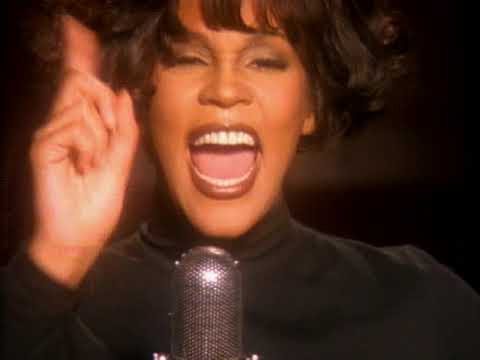
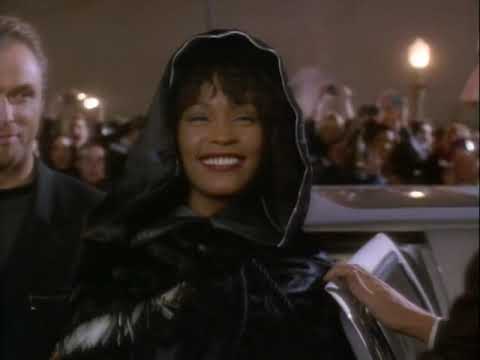
Release as the second Bodyguard single landed January 2, 1993 in the U.S.; the music video, directed by Randee St. Nicholas, stitched in cameos by Chaka Khan, Cissy Houston, Valerie Simpson, and TLC - plus a radiant, pregnant Whitney front and center. That visual, cut with film clips, turned the song from cover into coronation.
Verse Highlights
Verse 1
The opening trades intimacy for momentum: conversational promises over tight keys, then the rhythm section invites the choir of Whitneys to answer her lines. It’s arrangement as character - reassuring, then exuberant.
Chorus
The hook lands on downbeats and vowels that carry. Each repeat adds bodies to the dance floor - literally in the mix, metaphorically in the message - until the outro feels like a block party.
Bridge
The bridge is less about harmony twists than oxygen: a short breath that reloads the chorus and sets up the ad-lib fireworks. It’s how you turn three chords into a celebration without wearing out the groove.
Key Facts
- Featured: none
- Producer: Narada Michael Walden; additional production/remix by Robert Clivillés & David Cole
- Composers/Lyricists: Nickolas Ashford, Valerie Simpson
- Release Date: January 2, 1993 (U.S. single)
- Genre: R&B, dance-pop, house-inflected soul
- Instruments: lead and backing vocals, keyboards/synths, drum programming, percussion, bass
- Label: Arista
- Mood: celebratory, confident, inclusive
- Length: 4:45 (album/single version)
- Track #: 3 on The Bodyguard: Original Soundtrack Album
- Language: English
- Music style: disco roots + early-90s house bounce, call-and-response backing vocals
- Poetic meter: trochaic pulse in the hook (“I’m ev-ery wom-an”)
- © Copyrights: Arista Records
Questions and Answers
- Where does Whitney’s version sit in the Bodyguard story?
- It’s the extrovert counterbalance to the soundtrack’s ballads - a scene-setter that shows power can sound like joy, not only heartbreak.
- What’s different from Chaka Khan’s 1978 original?
- Whitney adds the spoken-sung intro and rides a 90s house/R&B chassis with Clivillés & Cole’s club instincts, while keeping Ashford & Simpson’s core architecture.
- Who’s in the video?
- Cameos include Chaka Khan, Cissy Houston, Valerie Simpson, and TLC, with Randee St. Nicholas directing a brisk, film-intercut performance clip.
- How did it chart?
- U.S. peaks: #4 Hot 100, #1 Dance Club, #5 R&B/Hip-Hop; UK peak: #4 on the Official Singles Chart.
- Is it true Whitney sang on the 1978 version?
- No - that’s a myth. She did background vocals for Chaka’s 1980 album Naughty; the 1978 single’s lineage runs through Ashford & Simpson and Cissy Houston’s world.
Awards and Chart Positions
U.S. Billboard: Hot 100 peak #4; Dance Club Songs #1; Hot R&B/Hip-Hop Songs #5. UK: Official Singles Chart peak #4. Awards: NAACP Image Award - Outstanding Music Video (1994). Grammy: nomination for Best Female R&B Vocal Performance (1994).
How to Sing?
Range & key center: comfortable belt in the upper 4th octave; plan for sustained A4–C5 phrases with optional higher ad-libs. The album version sits in a dance-friendly mid-tempo; keep vowels tall so the groove breathes under you.
Breath & phrasing: treat the verses like confident speech on pitch, then widen airflow for the chorus where sustained “woah/oh” figures can tire the abs if you’re not pacing. Map quick breaths before the final hook stack.
Style: clean diction first, riffs second. This track rewards precision - place consonants on the beat and let the choir parts carry the sparkle.
Songs Exploring Themes of Female Empowerment
Chaka Khan - “I’m Every Woman” (1978). The blueprint: Arif Mardin’s disco engine, Ashford & Simpson’s hand-clap songwriting, and Chaka’s elastic alto. It’s looser and earthier than Whitney’s, with congas and rhythm guitar doing the heavy lifting. Same theme, different palette - the club is smaller, the sweat is thicker, and the mic smiles when she pushes “it’s all in me.” Hearing Whitney’s version after Chaka’s is like seeing a beloved photograph restored and color-graded for a new decade.
Aretha Franklin - “Respect”. Empowerment as demand letter. The groove is clipped, the horn stabs are exclamation points, and every “R-E-S-P-E-C-T” turns into public record. Compared to Whitney’s party-friendly uplift, Aretha keeps the pressure on the two and four - urgent, punchy, undeniable. Put them together and you get a syllabus: pride that celebrates and pride that insists.
Beyoncé - “Run the World (Girls)”. Marching-band snare over chopped Afro-electro samples, a chant that treats the hook like a rally. It’s maximalist where Whitney is plush, militant where Whitney is communal, yet the through-line is the same: capability announced in the open. Stack all three and you hear a timeline of agency moving from soulful promise to modern, kinetic command.
A-Z Lyrics Universe
Cynthia Erivo Popular
Ariana Grande Horsepower
Post Malone Ain't No Love in Oklahoma
Luke Combs Good Riddance (Time of Your Life)
Green Day Bye Bye Bye
*NSYNC You're the One That I Wan
John Travolta & Olivia Newton-John I Always Wanted a Brother
Braelyn Rankins, Theo Somolu, Kelvin Harrison Jr. and Aaron Pierre The Power of Love
Frankie Goes to Hollywood Beyond
Auli’i Cravalho feat. Rachel House MORE ›