I Will Always Love You Lyrics – Whitney Houston
Soundtrack Album: Bodyguard
If I
Should stay
I would only be in your way
So I'll go
But I know
I'll think of you every step of
the way
And I...
Will always
Love you, oohh
Will always
Love you
You
My darling you
Mmm-mm
Bittersweet
Memories
That is all I'm taking with me
So good-bye
Please don't cry
We both know I'm not what you
You need
And I...
Will always love you
I...
Will always love you
You, ooh
[Instrumental/Sax solo]
I hope
life treats you kind
And I hope
you have all you've dreamed of
And I wish you joy
and happiness
But above all this
I wish you love
And I...
Will always love you
I...
Will always love you
[Repeat]
I, I will always love
You....
You
Darling I love you
I'll always
I'll always
Love
You..
Oooh
Ooohhh
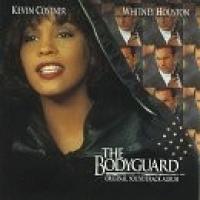
Bodyguard
Soundtrack Lyrics for Movie, 1992
Track Listing
Whitney Houston
Whitney Houston
Whitney Houston
Whitney Houston
Whitney Houston
Whitney Houston
Kenny G/Aaron Neville
Lisa Stansfield
The S.O.U.L. S.Y.S.T.E.M.
Curtis Stigers
Kenny G
Joe Cocker/Sass Jordan
Alan Silvestri
Song Overview
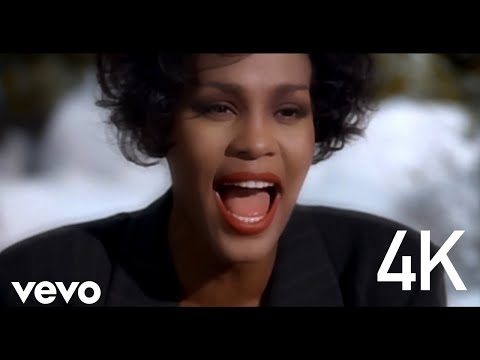
Personal Review
“I Will Always Love You” is the rare pop moment where restraint and detonation share the same breath. The lyrics say goodbye with care; the voice makes that goodbye feel like a sky opening. Houston begins alone, a cappella, then the record swells into a power ballad that rewrote chart history. If you want the plot in one line - a dignified parting that refuses bitterness, sung like a vow kept even in absence. The lyrics carry the softness; the timbre carries the steel.
Song Meaning and Annotations
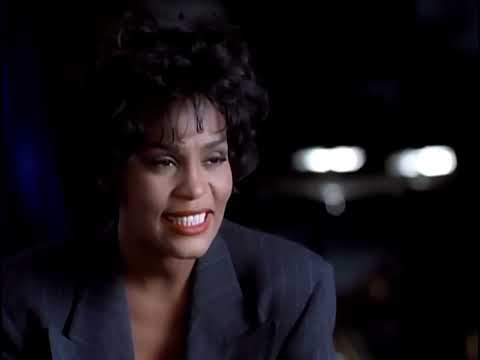
Message first. The song is a farewell letter written to protect two people from hurting each other further. Dolly Parton wrote it in 1973 as she left mentor Porter Wagoner; Whitney Houston reimagined it in 1992 as cinematic pop-soul, keeping the tenderness and adding drama fit for The Bodyguard.
Style and rhythm. Houston’s recording is a slow pop ballad framed like gospel: free tempo at the start, brushed keys, then orchestral lift, then a famous step-up key change that launches the final choruses. The production leans on suspended chords and air, making the silence before the big drum hit feel like a held breath.
Emotional arc. It starts vulnerable and almost conversational; by the last chorus it’s resolute and soaring. The plot never turns cruel - the singer leaves while still blessing the person she loves. That balance is why the record endures: duty without rancor, ache without collapse.
Historical touchpoints. Parton’s original topped the U.S. country chart twice - 1974 and 1982 - then Houston’s cover became a global phenomenon and the best-selling single by a woman in U.S. history, reaching RIAA diamond and then 11x platinum by 2025.
Production and instrumentation. David Foster produces and arranges; Whitney handles her own vocal arrangement. Kirk Whalum’s saxophone solo is the ember in the center, Ricky Lawson’s tom fill triggers the key change, and the session band (Neil Stubenhaus, Michael Landau, Dean Parks, Tony Smith, Claude Gaudette) colors the frame. Engineers Bill Schnee, Dave Reitzas, and Peter J. Yianilos capture it with lapidary clarity at Ocean Way.
Cultural context. The Bodyguard soundtrack went on to be the highest certified soundtrack in RIAA history, and the single became a seasonal ritual in the UK - including the 1992 Christmas Number 1 with a 10-week reign.
About that famous pause. Before the first full-tilt chorus, there’s silence, then a single drum hit, then Houston’s open-throated “And I…” that every karaoke bar knows. It’s theater - the cleanest example of tension-and-release in 90s pop.
“If I should stay / I would only be in your way”
Plainspoken, almost prose. It frames the narrator as the one taking the hard road to spare the other. The diction is simple - no frills - which lets the vibrato and breath do the ornamenting.
“Bittersweet memories / That is all I’m taking with me”
“Bittersweet” is the hinge. The word signals memory as both blessing and burden; it’s also a cue for the arrangement to widen around her without losing composure.
“And I wish to you joy and happiness / But above all this, I wish you love”
This closing benediction nearly fell out of the film cut. Dolly Parton personally insisted they keep the last verse after David Foster discovered Linda Ronstadt’s cover omitted it. That note from the writer reshaped the movie’s ending.
Creation history
Parton wrote the song as she left Porter Wagoner’s TV show and partnership - a clean break, not a fight. She later re-cut it in 1982 for The Best Little Whorehouse in Texas. In the early 90s, Kevin Costner suggested the song for Houston and pushed for the a cappella opening. Foster was skeptical at first, then built a pop-soul arrangement around that stark opening.
Verse Highlights
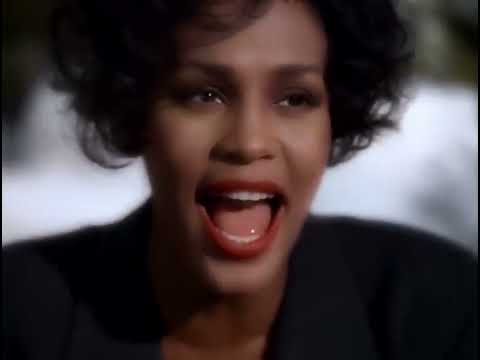
Verse 1
Just voice. No safety net. The mic hears micro-movements - breath, consonants brushed soft - and the phrasing lands slightly behind the beat like a private confession.
Chorus
The first is gentle, the later ones climb - volume, register, intensity - each chorus higher than the last. This escalation, plus the step-up key change, is how the record tells its story without changing a single word.
Bridge and Solo
Kirk Whalum’s sax draws a human line through the arrangement, imitating and answering the vocal melismas. It’s a duet without words.
Final Chorus
A tom hit, then lift-off - from A major to B major - and the belt narrows to laser focus. She rides the vowels on “I” and “you,” shaping them for projection and pitch center. The mix never loses the singer; the orchestra is there to frame the decision.
Key Facts
- Featured: none
- Producer: David Foster
- Composer: Dolly Parton
- Release Date: November 3, 1992
- Genre: Pop ballad with gospel inflections
- Instruments: lead vocal, keyboards, strings, saxophone (Kirk Whalum), drums (Ricky Lawson), bass (Neil Stubenhaus), guitars (Dean Parks, Michael Landau), programming (Tony Smith, Claude Gaudette)
- Label: Arista Records
- Mood: gracious goodbye, swelling resolve
- Length: 4:31 (single)
- Language: English
- Album: The Bodyguard: Original Soundtrack Album (also appears on Whitney: The Greatest Hits, 2000)
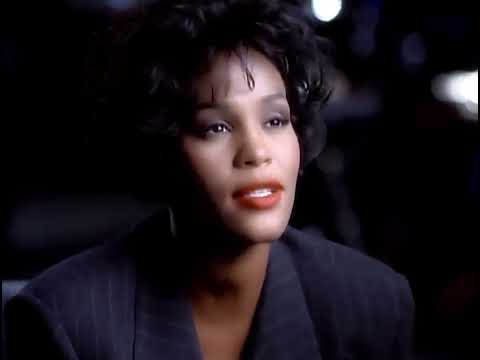
- Music video director: Nick Brandt (credit initially listed as Alan Smithee due to re-edit)
- Poetic meter: predominantly iambic phrasing with mixed feet in refrain
- © Copyrights: Velvet Apple Music (publ.), Arista Records
Questions and Answers
- Who suggested the a cappella opening?
- Kevin Costner pressed for it on set; the stark open showcased how deeply her character felt before any orchestra arrived.
- Why is the last verse so important?
- Parton’s blessing - “I wish you joy and happiness… but above all this, I wish you love” - turns a breakup into a benediction. It also restored what one earlier cover had removed.
- What’s the key musical trick everyone talks about?
- The step-up key change from A to B after a brief silence and drum hit - a classic pop device executed with surgical timing here.
- How big did it get on the charts?
- Fourteen straight weeks at No.1 on the U.S. Hot 100 and ten weeks at No.1 in the UK, including Christmas Number 1 in 1992.
- Where else has the song appeared onscreen besides the film?
- It turns up memorably in the 2013 comedy This Is the End, used by the production with Arista/RCA courtesy.
Awards and Chart Positions
Grammy Record of the Year and Best Female Pop Vocal Performance in 1994; multiple Billboard Music Awards including Hot 100 Single of the Year; two AMAs for Favorite Pop/Rock Single and Favorite Soul/R&B Single; UK Christmas Number 1 of 1992; and, in the U.S., a then-record 14 weeks at No.1 on the Hot 100. The single reached RIAA diamond in 2022 and 11x platinum by June 2025.
How to Sing?
Range and key. Sheet music places Houston’s studio take around F3 to G5, beginning in A major and modulating to B major after roughly 3:31. Plan your highest vowels for the upper passaggio and keep the jaw loose so the belt doesn’t thin.
Breath. The a cappella opening needs a slow, silent inhale and long lean support - think of exhaling through a straw to pace the line. Don’t over-vibrate: save width for the last chorus.
Placement. Keep verses in a speechy mask; shift to a mix-belt on the lifted choruses. Shape “I” toward “ah” and “you” toward a relaxed “yoo” to keep pitch center when the orchestra blooms.
The moment. Count the bar of silence before the drum hit, then enter slightly ahead of the grid so the consonant rides the attack. It sells the modulation without forcing volume.
Songs Exploring Themes of Love
Love here is generous - goodbye without blame. Three related tracks trace neighboring emotional weather.
Dolly Parton - I Will Always Love You (1974). Same story, different lens. Parton’s original is a country waltz with a small-room hush, the lyrics working like a handwritten note. Compared with Houston’s cathedral-sized arc, Dolly’s version stays porch-light warm - fiddle and steel guitar carry the ache, not the belt. The theme is identical, but the performance says: closure can be quiet.
Adele - Someone Like You. Piano, rubato phrasing, and a narrator who accepts loss while still scanning the horizon. The kinship is in the grace: no villain, just time doing its job. While Adele’s tone smokes and cracks for texture, Whitney’s gleams; both trust space more than ornament.
Sinead O’Connor - Nothing Compares 2 U. Another masterclass in controlled devastation. Minimal arrangement, a face-forward vocal, and lyrics that catalog absence like a ledger. Where Houston blesses her ex, Sinead documents the aftershock - both songs understand that love lingers even when the relationship cannot.
Extras: Remixes, Covers, Screens
Houston’s “Hex Hector Radio Mix” (2000) trims and modernizes the rhythm for Whitney: The Greatest Hits. Linda Ronstadt’s 1975 cover on Prisoner in Disguise kept the country tenderness intact a decade and a half before Houston’s version took it global. The track also scores a late, winkingly apocalyptic cue in This Is the End (2013).
A-Z Lyrics Universe
Cynthia Erivo Popular
Ariana Grande Horsepower
Post Malone Ain't No Love in Oklahoma
Luke Combs Good Riddance (Time of Your Life)
Green Day Bye Bye Bye
*NSYNC You're the One That I Wan
John Travolta & Olivia Newton-John I Always Wanted a Brother
Braelyn Rankins, Theo Somolu, Kelvin Harrison Jr. and Aaron Pierre The Power of Love
Frankie Goes to Hollywood Beyond
Auli’i Cravalho feat. Rachel House MORE ›