Happy Lyrics – Cecily Strong, Adam Sandler
Soundtrack Album: Leo
[MS. MALKIN, spoken]
I put my whole life into teaching, just to be a mere substitute.
(singing)
Happy, you want me to be happy.
I never got my own class,
never even got to try.
Never got respect,
never got to hunt a fly.
Just signs on my back,
thumbtacks on my chair,
spitballs, fireballs, gum and milk
duds in my underwear.
(spoken)
And here I am, after 45 years. No respect, no steady work, and no family.
You want me to be happy.
[LEO, spoken]
Look, I also had dreams that never happened, like seeing the Everglades or spreading Salmonella. But this year, I felt it is something even better. I really clicked with these kids.
[MS. MALKIN, spoken]
Oh, maybe it helped just a little, that you're a talking animal.
[LEO, spoken]
Yeah, but also maybe it's you, because I've seen some subs come through the school that kids love.
(sung)
What about Ms. Knight?
[MS. MALKIN]
Nice to the kids, didn't smell quite right
[LEO]
Remember Mr. Munk?
[MS. MALKIN]
He was a closet drunk
[LEO]
Everyone loved Mr. Garrett
[MS. MALKIN]
He was disturbingly close to his parrot
[LEO]
This may have been before your time
Miss Loge?
[MS. MALKIN, spoken]
A fine teacher
(sung)
She was mine
[LEO, spoken]
You were a student here?
[MS. MALKIN, spoken]
You don't remember me?
I was a lot different
I was
(sung)
Happy
[LEO, spoken]
Oh wow, yeah, you were very sweet
[MS. MALKIN, spoken]
I was adorable
And she—
[LEO]
She made you
Happy
[MS. MALKIN, spoken]
Yes, she did, she made me feel like I could do anything
[LEO, spoken]
And, tell me, do you think she was
(sung)
Happy?
(spoken)
She made you her family
That's what great teachers do, even substitutes
With the little time they have, they try to make a difference
And that's what keeps them happy
(sung)
You can feel love, it's not the end
That smile you had can come back again
Just pull that stick out your tush and take a cue
From teachers that preceded you
You're not alone, make a home for them
And embrace your important role
[MS. MALKIN & LEO, MS. MALKIN]
In shaping them
Body and soul (Hehehe, hoo-hoo)
And you'll be happy (And I'll be happy)
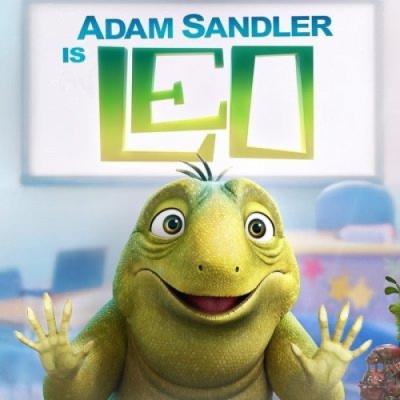
Leo
Soundtrack Lyrics for Movie, 2023
Track Listing
Felix Jaehn
Jax Jones
Galantis
Silento
V.I.C.
Tiffany Topol
Cast
Adam Sandler
Allison Strong
Sunny Sandler
Adam Sandler
Jason Alexander, Adam Sandler, Sadie Sandler, cast
Adam Sandler
Tiffany Topol
Cecily Strong, Adam Sandler
Cast
Cast
Tiffany Topol
Cast
Song Overview
The track “Happy” pairs Cecily Strong and Adam Sandler as Ms. Malkin and Leo in the 2023 Netflix animated musical comedy Leo. Written by Robert Smigel and released on the album Leo (Soundtrack from the Netflix Film) through Netflix Music on November 21, 2023, it plays as a late-film turning point where a bitter substitute teacher finally softens toward her students and toward herself. Clocking in at about 3 minutes and 16 seconds, set in G sharp major at a gentle 72 BPM, the song feels like a compact Broadway-style scene - half confessional monologue, half wry pep talk - wrapped in a warm, cinematic arrangement.
Review and Highlights
Quick summary
- Duet between Cecily Strong (Ms. Malkin) and Adam Sandler (Leo) from the Netflix animated feature Leo.
- Appears around the history-fair stretch of the film, roughly one hour and three minutes into the story, when Leo talks Ms. Malkin into embracing her role as a real teacher.
- Written by Robert Smigel, produced by Dan Bulla and JP on da Track, and released on the digital soundtrack Leo (Soundtrack from the Netflix Film) by Netflix Music on November 21, 2023.
- Slow, theatrical ballad in G sharp major at about 72 BPM, blending musical-theatre storytelling with contemporary film-score polish.
- Functions as Ms. Malkin’s big character song: a moment where resentment, regret, mentorship and found-family themes finally click into place.
Review: music, words, and performance
Heard on its own, “Happy” works like a small two-character scene lifted straight from the film and dropped onto the album. Strong begins mostly in spoken text over light underscore, venting about four and a half decades as a substitute with “no respect, no steady work, and no family.” The vocal delivery has a crisp, theater-trained bite - very much in line with her work on Schmigadoon! - but she keeps it just grounded enough that Ms. Malkin feels like a tired human being, not a cartoon villain.
Musically, the arrangement starts deceptively simple: piano, soft strings, and a bed of sustained harmony that leaves room for Strong’s spoken jabs and sighs. As Leo joins in, you hear those familiar Sandler vowels, but he reins in his more anarchic instincts. Instead of pure comedy, he leans into a gentle, slightly raspy conversational tone. Their voices sit in different textures - Strong’s more precise and pointed, Sandler’s more relaxed and rounded - and that contrast sells the dynamic between uptight teacher and surprisingly wise class pet.
The melodic writing follows classic musical-theatre logic. Ms. Malkin’s lines hover in a narrow, almost talk-sung range at first, then stretch as she opens up about who she used to be. Leo’s phrases act as a counterweight, sometimes sliding into supportive harmonies, sometimes taking the tune over completely when he needs to make a point. The chorus section, where he insists “that smile you had can come back again,” finally gives us a proper singable hook, with a rising contour that mirrors the character’s slow reawakening.
The production is clean but not hyper-modern. There is no big drum drop, no electronic bass to turn it into a pop single. Instead we get warm strings, subtle woodwinds and light rhythmic emphasis from percussion. It feels intentionally timeless, fitting the film’s mix of contemporary classroom details and more old-school, storybook heart. Critics who were lukewarm on some of the film’s other songs still tended to acknowledge that the musical numbers anchor the character arcs; “Happy” is one of the places where that structure lands strongest, giving Ms. Malkin dimension beyond “mean teacher.”
Screen & media placements
Leo (2023) - feature film song - diegetic. The number unfolds in the classroom after the kids’ Academicathlon push, around the 01:03:00 mark. Ms. Malkin unloads a lifetime of disappointment, Leo counters with examples of other substitutes and reminds her of the teacher who once inspired her. The song matters because it turns an antagonist into a mentor, reframing her relationship with the class and reframing the audience’s view of what a “temporary” teacher can mean to students.
Creation History
On the film side, Leo grew out of Adam Sandler’s ongoing collaboration with writer-director Robert Smigel, a partnership that goes back to their Saturday Night Live days and runs through numerous Happy Madison projects. For this movie, Geoff Zanelli composed the orchestral score while Smigel took the lead on the original songs, working them directly into the script so that almost every major character beat has a musical counterpart.
“Happy” is credited to Smigel as writer, with production by Dan Bulla and JP on da Track on the official soundtrack release. That pairing is intriguing: Smigel brings decades of sketch-writing instincts and affection for traditional show tunes, while the producers come from a more contemporary pop and hip-hop informed studio culture. The end result is not a beat-driven, radio-aimed single, but you can hear the modern sensibility in the clear vocal mix, tight runtime, and the way the groove subtly thickens under the climactic lines.
The soundtrack itself, released digitally by Netflix Music to coincide with the film’s global streaming debut, presents “Happy” as the ninth cut in a run of songs that map neatly onto the narrative. By the time listeners reach it, they have already met the kids, seen Leo bond with them, and heard the earlier teacher-related tracks; that makes this song feel like the payoff to questions the movie has been quietly asking since the first reel.
Song Meaning and Annotations
Plot
In the story of Leo, Ms. Malkin arrives as the nightmare substitute: rigid, unforgiving, apparently uninterested in the kids as people. “Happy” takes place after Leo has spent time secretly advising the students and after Ms. Malkin has borne the brunt of their pushback. She confronts him in a kind of half-argument, half-confession, insisting she has every reason to be bitter.
She lists the injuries of a career spent as a stand-in: pranks, humiliation, zero permanence, no recognition. The spoken introduction in the song underlines that she never had her own class, never built the long-term relationship that most teachers imagine when they start. She sees the kids’ misbehavior not as a phase, but as proof that her life choice failed her.
Leo counters by re-framing her experience. He points out that other substitutes at the school were beloved or at least memorable, but each came with quirks and flaws: one smelled odd, another drank too much, another had a strange attachment to a pet bird. Through that list, the song quietly deflates her myth that there is such a thing as a “perfect” teacher who would automatically earn respect.
Then comes the pivot: Leo asks about Miss Loge, a teacher Ms. Malkin adored as a child. We discover that Ms. Malkin actually went to this same school and once was a very different person. The music swells as she admits she used to be “happy,” recalling how a great teacher made her feel capable and seen. Leo then nudges her to consider whether Miss Loge was happy because she had a class that was perfect, or because she chose to treat those children like family.
From there, the number evolves into a joint resolution. Leo argues that even substitutes can choose to “make a home” with their students, emotionally if not legally. Ms. Malkin begins to accept that the path forward is not to demand control, but to reengage with the kids as human beings. By the end they are singing together about shaping the students “body and soul,” hinting that this unlikely pair will step into a shared, more nurturing role.
Song Meaning
At its core, “Happy” is a song about professional regret, late-life course correction, and the tricky kind of family that forms in classrooms. Ms. Malkin is the embodiment of a very real fear: giving decades to a vocation and feeling that nothing lasting came of it. Leo, in turn, represents the lived wisdom of someone who has watched children cycle through the system for years without ever being allowed to fully participate.
The message is not that happiness arrives through external validation - awards, permanent contracts, or perfect students. Instead, it suggests that joy returns when you let yourself care again. By reminding Ms. Malkin of the teacher who once inspired her, Leo reconnects her with her own origin story. The implication is that teaching is less about status and more about the decision to claim your students as “your people” while you have them.
More broadly, the song fits the film’s larger theme: adults can be just as confused and scared about transition as kids are. The fifth-graders are dealing with the anxiety of leaving elementary school; Ms. Malkin is dealing with the anxiety of aging out of a system that never fully embraced her. “Happy” lets the film acknowledge that pain without wallowing in it, then turns it toward something constructive: choosing to be part of a community instead of standing outside it, arms crossed.
Annotations
Instead of treating every line as a standalone gag, “Happy” threads character clues and little thematic hooks throughout. A few highlights:
“I never got my own class / never even got to try”
This is a simple, almost plainspoken admission, but it reframes everything we have seen Ms. Malkin do. Her harsh rules and obsession with procedure are suddenly less about control and more about frustration at being kept on the margins of the profession. The song asks us to see the structural problem - the gig-like status of long-term substitutes - behind her personal bitterness.
“Just signs on my back, thumbtacks on my chair”
The rhyme leans into slapstick imagery, yet it also captures how childhood cruelty lodges in memory. While the film keeps the mood light, the line hints that being the butt of the joke year after year would wear down anyone’s sense of self. That makes her later fear of never having a “family” of students feel earned, not exaggerated.
“You can feel love, it’s not the end / that smile you had can come back again”
Here Leo shifts from banter to something closer to a counselor’s tone. The line bridges his role as comic relief and his emerging role as mentor. Musically, the melody lifts on “smile” and “back again,” tracing the upward emotional swing the lyrics promise. It is the closest the song comes to a thesis: happiness is not a permanent state you either have or lack, but something that can return when you let yourself reconnect.
“You’re not alone, make a home for them / and embrace your important role in shaping them body and soul”
These lines move the focus from Ms. Malkin’s hurt to the kids’ needs. The idea of “making a home” inside a classroom nods to the way many students rely on teachers for stability, especially when home life is chaotic. The phrase “body and soul” also quietly acknowledges that teaching is not only about academics; it involves emotional and ethical development too.
Style, genre, and emotional arc
Stylistically, “Happy” sits at the intersection of film musical, family animation, and a slightly old-fashioned Broadway duet. There are spoken exchanges, call-and-response passages, and a closing section where both characters sing together in lightly overlapping lines. The rhythm never turns into a heavy groove, but the steady tempo gives the scene a forward pull; it never feels static or lecture-like.
The emotional arc runs from bitterness and isolation to reluctant hope. Strong starts clipped and almost nasal, shrugging off Leo’s attempts to encourage her. As the memories of her own teacher surface, the phrasing loosens and the tone softens; she lets a little air into the sound. Sandler’s character, meanwhile, starts with jokey asides about his own failed dreams, but his voice grows more focused as he zeroes in on what she needs to hear.
Culturally, “Happy” taps into a familiar trope - the teacher who has “lost the spark” - but roots it in the realities of substitute work and late-career burnout. It echoes other modern teacher stories that emphasize community over heroics, while still giving kids a clear, singable moment where the scary adult becomes an ally.
Technical Information
- Artist: Cecily Strong & Adam Sandler
- Featured: Duet vocals as Ms. Malkin (Strong) and Leo (Sandler)
- Composer / Lyricist: Robert Smigel
- Producer: Dan Bulla, JP on da Track
- Release Date: November 21, 2023
- Album: Leo (Soundtrack from the Netflix Film)
- Track #: 9 on the original soundtrack sequence
- Genre: Soundtrack, film musical, pop-influenced show tune
- Length: Approximately 3 minutes 16 seconds
- Label: Netflix Music, LLC
- Language: English
- Music style: Mid-tempo, theatrical ballad with orchestral backing and light pop production touches
- BPM / Tempo: Around 72 BPM, steady and relaxed
- Key: G sharp major
- Instruments (prominent): Piano, strings, woodwinds, subtle percussion, supporting choir textures
- Mood: Reflective, gently humorous, ultimately hopeful
- Poetic meter: Mostly conversational iambic patterns with flexible line lengths typical of modern stage songs
Questions and Answers
- When was “Happy” first released?
- It was released digitally on November 21, 2023, as part of the album Leo (Soundtrack from the Netflix Film), timed with the movie’s global streaming launch.
- Who wrote the song?
- The song’s words and music are credited to Robert Smigel, who also co-wrote and co-directed the film and serves as the creative mind behind all of its original songs.
- Who produced the recording?
- The official soundtrack lists Dan Bulla and JP on da Track as producers, giving the track its polished, tightly structured studio sound while still letting it feel like dialogue that happens to be sung.
- Where does “Happy” appear in the film?
- It plays in the back half of Leo, shortly after the big academic competition setup, around the point where Leo turns his attention from helping the kids one by one to helping Ms. Malkin confront her own unresolved disappointment.
- Is the song diegetic or background score?
- It is fully diegetic: the characters know they are singing, and the number unfolds as a conversation between Leo and Ms. Malkin inside the classroom, with the kids’ off-screen lives hanging in the balance.
- What musical style does it draw from?
- The song leans heavily on musical-theatre tradition - spoken patter, character-driven refrains, and a modest but clear climax - but is framed with a contemporary film-score palette of piano, strings and understated pop production.
- How does “Happy” develop Ms. Malkin’s character?
- It reveals that she was once a bright, optimistic student at the very same school and that being stuck as a perpetual substitute eroded that optimism. By the end of the song, she has begun to reclaim that earlier self by choosing to treat her current students as family rather than adversaries.
- How does the song fit into Leo’s arc?
- Leo spends much of the film helping kids one by one; “Happy” is where he uses that same insight on an adult. It reminds him that his role is not only to guide children but to catalyze a healthier environment for them, which means reaching the teacher too.
- Is “Happy” available outside the film?
- Yes. It can be streamed as an individual track on major music platforms under the artists’ names, and it appears in sequence on the official Leo soundtrack album.
- How does this song relate to Cecily Strong’s other musical work?
- Fans of Strong’s performances on Schmigadoon! will recognize her way of balancing character comedy with earnest singing. Here she channels that same stage-ready technique into a more grounded, less stylized role, making Ms. Malkin’s shift from bitter to hopeful feel like a believable choice rather than a punchline.
How to Sing “Happy”
Because “Happy” is written as a character duet, singing it well is less about vocal fireworks and more about storytelling, timing, and balance between humor and sincerity. The good news: it sits in a comfortable mid-range for most mezzos and baritones and moves at an unhurried 72 BPM, so you have room to breathe and act.
Key performance facts
- Key: G sharp major
- Tempo: Around 72 BPM, steady 4/4 feel
- Primary ranges (approximate): mid-range lines for both voices, with no extreme high belting; suitable for mezzo-soprano/alto and baritone/tenor equivalents.
- Texture: Mix of spoken lines, talk-singing and more sustained phrases.
- Performance style: Musical-theatre storytelling with a dry comic edge that melts into genuine warmth.
Step-by-step guide
-
Lock in the tempo and feel
Before worrying about notes, clap or tap along with the original track to internalize the 72 BPM pulse. It is slow enough that rushing is a real risk, especially on the spoken sections. Practice counting “1-and-2-and-3-and-4-and” over a metronome so that even when you talk on top, the underlying grid stays steady.
-
Map the dialogue versus singing
Print the text and highlight which phrases are spoken, which are half-sung, and which are fully melodic. Treat the spoken parts like good acting beats: where does Ms. Malkin’s voice drop in volume, where does she snap, where does she sigh? Then mark the transitions into sung lines so you do not get caught switching too late.
-
Shape the character arc
For the Ms. Malkin part, start tight and clipped - a little nasal, a little stiff. By the time she recalls being “happy” as a kid, let the vowels lengthen and the tone soften. For Leo, keep the first phrases easygoing and a bit playful, then narrow the focus as he gets serious about what teaching means. Acting those shifts will make the melody feel natural rather than forced.
-
Plan your breathing
The phrases are not especially long, but the temptation is to talk nonstop between breaths. Decide in advance where you will inhale - ideally at punctuation marks or at the end of thought units. Quiet, low breaths will keep the tone supported without sounding like you are gasping between complaints.
-
Dial in diction and humor
This is a wordy song, and the jokes land only if the consonants are clear. Practice tongue-twisty lines like the laundry list of classroom pranks slowly, then speed them up until every syllable remains intelligible. Let the humor come from honesty rather than mugging; Ms. Malkin is not trying to be funny, she is genuinely fed up.
-
Nail the shared lines and overlaps
In the later section where Leo and Ms. Malkin sing together, treat it almost like chamber music. If you have a duet partner, rehearse who leads each phrase and who follows. If you are singing both parts yourself, keep an ear on contrast: maybe a brighter color for Ms. Malkin, a rounder one for Leo, so the characters stay distinct even in quick alternation.
-
Match the orchestral phrasing
Listen to how the strings swell under the more hopeful lines. Use that as a cue: when the harmony rises, grow your sound; when it settles, relax. Thinking of yourself as another instrument in the ensemble will naturally align your dynamics with the arrangement.
-
Microphone and space
If you perform “Happy” in a cabaret or recital setting, use the mic to mirror the emotional distance. Pull it slightly away and stay drier in tone on the bitter opening, then move closer and warm up as the song turns toward connection. Avoid shouting on the bigger moments; let closeness and tone do the work.
-
Common pitfalls to avoid
Most singers either rush the spoken sections or underplay the ending. Guard against rushing by practicing with a click or a drum loop. Guard against an underwhelming finish by giving the final joint lines a clear rise in energy, even if you keep the volume moderate. The goal is not to belt like a power ballad, but to sound like two people who have genuinely made peace.
Practice materials
For practice, start with the original soundtrack recording to absorb phrasing and character choices, then switch to a piano-only or karaoke-style backing track if you have access to one. Record yourself once with full acting and once as a more neutral “technical take” so you can separate pitch issues from performance choices. If you are working toward a school or community-theatre performance, try running the number in context with the scenes on either side; the emotional momentum of those scenes will naturally feed how you sing it.
Additional Info
In the broader landscape of Adam Sandler’s work, Leo sits in an interesting corner. Trade outlets like Variety and The Hollywood Reporter noted that the film splits the difference between gently absurd comedy and a sincere coming-of-age story, with the songs doing a lot of heavy lifting for both tones. “Happy” is one of the clearest examples of that balance, letting Sandler do his familiar warm crank routine while giving Cecily Strong space to draw a surprisingly layered portrait of a teacher who never got her shot.
The film itself became one of Netflix’s more successful family releases, pulling strong viewership in its first weeks and earning nominations from bodies such as the Annie Awards and the Chicago Film Critics Association. While those honors are aimed at the movie, not the individual songs, they reflect a critical sense that the combination of animation, performance and music works as a cohesive package. According to coverage in industry press, the soundtrack’s mix of kids’ ensemble numbers and character-specific pieces is a big part of why the film connects with parents as well as younger viewers.
For Cecily Strong, “Happy” also sits comfortably alongside her other musical projects. Fans who know her from Schmigadoon! will hear the same knack for pastiche - channeling classic stage idioms while keeping one foot in sketch-comedy timing. Here, though, she trades elaborate parody for something closer to straightforward character work, which makes the final shared lines with Leo feel earned. As some critics of family films have pointed out, getting that balance right is harder than it looks; it is one reason this particular number lingers after the credits roll.
Key Contributors
| Entity | Type | Relation |
|---|---|---|
| Cecily Strong | Person | Cecily Strong voices Ms. Malkin and sings the primary teacher lines in “Happy”. |
| Adam Sandler | Person | Adam Sandler voices Leo and sings the duet sections that guide Ms. Malkin toward change. |
| Robert Smigel | Person | Robert Smigel writes the songs for Leo, including composing and scripting “Happy”. |
| Dan Bulla | Person | Dan Bulla produces the recording of “Happy” for the official soundtrack release. |
| JP on da Track | Person | JP on da Track co-produces “Happy”, shaping its studio sound alongside Dan Bulla. |
| Geoff Zanelli | Person | Geoff Zanelli composes the original score for Leo, surrounding “Happy” with thematic cues. |
| Netflix Animation | Organization | Netflix Animation oversees production of Leo, the film that features “Happy”. |
| Happy Madison Productions | Organization | Happy Madison Productions produces Leo, continuing Adam Sandler’s run of Netflix projects. |
| Netflix Music, LLC | Organization | Netflix Music, LLC releases the album Leo (Soundtrack from the Netflix Film) featuring “Happy”. |
Sources: Filmmusicreporter, Soundtracki, IMDb, Musicstax, Apple Music, Amazon Music, Wikipedia, Variety, The Hollywood Reporter, Deadline
A-Z Lyrics Universe
Cynthia Erivo Popular
Ariana Grande Horsepower
Post Malone Ain't No Love in Oklahoma
Luke Combs Good Riddance (Time of Your Life)
Green Day Bye Bye Bye
*NSYNC You're the One That I Wan
John Travolta & Olivia Newton-John I Always Wanted a Brother
Braelyn Rankins, Theo Somolu, Kelvin Harrison Jr. and Aaron Pierre The Power of Love
Frankie Goes to Hollywood Beyond
Auli’i Cravalho feat. Rachel House MORE ›