When I Was Ten Lyrics – Cast
Soundtrack Album: Leo
When I was ten
I didn't have a single care
And not a single body hair
And life was fine.
When I was nine
We still left milk for Santa Claus
My mom was not in menopause
And life was great
When I was eight
I still could wear a size one shoe.
I thought Big Macs were good for you
Yes, life was heaven.
When I was seven
I knew some dirty words but, but
Those babies came out of mom's butt
Like baby chicks
When I was six,
my folks would fight, but I was chill.
My grandpa and my gerbils were still alive.
When I was five
I didn't care that people die.
A haircut used to make me cry way more.
When I was four
I didn need to have a phone
We had not yet invented drones
to follow me
When I was three.
I'd laugh for days when I was two
When someone said the word doo -doo.
There were no rules when I was one
Except don't fall we just had fun
But that was then.
[together]
When I was ten

Leo
Soundtrack Lyrics for Movie, 2023
Track Listing
Felix Jaehn
Jax Jones
Galantis
Silento
V.I.C.
Tiffany Topol
Cast
Adam Sandler
Allison Strong
Sunny Sandler
Adam Sandler
Jason Alexander, Adam Sandler, Sadie Sandler, cast
Adam Sandler
Tiffany Topol
Cecily Strong, Adam Sandler
Cast
Cast
Tiffany Topol
Cast
Song Overview

Review and Highlights
Quick summary
- Classroom ensemble song from Netflix's 2023 animated musical film Leo, written by Robert Smigel for the fifth grade cast.
- Released on the album Leo (Soundtrack from the Netflix Film) on November 21, 2023, under Netflix Music as track 10 with a duration of 2:39.
- Performed by Leo - Cast with Robert Smigel as composer and lyricist and Steven M. Gold handling production and engineering.
- Built around a gently swinging piano groove in C major at a mid tempo, with kids' voices stacked in close harmonies.
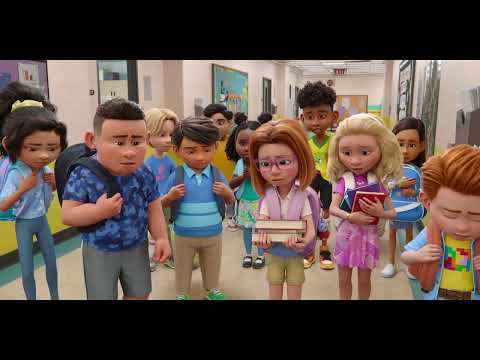
- Placed late in the film, after Leo's goodbye letter, where the class sings through each age from ten down to one in a bittersweet countdown of childhood.
Sound, style, and key takeaways
Heard in isolation, "When I Was Ten" could pass for a smart little Broadway pastiche: an easy lilt in 4/4, close voiced piano chords, kids singing in unison with occasional simple harmony splits. In context, though, it is one of those deceptively light moments that quietly carry a film. According to Film Music Reporter, the track sits mid way through the official soundtrack, coming after a run of character songs and just before the closing reprises and end credits pieces, which positions it as a hinge between classroom chaos and graduation reflection.
The arrangement is stripped down compared to some of the broader numbers in Leo. Instead of a big band or full orchestra crashing in, the song leans on piano, rhythm section, and the kids' voices. The harmony feels classic: think C major with a few jazzy extensions (D minor 7, G7, C major 7, F) that give a hint of standards vocabulary without becoming pastiche for its own sake. Online chord tools show essentially that four chord loop, and you can hear why - it keeps the focus squarely on the words while still supplying enough harmonic movement to avoid feeling like a nursery rhyme.
Key takeaways
- A mid tempo, piano led classroom song that packages a lot of life experience into two minutes and change.
- Text and music are tightly integrated: each verse steps down an age and the harmony walks you down memory lane at the same unhurried pace.
- Balances jokes about Santa, body changes, and tech obsessions with sudden punches of mortality and family tension.
- Shows off Robert Smigel's knack for blending comedy with genuine vulnerability in musical form, something several critics have highlighted.
Screen and media placements
Leo (2023) - soundtrack song - diegetic. The song appears in the classroom shortly after substitute teacher Mrs Malkin has taken Leo to the Everglades and returned alone, reading out a goodbye letter that claims the iguana left of his own accord. Around the 1:11:00 mark, the fifth graders process the news by singing "When I Was Ten", each verse stepping one year back and revealing what the world looked like at that age. The moment is fully diegetic: the kids are singing in story, not overlaid from outside, and the camera treats it as a collective confessional rather than a fantasy montage, which is why TV Tropes tags it as the film's melancholy musical beat.
Outside the film, the track is present on the digital soundtrack album on services like Apple Music, Spotify, and Amazon Music, where it sits between "Happy" and "Last Year (Reprise)". The official song clip lives on YouTube under the title "When I Was Ten - Official Song from Leo", with Netflix pushing it in family playlists and social media snippets. A number of piano tutorials and karaoke style videos have appeared as well, reflecting how quickly it has been adopted for home singalongs and school concerts.
Creation history
The bones of the soundtrack were laid out by Geoff Zanelli, with Robert Smigel contributing original songs as writer and co director. Film Music Reporter flagged early that the album would include a cluster of new tunes by Smigel and collaborators, including the cast driven numbers "Last Year", "Extra Time (Not That Great)", and "When I Was Ten". In press interviews, Smigel singled out this particular song as a personal favorite, describing it as the heart of the film - the moment where the kids voice a fear that had hit his own family in real life when his son first grasped the meaning of death.
ThatShelf's coverage of the Leo press conference paraphrased his account: the idea came from overhearing his child quietly crying about a relative's death and realizing that a line had been crossed, that childhood innocence does not vanish on schedule but in specific, painful flashes. Smigel translated that moment into an eleven year old looking back at being ten - a framing that lets the lyric feel both recent and already nostalgic. The song was produced by Steven M. Gold, and Shazam's credits list Smigel as both composer and lyricist and Gold as producer and engineer, with Leo - Cast as the performing ensemble rather than a single star vocalist.
Song Meaning and Annotations
Plot
By the time we reach the scene that houses "When I Was Ten", Leo has already been on a small odyssey. The 74 year old classroom iguana, voiced by Adam Sandler, has discovered that his time might be running out. A new, tightly wound substitute teacher, Mrs Malkin, has turned the school year into a gauntlet of tests and helicopter parenting. Leo has been smuggled home by various kids across a series of weekend visits, dispensing blunt but compassionate advice in song, and slowly realizing that the fifth graders are carrying a lot more weight than their cheerful faces suggest.
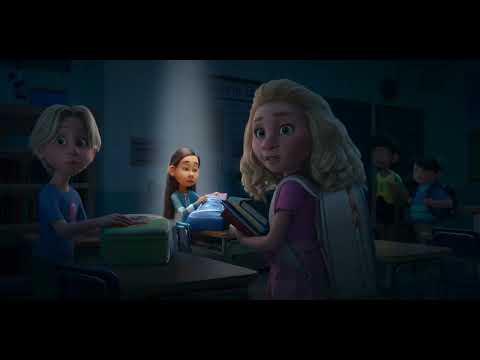
When Mrs Malkin finally hauls Leo off to the Everglades and leaves him there, she spins the story to the class as a voluntary departure. Back in the classroom, she reads Leo's goodbye letter, insisting that he wanted to move on. The kids, crushed and confused, respond by singing "When I Was Ten", a collective number in which they rewind to earlier ages and measure how their worries have grown. Each verse spotlights a different vantage point: ten, nine, eight, all the way back to one, with the full cast joining on the final refrain.
The staging keeps things almost prosaic: desks, whiteboard, familiar classroom clutter. There are no dragons, no fantasy cutaways, just children singing about Santa, phones, drones, and death under fluorescent light. That restraint is deliberate. It allows the lyric to land without distraction and lets the viewer clock the fact that, for this group, a silly song is the safest way to talk about frightening changes.
Song Meaning
At its core, "When I Was Ten" is about that slippery borderland between childhood and everything that comes after. Each verse describes an age with one or two concrete details and a punchline, then moves down a year. We start with the opening claim that at ten, there was not "a single care" and not "a single body hair" to worry about - a cheeky way to introduce puberty and anxiety in the same breath. At nine, the family still leaves milk for Santa, and mom is not in menopause; childhood magic and the stability of parents are still intact.
As the count drops, reality encroaches. At seven, the singer knows rude words and has picked up a hilariously wrong idea about how babies arrive. At six, family conflict and mortality slip in: "my folks would fight, but I was chill. My grandpa and my gerbils were still alive." It is a masterstroke of pairing - minor bickering at home, and the awareness that loved ones and pets do not last forever, all tucked into one line. By five, death is real but distant: the kid admits they did not care that people die and cried harder over haircuts. By four and three, the song nods to life before phones and drones, before surveillance and constant connectivity.
On the surface, it is funny. The kids are saying the sort of wrong but honest things actual fifth graders say when adults are not filtering them. But underneath, the message is sharp: growing up is less about suddenly knowing more and more about the world, and more about being unable to unknow painful facts. The last line - "But that was then" - snaps the thread. Ten is already gone, replaced by a present where friends move away, parents split up, technology is everywhere, and grief can visit without warning.
Critics have homed in on this duality. Cinemablend's write up of the film, syndicated by Yahoo, singled out "When I Was Ten" as the song the writer could not stop replaying, precisely because it marries silly turn of phrase with the sharp sting of recognition. RogerEbert.com's year end "Year of the Teacher" feature grouped it with "You're Not That Great" and "Dear Drone" as examples of how Leo uses music to talk frankly about kids' inner lives without preaching.
Annotations
Because the lyric is deceptively simple, it rewards a closer look at a few key lines and what they bring to the story.
"When I was six, my folks would fight, but I was chill. My grandpa and my gerbils were still alive."
This is where the song tips its hand about what it is really doing. The kid narrator casually lists domestic tension and looming bereavement in the same breath as small pets. That is not making light of loss; it is reflecting how kids genuinely process it. They do not have the language to rank which deaths will shatter them, so they stack everything together: creatures, relatives, routine. The joke in "I was chill" is that of course they were not; they just did not yet grasp how fragile that scene was.
"When I was five, I did not care that people die, a haircut used to make me cry way more."
This line has been quoted everywhere from casual social media posts to YouTube comments, and for good reason. It nails the way small personal inconveniences can loom larger than abstract concepts like mortality, right up until the first time death hits close. Smigel has said that his own son crossing that threshold was a key spark for the song. Here, you can almost hear that moment of realization rushing toward the character, even as they remember a time when the worst thing that could happen was a bad trim.
"When I was nine, we still left milk for Santa Claus, my mom was not in menopause."
The rhyme is deliberately clunky. It is the kind of joke that made at least one teen critic roll their eyes in print, and that is part of the point. The kids are parroting adult language they have half understood. "Menopause" is a big, mysterious word that has suddenly entered their orbit; of course it ends up in a rhyming couplet with Santa Claus. Underneath the gag is a real observation: parents change too, physically and emotionally, and that change can be just as unsettling for children as their own.
Structurally, the year by year countdown functions like a ladder in reverse. Each rung is a snapshot: no phones, no drones, no sense of rules beyond "do not fall". By the time the class hits one and then returns to the group refrain, you feel how quickly ten years vanish. That is why several feature pieces, including one at ThatShelf highlighting five surprising facts about Leo, have called this song the heart of the film. It compresses the theme of fleeting childhood into a single, singable sequence.
Harmony, rhythm, and genre blend
Musically, "When I Was Ten" sits at an intersection of school choir song, show tune, and lightly jazzy ballad. Tempo analysis sites put it in a relaxed mid tempo zone, hovering around the 90 to 110 bpm mark depending on how you tap it out, and tools like Chordify show the harmony cycling through Dm7 - G7 - Cmaj7 - F in a comfortable C major register. That is standard fare for Great American Songbook influenced material, and deliberately so. Smigel is nodding to the sound world of classic cabaret and film standards while still keeping things simple enough for child performers.
The rhythm section plays straight, almost like a metronomic school accompanist, while the vocal lines sit slightly behind the beat, giving the impression of hesitant kids finding their courage. The melody lifts on words that carry hope or absurdity and falls on the phrases that carry loss. You can hear it when the line about someone "still alive" drops down at the end of the phrase, as if sinking in.
Humor, vulnerability, and language
Lyrically, the song is packed with markers of a very specific era of childhood: phones, drones, haircuts, food at fast food chains, social media tinged birthday parties implied around the edges. But it also taps into timeless images: leaving treats for Santa, laughing at toilet humor, misunderstanding where babies come from. That combination gives the song a double life. Kids watching in 2023 recognise their own gadget filled world, while adults of different generations recognise the structure of their own memories.
Several reviewers have pointed out that a number like this could easily have tipped into saccharine territory. What rescues it is the willingness to let the kids say the quiet part out loud. They admit to being scared, grossed out, selfish, mournful, all within the same 16 bar phrases. The rhyme choices are deliberately awkward at points, but that awkwardness matches the age group, and that honesty is why a critic at ThatShelf could credibly call it the film's beating heart even while acknowledging that not every gag in Leo lands.
Technical Information
- Artist: Leo - Cast
- Featured: Fifth grade ensemble voices from the film's classroom cast
- Composer: Robert Smigel
- Lyricist: Robert Smigel
- Producer: Steven M. Gold
- Release Date: November 21, 2023 (soundtrack album)
- Genre: Musicals, soundtrack, film song
- Instruments: Piano, bass, light drums, possibly guitar and subtle orchestral pads
- Label: Netflix Music, LLC
- Mood: Nostalgic, wry, tender, reflective
- Length: 2:39
- Track #: 10 on Leo (Soundtrack from the Netflix Film)
- Language: English
- Album: Leo (Soundtrack from the Netflix Film)
- Music style: Piano led show tune with light jazz influences and ensemble vocals
- Poetic meter: Mostly anapestic and iambic lines shaped to fit the swing of the melody; lots of three syllable pickups landing on the beat.
- Key (recording): C major
- Tempo: Mid tempo around the low 100s bpm in 4/4
Questions and Answers
- Who wrote and composed "When I Was Ten"?
- Robert Smigel is credited as both composer and lyricist. He wrote the tune and the text, drawing on his experience as co writer and co director of the film, as well as on personal family moments that shaped his view of childhood.
- Who performs the song in the film and on the soundtrack?
- The track is credited to Leo - Cast, meaning the fifth grade characters' voice actors sing it as an ensemble. There is no single pop star fronting the piece; it is very much the kids' song.
- When was "When I Was Ten" released?
- The song was released digitally on November 21, 2023 as part of Leo (Soundtrack from the Netflix Film), which collects both Geoff Zanelli's score and the original songs.
- Where does the song appear in the movie Leo?
- It appears in the classroom after Mrs Malkin returns from the Everglades without Leo and reads out his supposed goodbye letter. The devastated class sings "When I Was Ten" as they process what they think is a permanent farewell.
- What is the main message of the song?
- The piece is about looking back at earlier ages and noticing how worry creeps in as you learn more about the world. Each verse remembers a time when life seemed simpler, then quietly admits that knowledge of death, conflict, and technology has made things messier.
- Is the song meant more for kids or adults?
- Like a lot of Leo, it sits right in the middle. Kids get the surface level jokes and the catchy tune, while adults hear deeper currents about mortality, parental change, and the way childhood milestones blur together when you look back.
- Why do critics keep highlighting this particular track?
- Because it is one of the few moments where the film drops its guard and lets the kids articulate what growing up feels like. According to several reviews, it encapsulates the blend of silliness and honesty that makes Leo stand out among recent classroom themed stories.
- How does "When I Was Ten" compare to other songs in Leo?
- Compared with the brassy "Extra Time (Not That Great)" or the lullaby "Don't Cry", this track is more restrained and conversational. It has fewer spectacle elements and more confessional lines, which makes it linger in the memory.
- Does the song appear over the end credits?
- No. The end credits are anchored by "When It's Us" and reprises of "Last Year". "When I Was Ten" is firmly placed in story, which is part of why it lands so strongly as a character moment.
- Has "When I Was Ten" been considered for any awards?
- The song was on the long list of 94 pieces vying for Oscar consideration in the Best Original Song category for its year, which gave it a brief life in awards discourse even though it did not advance to nomination.
- What makes the lyrics feel authentic to real fifth graders?
- Smigel leans into oddly specific details and slightly wrong assumptions - misunderstanding where babies come from, mixing up adult medical terms, fixating on haircuts and tech - which are exactly the kind of things kids latch onto when trying to sound worldly.
- Is the melody difficult to sing?
- The melody is quite approachable. It sits in a comfortable range for most young voices, mostly stepwise motion with a few small jumps, and the phrases line up with natural speech patterns, which is why school choirs and YouTube singers have been able to cover it so quickly.
- Why does the song count down from ten to one instead of up?
- Counting down emphasizes loss: every step takes you further away from the present ten year old and closer to the almost wordless baby at one. It underlines how quickly those years vanish when you look back from the vantage point of the classroom.
Awards and Chart Positions
This is not a chart banger in the pop radio sense, but "When I Was Ten" has built a quiet reputation in award chatter and streaming stats.
| Recognition | Details |
|---|---|
| Oscar eligibility list | The song appeared on the Academy's long list of 94 titles vying for Best Original Song consideration for its release year, listed simply as "LEO - When I Was Ten" alongside tracks from larger franchise films, as noted in The Film Experience's coverage. |
| Streaming metrics | Data aggregators such as Tunebat and Musicstax log the track with mid level popularity on major platforms, showing it as a well played but not overexposed piece of the Leo soundtrack. |
| Critical mentions | Entertainment outlets including Cinemablend and various film blogs have singled the song out as a standout, with some calling it their favorite number in the film and others noting how effectively it crystallises the story's themes. |
| Year of the teacher discussion | In RogerEbert.com's feature on classroom centered films, the Leo song score and titles such as "When I Was Ten" were highlighted as helping define 2023 as a notable year for teacher stories on screen. |
How to Sing When I Was Ten
If you are thinking about covering "When I Was Ten" - whether as a solo, with friends, or as a full choir - think of it as a story song that just happens to sit on very singable chords. The trick is less about vocal fireworks and more about timing, diction, and keeping the humor grounded.
Key performance parameters
- Key: C major in the original recording.
- Tempo: Mid tempo, roughly in the 90 to 110 bpm pocket, with a steady four beat pulse.
- Feel: Light swing or gently shuffling pop ballad; not straight rock, not full jazz.
- Range: Sits mostly in the middle of the staff for treble voices, making it easy for kids and comfortable for adults.
- Texture: Verses in unison or lightly doubled voices, with simple harmonies and group refrains.
Step by step
- Get the groove into your body - Before you worry about pitch, clap or tap along with the recording until the pulse feels natural. Count "one and two and three and four and" and notice where the words fall; many phrases start just before the bar line.
- Speak the lyric like a monologue - These lines are basically kids telling stories. Read each verse aloud as if you are venting to a friend about how things used to be. Mark where your voice naturally rises or drops and try to preserve that contour when you add melody.
- Break the song into age chunks - Practice the "ten" and "nine" verse as one unit, then "eight" and "seven", and so on. Each verse uses similar melodic shapes, so once one clicks, the rest follow more easily.
- Plan your breathing - Lines like "When I was five I did not care that people die" are compact but dense. Take a good breath before those longer phrases and aim to carry each sentence in a single exhale without rushing. Mark breaths at commas or natural thought breaks, not randomly mid word.
- Lean into the punchlines without overdoing them - The jokes land best when they feel like real kids oversharing, not sketch comedians milking every syllable. Let phrases like the Santa and menopause couplet or the baby butt line pop a little, then move on; do not sit on them as if you are waiting for applause.
- Shape group dynamics - If you are directing a choir, decide where the sound should be small and confessional and where it should bloom. Often, the early verses benefit from a conversational dynamic and the later ones can swell as the emotion sharpens.
- Coordinate entrances and cutoffs - Because the arrangement often has the group land consonants together, rehearse exactly how long you hold words like "alive" or "fun" and where you release. Record a run through and listen for messy endings; clean those up first.
- Use a mic to support nuance, not volume wars - For amplified performances, set levels so the softest verses are still audible, then focus on color rather than shouting. This is not a belter's number; it lives in a more conversational, confiding place.
- Watch out for common pitfalls - The most frequent issues are rushing the tempo when the jokes land, flattening the swing into straight eighths, and losing pitch on long sustained notes at the end of phrases. Practicing with a metronome and piano can help keep everything grounded.
Practice materials
For rehearsal, a good combination is the official soundtrack version, a simple piano reduction or lead sheet in C major, and, if you are arranging for kids, any of the existing school choir arrangements that have surfaced online. According to NME magazine style coverage of kids' musical trends, this kind of mid tempo, nostalgia driven ensemble piece is increasingly popular for school performances, largely because it is catchy without being vocally punishing.
Additional Info
One of the pleasures of following film music across decades is watching how different creative teams tackle similar problems. In Leo, Smigel and Zanelli had to figure out how to give each kid a voice, carve out space for Adam Sandler's wise but anxious iguana, and keep the tone light enough for family viewing. "When I Was Ten" ends up being a kind of pressure valve: a simple song that quietly gathers up all the film's anxieties about growing up and puts them in one place.
According to ThatShelf's report on the Leo press conference, Smigel openly described the song as his favorite scene, precisely because it sneaks up on people. Variety's coverage of his awards season comments likewise notes that he pointed to this number when talking about the showpiece sequences. And beyond trade coverage, you see the track crop up again and again in thinkpieces as the example of Leo getting something just right; RogerEbert.com, for instance, put it alongside other classroom songs in a feature arguing that 2023 belonged to stories about teachers and kids learning to talk to each other.
On the fan side, it has already started to take on a life of its own. There are piano tutorials built around the original key, vocal covers that treat it as a torch song, and school concert videos where local classes adopt it as their own farewell number. As one small but telling TikTok comment put it, this is the song that made some viewers suddenly remember being ten and realising their grandparents would not be around forever. In that sense, it does exactly what the best soundtrack cuts do: it pins a specific moment in a story to a moment in your own life.
Key Contributors
| Subject | Relation | Object |
|---|---|---|
| Robert Smigel | wrote and composed | When I Was Ten |
| Steven M. Gold | produced and engineered | When I Was Ten |
| Leo - Cast | performed | When I Was Ten |
| Geoff Zanelli | composed original score for | Leo (Soundtrack from the Netflix Film) |
| Netflix Music, LLC | released | Leo (Soundtrack from the Netflix Film) |
| Robert Marianetti | co directed | Leo (2023 film) |
| David Wachtenheim | co directed | Leo (2023 film) |
| Adam Sandler | voiced | Leo the iguana |
| Leo (2023 film) | features as classroom song | When I Was Ten |
Sources: STLyrics Leo page, Film Music Reporter soundtrack announcement, Soundtracki scene guide, Apple Music and Spotify album listings, Shazam track credits, Tunebat and chord tools, Netflix Leo page, Cinemablend and Yahoo features, The Film Experience Oscar song list, ThatShelf Leo press conference report, RogerEbert.com 2023 teacher feature, Deadline and other Leo reviews.
A-Z Lyrics Universe
Cynthia Erivo Popular
Ariana Grande Horsepower
Post Malone Ain't No Love in Oklahoma
Luke Combs Good Riddance (Time of Your Life)
Green Day Bye Bye Bye
*NSYNC You're the One That I Wan
John Travolta & Olivia Newton-John I Always Wanted a Brother
Braelyn Rankins, Theo Somolu, Kelvin Harrison Jr. and Aaron Pierre The Power of Love
Frankie Goes to Hollywood Beyond
Auli’i Cravalho feat. Rachel House MORE ›