For Good Lyrics – Cynthia Erivo & Ariana Grande
Soundtrack Album: Wicked: For Good
[ELPHABA, spoken] Promise me that you won't try to clear my name. Promise me
[GLINDA, spoken] Why? Why would you ask me to promise that?
[ELPHABA SINGING:]
I'm limited
[ELPHABA, spoken]
Just look at me
[ELPHABA]
I'm limited
And just look at you
You can do all I couldn't do, Glinda
Now it's up to you
[ELPHABA, spoken]
Here, take it
[GLINDA, spoken]
What? But you know I, I can't read this, I—
[ELPHABA, spoken]
Well, you have to learn
[ELPHABA]
Because now it's up to you
For both of us
Now it's up to you
[GLINDA]
I've heard it said
That people come into our lives for a reason
Bringing something we must learn
And we are led
To those who help us most to grow
If we let them
And we help them in return
Well, I don't know if I believe that's true
But I know I'm who I am today
Because I knew you
Like a comet pulled from orbit
As it passes a sun
Like a stream that meets a boulder
Halfway through the wood
Who can say if I've been changed for the better? But
Because I knew you
I have been changed for good
[ELPHABA]
It well may be
That we will never meet again
In this lifetime
So let me say before we part
So much of me
Is made of what I learned from you
You'll be with me
Like a handprint on my heart
And now whatever way our stories end
I know you have re-written mine
By being my friend
Like a ship blown from its mooring
By a wind off the sea
Like a seed dropped by a skybird
In a distant wood
Who can say if I've been changed for the better? But
Because I knew you
[GLINDA]
Because I knew you
[GLINDA & ELPHABA]
I have been changed for good
[ELPHABA]
And just to clear the air
I ask forgiveness for the things I've done you blame me for
[GLINDA]
But then, I guess we know there's blame to share
[GLINDA & ELPHABA]
And none of it seems to matter anymore
[GLINDA & ELPHABA]
Like a comet pulled from orbit (Like a ship blown from its mooring)
As it passes a sun (By a wind off the sea)
Like a stream that meets a boulder (Like a seed dropped by a bird)
Halfway through the wood (In the wood)
[GLINDA & ELPHABA]
Who can say if I've been changed for the better?
I do believe I have been changed for the better
[GLINDA]
And because I knew you
[ELPHABA]
Because I knew you
[GLINDA & ELPHABA]
Because I knew you
I have been changed
For good

Wicked: For Good
Soundtrack Lyrics for Movie, 2025
Track Listing
Wicked Movie Cast & Cynthia Erivo (Ft. Ariana Grande & Michelle Yeoh)
Ariana Grande & Wicked Movie Cast (Ft. Michelle Yeoh)
Cynthia Erivo
Marissa Bode, Cynthia Erivo & Ethan Slater
Jeff Goldblum, Cynthia Erivo & Ariana Grande
Ariana Grande
Cynthia Erivo & Jonathan Bailey
Cynthia Erivo
Wicked Movie Cast & Ethan Slater
Ariana Grande
Cynthia Erivo & Ariana Grande
John Powell & Stephen Schwartz, Featuring Ariana Grande & Cynthia Erivo
Stephen Schwartz
Song Overview
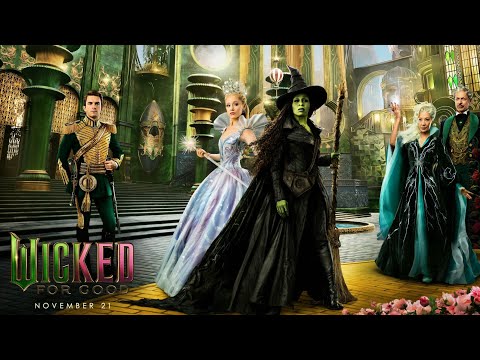
Review and Highlights
Quick summary
- This screen version is the namesake moment of the second film, tying up the arcs of Elphaba and Glinda after two movies of political and personal fallout.
- The text keeps almost all of the 2003 stage wording but adds more spoken material at the top of the scene, letting us hear the promise about Elphaba’s legacy and the handover of the spellbook in full.
- Erivo and Grande lean into film acting: the singing is more conversational, the vibrato narrower, and the climaxes shaped for close microphones rather than a Broadway house.
- Arrangement wise, Stephen Schwartz, Stephen Oremus, and Greg Wells preserve the core piano-and-strings frame but extend underscoring around the dialogue so the scene plays as one continuous dramatic beat.
- The track appears on Wicked: For Good - The Soundtrack, released alongside the movie in November 2025, and sits near the end of a set that also introduces two new Schwartz numbers for the sequel.
What is different in this version?
The first thing you notice is how much more of the scene survives onto the album. The original Broadway cast recording faded up almost straight into Glinda’s sung entrance. Here we hear the private negotiation that precedes it: Elphaba asking her friend not to clear her name after she vanishes, Glinda’s hurt confusion, and the explicit passing of the Grimmerie. The underscored spoken lines about seeing Elphaba through the public’s eyes rather than Glinda’s own are a stark reminder that this is not simply a personal goodbye but a political choice.
The second shift is in tone. Where Idina Menzel and Kristin Chenoweth built long lines that could carry to the back row, Erivo and Grande often sing as if the microphone is inches away. Lines that used to ride a broad, legato arc now carry tiny flickers of breath and consonant detail. Reviews have been quick to point out how director Jon M. Chu favours close-ups here; the audio mirrors that decision, inviting us into small hesitations and half-swallowed syllables that would disappear in a proscenium theatre.
There are also modest wording tweaks and emphases. A few connective phrases are tightened, and the alternation near the end between “seed dropped by a bird” and “comet pulled from orbit” is balanced even more carefully so that neither melody line feels subordinate. The overall architecture, though, remains very close to the stage original: two solo verses followed by counterpoint, then a final unison stretch on the closing title phrase. The movie does not reinvent the piece so much as re-frame it for a medium where we can see every thought land on a character’s face.
According to early film reviews, the scene plays almost in real time, with the chaos of Oz held at a distance while the duet unfolds in a ruined, half-lit space. Critics at outlets like the New York Post and Newsweek have singled it out as the place where the spectacle finally drops away and the story reveals its heart. That matches how it feels on record: even surrounded by thunderous orchestral cues and new showstoppers like No Place Like Home and The Girl in the Bubble, this quieter track sounds like the franchise taking a breath.
Creation history
The root of the song still lies in Stephen Schwartz’s early 2000s conversation with his daughter about what she would say if she never saw her best friend again. What is new is how that material has been revisited for cinema. As Schwartz and Oremus have discussed over the years, the two Wicked films were shot back to back, allowing them to hear Erivo and Grande live in these characters long before post-production. Director Jon M. Chu has described an early run-through at his house, when the pair sang the duet together for the first time in front of Schwartz and Winnie Holzman; he talks about that moment as the night he knew the second film would work at an emotional level.
After the first movie’s success, Chu went back into the sequel’s edit and made changes, including a reworked cut of this finale. Entertainment Weekly reports that he added new dialogue at the top of the scene to underline Elphaba’s growth and clarified Glinda’s burden in keeping the truth hidden. On the recording, you can hear those adjustments in the spoken exchange about promises, public opinion, and the spellbook. They give the familiar song a sharper dramatic spine without disturbing the melody people know.
On the production side, Schwartz, Oremus, and Greg Wells treat the track as the dramatic summit of the soundtrack. The instrumentation is not radically larger than the theatre version - still piano led, with strings and winds providing colour - but it is mixed cinematically. Low strings rumble around Elphaba’s lines, high violins shimmer around Glinda, and there is a subtle expansion in the stereo field during the counterpoint section that mimics the feeling of the camera slowly circling them. If you listen on headphones, you can hear how carefully the engineers place each voice in the stereo image so that their blend never collapses into mush.
Song Meaning and Annotations
Plot in the film version
By the time this scene arrives in the second movie, the relationship between the two witches has been through the wars. The first film ends with Elphaba quite literally flying away from the institutions that tried to tame her. The sequel pushes further: propaganda turns her into a national threat, new songs lay out how the regime tightens its grip, and Glinda drifts into the role of polished spokesperson for a government she no longer fully trusts.
In that context, the farewell feels heavier. The film spends more time on the cost of rebellion and the seduction of power, so when Elphaba asks Glinda to promise that she will not attempt to clear her name later, it lands as a sober tactical move rather than vague self-pity. She understands that Oz needs its myth of the Wicked Witch to prop up the story it has been telling about law, order, and safety. Clearing that myth might actually do more harm than good to the people she has been trying to protect.
Glinda’s side of the scene is slightly different too. Across the two films, she has been presented as media savvy, clever, and unusually sensitive to the way narratives are staged. When she protests the request not to exonerate her friend, it is not because she does not grasp the stakes but because she hates the idea of letting the lie stand. The spoken exchange about the spellbook - Glinda admitting she cannot read it, Elphaba insisting she will have to learn - doubles as an argument about literacy in power: who gets to interpret the forces that shape their world.
Once the spoken preamble ends, the sung dialogue tracks closely to the stage script. Glinda starts from the familiar premise that people come into our lives for a reason, then undercuts it with uncertainty. Elphaba answers with the “handprint on my heart” metaphor and the acknowledgment that her story has been rewritten by friendship. Both know they may never meet again in this lifetime; both choose to leave each other with gratitude rather than bitterness.
Song meaning in the movie
At its core, the meaning has not changed: two people who once misunderstood each other recognise that they have become who they are through that very tension. What the film does is add extra layers of context. The promise not to clear Elphaba’s name turns the duet into a commentary on public memory. Instead of dreaming of being understood by the world, Elphaba accepts that history might always misread her and places her trust in a single living witness. That is a darker conclusion than many musical finales offer, and it fits a sequel that leans into propaganda and revisionism as themes.
The Grimmerie exchange sharpens another undercurrent. When Elphaba forces Glinda to hold the book and learn it, she symbolically hands over both knowledge and responsibility. Glinda will go back to a life of palaces and public ceremonies, but she will do so carrying the one tool that might let her push Oz in a kinder direction. The duet becomes less of a static goodbye and more of a commissioning ritual: one woman goes into hiding, the other stays in the spotlight, and both are changed by having known the other.
The film also foregrounds the idea that change can be painful. Plenty of fans have interpreted the line about being “changed for the better” as unambiguously optimistic. On screen, that optimism is tempered by the visual storytelling. The setting is ruined; the land is scarred by conflict. The two characters are older, bruised by the consequences of their choices. When they affirm that they have been changed, you can see in their faces that they are remembering betrayals as well as kindness. The line reads less like a greeting card and more like a hard-won admission that growth rarely comes clean.
Annotations: what the new script details add
“Promise me that you will not try”
Opening with a promise changes the temperature of the scene. Before anyone sings a word, we understand that this is not a nostalgic catch-up but a negotiation. Elphaba is setting terms for her own disappearance. The fact that the request is about what Glinda must not do - clear her name - complicates the usual wish that friends defend each other. Here love means restraint, not vindication.
“Not with your eyes, with theirs”
This line is new to most listeners, and it might be the single most important addition. Elphaba forces Glinda to imagine how the mob sees her: not as a friend but as a symbol. In one stroke, the film brings the whole apparatus of Oz’s propaganda into the room. It also acknowledges something that has always been true for marginalised figures in fiction and in life: they do not get to control the lens through which power views them.
“You are the only friend I ever had”
Stage fans will recognise this exchange from the script, but the camera lets it land differently. Erivo plays the line with a kind of quiet shock, as if she has only just realised it herself. Grande’s reply, about having many friends but only one that mattered, undercuts Glinda’s image as a social butterfly. Unlike on the cast album, the soundtrack preserves these lines more fully, and the mix leaves space around them so they feel like the emotional fulcrum of the scene.
The film also doubles down on the motif of learning. When Glinda admits she cannot read the spellbook and Elphaba replies that she will have to, it foreshadows the future ruler who has done her homework. In many interpretations of the musical, Glinda’s leadership feels mostly cosmetic. The movie hints that this version of the character might eventually understand the machinery behind the curtain and make different choices because of it.
Rhythm, harmony, and performance choices
Musically, the film keeps the same key area and basic structure as the theatre chart, but the feel is slightly more elastic. Tempi breathe around the dialogue; phrases are allowed to linger if a look between the characters calls for it. You can hear this especially in the first verse, where Grande sometimes holds a syllable just long enough for a flicker of doubt or humour to cross Glinda’s face before moving on.
In the climactic counterpoint section, the tradition of swapping vocal lines survives. As in the stage arrangements, there are moments when Elphaba floats above Glinda rather than sitting under her, a neat signal that their inner lives have shifted. Erivo’s tone tends to be earthier and more covered, Grande’s lighter and more glittering, but they meet in the middle on the final sustained notes. The blend is different from the Menzel-Chenoweth pairing - more contemporary pop inflection on Glinda’s top line, a slightly more soulful edge on Elphaba’s - yet the underlying harmony writing is the same.
Rotten Tomatoes’ pre-release interview with the cast made much of how the two actors approached the scene only after living with the characters across both films. Erivo talks about arriving at the duet with a deeper understanding of what these women are leaving behind; you can hear that in the way she leans into words like “stories” and “friend”. Grande, for her part, has spoken in other interviews about wanting to show a side of Glinda that is not simply comedic or bubbly anymore. Her choices in this track - straighter tone, less twang, more grounded vowels - match that desire.
Key Facts
- Artist: Wicked Movie Cast featuring Cynthia Erivo and Ariana Grande
- Featured: Duet between Elphaba (Erivo) and Glinda (Grande)
- Composer: Stephen Schwartz
- Producer: Stephen Schwartz, Stephen Oremus, Greg Wells
- Release Date: November 21, 2025 (soundtrack and film)
- Genre: Film musical ballad, show tune
- Instruments: Piano, strings, woodwinds, subtle percussion, sound design textures
- Label: Republic Records, Verve Label Group, in partnership with Universal
- Mood: Reflective, bittersweet, resolute, intimate
- Length: 5:04
- Track #: 11 on Wicked: For Good - The Soundtrack (with a reprise as the film finale)
- Language: English
- Album: Wicked: For Good - The Soundtrack
- Music style: Two-voice ballad with contrapuntal climax, arranged for modern film orchestration
- Poetic meter: Largely iambic with conversational deviations and some anapestic figures
Canonical Entities & Relations
- Stephen Schwartz - composed and wrote the text for the duet and oversaw its adaptation for film.
- Cynthia Erivo - plays Elphaba in the movies and performs the lower and occasionally higher vocal line in the new recording.
- Ariana Grande - plays Glinda on screen and sings the other line in the duet, bringing a pop shaped tone to a theatre role.
- Jon M. Chu - directs both Wicked films and chose to reshape the finale scene, adding new dialogue around the number.
- Winnie Holzman - book writer of the stage show, whose dialogue forms the backbone of the film scene leading into the song.
- Greg Wells - co-produces and mixes the soundtrack, helping translate the theatre orchestration to a modern film mix.
- Stephen Oremus - long-time Wicked music supervisor and co-producer on the soundtrack, responsible for vocal arrangements and conducting.
- Universal Pictures - studio behind the two-part film adaptation, releasing both movies and their associated albums.
- Republic Records and Verve Label Group - labels handling the commercial release of the soundtrack.
- Gershwin Theatre - original Broadway venue where the duet has been performed since 2003 and where the One Wonderful Night TV performance was partially filmed.
Questions and Answers
- How different is the movie text from the original stage version?
- The sung sections are almost identical, with the same metaphors and emotional beats. The big difference lives in the prologue: the film and soundtrack include more of the surrounding scene, including Elphaba’s request that Glinda not clear her name and a fuller exchange about the spellbook. Those extra lines shift the frame from purely personal to explicitly political.
- Why does Elphaba ask Glinda not to clear her name?
- Within the story, she understands that Oz has built its sense of order on the image of a dangerous witch. If Glinda dismantles that myth, it could destabilise the regime and put others at risk. On a thematic level, the choice underlines how history often prefers simple villains; Elphaba opts to let that simplification stand so long as at least one person knows the truth.
- Does the film change the basic message of the duet?
- Not really. The central idea - that knowing another person can permanently alter who you are - remains intact. What changes is the shading. The camera and added dialogue make it clearer that the change has come at a cost, and that the world outside the room may never recognise their connection.
- How do Cynthia Erivo and Ariana Grande’s vocals compare to Idina Menzel and Kristin Chenoweth’s?
- The earlier recording leans into classic Broadway production: bigger vibrato, more obvious dynamic swells, and phrasing designed for a large house. The movie version is quieter and more detailed. Erivo often keeps the tone focused and earthy, letting intensity build from text rather than volume; Grande pares back her usual pop agility in favour of clean, centred vowels. It feels less like a showstopper and more like eavesdropping on a real conversation.
- What do critics say about this new take?
- Early reviews have consistently picked out the duet as a highlight of the sequel, even in articles that are mixed on the film as a whole. Several critics note that while the second movie adds new songs aiming at awards recognition, the familiar farewell still lands hardest. According to some press coverage, Chu’s decision to stage the number with minimal visual distraction is a key factor in its impact.
- How does this track relate to the two new songs on the soundtrack?
- No Place Like Home and The Girl in the Bubble are designed to deepen Elphaba and Glinda’s individual journeys earlier in the film. By the time the farewell arrives, we have heard each woman lay out her private fears and hopes in those new solos. That context makes the shared duet feel even richer: we are hearing two people who have already sung frankly alone now attempt to speak honestly together.
- What role did the NBC One Wonderful Night special play in shaping expectations?
- The TV event featured Erivo and Grande singing alongside Menzel and Chenoweth with additional lines written just for that performance. Those television-only words are not in the film, but they primed audiences to expect fresh touches and showed that Schwartz was willing to revisit the material. The special also underlined the passing of the torch from the original Broadway cast to the film leads.
- Is there any hint of a romantic reading of the relationship in the film version?
- The movies, like most stagings of the musical, stop short of labelling the connection romantic. That said, the camera’s focus on tiny gestures - shared looks, hands touching, the almost unbearable closeness of their final embrace - keeps the emotional stakes high enough that many viewers read the scene as at least potentially more than platonic. The text itself remains framed as friendship, but the performance leaves room for interpretation.
- Why do some fans say the line about being “changed for the better” hits differently on screen?
- In a theatre, the line can feel like a straightforward uplift. On film, with years of plot and two movies’ worth of visual trauma behind it, the same words land against images of ruined landscapes and haunted faces. The viewer can see that “better” includes scars as well as growth, which makes the affirmation feel braver and less sugary.
- Does the soundtrack include a reprise of the duet?
- Yes. The album closes with a finale track built around a reprise of the title song, similar to the stage show’s ending but re-titled and expanded for film. This reprise brings in more of the company and ties the Oz-wide consequences of the women’s choices back to their private farewell.
Awards and Chart Positions
At the time of writing, the album that contains this track is just reaching the world. The soundtrack has already attracted attention on awards shortlists thanks to its new material: No Place Like Home and The Girl in the Bubble have been nominated at the Hollywood Music in Media Awards in feature-film categories, and the album as a whole appears on the same ballot. The duet itself is not singled out by name in those nominations, but it is clear from coverage that industry voters and critics regard it as the emotional anchor of the record.
Because the soundtrack is being released day-and-date with the film in multiple formats - digital, CD, LP, and picture disc - chart data is still in flux. Pre-add and pre-save campaigns on services such as Apple Music and Spotify, along with a robust physical pre-order push through Universal and Republic’s official store, suggest strong first-week numbers. The first Wicked movie’s album established a precedent for long life on the charts, and few observers expect the sequel’s companion release to behave differently, especially with the title duet sitting at its climax.
| Release | Category | Key recognition | Relevance to the duet |
|---|---|---|---|
| Wicked: For Good - The Soundtrack | Soundtrack album | Hollywood Music in Media Awards nominations for best song and album (pending at time of writing) | Hosts the new recording of the farewell duet and frames it as the title moment of the sequel. |
| Wicked: One Wonderful Night | Live television special and album | Strong streaming engagement and broadcast reach on NBC and Peacock | Features a cross-generational performance that helped re-introduce the song just before the film opened. |
How to Sing For Good
For singers wanting to tackle this version, it helps to think less like a stage belter and more like a film actor whose voice happens to be recorded in high definition. The notes are much the same as the theatre chart; the challenge lies in restraint.
- Key area: close to Db major in most published scores, though transposed versions circulate for different voices.
- Approximate tempo: around 70–80 BPM, with rubato allowed around dialogue and emotional peaks.
- Vocal range: roughly from the low G or Ab below middle C up to about Db or Eb an octave and a half above, depending on cut and arrangement.
- Style: contemporary musical theatre ballad with pop influences, emphasising clean speech-like delivery and controlled vibrato.
Step-by-step guide (film-style)
-
Learn the scene, not just the tune
Treat the spoken introduction as part of the same musical arc. Practise moving from plain speech into sung lines without changing your emotional temperature. Record yourself delivering the promise and the Grimmerie exchange, then sliding into the opening phrase; the transition should feel seamless, not like a gear shift into “song mode”. -
Dial in a cinematic dynamic range
Work at low volumes first. Aim for a supported, airy piano rather than a big theatre mezzo-forte. Once you can sustain the full melody quietly with good breath support, layer in dynamics that grow out of the text: save your largest sound for the few places where the harmony really needs it, rather than riding at maximum from the start. -
Shape vowels for microphones
Listen closely to how Erivo and Grande round key vowels so they sit comfortably under close miking. Avoid overly bright, spread sounds on climactic notes; think of “good” as a tall, rounded [ʊ] rather than a shouted “guhd.” Practise holding important syllables on humming or lip trills, then open into the vowel while keeping the same support. -
Plan breaths around sentences, not bars
Circle punctuation marks in the text and treat them as guides. Breathe where the character would in conversation. For example, try to carry “so much of me is made of what I learned from you” through on one supported airflow. Use slow inhale exercises - four counts in, eight counts out on a hiss - to build the stamina you need. -
Build a shared placement with your partner
When you rehearse with your duet partner, start by agreeing on a common tonal “home”: slightly forward, focused, with minimal breathiness unless you both add it for colour on the same word. Sing the counterpoint section on a neutral syllable like “nah” until your blend is smooth, then add words back in while preserving the shared placement. -
Rehearse the swaps in the harmony
Mark in your score where the upper and lower lines cross so you are not surprised in the climax. Practise those passages in slow motion: first the lower line alone, then the upper alone, then together at half speed. Your goal is to make the moment where the roles reverse feel effortless, mirroring the way the characters have influenced each other. -
Think visually as well as vocally
The movie reminds us that tiny physical choices matter. Decide what your hands, eyes, and posture are doing on key lines. A slight turn away, a glance down at the book, or a delayed look back at your partner can communicate as much as a swell in the voice. Practise in front of a mirror or on camera to make sure your physical choices support, rather than distract from, the sound. -
Avoid the biggest pitfalls
Common problems include pushing for volume in the climax, letting vibrato widen under stress, and rushing the last phrases. To counter this, rehearse the entire final page at mezzo-piano, with a consciously narrow vibrato or even straight tone, until intonation and blend are rock solid. Only then add volume in tiny increments. -
Create your own reference tracks
Once you have both parts learned, record a version where you sing your partner’s line and play your own on piano, then the opposite. These DIY rehearsal tracks teach you to listen actively across the duet rather than getting locked inside your own melody. When you return to the official soundtrack for inspiration, use it for phrasing ideas, not as a rigid template.
Additional Info
In the run-up to the sequel’s release, Universal and its partners treated this duet as a kind of calling card for the whole project. NBC’s Wicked: One Wonderful Night special put it at the centre of a four-witch performance that brought together the stage and screen casts. People magazine and other outlets documented that evening as a symbolic hand-off from one generation of performers to another.
Director Jon M. Chu has been especially vocal about what the number means to him. In an interview about the films’ development, he recalled the first time Erivo and Grande sang the piece together in his home, with Stephen Schwartz and Winnie Holzman present. He describes that impromptu living-room rendition as the moment he felt the adaptation click into place; everything else, he suggests, was built to support the emotional truth that surfaced in that room. According to NME magazine’s broader coverage of the sequel, that ethos carries through the finished film: no matter how big the sets or how complex the visual effects, the camera comes back to two women in a room.
Critics have already started to position the new recording within the larger history of the score. Some writers note that, while fresh additions like No Place Like Home and The Girl in the Bubble may draw awards buzz, the Act II farewell is still the song viewers leave humming. Others, like a recent Rolling Stone feature on the two-part film project, frame it as evidence of how adaptable Schwartz’s material is: it can survive new contexts, new orchestrations, and new performers without losing its core identity.
For long-time fans, one of the pleasures of this version lies in its small surprises. Hearing the dialogue restored on an official album, catching a slightly different inflexion on a well-known metaphor, noticing how Erivo and Grande swap lines in ways that echo but do not copy their predecessors - all of that invites listeners to hear a familiar piece with fresh ears. For newcomers meeting the story through the movies first, this may be “the” version they grow up with. Either way, the duet has successfully made the leap from stage classic to film standard, carrying its story of friendship, compromise, and lasting change into a new medium.
Sources: Playbill, Billboard, Rotten Tomatoes editorial, NBC Insider, Vanity Fair, People, Indiewire, Newsweek, official Wicked and Universal soundtrack materials
A-Z Lyrics Universe
Cynthia Erivo Popular
Ariana Grande Horsepower
Post Malone Ain't No Love in Oklahoma
Luke Combs Good Riddance (Time of Your Life)
Green Day Bye Bye Bye
*NSYNC You're the One That I Wan
John Travolta & Olivia Newton-John I Always Wanted a Brother
Braelyn Rankins, Theo Somolu, Kelvin Harrison Jr. and Aaron Pierre The Power of Love
Frankie Goes to Hollywood Beyond
Auli’i Cravalho feat. Rachel House MORE ›