The Girl in the Bubble Lyrics – Ariana Grande
Soundtrack Album: Wicked: For Good
[GLINDA, spoken]
Look
[GLINDA]
There's that beautiful girl
With the beautiful life
Such a beautiful life
Built on lies
'Cause all that's required
To live in a dream
Is endlessly closing your eyes
She spins such beautiful stories
To sing her to sleep
Full of magic and glory and love
She's the girl in the bubble
The bright shiny bubble
Blissfully floating above
Ah, but the truth has a way
Of seeping on in
Beneath the surface and sheen
And blind as you try to be
Eventually
It's hard to unsee what you've seen
And so that beautiful girl
With the beautiful life
Has a quеstion that haunts her somehow
If she comеs down from the sky
Gives the real world a try
Who in the world is she now?
And though so much of her wishes
That she could float on
And the beautiful lies, ah, never stop
For the girl in the bubble
The pink shiny bubble
It's time for her bubble to pop
For the popular girl
High in the bubble
Isn't it high time
For her bubble to pop?

Wicked: For Good
Soundtrack Lyrics for Movie, 2025
Track Listing
Wicked Movie Cast & Cynthia Erivo (Ft. Ariana Grande & Michelle Yeoh)
Ariana Grande & Wicked Movie Cast (Ft. Michelle Yeoh)
Cynthia Erivo
Marissa Bode, Cynthia Erivo & Ethan Slater
Jeff Goldblum, Cynthia Erivo & Ariana Grande
Ariana Grande
Cynthia Erivo & Jonathan Bailey
Cynthia Erivo
Wicked Movie Cast & Ethan Slater
Ariana Grande
Cynthia Erivo & Ariana Grande
John Powell & Stephen Schwartz, Featuring Ariana Grande & Cynthia Erivo
Stephen Schwartz
Song Overview
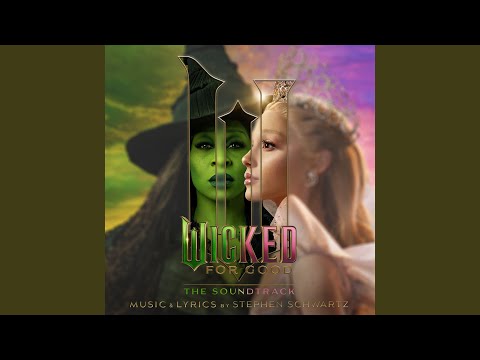
Review and Highlights
Quick summary
- New original solo for Glinda in the film sequel Wicked: For Good, written by Stephen Schwartz specifically for the screen.
- Performed by Ariana Grande with a lush studio orchestra, sitting in the middle of Act 2 as Glinda’s private reckoning.
- Appears on Wicked: For Good - The Soundtrack as track 10 and was previewed as one of two brand new numbers for the movie.
- Stylistically, it blends Broadway storytelling with soft pop and dream pop textures rather than the brassy comedy of Glinda’s earlier songs.
- The track has already drawn awards attention and heavy critical focus as a key turning point in Glinda’s arc.
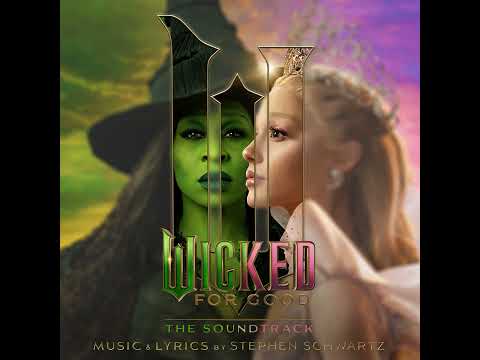
The Girl in the Bubble (2025) - soundtrack feature - non diegetic interior monologue. Glinda, alone in her apartment high above the Emerald City, processes the witch hunt that is about to descend on Elphaba and questions the comfortable role she has played in the Wizard’s propaganda campaign. The sequence works as a pause between political escalation scenes, letting the camera stay close on her as she sings and, finally, decides to step off her pedestal.
Review
For anyone who has lived with the stage version of Wicked for years, Glinda has usually been the comic relief who gradually earns depth. This new number rebalances that arc. Instead of just quips and dazzle, the track lets her narrate her own crisis of conscience in a language that is far more internal than anything she gets in the original score. You can hear it from the first line: the voice is hushed, almost spoken, as if she is watching herself from outside.
Musically, the piece sits in the pop ballad space but avoids the usual power ballad structure. The tempo moves at a measured mid range, around the mid 80s beats per minute, which gives the piano figure enough space to breathe between phrases. The harmony leans on a Db tonal center with chords that feel almost lullaby like, matching the lyric’s references to stories sung to sleep. Underneath, strings swell in waves rather than big hits, which keeps the focus on the voice instead of orchestral spectacle.
What stands out is how carefully Ariana Grande shades the performance. She holds back much of her upper range for most of the track, almost murmuring over the first verses. The famous ease with high notes only really shows up near the end, when Glinda is ready to admit that the pink bubble she floats in is not just pretty but suffocating. According to Playbill’s breakdown of the song’s placement, this is the moment where Glinda finally decides to act rather than pose, and the production mirrors that by slowly opening up her dynamics.
Textually, Stephen Schwartz writes in a deceptively simple loop of images: the beautiful girl, the beautiful life, the bubble. Each repetition changes slightly as Glinda’s understanding shifts. Early on, those phrases sound like the way the citizens of Oz see her. By the bridge, they read like a verdict; she is starting to recognize that the persona is built on avoidance. Critics have already likened this to a modern spin on the “11 o’clock number” that musical heroines get, but turned inward instead of belted at a cheering crowd.
As a recording, the track is sleek but not glossy. Greg Wells, Stephen Oremus, and Schwartz share production credit, and you can hear their different instincts in the layered keyboards, the almost cinematic mixing of the orchestra, and the clear line given to the vocal. The song never explodes into a huge rhythm section. Instead it rides a steady, heartbeat like pulse, which fits Glinda’s internal monologue more than any show stopping tap break would.
Screen & media placement
The piece is written for and used in Wicked: For Good, the second film based on the musical. In the movie, it comes after a sequence in which the Ozians gear up to hunt down Elphaba. Glinda, left behind in her elevated palace space, watches the fear campaign she helped shape and begins to question whether her comfort has cost too much. Industry outlets have described the scene as one of the film’s quiet high points, a rare moment where time slows while we sit with Glinda’s guilt and doubt.
Creation History
Stephen Schwartz revealed back in 2022 that part two of the film adaptation would feature two brand new songs to serve the story beats unique to the screen version. Those songs were later announced as No Place Like Home for Elphaba and The Girl in the Bubble for Glinda, both written to deepen the characters’ inner journeys in the second half of the narrative. Trade coverage and fan sites have traced their rollout through teasers, a lyric video, and early snippets in trailers and television specials.
The soundtrack album Wicked: For Good - The Soundtrack was scheduled for November 21, 2025, matching the film’s theatrical release. The Girl in the Bubble appears there as track 10, and according to fan discography sources it was issued slightly earlier as part of a duet vinyl single paired with Cynthia Erivo’s No Place Like Home. Several outlets, including NME magazine, have singled out these new numbers as the key additions that distinguish the soundtrack from a straightforward filming of the Broadway score.
Ariana Grande has spoken in interviews about how daunting it felt to premiere a freshly written Schwartz solo in such a beloved franchise. She has described the recording as one of the hardest and most rewarding studio days of the entire project, in part because it demanded a kind of vocal vulnerability she had not often put on record. Rather than leaning on riffs, she had to sit still in the character’s doubt, something that is hard to fake when a microphone is close enough to capture every breath.
Song Meaning and Annotations
Plot
Within the story, the song arrives just as Oz tips into open persecution. The Wizard’s regime has spent years turning Elphaba into a symbol of fear, and now ordinary citizens are ready to march against her. Glinda has been the smiling public face of that regime, the “good” witch in the pink gown, comforting crowds and selling the story that everything is under control.
Left alone, she watches that narrative bear fruit and turns her gaze on herself. The opening lines treat Glinda almost as a separate character: “that beautiful girl with the beautiful life.” She describes this image in the third person, as if she is examining a doll in a shop window. The “beautiful life built on lies” refers both to the Wizard’s propaganda and to her own habit of looking away from cruelty as long as she gets to keep her status.
Over the verses, she outlines how easy it is to live in a dream if you keep your eyes closed. She admits she has been spinning “beautiful stories” to lull herself to sleep, narratives full of magic and romance that keep her from facing the pain around her. The metaphor of being in a bubble works literally, given Glinda’s famous mode of transport, and figuratively, as a symbol of isolation and privilege.
As the song moves into its middle section, Glinda acknowledges that truth has “a way of seeping in beneath the surface and sheen.” Even someone who tries to stay blind cannot ignore what she has seen forever. That realization leads her to the core question that “haunts her” in the lyric: if she steps out of the dream, who is she without the bubble, without the carefully crafted identity of Glinda the Good.
In the final stretch, the language shifts from description to decision. Glinda admits that a big part of her wishes she could stay floating forever, letting the “beautiful lies” keep coming. But she concludes that it is time for the bubble to pop. The last lines connect back to her public image as the popular girl in the bubble, suggesting that popularity without integrity is no longer enough. By the time the song ends, she has resolved to step down from her safe height and act differently, which sets up her later choice to resist the witch hunt.
Song Meaning
At heart, the piece is about waking up from a comforting illusion. Glinda embodies a kind of performative goodness: she is adored, constantly praised for being kind and charming, yet her comfort depends on not asking questions about who is hurt by the system she serves. The track cracks that shell. She starts by talking about “that beautiful girl” as if she were someone else, then gradually admits that the bubble is her own.
The “bubble” gathers several layers of meaning. It is Glinda’s literal transport device, the glossy spectacle that introduces her to the public. It is also the cushion of wealth and status, the court around her, the constant applause that insulates her from consequences. Finally, it is the curated image she posts to the world: always smiling, always benevolent, never angry or conflicted. When she says it is time for the bubble to pop, she is not just talking about a magic sphere; she is talking about dismantling the persona that has kept her from real moral action.
The lyric also speaks to broader themes in Wicked. The franchise has always contrasted propaganda with truth, comfortable myths with messy reality. Here, instead of exposing the Wizard, Schwartz exposes how an ordinary person can go along with a harmful story because it is flattering and safe. Glinda’s journey mirrors the audience’s: the realization that not choosing is, in fact, a choice, and that silence can be its own form of complicity.
Stylistically, this is reflected in the music. The gentle, rocking rhythm feels like a lullaby at first, echoing the “stories to sing her to sleep.” As the song progresses, dissonant notes slip into the harmony and the vocal line stretches further, mirroring the discomfort of seeing too much. By the end, when she repeats that it is time for the bubble to pop, the melody rises higher and holds longer, as if she is finally willing to take up space as her real self rather than as a polished figurehead.
Annotations
“The bubble symbolizes the public image she must maintain - floating above everyone else, smiling, golden, and flawless.”
This captures the double life running through the song. When Glinda describes the girl in the bubble from the outside, she is almost critiquing a celebrity persona rather than speaking as a character in a fantasy land. The imagery resonates in a media culture where polished images float across screens while the people behind them wrestle with anxiety and doubt.
“Her fame and responsibility as a figure of hope actually keep her confined emotionally, unable to show vulnerability or make choices that truly reflect who she is.”
This is one reason the track feels so intimate. We are hearing things Glinda could never say at a balcony rally. The writing gives her space to confess that the role of “good witch” has become a cage. Her reputation for goodness stops her from making messy, risky choices that might upset the Wizard or the public, even if they are the right ones.
“The song reflects Glinda’s connection to Elphaba and her guilt over the role she plays in shaping public opinion against her friend.”
That guilt hangs over every line, even though Elphaba’s name is never spoken. When Glinda talks about stories she tells herself, we can hear the propaganda she has repeated about the so called wicked witch. The decision to pop the bubble is not just about her own identity; it is about whether she will stand by while her old friend is hunted down.
Metaphors and symbols
The piece is thick with symbolic language, but three motifs stand out. First, the repeated “beautiful” phrases. They begin as surface compliments, then start to feel hollow as Glinda associates beauty with denial. Second, the image of closing one’s eyes to live in a dream. That line is simple, but it reframes ignorance as an active habit: you have to keep choosing not to look. Third, the notion of stories as sedatives. Her tales “sing her to sleep,” which in context is less about comfort and more about self inflicted numbness.
Genre and musical palette
In terms of sonics, The Girl in the Bubble leans into a gentle fusion of musical theater writing and dream pop atmosphere. You hear show tune craft in the clear narrative structure and the way each chorus slightly reframes its hook. At the same time, the production surrounds Glinda with soft synth pads, delicate harp figures, and a reverberant piano that feels almost cinematic. According to several soundtrack guides, this track was conceived as a fresh color in the Wicked palette, setting Glinda’s private voice apart from her brighter, bouncier numbers earlier in the saga.
Cultural and character context
On a cultural level, the song speaks to a larger conversation about privilege, performance, and what “being good” actually means. In interviews around the film, Ariana Grande has talked about Glinda learning that goodness is not just a label but a series of hard choices. That idea sits at the core of the song: to be truly kind, she has to step down from the safe bubble and risk being disliked or misunderstood. As stated in a recent Rolling Stone study on fandom and morality in pop narratives, modern audiences often respond strongly to characters who reckon with their complicity rather than staying flawless icons, and Glinda fits that mold here.
Technical Information
- Artist: Ariana Grande
- Featured: none on this track
- Composer: Stephen Schwartz
- Producer: Stephen Schwartz, Stephen Oremus, Greg Wells
- Release Date: November 21, 2025 (soundtrack album); early single drop on November 11, 2025 on select formats
- Genre: Musical theatre pop, dream pop influenced ballad
- Instruments: Piano, keyboards, orchestral strings, harp, light percussion, brass and woodwinds
- Label: Republic Records, Verve, Universal Studios music partners
- Mood: reflective, conflicted, quietly hopeful
- Length: about 3 minutes 40 seconds
- Track #: 10 on Wicked: For Good - The Soundtrack
- Language: English
- Album: Wicked: For Good - The Soundtrack
- Music style: Character driven solo with cinematic orchestration and soft pop rhythm programming
- Poetic meter: Flexible, conversational lyric with predominantly iambic phrases
Questions and Answers
- Who produced The Girl in the Bubble by Ariana Grande?
- The recording is produced by Stephen Schwartz, Stephen Oremus, and Greg Wells, the core music team behind the Wicked films and soundtracks.
- When will Ariana Grande release The Girl in the Bubble?
- The track is tied to Wicked: For Good - The Soundtrack, scheduled for November 21, 2025, with an earlier single style rollout in mid November to promote the film.
- Who wrote The Girl in the Bubble?
- Stephen Schwartz wrote both the music and words, continuing his role as primary songwriter for the Wicked universe.
- Where does the song appear in Wicked: For Good?
- It appears in Act 2 of the film, after the citizens of Oz rally against Elphaba. Glinda sings it alone, reflecting in her elevated quarters while the witch hunt gathers outside.
- How is this track different from Glinda’s earlier numbers like Popular or Thank Goodness?
- Earlier songs highlight her charm and comic bravado in bright major keys and fizzy rhythms. Here, the tempo slows, the harmony softens, and the focus is on honesty rather than performance. She is no longer selling a story to a crowd; she is confessing to herself.
- Does the song change Glinda’s relationship with Elphaba?
- Indirectly, yes. The number marks the point where Glinda admits she has helped demonize her former friend. The decision to “pop” the bubble leads into later scenes where she chooses action to protect Elphaba rather than simply keeping her distance.
- Is The Girl in the Bubble used outside the film, for example in trailers or promotional clips?
- Short excerpts of the track have been used in teaser campaigns and social media previews for Wicked: For Good, often paired with images of Glinda alone in her bubble or standing over the Emerald City.
- What vocal challenges does the song pose for Ariana Grande or anyone covering it?
- The range sits in a warm mid register but climbs into sustained high phrases near the end. The tricky part is less the range and more the control: it requires very soft, steady lines at the beginning and then a gradual build to more open, ringing notes without sounding showy.
- How does the orchestration support the story?
- The arrangement starts spare, mostly piano, with subtle string pads. As Glinda lets truth in, more of the orchestra joins, adding harmonic weight. By the climax, the strings are fuller and the percussion slightly more pronounced, mirroring her resolve.
- Is the track intended as an awards contender?
- Industry coverage has grouped The Girl in the Bubble with other original film songs that might compete in awards seasons, especially after early nominations from music in media organizations, but its primary purpose in the film is to deepen character rather than to chase trophies.
- Are there official translated versions?
- While the main recording is in English, official translations of the text for Spanish and Thai speaking audiences have been circulated on licensed lyric platforms, reflecting the global reach of the Wicked films.
- How does this song relate to the broader message of For Good?
- The film’s title and the finale For Good stress lasting change and moral growth. The Girl in the Bubble is Glinda’s private prologue to that idea, showing the moment she chooses to move from image based goodness to active, truth based goodness.
- What makes this track stand out on the soundtrack album?
- Among big ensemble numbers and climactic power pieces, this song stands out for its quietness. It is small scale, almost chamber like, but it carries one of the soundtrack’s most significant character shifts, which is why outlets like NME magazine have highlighted it in their coverage.
Awards and Chart Positions
Even before the full film rollout, the track began attracting awards chatter. Music press and trade outlets have noted that Wicked: For Good - The Soundtrack earned multiple nominations at the Hollywood Music in Media Awards, including one specifically for The Girl in the Bubble in the song for feature film category. That places Glinda’s solo alongside No Place Like Home and the album as a whole in early recognition for the project’s new material.
Streaming platforms reported significant early interest around release week, with the track landing on prominent musical theatre and film music playlists. While detailed chart placements for this specific song vary by territory, the soundtrack album itself entered several national album charts on release and secured a strong position on soundtrack and cast recording lists according to industry roundups.
How to Sing The Girl in the Bubble
Because the track sits at the crossroads between pop and theatre, it asks for both stylistic control and honest storytelling. Here is a practical guide if you want to sing it yourself.
Core specs
- Key: Db major in the original recording.
- Tempo: about 86 BPM, a relaxed mid tempo pulse.
- Approximate vocal range: from around Ab3 up to about Db5, with optional higher inflections for advanced singers.
- Style: contemporary musical narrative with light pop phrasing and subtle use of head voice and mix.
Step by step approach
1. Lock in the tempo and pulse
Start by speaking the text in time over a metronome around 86 BPM. Feel how each phrase sits slightly behind the beat, almost like a lullaby. Avoid rushing; Glinda is thinking out loud, not giving a pep rally speech.
2. Shape the diction
The lyric is conversational. Focus on clean consonants and long vowels, especially on words like “beautiful,” “bubble,” and “lies.” Slightly soften “t” and “d” sounds so they do not chop the line. Imagine you are whispering a secret to yourself rather than declaiming to a hall.
3. Build a breathing plan
Mark breaths at natural punctuation points, and practice low, silent inhales. Early phrases can be sung on fairly long lines; use gentle, continuous airflow rather than big bursts. Reserve deeper breaths for the climactic section when the melody climbs and holds notes like “pop” and “now.”
4. Manage flow and rhythm
Several phrases float slightly ahead or behind the beat to mirror thinking in real time. Once the basic timing is secure, experiment with tiny pushes on key words while keeping the underlying pulse steady. Think of it as speaking in tempo rather than counting strict measures.
5. Work the accents and dynamics
The arc should move from almost fragile at the top to quietly powerful at the end. Start with a gentle dynamic, maybe mezzo piano, and gradually open through the bridge. Place emotional weight on words that signal realization, like “lies,” “truth,” and “pop.” Avoid blasting the last chorus; intensity comes from focus, not volume.
6. Ensemble and doubles
On the studio recording, you can hear light vocal doubling and harmonies near the end. For live performance, you can simulate that richness by slightly thickening your tone on repeats and adding a restrained harmony line if another singer is available. Keep any embellishments in character; Glinda is not riffing for applause here.
7. Microphone technique
If you are on mic, stay close for the first half to catch the intimate nuances. As you swell in the final lines, pull back a little or angle the mic to avoid peaking. Practice shifting distance in rehearsal so you can keep your vocal color consistent.
8. Common pitfalls
- Over singing the opening, which should feel almost like a confession.
- Adding pop runs that distract from the text.
- Ignoring the narrative arc and singing every section at the same intensity.
- Letting breath support collapse on longer sustained notes, causing wobble.
Practice materials
Use an instrumental or piano reduction in Db to get used to the harmonic color, then try half step transpositions if the top notes feel tight. Record yourself on a smartphone and listen back for clarity of text and dynamic contrast rather than just pitch. Once you are comfortable, perform it for a friend while briefly explaining Glinda’s situation; that context will often deepen your interpretation.
Additional Info
One of the striking things about The Girl in the Bubble is how clearly it has become part of the Wicked mythos almost overnight. Articles in outlets like Playbill and Out have already started listing it alongside long standing favorites as a core Glinda piece, not just an add on. According to NME magazine’s round up of the sequel soundtrack, the song functions as the emotional hinge of the second film, turning Glinda from a decorative figure into a moral agent.
Interviews with the creative team underline how deliberate that shift was. Stephen Schwartz has spoken in various press notes about wanting each new song in the film sequel to answer a specific storytelling need rather than feeling like a bonus track. For Glinda, that need was to see her question the privileges she had taken for granted. Director Jon M. Chu has described the sequence as one where the camera finally stops treating her as a spectacle and instead treats her as a person.
Ariana Grande, for her part, has mentioned how attached she became to Glinda’s bubble over the many months of filming. Behind the scenes features show her describing the prop as a kind of safe room and confession booth, a place where Glinda hides all the thoughts she cannot voice in public. That personal connection dovetails neatly with the track’s central metaphor, and may be part of why the performance feels so lived in.
Key Contributors
| Subject | Verb | Object |
|---|---|---|
| Stephen Schwartz | wrote | The Girl in the Bubble |
| Ariana Grande | performed as | Glinda on The Girl in the Bubble |
| Stephen Oremus | conducted and arranged | orchestration for Wicked: For Good - The Soundtrack |
| Greg Wells | co produced | The Girl in the Bubble recording |
| Universal Pictures | produced | the film Wicked: For Good |
| Republic Records | released | Wicked: For Good - The Soundtrack |
| Verve Records | co released | Wicked: For Good - The Soundtrack |
| Hollywood Music in Media Awards | nominated | The Girl in the Bubble for a feature film song prize |
| Sky Studios, London | hosted | recording sessions for Wicked: For Good music |
Sources: Official Wicked: For Good soundtrack notes, major entertainment press coverage, Playbill, Out, NME magazine, Hollywood and music industry award listings.
A-Z Lyrics Universe
Cynthia Erivo Popular
Ariana Grande Horsepower
Post Malone Ain't No Love in Oklahoma
Luke Combs Good Riddance (Time of Your Life)
Green Day Bye Bye Bye
*NSYNC You're the One That I Wan
John Travolta & Olivia Newton-John I Always Wanted a Brother
Braelyn Rankins, Theo Somolu, Kelvin Harrison Jr. and Aaron Pierre The Power of Love
Frankie Goes to Hollywood Beyond
Auli’i Cravalho feat. Rachel House MORE ›