Thank Goodness / I Couldn't Be Happier Lyrics – Ariana Grande & Wicked Movie Cast (Ft. Michelle Yeoh)
Soundtrack Album: Wicked: For Good
[GLINDA]
We couldn't be happier
Couldn't be happier
We couldn't be happier
[GLINDA]
Because happy is what happens
When all your dreams come true
[CROWD]
Thank Goodness
[GLINDA & CROWD]
Today
Thank Goodness for today
Thank Goodness for today
I hear she has an extra eye that always remains a wink.
I hear she can shed her skin as easily as a snake.
I hear some rebel animals are giving her food and shelter.

Wicked: For Good
Soundtrack Lyrics for Movie, 2025
Track Listing
Wicked Movie Cast & Cynthia Erivo (Ft. Ariana Grande & Michelle Yeoh)
Ariana Grande & Wicked Movie Cast (Ft. Michelle Yeoh)
Cynthia Erivo
Marissa Bode, Cynthia Erivo & Ethan Slater
Jeff Goldblum, Cynthia Erivo & Ariana Grande
Ariana Grande
Cynthia Erivo & Jonathan Bailey
Cynthia Erivo
Wicked Movie Cast & Ethan Slater
Ariana Grande
Cynthia Erivo & Ariana Grande
John Powell & Stephen Schwartz, Featuring Ariana Grande & Cynthia Erivo
Stephen Schwartz
Song Overview

Review and Highlights
Quick summary
- Act II celebration scene in Wicked: For Good, following straight on from “Every Day More Wicked,” with Glinda front and center as Oz throws her a public party.
- The track is a re-imagined version of the stage song “Thank Goodness,” now titled “Thank Goodness / I Couldn't Be Happier,” recorded by Ariana Grande with Wicked Movie Cast and Michelle Yeoh.
- Serves as track 2 on Wicked: For Good – The Soundtrack, released November 21, 2025, with production by Greg Wells, Stephen Oremus and Stephen Schwartz.
- Musically, it blends classic Broadway orchestrations, expanded film-score textures and pop-leaning vocal production, turning Glinda’s Act II opener into a gleaming set piece.
- Dramatically, it is the big “mask” number: Oz sees a fairytale engagement and shiny yellow brick road; Glinda feels the cracks in her so-called happy ending.
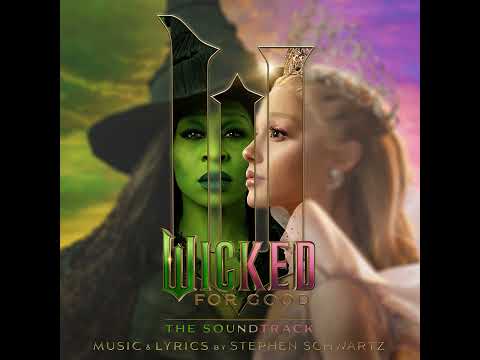
On record, “Thank Goodness / I Couldn't Be Happier” plays like the curtain rising on a party that feels just slightly off. The orchestra swells, the citizens cheer, Madam Morrible beams, and Ariana Grande’s Glinda sweeps in with that sparkling, slightly breathless soprano that theatre fans were waiting to hear. If “Every Day More Wicked” is the panic, this is the hangover brunch where everyone pretends things are fine.
Compared with the original Broadway cast recording, this film version is tighter and more cinematic. According to Classic FM, the Act II number has been split in two for the movie, with the prologue material expanded into “Every Day More Wicked” and the remainder reshaped as “Thank Goodness / I Couldn't Be Happier.” The result is that this track can lean fully into Glinda’s perspective and the fairy-tale trappings without having to recap the whole political situation at the same time.
The arrangement is plush even by Wicked standards. Strings shimmer under the crowd’s chant of “thank goodness,” while brass punctuates Morrible’s lines with satirical pomp. Greg Wells’ production brings a bit of modern polish: the low end is punchier than on the 2003 cast album, the choir is closer in the stereo field, and the lead vocal is treated as carefully as any pop single, even though it still behaves like a stage song in structure.
Grande’s performance is the hinge that keeps all of this together. According to NBC Insider’s song-by-song breakdown, Schwartz wanted a clear split between Glinda’s “public” soprano and her “private” chestier voice; you can hear that in how she sails through the opening celebration verses, then lets a little grit into her tone as she admits that happiness is more “complicated” than she expected. Michelle Yeoh’s Morrible, meanwhile, is icy and precise, more spoken-singing than belting, which underlines how much of this event is political theatre.
Screen & Media Placements
Wicked: For Good (2025) - feature film musical number - mostly diegetic, set as a public celebration in Oz. The song appears early in the second film, right after “Every Day More Wicked” has sketched the new climate of fear. We see Glinda on a balcony or platform, Ozians gathered in a square and banners declaring the opening of the yellow brick road. Within that public event, the number glides between Glinda’s speech, Morrible’s propaganda, crowd gossip and Glinda’s private doubts, sometimes in the same stanza.
Outside the film itself, the studio recording is a key track on Wicked: For Good – The Soundtrack, and a solo live rendition of “Thank Goodness” by Ariana Grande appears on Wicked: One Wonderful Night (Live), recorded for NBC’s concert special ahead of the movie. That live cut strips away much of the crowd material, focusing on Glinda’s inner monologue, which makes a neat companion to the film version’s emphasis on public spectacle.
Creation History
The stage version of “Thank Goodness” has always been the pivot into Act II. As the Wicked Wiki and years of sheet-music analysis point out, it is Glinda’s big “public face” number, sung with Madame Morrible and the citizens of Oz as they gloss over what really happened at the end of “Defying Gravity.” For the film, that material has been redesigned. Classic FM notes that the prologue has been carved off and expanded as “Every Day More Wicked,” leaving “Thank Goodness / I Couldn't Be Happier” to carry the party, the engagement announcement and Glinda’s internal doubt.
On the recording side, this track follows the same pipeline as the rest of the For Good soundtrack: Stephen Schwartz revisiting his own composition, Stephen Oremus handling arrangements and conducting, and Greg Wells co-producing and mixing. Ariana Grande Wiki documents that principal vocal and orchestral sessions took place at Sky Studios in London in 2023, with a large orchestra and choir that match the personnel listed in the soundtrack credits.
What is different here, compared with the 2003 Broadway album, is the way the film can cut visually between Glinda’s public smile and private hesitation. According to NBC Insider, Schwartz has spoken about using vocal register as a storytelling tool: Glinda sings in bright soprano when addressing her public, then drops into a more grounded quality when she sings for herself. Ariana leans into this idea, flipping seamlessly between a crystalline head voice on lines like “thank goodness” and a more mixed, conversational tone on “getting your dreams, it’s strange, but it seems a little complicated.”
Press coverage around the film also underlines how central this number is to Grande’s arc. Vanity Fair’s first-look feature singled out “Thank Goodness” as one of director Jon M. Chu’s favourite Act II pieces, and Newsweek’s early review mentions how her performance in this scene adds new heft to Glinda’s story. According to NME magazine’s rundown of the full soundtrack, it is one of the key returning songs that anchor the second film around fan-favourite moments rather than just the new material.
Song Meaning and Annotations
Plot
Within the story, this song marks a rare “good news” day in Oz. The citizens gather to celebrate Glinda and Fiyero’s engagement and the supposed absence of the Wicked Witch. Glinda leads them in a bubbly celebration, promising “a celebration the Glinda way,” while the crowd chants its gratitude. It feels like a fairy tale ending: a prince, a beloved public figure, a new yellow brick road that promises prosperity.
Madame Morrible adds her own commentary, proclaiming a day that is “totally wicked witch free.” Her words reframe the scene as a victory over a common enemy, not just a wedding announcement. In the middle of this, she pushes Fiyero into the spotlight, publicly confirming the engagement before he has even fully processed it. His confused “We’re engaged?” quickly gets folded into Glinda’s PR spin.
As the party continues, Morrible stokes the crowd with lurid rumours about Elphaba: an extra eye that never sleeps, skin that can be shed like a snake, a soul so unclean that water might melt her. The Ozians repeat and enlarge these stories, turning gossip into doctrine. Their chant “please, somebody go and melt her” underlines how thoroughly fear has been directed at a single scapegoat.
Fiyero, unsettled, walks out rather than endorse the mood. Glinda covers for him, telling the crowd he has gone to fetch her a drink. Then the song quietly pivots inward. In “I Couldn't Be Happier,” she admits to herself that getting what she thought she wanted feels strangely hollow. There is a “kind of a sort of cost,” she realises; some things are lost along the way, some bridges crossed without even noticing.
The number closes with the crowd returning to a chant of devotion. They tell Glinda they love her, thank her and the Wizard for their joy, and assure her that she and Fiyero “couldn’t be goodlier.” Glinda joins in the refrain one more time, insisting that “happy is what happens when all your dreams come true,” but the way she phrases the last “well, isn’t it?” leaves a question hanging in the air.
Song Meaning
“Thank Goodness / I Couldn't Be Happier” is a study of public narrative versus private truth. On the surface, it is a triumphant ensemble piece: the regime has a princess-like figurehead, a handsome prince, a shiny new road and a story about evil vanquished. Underneath, almost every element is compromised. The engagement is half-arranged and half assumed; the enemy is misunderstood; the heroine’s happiness is more slogan than feeling.
NBC Insider boils the number down to Glinda’s “public perception vs. private” self, and the lyrics make that explicit. She tells the crowd she could not be happier and lists all the outward signs of a perfect ending: the plot, the pageantry, the cheers. But in the verse where she admits that getting your dreams “seems a little, well, complicated,” the rhyme scheme itself turns tangled, mirroring her unease. Happiness is no longer a simple reward; it comes with trade-offs, broken friendships and moral compromises.
This is also one of the story’s sharpest portraits of propaganda. Morrible uses the occasion to plant highly specific myths about Elphaba (the extra eye, the melting water, the rebel Animals) that will later pay off in “No Good Deed” and the final scenes at Kiamo Ko. The citizens’ cries for someone to “melt her” show how easily fear can be redirected into violence when it is dressed up as civic duty.
For Fiyero, the song marks a breaking point. He refuses to smile and pretend, which sends him down the path toward openly siding with Elphaba. For Glinda, it is a fork in the road: she chooses, at least in this moment, to keep the mask on and hold the center of the crowd, even as she senses that the version of herself being applauded is not quite real.
Annotations
Critics often describe the song as Glinda’s “fairytale ending” set to music, with the twist that she realises in real time that the fairy tale does not fit.
That is the heart of it. She is literally standing in the middle of a storybook outcome - prince, promotion, public adoration - while quietly processing that the cost of getting here includes losing Elphaba, losing honesty and losing any simple idea of what “good” even means.
Stephen Schwartz has explained that Glinda’s voice changes depending on whether she is addressing the crowd or revealing herself, moving from bright soprano to a more grounded mix.
Listen to Ariana on the film recording with that in mind: the word “happier” at the start of the song is almost sparkling, thrown up into the air; by the time she reaches the line about bridges you do not know you crossed, she sounds lower, more conversational, like someone thinking aloud and trying not to hear herself too clearly.
Stage analyses frequently point out that “happy is what happens when all your dreams come true” is both sincere and desperately self-persuading.
The reprise of that line in the final bars is where the mask almost slips. She repeats the slogan, then adds “well, isn’t it?” - the tiniest crack in the facade, but enough to reframe the entire number. That question will echo under everything Glinda does for the rest of the story.
Masks, myths and microphones
On a metaphorical level, this song is about how a person can become a brand. Glinda has been packaged as “Glinda the Good,” and the citizens now chant her name like it is a product logo. In that environment, saying “I am not as happy as I look” is nearly impossible; it would crash the narrative everyone is living inside. So she does what many public figures do: she doubles down on the image, even as she sings about how wrongly it fits.
Public soprano vs private confession
Schwartz’s register trick is a neat example of how songwriting can encode character. Academic work on Wicked has noted that Glinda’s big public numbers (“No One Mourns the Wicked,” “Thank Goodness”) sit high in her range, while more intimate songs use lower, warmer notes. In this track, both modes collide inside a single piece. Grande is clearly enjoying the high-flying phrases that fans expected, but the more telling moments are the lower, rhythmically tricky lines where she admits the deal is complicated.
The Oz rumour mill
The gossip section - all those “I hear she…” lines about Elphaba - is musically playful, but thematically brutal. Each rumour strips away a bit of Elphaba’s humanity: extra eyes, reptilian skin, a soul that water can destroy. By the time the crowd calls for someone to “melt her,” the language has primed them to think more about pest control than about a person. The cheerful bounce of the music is part of the horror; it shows how atrocity can sneak in under a catchy tune.
Fairytale endings and sunk costs
“There are bridges you cross you didn’t know you crossed until you’ve crossed” is one of Schwartz’s best lines in the whole score. It captures how complicity often works in real life: you compromise a little, then a little more, and only later realise how far you have travelled. Glinda has crossed the bridge from co-conspirator with Elphaba to public defender of the Wizard’s narrative. The song lets her clock that fact without letting her off the hook.
Technical Information
- Artist: Ariana Grande, Wicked Movie Cast, featuring Michelle Yeoh
- Featured: Ariana Grande (Glinda), Michelle Yeoh (Madame Morrible), ensemble vocals by the Wicked Movie Cast
- Composer: Stephen Schwartz
- Lyricist: Stephen Schwartz
- Producers: Greg Wells, Stephen Oremus, Stephen Schwartz
- Release Date: November 21, 2025
- Album: Wicked: For Good – The Soundtrack (track 2)
- Genre: Musical theatre, film soundtrack
- Music style: Act II ensemble celebration with solo turns, combining Broadway-style through-composition and film-scoring scale
- Length: 5:23 (album version)
- Label: Universal Studios, Republic Records, Verve Label Group (via Universal Music Group)
- Language: English (with early Spanish and Thai translation versions circulating on major lyric platforms)
- Instruments: Full orchestra (strings, brass, woodwinds, harp, timpani, auxiliary percussion), piano, keyboards, bass, guitar
- Tempo: Around 90 BPM in the original stage incarnation, with film arrangement flexing between that and a slightly brisker feel
- Key centre: Rooted in E flat major, with modulations and colour shifts typical of Schwartz’s Act II writing
- Mood: Celebratory on the surface, conflicted and questioning underneath; equal parts pageant and confession
- Track #: 2 on the standard soundtrack
- Poetic meter: Mostly anapestic and trochaic patterns, with patter-song runs in the crowd gossip and more lyrical scansion in Glinda’s introspective section
Questions and Answers
- Who produced “Thank Goodness / I Couldn't Be Happier” by Ariana Grande and Wicked Movie Cast?
- The song is produced by Greg Wells, Stephen Oremus and Stephen Schwartz, the core creative team behind the Wicked: For Good soundtrack as a whole.
- When was “Thank Goodness / I Couldn't Be Happier” released?
- It was released on November 21, 2025, as track 2 on Wicked: For Good – The Soundtrack, the same day the film opened in cinemas.
- Who wrote “Thank Goodness / I Couldn't Be Happier”?
- Stephen Schwartz wrote both the music and the lyrics, adapting and expanding his original stage composition “Thank Goodness” for the film’s new two-part structure.
- How does the film version differ from the original Broadway “Thank Goodness”?
- The main structural difference is the split: the early “Every day, more wicked” section that used to open the Act II prologue is now its own song, “Every Day More Wicked,” while the celebration and introspection material remain in “Thank Goodness / I Couldn't Be Happier.” Some dialogue has been reworked, and subtle musical changes support the new film pacing.
- Which characters are featured in the recording?
- The principal vocal focus is on Glinda, sung by Ariana Grande, with key contributions from Madame Morrible, played by Michelle Yeoh, and the citizens of Oz. Fiyero has spoken interjections that help mark his growing discomfort.
- Is “Thank Goodness / I Couldn't Be Happier” considered a new song?
- No. Unlike “No Place Like Home” and “The Girl in the Bubble,” which are brand new compositions, this track is a reworking of the existing stage song. However, because of the restructuring and new dramatic context, many coverage pieces treat it almost like a fresh set piece within the film.
- What role does this number play in Glinda’s character arc?
- This is the moment where Glinda has technically “won” - she is beloved, engaged and promoted - but emotionally knows something is wrong. The song lets audiences see the gap between the smiling public figure and the friend who has just watched Elphaba become public enemy number one.
- How high does Glinda sing in this piece?
- In the stage score, Glinda’s part in “Thank Goodness” stretches up to a high C and has an optional even higher note that some performers attempt. Vocal range guides cite her line as roughly Bb3 to C6, with an optional F6. The film arrangement keeps the climactic high notes but shapes them for Ariana Grande’s voice and the cinematic mix.
- Is there a live version apart from the soundtrack cut?
- Yes. Ariana Grande performs “Thank Goodness” solo in the Wicked: One Wonderful Night (Live) special and its companion album, recorded at the Dolby Theatre. That version focuses on her internal monologue and trims some of the spoken and ensemble material.
- How does this song connect to “Every Day More Wicked”?
- The two tracks function as a diptych. “Every Day More Wicked” shows how Oz has grown fearful and obsessed with the Witch; “Thank Goodness / I Couldn't Be Happier” then reveals how the same society throws a party to celebrate Glinda as its comforting symbol, even as the machinery of fear keeps grinding away in the background.
- Why is the crowd so fixated on melting Elphaba?
- That detail is part urban legend, part foreshadowing. Morrible feeds the rumour that pure water can melt Elphaba’s “unclean” soul, and the crowd seizes on it as a simple solution: pour water, solve problem. The musical will eventually twist that piece of folklore into the climactic “death” that is not quite what the Ozians think it is.
Awards and Chart Positions
As of release day, there is no specific award or chart entry attached only to “Thank Goodness / I Couldn't Be Happier.” However, its fortunes are tightly bound to the soundtrack it opens alongside “Every Day More Wicked.” The Wicked: For Good – The Soundtrack album has already picked up early recognition in the film-music world: according to the current Wikipedia summary of awards, the album itself is nominated at the Hollywood Music in Media Awards, while the two new songs “No Place Like Home” and “The Girl in the Bubble” are cited in the Song - Feature Film category.
Given how streaming-era charts work, it is reasonable to expect that listeners binging the full album - and replaying Ariana’s big Act II showcase - will give this track a measurable footprint on global streaming and soundtrack charts in the weeks after release, even if it is not serviced as a standalone single. For now, most coverage treats it less as a chart contender and more as the dramatic pillar of Glinda’s second-act story.
| Category | Status (late November 2025) | Notes |
|---|---|---|
| Official singles | Not issued as a standalone single | Ariana Grande Wiki and label materials identify “No Place Like Home” and “The Girl in the Bubble” as the two soundtrack singles; this track is promoted through album campaigns and film clips. |
| Soundtrack awards | Album-level nominations in progress | The soundtrack has early award-season traction; coverage clusters its recognition around the full album and the new songs rather than this specific track. |
| Live performance visibility | Featured in NBC’s Wicked: One Wonderful Night special | The live version helped elevate the song’s profile before the film’s release, with critics highlighting it as a showcase for Ariana’s acting-through-music. |
How to Sing Thank Goodness / I Couldn't Be Happier
For singers, this piece can look intimidating on paper: lots of text, a fairly brisk tempo, and high notes that have launched a thousand fan debates. The good news is that it is also one of Schwartz’s most singable constructions, provided you respect the style and do not try to brute-force your way through.
Vocal range, key and tessitura
Resources like Musical Theatre vocal guides and fan wikis place Glinda’s part in “Thank Goodness” roughly between Bb3 and C6, with an optional F6 for the bold. Not every production takes the highest option, and there is plenty of room to adapt for your voice. The original Broadway recording sits in E flat major with some tonal shifts; the film version stays in that neighbourhood.
If you are singing Glinda’s material, be prepared to live in the upper middle of your range for a while rather than just popping up for a single money note. The challenge is sustaining a bright, ringing sound on repeated words like “happier” and “thank goodness” without letting the jaw lock or the larynx creep upward.
Tempo and rhythmic feel
Tempo resources for the stage show typically give “Thank Goodness” a pulse around 90 BPM, though the internal subdivisions and short phrases can make it feel faster. Some pop-centric chord charts list a higher equivalent BPM because of the subdivision they count. Either way, the feel is a buoyant, slightly march-like allegro, with occasional rubato in the more introspective lines.
Step-by-step approach
- Start with the spoken sections. This number has key spoken or half-spoken lines (Glinda’s asides, Fiyero’s protest). Get comfortable moving between speech and song on the page; it will make the transitions feel natural rather than jolting.
- Map Glinda’s “public” versus “private” lines. Mark your score with two colours: one for lines addressed to the crowd, one for internal confession. In public mode, aim for a clear, bell-like tone and slightly formal diction; in private mode, let the sound warm and loosen just a touch.
- Secure the text on a single pitch. Run the full lyric on, say, a comfortable F or G, speaking-rhythm only. This is crucial for the wordy middle verse: “There are bridges you cross you didn’t know you crossed until you’ve crossed” needs rhythmic clarity far more than vocal fireworks.
- Add melody in small chunks. Once the speech rhythm is solid, restore the real melody one phrase at a time, keeping the same lazy jaw and clean consonants you used on the monotone version.
- Place the high notes smartly. For the climactic phrases, think “up and over” rather than “up and strain.” Support from low, wide ribs, keep the tongue forward, and resist the temptation to hammer the final consonants.
- Rehearse with and without the chorus. If you are singing in an ensemble, spend time running your lines alone against a piano reduction; then practise blending into the crowd on the “thank goodness” refrains without losing your pitch center.
- Plan breathing like a speech, not like a scale. Mark breaths where Glinda would naturally pause if she were just talking to the crowd. That will help you keep the acting alive and avoid random gasps that break the line of thought.
- For mic’d performances, keep the sound conversational. This is not a rock power ballad. On a microphone, you can afford to sing a notch lighter than you would in an unamplified theatre, especially on the introspective “I Couldn't Be Happier” material; let the mic do some of the work.
- Common pitfalls. The big ones: racing ahead of the orchestra in the gossip section, swallowing consonants on “bridges” and “ballyhoo,” and over-selling the final “thank goodness” so much that it sounds triumphant rather than conflicted. Aim for control and nuance rather than just volume.
Good practice materials include the Broadway cast recording, the film soundtrack and instrumental tracks from musical-theatre karaoke libraries. Some singers also use the “Live from the Dolby Theatre” version as a study in how to carry the emotional arc with fewer external bells and whistles.
Additional Info
Because this number has lived on stage for two decades, the film version arrives with a built-in critical conversation. Academic writing on Wicked has long used “Thank Goodness” as a prime example of how the show explores hegemony and social performance: Glinda’s speech is both a political act and a personal coping mechanism. The movie doubles down on that reading by tying the song to close-ups and cutaways that underline the gap between what Oz hears and what Glinda feels.
Modern reviewers have picked up on this. Newsweek’s review of Wicked: For Good notes how Ariana Grande’s take on the Act II opener brings new nuance to Glinda’s conflict. The Daily Beast goes as far as suggesting that her performance in the sequel might be awards-worthy, with this sequence often cited as one of the key pieces of evidence. According to NBC Insider, Schwartz himself sees “I Couldn't Be Happier” as a marker of Glinda’s increasing self-awareness, a place where she starts to question not just her circumstances but the story she has been telling about them.
The song also has a small but lively life outside the film. Fans have been trading Spanish and Thai translation videos online, full of home-made subtitles and performance clips; an official Spanish-translated lyric version has begun circulating on major platforms as well. Reddit threads are already ranking theoretical “Glinda notes” in the movie, comparing Grande’s choices on this track to the Broadway tradition: which notes she sustains, where she opts up, how she phrases that final “thank goodness.”
In short, “Thank Goodness / I Couldn't Be Happier” sits at an interesting crossroads: it is a beloved legacy number, a new star vehicle for Ariana Grande and a thematic keystone in a franchise that has become one of the defining musical stories of the century. As stated in Classic FM’s coverage of the Part Two music, this is one of the songs where long-time fans and newcomers alike will hear something both familiar and freshly sharpened.
Key Contributors
| Entity | Type | Relation (S–V–O) |
|---|---|---|
| Stephen Schwartz | Person | Stephen Schwartz wrote the music and lyrics for “Thank Goodness / I Couldn't Be Happier.” |
| Ariana Grande | Person | Ariana Grande performs Glinda’s lead vocals on the track and serves as a vocal producer on the soundtrack. |
| Michelle Yeoh | Person | Michelle Yeoh performs Madame Morrible’s vocal and spoken lines within the song. |
| Greg Wells | Person | Greg Wells produces, mixes and plays instruments on the recording. |
| Stephen Oremus | Person | Stephen Oremus arranges and conducts the orchestral and choral forces for the track. |
| Wicked Movie Cast | Organization (ensemble) | Wicked Movie Cast supplies ensemble and crowd vocals for the number. |
| Universal Studios | Organization | Universal Studios produces and releases the film Wicked: For Good, which features the song. |
| Republic Records | Organization | Republic Records distributes the soundtrack album containing “Thank Goodness / I Couldn't Be Happier.” |
| Verve Label Group | Organization | Verve Label Group collaborates with Republic and Universal Studios on the soundtrack release. |
| Wicked: For Good – The Soundtrack | Creative Work | The album Wicked: For Good – The Soundtrack includes “Thank Goodness / I Couldn't Be Happier” as its second track. |
| Wicked: One Wonderful Night (Live) | Creative Work | The live album Wicked: One Wonderful Night (Live) features a solo performance of “Thank Goodness” by Ariana Grande. |
| Sky Studios, London | Place | Sky Studios in London hosts core recording sessions for the Wicked: For Good songs. |
| AIR Studios, London | Place | AIR Studios in London provides orchestral recording facilities for the soundtrack. |
Sources: NBC Insider, Classic FM, Radio Times, Wikipedia (Wicked: For Good – The Soundtrack), Ariana Grande Wiki, SongBPM, Musical theatre vocal guides, Billboard, Variety, Newsweek, NME magazine
A-Z Lyrics Universe
Cynthia Erivo Popular
Ariana Grande Horsepower
Post Malone Ain't No Love in Oklahoma
Luke Combs Good Riddance (Time of Your Life)
Green Day Bye Bye Bye
*NSYNC You're the One That I Wan
John Travolta & Olivia Newton-John I Always Wanted a Brother
Braelyn Rankins, Theo Somolu, Kelvin Harrison Jr. and Aaron Pierre The Power of Love
Frankie Goes to Hollywood Beyond
Auli’i Cravalho feat. Rachel House MORE ›